Iran vowed retaliation after President Trump pledged to eliminate its nuclear program and devastate its military. Israel joined the U.S.-led attack and said it had targeted a gathering of senior Iranian officials. The United States and Israel attacked Iran in a major assault on at least nine cities.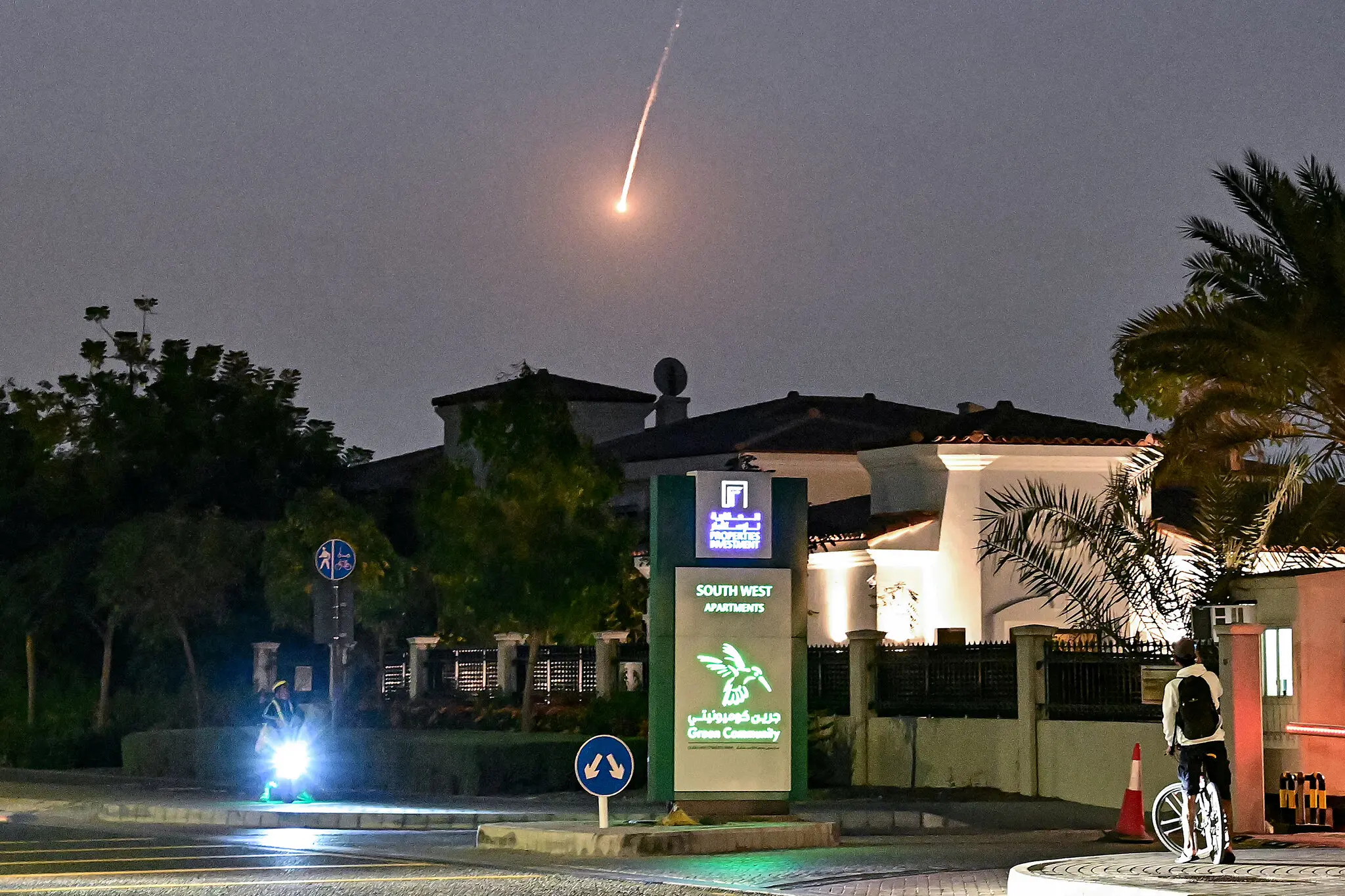 In retaliation, Iran fired waves of ballistic missiles at Israel and targeted at least four U.S. military bases in the Persian Gulf. Reuters
The United States and Israel attacked Iran on Saturday in a major air assault that threatened a broader regional conflict, with President Trump vowing to devastate the country’s military, eliminate its nuclear program and bring about a change in its government.
In retaliation, Iran fired waves of ballistic missiles at Israel, where the authorities reported only minor injuries, and also at several countries in the region that host U.S. military bases. The United Arab Emirates, Qatar, Bahrain, Kuwait and Saudi Arabia all said they had come under attack, and debris from an Iranian missile attack killed at least one person in the Emirates, according to its government.
The Iranian response was broader than during the 12-day war last June when Israel and the United States bombed Iran; in that conflict, Iran fired missiles only at Israel and a U.S. base in Qatar. Saudi Arabia’s foreign ministry said Saturday that there had been “blatant and cowardly Iranian attacks” on its capital Riyadh and in the country’s oil-rich eastern province, while Bahrain’s emergency services were responding to a blast at a residential tower in the capital Manama.
The fighting effectively shut down shipping through the Strait of Hormuz, the conduit for one-fifth of the world’s oil supply, according to shipping companies and Iran’s semiofficial Tasnim news agency, which was sure to send oil prices upward. The U.S. Maritime Administration advised ships to avoid the Persian Gulf, including the strait, and Iran’s Revolutionary Guards said that the straits were unsafe for commercial traffic, Tasnim reported.
Waves of large explosions shook the Iranian capital, Tehran, and witnesses described chaos in the streets as people rushed to seek shelter, find loved ones or flee the city.
Israel’s military said it had, in part, targeted a gathering of senior Iranian officials in the opening strikes. Satellite imagery showed a plume of smoke and extensive damage at the high-security compound of Ali Khamenei, Iran’s supreme leader.
Mr. Khamenei may have been killed, Prime Minister Benjamin Netanyahu said in a televised address, citing “many indications that this tyrant is gone.” But a spokesman for Iran’s foreign ministry, Esmaeil Baghaei, told ABC News that both Mr. Khemeni and President Masoud Pezeshkian were “safe and sound.”
Mr. Trump had threatened an attack for weeks, saying earlier that he was considering limited strikes to compel Iran to accept U.S. terms for a deal restricting its nuclear program. Instead, he launched a much more ambitious, potentially more perilous venture.
The president said in a video posted to Truth Social on Saturday that in addition to targeting Iran’s nuclear program, the United States would also “raze their missile industry to the ground,” “annihilate their navy” and enable the overthrow of the regime, arguing that Iran had refused to reach a deal that would have averted war.
In a video statement, Mr. Trump urged Iranians to rise up against their authoritarian government, which recently killed thousands of people in suppressing protests. “When we are finished, take over your government,” he said. “It will be yours to take.”
U.S. strikes were carried out by attack planes from bases and aircraft carriers around the Middle East, with officials saying the initial focus was Iranian military assets. Israel’s military said it had struck about 500 targets across Iran, including ballistic missile sites and antiaircraft systems.
Analysts warned that the fighting could devolve into a protracted war with no clear exit. Many world leaders urged restraint, although Canada and Australia backed the American action.
Here’s what else to know:
-
Chaos in Tehran: Ali Zeinalipoor, a Tehran resident, described watching a massive plume of smoke billowing from nearby Pasteur Street. “I rushed to school to get my daughter from middle school, the girls were hiding under the stairs and crying,” he said. Read more ›
-
The crisis: The latest tensions with Iran began after Mr. Trump vowed in early January to aid antigovernment demonstrators there. The Iranian government quelled those protests in a bloody crackdown that killed thousands, according to rights groups. Mr. Trump has more recently focused on Iran’s nuclear program. American and Iranian officials held a last-ditch round of mediated talks on Thursday over the program that ended without a breakthrough.
-
Reports of casualties in Iran: Iranian state media reported that one of the attacks had struck a girl’s elementary school in the southern town of Minab, killing dozens of children. Iran’s Red Crescent and several state news outlets said more than 60 people were killed in the strike on the Shajarah Tayyebeh school, which is near a naval base. Iran’s state news broadcaster, IRIB, gave a higher toll of 85 dead and 93 injured. Times reporters are working to confirm those details.
-
Last year’s strikes: The United States bombed Iran’s nuclear facilities last June during a 12-day-war between Israel and Iran. While Mr. Trump said repeatedly that the Iranian nuclear program had been “obliterated” by those American strikes, it later emerged that the effort had been degraded, not decisively destroyed.
Image

The latest U.S. military strikes on Iran came roughly eight months after American forces bombed three Iranian nuclear facilities, attacks that directly involved the United States in Israel’s 12-day war on Tehran.
Those June attacks came after President Trump — who campaigned against American interventionism and has billed himself as a peacemaker — lost patience with diplomatic efforts and shifted his position on Iran under pressure from Israel.
Israel set off the war on June 13, 2025, with surprise attacks across Iran that took out much of its defense capabilities and killed a string of its senior military commanders and nuclear scientists. Israel’s widespread bombing campaign in the following days destroyed Iranian military, government and nuclear sites, but also multiple apartment buildings in densely populated neighborhoods, a TV station broadcasting the news and a prison.
In all, the Israeli strikes killed more than 1,000 Iranians, most of them civilians. Iran’s retaliatory strikes on Israel killed 31 people, according to Israel’s foreign ministry.
Though Mr. Trump had spent the early months of his administration warning Prime Minister Benjamin Netanyahu of Israel against striking Iran, Mr. Trump privately and publicly marveled at what he called an “excellent” operation within hours of its start. As his team began monitoring prominent Trump supporters for their reactions to the prospect of the United States directly joining the war, Mr. Trump was closely watching Fox News, which was airing wall-to-wall praise of the Israeli attacks and featuring guests urging him to get more involved.
By June 17, Mr. Trump had largely decided to move forward with striking Iran. As top military commanders tried to finalize preparations in secret, Mr. Trump seemed to relish keeping the world on its toes and making threatening statements about whether the U.S. would attack.
Image

The attack was carried out on June 22, when the United States fired bunker-busting bombs and a barrage of missiles at three Iranian nuclear facilities, including two major uranium enrichment centers. Mr. Trump quickly declared that Iran’s nuclear program had been “completely and totally obliterated.” But initial assessments by the U.S. and Israeli militaries were far more cautious, and senior Trump administration officials conceded that they did not know the status of Iran’s stockpile of enriched uranium.
In retaliation, Iran fired missiles at the biggest U.S. air base in the Middle East, Al Udeid, but gave advance notice of the strike. The Pentagon said there were no reports of casualties, and Mr. Trump thanked Tehran for exercising restraint.
In the days after the bombings, a preliminary classified U.S. report found that Iran’s nuclear program had been set back by only a few months and that much of its uranium had been moved before the strikes, according to officials familiar with the findings.
Weeks later, a new American intelligence assessment found that Fordo, the mountain facility that was Iran’s most critical uranium enrichment plant, had been badly damaged by the U.S. strikes. But U.S. and Israeli officials said Iran likely still held a stockpile of near-bomb-grade fuel, and the question of how long the strikes set back Iran’s overall nuclear program or its ability to use its existing uranium remained unsettled.