Not in a perfect line. Not like a movie. The story came in bursts, with gaps and restarts, pieces she had to drag back through shame and exhaustion. She’d been twenty-three, alone, and working nights cleaning offices in Savannah. My father, a man she never named at first, had money and a family already. When she got pregnant, he paid for an apartment, then disappeared. After I was born, she got behind on rent, then on everything else. One summer, she left me with a neighbor while she took an overnight bus to Atlanta for work that had been promised to her. When she returned, the neighbor was gone, and so was I. She said there had been police. Questions. Paperwork. Then a social worker who told her a temporary foster placement had turned permanent after she missed hearings she never knew about. “I was poor,” she said, staring at the pavement. “Poor sounds smaller than it is. Poor can erase you.” Brooklyn had tears running down her face by then, but she kept wiping them away like she was embarrassed to let strangers see. Marcus quietly moved between us and the growing crowd. He didn’t say anything. Just made space. “Why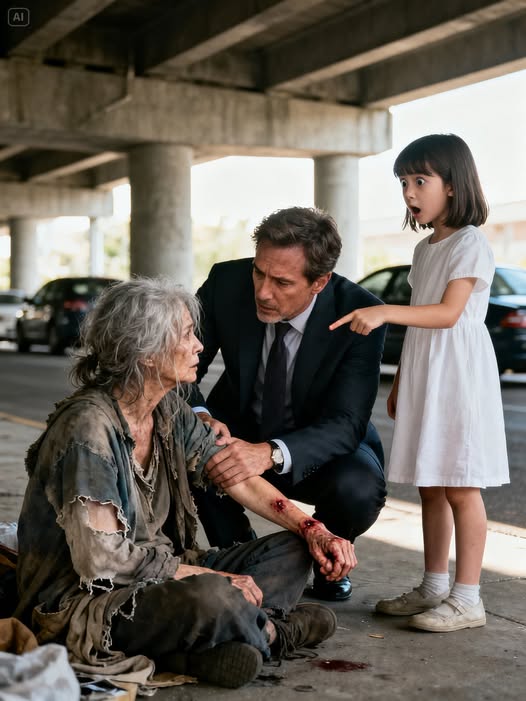
didn’t you find me later?” I asked. I hated how fast the question came out. Hated how much of the little boy was still inside it. Rose flinched. “I tried.” She pointed at the sign. “For years. Shelters. churches. records offices. Anybody who would listen. Then your name changed.
Then the trail died.”
“Changed to Miller,” I said.
She nodded once.
That stopped me cold.
I was raised by Harold and Elaine Miller, decent people in every visible way. They were old money quiet, the kind who donated libraries and sent handwritten condolences. They loved me. I won’t lie about that. But love and truth aren’t the same thing.
When I was sixteen, I found sealed papers in my father’s study. My adoption had been expedited through a private attorney with ties to Savannah. He told me it was legal. He told me my birth mother had abandoned me. He told me digging further would only hurt everyone involved.
I believed enough of that to stay still.
For a while.
Years later, after both of them died, I hired investigators. One found Rose’s maiden name. Another found an address that no longer existed. After that, nothing. It was like she had fallen through the floor of the country.
And now she was sitting under an overpass ten blocks from my office.
Brooklyn looked at the cardboard sign again. “How long have you been here?”
Rose gave a tired laugh. “Long enough to learn that rich people don’t look down.”
That one landed where it should.
I took off my jacket and draped it over her shoulders. She tried to hand it back immediately.
“No,” I said.
“I’m filthy.”
“I know.”
That made her stop resisting. Maybe because I said it plainly. Maybe because pretending otherwise would’ve felt insulting.
Marcus leaned toward me. “Car’s at the curb.”
I nodded, then looked at Rose. “I’m taking you somewhere safe. Hospital first. Then food. Then we figure out the rest.”
Her expression hardened in a way I didn’t expect. “You don’t get to rescue me because the story got sad.”
Brooklyn stared at her, startled.
But I understood.
She wasn’t refusing help. She was refusing to become a scene I could survive by financing.
“I’m not trying to erase what happened with a hotel room and a doctor,” I said. “I’m trying to not leave my mother on the sidewalk.”
That word changed her face again.
Mother.
She looked away and pressed her mouth together so tightly the skin around it went white. “I don’t know if I still get to be that.”
Brooklyn answered before I could. “You do to me.”
Rose started crying then. Not quietly. Not beautifully. The sound came out rough and shocked, like it had been trapped too long.
We got her into the car with Marcus’s help. A few people filmed. One woman actually asked me to look up at her phone. Marcus shut that down with one stare.
At the hospital, Rose kept apologizing to every nurse who touched her. For the smell of her clothes. For the state of her hands. For existing at full volume in a clean place. I watched that and felt a kind of anger that had no direction big enough.
Brooklyn stayed beside her almost the whole time.
At one point I stepped into the hall to call our family attorney, then hung up before the call connected. I didn’t want an attorney first. I wanted facts. Real ones. DNA, records, dates, signatures, court filings. I wanted everything brought into daylight and laid flat.
Marcus found me standing by a vending machine, staring at nothing.
“You okay?” he asked.
“No.”
He nodded like he respected the honest answer. “Good.”
I almost laughed.
He leaned against the wall. Marcus has driven for me nine years. Former Army. Calm voice, one silver scar under his chin, notices everything. “You always said if she was alive, you’d want to know.”
“I said that when it was hypothetical.”
“That’s when people say brave things.”
He was right.
By midnight, Rose had clean clothes, treatment for dehydration, and a room for observation. Brooklyn had fallen asleep curled in a waiting room chair with my jacket over her knees. I stood outside Rose’s room, hand on the door frame, suddenly terrified to go in.
Not because she wasn’t my mother.
Because she might be.
I went inside anyway.
She was awake, staring at the ceiling. The fluorescent lights made her look smaller, but clearer somehow. Less like a ghost. More like a person my life had failed to account for.
“There’s something else,” she said before I could sit down.
My stomach tightened. “What?”
She turned her head toward me. “The man who arranged your papers. The lawyer. He didn’t just handle the adoption.”
I felt a pulse of cold move through my arms.
“He worked for your father.”
I sat very still.
“You knew my father?”
She nodded once. “Too well.”
I waited.
Then she said the one thing I’d never allowed myself to suspect, not fully.
“Harold Miller wasn’t the man who adopted you out of kindness.”
I could hear the monitor beside her bed ticking out her heartbeat. Steady. Mine wasn’t.
“He was your real father.”
I don’t remember sitting down, but suddenly I was in the chair.
For a long time, neither of us spoke.
All those years. All those dinners across polished tables. Every lesson about discipline, reputation, legacy. Every time he told me the past was closed. It hit me in one brutal line: he hadn’t saved me. He had hidden me.
Rose watched me absorb it. “He told me you’d have a better life if I let go,” she said. “Then when I fought him, I lost everything faster.”
I pressed both hands over my face.
The room smelled like antiseptic and burnt coffee from the nurses’ station. My palms were cold. My jaw hurt from clenching it.
Then came the question I didn’t want to ask.
“Can you prove it?”
Rose closed her eyes. “There was a box. Letters. Money receipts. A photograph of him holding you when you were a baby. I kept it all.”
Hope rose too quickly.
Then she opened her eyes again and finished the sentence.
“I don’t know where it is now.”
I looked up.
“The shelter where I was staying cleared my cot two weeks ago after I missed check-in. Everything was taken to storage, donated, or thrown out. I’ve been trying to find the box ever since.”
There it was. The next cliff.
Not just whether Rose was telling the truth. Whether the proof existed. Whether the dead man who raised me had spent decades standing in the doorway between my two lives.
At 1:17 a.m., Brooklyn woke up and walked into the room rubbing one eye. She took one look at my face and knew something had changed.
“What happened?” she asked.
I stood and crossed to her, then put a hand on the back of her head the way I always do when I need to steady myself more than comfort her.
“There may be a box,” I said. “A box that explains everything.”
Brooklyn looked at Rose, then back at me. “Then we find it.”
Simple. Certain. Thirteen years old and already braver than I was at twice her age.
Marcus, still in the hallway, heard enough to step in. “Tell me where to start.”
And just like that, the three of us had a direction.
Not peace. Not closure. Direction.
By dawn, I had arranged for Rose to move into a private recovery suite for a week. She protested. I ignored most of it and negotiated the rest. Brooklyn missed school that morning, and for once I didn’t care what the attendance office thought. Marcus started calling shelters, storage contractors, and city outreach offices before the sun was fully up.
I went home to shower and found the speech from the luncheon still folded in my jacket pocket.
It was about generational responsibility.
I stood in my dressing room, reading my own polished words, and understood how easy it is to speak beautifully about people you’ve never had to kneel beside.
By noon, Marcus called with our first lead.
A volunteer at a Midtown shelter remembered Rose. More importantly, she remembered the box: blue metal corners, one broken latch, a strip of white tape across the top.
It hadn’t been thrown out.
It had been picked up.
By a man who signed the release form with a last name I knew too well.
Miller.
That afternoon, I went back to the hospital and sat beside Rose while Brooklyn read to her from a magazine she clearly wasn’t following. I kept staring at the city outside the window, wondering how many lies can survive in one family before they start breeding new ones.
Then I turned back to my mother and made the first real promise of my life.
I told her I was going to find that box, and when I did, I would find out which Miller had taken it — and why.
What I didn’t know yet was that the answer would drag another living member of my family into the open.