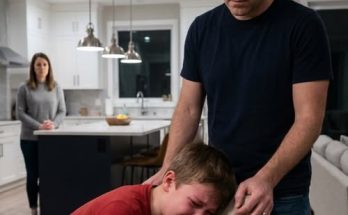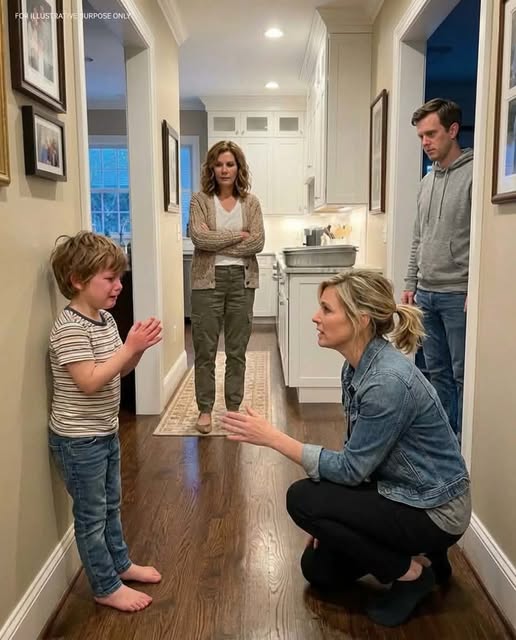
Evan came in, looked at Lily’s hands, and instead of reacting like I expected, he tried to downplay it—suggesting we shouldn’t “make it bigger than it needed to be.”
That was the moment I understood something terrifying: silence and cowardice can harm a child just as much as cruelty.
The police and paramedics arrived quickly. At the hospital, doctors confirmed the burns were consistent with forced contact against something hot. Lily repeated the same story again and again—no confusion, no changes.
That night, she cried over a dinner roll, whispering that she “didn’t mean to be bad.”
Something inside me hardened.
I told her she had done nothing wrong. That hunger isn’t a crime. That no adult has the right to turn shame into punishment.
The next day, I met with a lawyer. We filed for emergency custody and a protective order.
Evan and his mother tried to rewrite the story, claiming it was an accident. But the evidence didn’t support them. The call, the recording, the medical reports—it all told the truth.
In court, when the judge heard her calmly justify hurting a child over bread, the room fell silent.
I was granted full temporary custody immediately. Evan’s visits were restricted and supervised. His mother was banned from any contact.
Later, she was charged with child abuse. The image she had carefully built in her community collapsed quickly once the truth came out.
Neighbors stopped defending her. The church removed her. The story spread on its own.
The legal process took time, but the outcome was clear. I was given full custody. Evan was required to attend therapy and parenting programs. His regret came—but far too late to undo what had happened.
As for Lily, healing didn’t come all at once.
It came in small steps.
When she let nurses treat her hands.
When she stopped asking permission to eat.
When she laughed again during therapy.
Bread was the hardest part.
At first, it scared her. The smell, the sight—it all brought back fear. So we started slowly. We turned bread into something safe again—feeding birds, cooking together, baking at home.
Months later, when her hands had healed, we baked a loaf together. She hesitated at the oven, so I showed her how we stay safe—how heat is controlled, not used to hurt.
When it was done, she asked if she could have the first piece.
I said yes.
A year later, life felt ordinary again—and that ordinary felt like a gift.
One morning, she stood in our kitchen, sunlight on her face, tearing a piece of bread. She paused for a second, as if expecting to be stopped.
I smiled and slid the butter toward her.
“Take what you want,” I said. “It’s yours.”
She smiled, took another piece, and kept talking—no fear left in her hands.
The scars on her palms were still there, faint but real.
But they were no longer the end of her story.
Because she had learned something her grandmother never understood:
A lesson built on pain deserves consequences.
And a child deserves safety—before anything else.