At that moment everything inside me went cold and clear. I had spent years trying to earn equal love from people who had always measured me by what I could give them. They didn’t want fairness. They wanted access. The prosecutor ended the meeting and called investigators into the room immediately. My charges were suspended on the spot. Madison tried to stand, but an officer moved behind her chair. My mother began crying—not because she had betrayed me, but because the plan had failed. My father looked at me as if I had destroyed them simply by surviving. As Madison was escorted out, she turned and hissed, “You ruined everything.” I answered without shaking. “No,” I said. “I just stopped letting you ruin me.” Once the evidence was formally entered, the case against me collapsed quickly. The pills were tested, the timeline reconstructed, and the prosecutor dismissed everything before charges were even filed. I walked out of the station with Nina beside me, feeling less triumphant than hollow. Freedom didn’t look dramatic. It looked like fluorescent lights, exhaustion, and realizing the only place I wanted to be was somewhere my
parents weren’t. Over the following weeks I learned the full story. Madison’s “travel brand” was never a real business. She had been trying to impress a wealthy boyfriend who funded luxury weekends and preferred women who appeared expensive. She had maxed out credit cards,
borrowed from friends, and lied about deposits for a villa retreat in Italy she couldn’t afford. When I refused to finance it, my parents panicked. They had promised her help they couldn’t deliver. My savings became their solution. According to testimony, they convinced themselves I would
never face real prison time. They imagined a scare, maybe probation, and then I would give in just to make the problem disappear. That was the most disturbing part. They didn’t see themselves as monsters. They believed they were practical people making a difficult family decision. The
state charged Madison with possession of a controlled substance, evidence tampering, filing a false police report, attempted extortion, and conspiracy. My parents were charged with conspiracy, witness tampering, and making false statements. None of them looked powerful once they sat
under courtroom lights. Madison cried. My mother prayed in the hallway. My father avoided eye contact with everyone. Nina asked whether I wanted to speak at sentencing. I did.
When I stood in court, my voice stayed steady. I said I had spent my entire life being treated as the backup child—the reliable one, the one expected to absorb damage quietly because someone else always mattered more. I said the worst thing they had taken from me wasn’t sleep, money, or dignity.
It was my belief that home meant safety.
The courtroom stayed silent after that.
The judge sentenced Madison to four years, with eligibility for parole after two. My parents each received county jail time, probation, and financial penalties. Some people later told me the punishment seemed harsh. Those people had never sat in a holding cell because their own mother lied without hesitation.
Two months later I sold the townhouse and moved into a Craftsman house. Nina helped connect me with a financial adviser, and for the first time I structured my savings so no relative could ever reach them. I changed my locks, changed my phone number, and replaced the emergency contact on every account I had.
Boundaries, I learned, aren’t cruelty.
They’re survival—with paperwork.
Life didn’t suddenly become easy after that, but it became honest. I slept again. I returned to consulting work and reduced my client load so I could breathe. I started volunteering weekly with a legal aid group that helps women facing fraud, coercion, and financial abuse.
About seven months later, I received a letter from Madison in prison. I recognized her handwriting instantly. I left it unopened in a kitchen drawer for three days before shredding it. I didn’t owe curiosity to the person who tried to trade my freedom for a transfer form.
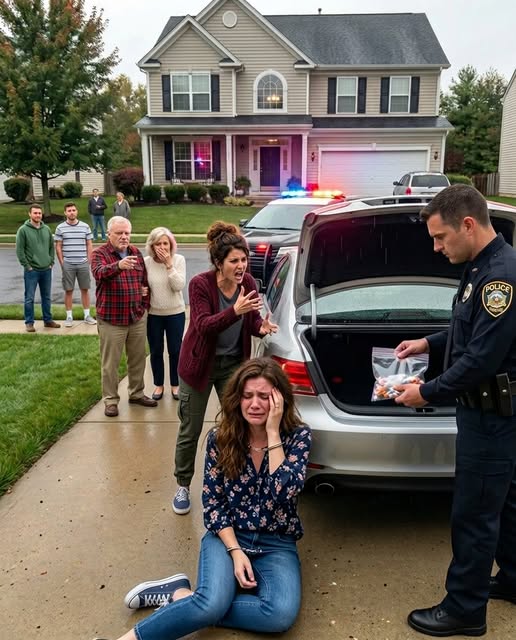
Sometimes I still think about that morning—the police lights, the trunk, and the way my father said prison like it was a negotiation tactic.
Then I look around my quiet house and remember something better.
They were willing to destroy me for access to my future.
And they still failed.
If my story moved you, share your thoughts below. And tell me honestly—would you ever forgive family after something like that?
Post Views: 390