Chapter 1: The Darkened Lighthouse: The shadows clinging to the front facade of our home were the first symptom of the rot. I cut the engine of my sedan at exactly 6:14 AM, the crisp November air seeping through the floorboards, and stared through the windshield. The porch light was dead. For three uninterrupted years, that singular yellow bulb had been my beacon. My husband, Marcus, knew the exact rhythm of my grueling night shifts. Every morning, without fail, that light burned against the pre-dawn gloom. I used to tease him, calling him my faithful lighthouse keeper, standing vigil for a battered ship. He’d laugh, kissing my forehead, handing me a steaming mug of dark roast he’d started brewing the second my tires hit the asphalt. But today, the lighthouse was dark. I sat behind the steering wheel for a long, quiet minute. My brain, sludgy and slow after a brutal twelve-hour rotation on the pediatric floor of St. Clement’s Hospital, offered a weak rationalization. The filament just burned out. It’s an old bulb. I grabbed my leather tote from the passenger seat. My arches throbbed, a familiar, dull agony from sprinting down sterile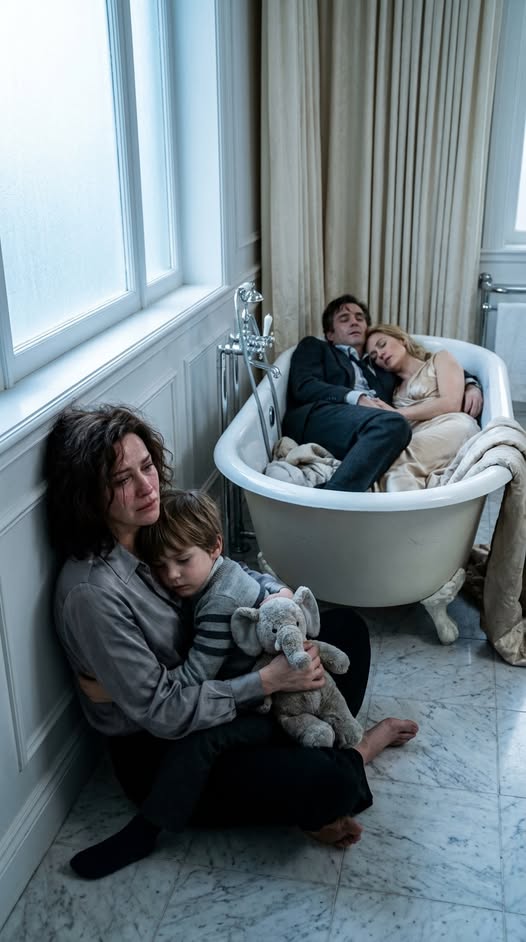
corridors all night. I was twenty-eight, a registered nurse since I was twenty-three, and I wore my exhaustion like a badge of profound honor. I worked relentlessly. I loved my family with a fierce, protective gravity. I slid my brass key into the deadbolt and pushed the heavy oak door inward.
The living room looked as though a localized hurricane had torn through it. Greasy pizza boxes slumped across the mahogany coffee table. Discarded wine glasses—not our crystal stems, the ones my mother-in-law had agonizingly selected for our registry, but cheap, flimsy plastic cups from
a corner liquor store—littered the Persian rug. A violently patterned throw blanket I had never laid eyes on was crumpled on the sofa.
And then, I saw the shoes.
They were kicked carelessly against the baseboard near the entryway. They did not belong to me, nor did they belong to Marcus. They were women’s shoes. Size seven. A distinctive, blush pink suede.
My sister wore a size seven.
I stood paralyzed on my own welcome mat. A jagged shard of ice slid down my esophagus, a freezing dread that had absolutely nothing to do with the autumn wind howling at my back.
“Marcus?” The word scraped out of my throat, barely a whisper.
Silence answered me. It wasn’t the peaceful quiet of a sleeping household; it was a heavy, guilty stillness.
My nursing instincts kicked in—the rigid, drilled protocol that takes over when a patient flatlines. Prioritize the most vulnerable. I bypassed the stairs and moved soundlessly down the hallway toward my five-year-old son’s room. Checking on Noah was always my first action, my grounding ritual. He slept clutching a battered stuffed elephant named Captain, and he invariably kicked his dinosaur quilt onto the floor by 3:00 AM. I just needed to tuck him back in, to stand in the quiet dark and listen to the reassuring rhythm of his breathing.
I pushed his door open. The bed was perfectly made. Empty.
In my profession, I have held the trembling hands of mothers in emergency trauma bays. I have modulated my voice to a calm, steady baritone in rooms slick with blood. I know the precise anatomy of panic, how to force oxygen into your lungs when your nervous system is screaming at you to run.
I pivoted on my heel and moved swiftly toward the kitchen.
Noah was asleep on the freezing ceramic tile. He was curled into a tight, trembling ball beneath the oak dining table, using his own thin windbreaker as a makeshift pillow. Captain the elephant was crushed against his chest. He was still wearing his clothes from yesterday evening—the red Tyrannosaurus shirt and the heather-gray sweatpants.
I dropped to my knees. The kitchen’s ambient temperature was freezing; the central heating hadn’t kicked on. When I pressed my palm to his cheek, his skin was terribly cold to the touch.
My hands betrayed me then, shaking violently as I scooped his fragile weight into my arms. He stirred, his dark eyelashes fluttering against his pale cheeks.
“Mommy?” he murmured, his voice a sleepy, confused thread.
“I’ve got you, baby,” I breathed, crushing him against my collarbone.
And as I lifted my head, my eyes caught a sliver of golden light spilling onto the hallway floorboards. It was leaking from the bottom edge of the guest room door at the far end of the hall.
Chapter 2: The Triage Protocol
I carried my son back to his bedroom. I tucked him deep beneath his heavy quilts, wedging Captain under his chin. I kissed his freezing forehead, whispering that Mommy was home, that everything was perfectly fine. I delivered the lie with a steady voice, a promise I had absolutely no idea how to execute.
Then, I walked back down the hallway.
I didn’t hesitate. I grasped the brass knob of the guest room and pushed.
My husband was deeply asleep in the center of the queen mattress. My sister, Diane, was asleep right beside him.
A part of me wishes I could recount how I shattered the room. How I screamed until my vocal cords bled, how I hurled the bedside lamp against the drywall, how I articulated the catastrophic betrayal detonating inside my ribcage. But the clinical truth is that I simply stood in the threshold, utterly mute, for a very long time.
I just observed them.
Here was Marcus. The man I had met over spilled beers at a crowded birthday party seven years ago. The man who wept openly at the altar, who gripped my hand so tightly in the delivery room I thought my bones would snap, declaring I was the most formidable force of nature he had ever witnessed.
And there was Diane. Three years my junior, a perpetual storm of chaos I had spent my entire existence managing. I was her shield, her excuse-maker, her financial bailout.
They were both still fully dressed in yesterday’s clothes. I noted this with the sterile, detached precision of a triage nurse assessing a multi-vehicle pileup. I cataloged the half-empty Merlot bottle on the nightstand. The two smeared glasses. The nauseating detail of Diane’s messy blonde hair fanned out across the specific memory-foam pillow I used when Marcus and I retreated to this room during the suffocating summer heatwaves.
I pulled the door shut until it clicked softly into the strike plate.
I walked into the master bathroom, lowered myself onto the cold porcelain edge of the bathtub, and dialed my attorney.
Patricia Hendricks was a shark in a tailored suit. I had retained her services eight months prior when the math in our joint accounts started developing a slow, unexplainable hemorrhage. Small bleeds at first—forty dollars here, a hundred there. Marcus always had a remarkably plausible tourniquet of an excuse, and because I was working sixty-hour weeks, drowning in exhaustion and deeply in love with him, I chose to be blind to the terminal diagnosis staring me in the face.
Patricia picked up on the second ring. I had warned her the call might come at an ungodly hour.
“I found them,” I stated, my voice devoid of inflection. “In my house. My son was abandoned, freezing on the kitchen floor.”
The line held a heavy, pregnant pause. Then, Patricia’s voice clicked into high gear, crisp and authoritative. “Do not wake them. Do not confront them. Can you extract your boy and vacate the premises immediately?”
“Yes.”
“Go to the hotel we designated. Pay with the corporate card tied to your business LLC, absolutely nothing from the joint accounts. I will have the preliminary filings ready for the judge’s desk by 9:00 AM. But I need you to execute one vital task before you leave that house.”
She gave me my marching orders.
I moved through my own home like a ghost. I grabbed my phone charger from the kitchen counter. I slipped into Noah’s room and packed a tactical duffel: warm clothes, his electric toothbrush, the illustrated space book he demanded every night. I moved with the terrifying, lethal efficiency I utilized during a Code Blue. Panic was an unaffordable luxury.
Then, I followed Patricia’s final directive.
I crept back to the guest room. I eased the door open just enough. I raised my smartphone and took the photographs. Crisp, brutally clear, time-stamped digital evidence of my sister and my husband tangled in my sheets at exactly 6:31 AM. I angled the lens to capture the wine bottle, the glasses, and those pink suede shoes peeking from the corner.
I told her those shoes were cute, my brain whispered, a sudden, sick echo. Two months ago, at Noah’s birthday party. I cut her a slice of funfetti cake, laughed at her terrible jokes, and paid for her Uber home because she was drunk. And she had been doing this.
I scooped Noah into my arms, carrying his sleeping weight out the front door and into my car. As I backed out of the driveway, I looked at the dark porch light one last time. I knew, with absolute certainty, I was never coming back to the life I had built inside those walls.
Chapter 3: The Bleeding Ledger
Noah slept through the brief drive. I navigated to the Marriott on Clement Avenue, checking in under my maiden name and my LLC, a contingency protocol Patricia and I had mapped out in her mahogany-paneled office months ago.
We entered the sterile suite. I laid my son on the crisp white sheets, pulling the heavy blackout curtains tight against the rising sun. I sat on the edge of the mattress, my posture rigid, waiting for the phone to vibrate.
When Patricia called back, she delivered the autopsy report of my marriage.
“The bleeds aren’t minor anymore,” she said, her voice dropping an octave. “My forensic accountant spent the night digging through the secondary ledgers. Over the past fourteen months, Marcus has siphoned exactly sixty-three thousand dollars out of your shared assets.”
I stopped breathing. “Sixty-three?”
“He was methodical,” Patricia continued relentlessly. “Moving amounts just beneath the threshold of banking fraud alerts. A portion of it fed a secret credit line in his name. A larger chunk disappeared into untraceable cash ATM withdrawals. But the worst of it… seventeen thousand dollars was wired from Noah’s 529 education fund.”
I gripped the bedsheet, my knuckles turning white. “Where did the education money go, Patricia?”
“It secured the down payment and first six months’ rent on a luxury lease. The Birchwood Apartments. The leaseholder is your sister, Diane.”
I sat with that radioactive truth burning a hole through my chest.
I had spent my entire life playing the surrogate mother to Diane. Our biological mother was fundamentally broken—incapable in ways that confused me as a child and horrified me as a clinical professional. From the age of nine, I was the one ensuring Diane ate something other than cereal, brushing the tangles from her hair, and shielding her from our mother’s erratic storms.
When I earned my nursing degree and started generating real income, I became her personal ATM. I paid her exorbitant phone bills when she fake-cried about being disconnected. I fronted the deposit for her last apartment because she looked at me with those wide, desperate eyes that instantly transported me back to childhood, making me feel solely responsible for her survival.
And now, she was sleeping in my bed, subsidized by the money I had bled for to send my son to college.
Noah woke up at 8:00 AM, rubbing his eyes, instantly demanding to know where Daddy was.
“Daddy had to stay at the house,” I told him, forcing a bright, synthetic smile. “We are on a top-secret adventure mission today. Just you and me.”
We ordered a mountain of room service pancakes. To a five-year-old, eating breakfast in bed was a miracle. He bounced on the mattress, drowning his food in artificial maple syrup, excitedly demonstrating how Captain the elephant could execute a backflip off the pillows.
I watched him chew, his face sticky and radiant with pure joy. Deep within my core, the chaotic storm of grief and betrayal suddenly evaporated. It was replaced by a terrifying, crystalline clarity. The triage phase was over. It was time for surgery.
At 9:07 AM, Patricia filed the divorce petition.
At 9:45 AM, my screen flashed with Marcus’s caller ID. I let it ring into the void.
At 9:52 AM, Diane’s name illuminated the glass. I silenced the device.
At 10:30 AM, I initiated the hardest call. I dialed my mother. Our relationship was a minefield of unspoken resentments, but she had the right to hear the detonation from me before Diane spun her web of lies.
I delivered the facts clinically. The affair. The stolen funds. The apartment.
My mother absorbed the shockwave in silence. When she finally spoke, her voice was painfully evasive. “Well… Diane did mention things were rocky between you two. She said you and Marcus were basically living separate lives.”
The temperature in the hotel room seemed to plummet. “Mom. How long have you known they were sleeping together?”
The resulting silence was a confession. “It wasn’t my place to interfere,” she mumbled weakly. “I thought… I hoped it was just a passing phase.”
“Goodbye, Mom,” I said.
I ended the call. I opened my digital notepad and meticulously documented the time, date, and exact phrasing of her admission. I would not speak to the woman who birthed me for another three months.