The directors stared in absolute, paralyzing shock. Preston realized it was over. The walls were collapsing. He lunged across the table toward the central console, desperately trying to smash the remote. A uniformed officer intercepted him mid-air, tackling Preston violently onto the mahogany table. Coffee cups shattered. Papers flew like confetti. I stood up slowly, buttoning my cheap suit coat, looking down at the architects of my wife’s murder. “You forged the FDA trial data,” I said, ensuring every investor in the room heard the lethal truth. “You poisoned innocent patients for profit. Chloe found out. So you poisoned your own daughter to protect your stock options.” Eleanor Vanguard marched forward, her face twisted in an ugly, feral rage. She raised her hand and slapped me across the face with all her remaining strength. The sharp crack echoed like a gunshot across the paralyzed room. I did not move. I did not blink. I just stared at her, absorbing the physical blow as validation of her total defeat. Detective Reynolds stepped forward, pulling a pair of heavy steel handcuffs from her belt. “Eleanor Vanguard, Preston Vanguard, you are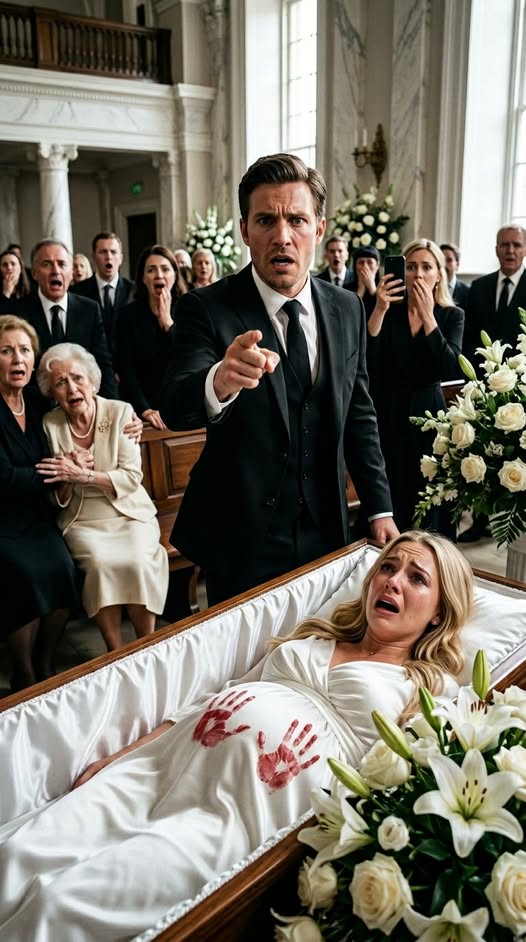
both under arrest for attempted murder in the first degree, criminal conspiracy, securities fraud, evidence tampering, and federal obstruction of justice.” Preston fought like a cornered animal, screaming obscenities as the officers dragged him off the table and cuffed him. Eleanor did not fight. The aristocratic pride wouldn’t allow it. She simply stood perfectly still as the cold steel closed around her wrists. As they turned her to lead her out, she looked back at me. Her eyes were black, bottomless pits of hatred. “You think you’ve won, you insignificant little man?” she
whispered, a venomous curse meant to haunt me. “You think taking my company brings her back?”
I leaned in close, so only she could hear my final verdict.
“No, Eleanor,” I replied, my voice perfectly steady. “Chloe lived. That was the victory. This? This is just me taking out the trash.”
As the police dragged them out, the boardroom descended into absolute chaos. The merger was dead. The investors were screaming into their phones. The empire was burning to the ground.
I turned away from the screen, victorious, when my cell phone vibrated violently in my pocket.
It was the private line to the ICU.
I answered it. “Hayes.”
“Mr. Hayes,” the panicked voice of a triage nurse crackled through the speaker. “It’s your wife. Her heart rate just spiked, and she’s seizing. The experimental compound… it’s causing a secondary crash. You need to get to the hospital. Right now.”
The phone slipped from my hand, clattering against the polished floor.
The real battle hadn’t even begun.
The fallout from the boardroom coup was immediate, merciless, and brutally public.
By noon, the multi-billion dollar merger had completely collapsed, sending Vanguard Pharmaceuticals’ stock plummeting into the abyss. By evening, federal agents from the FBI and the SEC were executing raid warrants, seizing company servers, and freezing every offshore account tied to the Vanguard name. Dr. Aris, terrified of spending the rest of his life in federal prison, officially flipped, trading his devastating medical testimony for a reduced sentence. Eleanor’s towering, intimidating oil portrait was unceremoniously removed from the corporate lobby before the sun even set.
But I didn’t care about the stock market. I didn’t care about the news cycles flashing Eleanor’s mugshot across every channel.
I spent the next forty-eight hours sitting in the harsh, sterile glow of the ICU, holding Chloe’s hand, praying to a God I hadn’t spoken to in years. The secondary crash had been brutal, a final, violent echo of the poison fighting to finish its dark work. The doctors had performed an emergency cesarean section to save the baby while working frantically to stabilize Chloe’s failing heart.
For three days, the silence in that room was the heaviest thing I had ever carried.
Then, on the fourth morning, just as the golden sunrise pierced the hospital blinds, the rhythmic, mechanical breathing of the ventilator hitched.
Chloe’s fingers twitched against my palm.
I shot up from my chair, my heart hammering against my ribs. “Chloe? Sweetheart, can you hear me?”
Her eyelids fluttered, fighting against the heavy sedation. Slowly, agonizingly, she opened her eyes. They were unfocused, glassy, but the vibrant, fierce light of her soul was undeniably back.
She couldn’t speak at first. Her throat was raw from the tubes. She just looked at me, a silent, desperate question in her eyes.
I knew exactly what she was asking.
I signaled the nurse, and a few moments later, they wheeled a small, clear plastic bassinet into the room. I gently lifted a tiny, warm bundle wrapped in a pink blanket and placed her carefully against Chloe’s chest.
Chloe let out a sound that was half-sob, half-laugh. She buried her face into the soft, downy hair of our daughter. She wept, entirely unbothered by the machines or the tubes, holding the life that her mother had tried to extinguish.
We named her Hope. Because she was the only thing that survived the ashes of the Vanguard empire.
One year later.
I stood on the lush, green lawn of the sprawling, modern garden house I had designed and built for my family, hundreds of miles away from the towering, toxic shadow of Vanguard Tower. The air smelled of blooming jasmine and fresh rain, a stark contrast to the lilies and embalming fluid of that terrible day.
Chloe walked slowly beside me. She was still healing, still undergoing physical therapy to combat the lingering neurological effects of the compound, but she was fiercely alive. Her laughter was returning, brighter and stronger than before.
Hope, now a thriving, energetic one-year-old, was fast asleep against my shoulder, her tiny hands clutching the fabric of my shirt. She was warm, heavy, and absolutely perfect.
Through the massive glass windows of our living room, the muted television played the evening news. The anchor was reporting on the conclusion of the trial of the decade.
Eleanor Vanguard had just been sentenced to thirty-two years in federal prison without the possibility of parole. Preston had received twenty-six years. They would both die in cages, stripped of their wealth, their power, and their name.
Chloe stopped walking. She looked through the glass at the television screen. She raised a remote and clicked the power button. The screen went black, silencing the ghosts of her past forever.
She turned to me, the evening breeze catching her hair.
“Are you okay, Liam?” she asked, her voice soft, laced with the deep, unspoken understanding of what we had survived.
I looked at my brilliant wife. I looked at the daughter sleeping safely against my chest. I looked at the sunlight catching the dew on the grass of the home I had built with my own two hands.
For so long, the world, and especially her family, had mistaken my quietness for weakness. They believed that because I didn’t shout, I couldn’t fight. They believed that because I lowered my eyes, I couldn’t see them coming.
But quiet men hear absolutely everything. We see the flaws in the foundation. And we know exactly where to strike to bring the whole structure crashing down.
I leaned down and kissed Chloe softly on the forehead, pulling her close into the circle of my arm.
“I am now,” I said, and I meant it with every fiber of my being.
And for the first time since I stood over that glass casket in the funeral home, the silence didn’t feel heavy, or oppressive, or dangerous.
The silence, finally, felt incredibly peaceful.
If you want more stories like this, or if you’d like to share your thoughts about what you would have done in my situation, I’d love to hear from you. Your perspective helps these stories reach more people, so don’t be shy about commenting or sharing.