I woke up to the sound of my mother planning my autopsy. Not metaphorically. Not cruelly, in a moment of heated anger. Calmly, the way she used to plan seating charts for her charity galas. “Pull the ventilator,” she told the doctor, her voice smooth and polished. “Take the liver. Save our son. Do it now.” My body felt like lead under the crisp white hospital sheets. A tube rested uncomfortably near my throat, though I wasn’t relying on the machine to breathe. Monitors beeped around me in a steady, rhythmic cadence. My father stood beside her. I didn’t need to open my eyes to know his jaw was tight and his bespoke suit was perfectly pressed. “Clara won’t object,” he said. “She’s always been… unstable. A tragic soul. But she would want to do this. It’s her redemption.” Then, my mother leaned closer to the doctor, her voice dropping to a conspiratorial whisper. “Let’s be honest, Doctor. She’s just a burden. An addict who finally took one pill too many.” The words entered me cleaner than any scalpel. I kept my eyes closed. To the world, the Sterling family was a dynasty. My parents, Richard and Evelyn Sterling, controlled the largest real estate and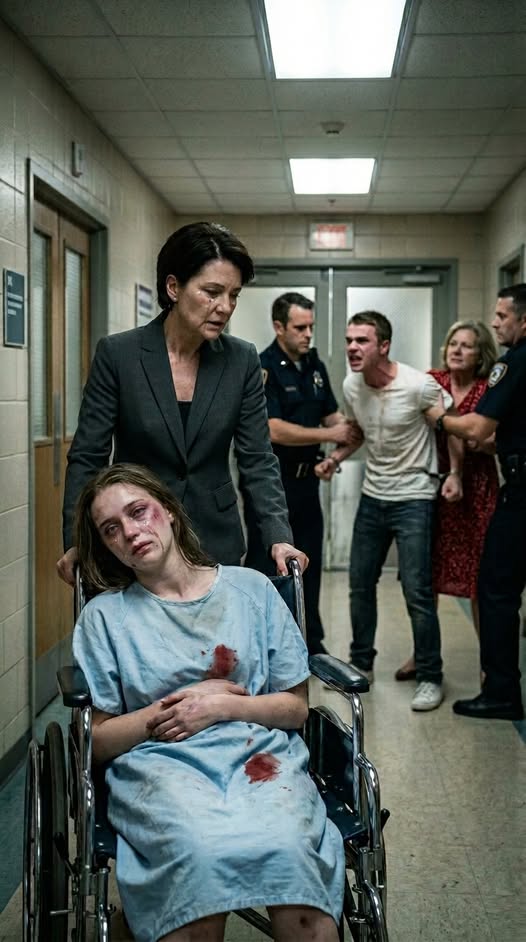
media conglomerate on the East Coast. My brother, Julian, was the golden boy—handsome, charismatic, and currently being groomed for a prominent Senate run. And I, Clara Sterling, was the designated disaster. The media—our media—painted me as the erratic, reclusive daughter. A psychological mess. An addict. It was a narrative my parents had carefully crafted for years to discredit me, keeping me out of the public eye while Julian shone.
The doctor, a weary-sounding man named Dr. Aris, hesitated. “Mr. and Mrs. Sterling, your daughter’s toxicology reports are… complex. But more importantly, consent laws are strict. We cannot terminate life support and harvest organs just because you request it. She has brain activity.”
“My son’s liver is failing!” my mother snapped, the veneer cracking. “Julian is the future of this family. Clara is nothing. She lives alone, contributes nothing to society, and has embarrassed us for the last time. We are done waiting.”
I almost laughed, but I kept my breathing slow and even.
They still thought I was the broken daughter. They had no idea that the “charity job” I supposedly worked was actually the operational front for the Sterling Media Trust. They had no idea that when my grandfather passed away, he didn’t leave the controlling shares to my father or Julian. He left them to me, because I was the only one who actually read the financial contracts.
And they definitely had no idea that this hospital—the very VIP wing they were standing in—was entirely funded by a shell corporation that I owned.
My parents had zero legal control over my body, my money, or my life.
But I stayed perfectly, terrifyingly still. Because betrayal only becomes irrefutable evidence when people believe you are too weak to hear it.
“Prepare the paperwork,” my father demanded. “We are her next of kin. We will sign whatever you need to expedite the transplant.”
“You can’t sign for her,” Dr. Aris insisted.
My mother laughed softly, a chilling sound. “Doctor, everyone signs for Clara. She has never made one useful decision in her entire life.”
The door of the ICU room clicked open.
The sound of heels against the linoleum floor was measured, sharp, and familiar.
“Actually,” said Sloane Pierce, my lead attorney, “she has made several excellent ones.”
Silence dropped into the room like an anvil.
My mother inhaled sharply. “Who the hell are you?”
“I am the woman your daughter trusts more than you,” Sloane replied coolly.
That was my cue.
My eyelids fluttered, then opened completely. The harsh fluorescent lights blurred for a second before sharpening around their faces. My mother’s mouth fell open. My father went the color of wet ash.
I reached up, pulled the superficial oxygen cannula from my nose, and looked straight at them.
“Leave my room,” I whispered.
For the first time in my twenty-eight years of life, they obeyed. They backed out of the door, completely speechless.
As soon as the door clicked shut, Sloane moved to the side of my bed. “Security is stationed in the hallway. Your medical directives are airtight. No one touches you.”
“Julian?” I asked, my voice slightly raspy.
“Down the hall. His liver failure is acute, but he’s stable for now. They exaggerated the urgency to get you carved up faster.”
Of course they had.
For six months, I had noticed the subtle changes in my routine. A strange, bitter aftertaste in my morning tea. Bouts of severe lethargy. Dizziness. My parents had been visiting my apartment frequently under the guise of “reconnecting.”
I wasn’t an addict. They were slowly poisoning me with a cocktail of heavy psychotropics and untraceable toxins. They wanted to induce a deep, irreversible coma, frame it as a tragic suicide overdose to the press, and use my liver to save Julian, whose own liver had been destroyed by years of secret, relentless substance abuse. A scandal like Julian’s addiction would ruin his political career; but a tragic sister making a “noble final sacrifice”? That was prime-time PR gold.
Once I figured out what they were doing, I didn’t confront them. I swapped the tainted tea for my own. I bought empty gelatin capsules and filled them with vitamins, leaving them where my mother could “discover” my supposed stash. I played the part of the fading, depressed daughter to perfection.
Sloane picked up my right hand. Resting on my index finger was a sleek, matte-black smart ring. It looked like a standard biometric fitness tracker.
“The ring worked perfectly,” Sloane said, tapping her tablet.
The ring was a custom-built, continuous audio recorder synced directly to a secure cloud server. It had captured everything. Every time my mother handed me a poisoned cup. Every hushed conversation they had in my living room when they thought I was passed out.
It had captured my mother saying: “Increase the dosage. Julian is running out of time. She won’t be missed.”
It had captured my father replying: “Make sure the suicide note is typed. Her handwriting is too erratic.”
I closed my eyes, letting a cold, absolute focus wash over me.
Two hours later, the heavy door of my ICU room swung open.
It wasn’t my parents this time. It was Julian.
He was in a wheelchair, pushed by a young, nervous-looking nurse. Sloane gave the nurse a curt nod, silently dismissing her, and the girl practically ran out of the room.
Julian wheeled himself to the edge of my bed. The sight of him was jarring. The media always portrayed Julian Sterling as the picture of robust, American political royalty. But up close, the reality of his hidden life was impossible to ignore. His skin was tinged with the sickly, sallow yellow of acute jaundice. His hands, gripping the armrests of the wheelchair, carried a faint, uncontrollable tremor. Yet, despite his failing body, he still wore a five-thousand-dollar Patek Philippe watch on his wrist and that same arrogant, untouchable smirk on his face.
He looked at me, letting out a long, theatrical sigh.
“Clara,” he said, shaking his head as if dealing with a stubborn toddler. “I heard you woke up and kicked Mom and Dad out. Please, don’t be dramatic. It’s just a piece of liver. It regenerates. You owe me this.”
I stared at him. The sheer audacity of his entitlement hung in the sterile air between us.
“You knew,” I said. My voice was raspy from the tube that had been in my throat, but it was perfectly steady.
His smile twitched, just a fraction. “I knew Mom and Dad were taking care of the problem. They were handling the logistics. You know how they are.”
“I’m not talking about logistics, Julian,” I said, leaning back against my pillows, watching him the way a scientist observes a rat in a maze. “I’m talking about the lorazepam. The heavy metals. The cocktail of untraceable psychotropics they were slipping into my chamomile tea every morning for the last six months.”
Julian broke eye contact for a microsecond—a classic tell. Then he forced a harsh, breathy laugh.
“Poisoning? Really, Clara? Listen to yourself. You sound insane,” he scoffed, waving a trembling hand. “You’re an addict. You did this to yourself. You couldn’t handle the pressure of our name, you went off the deep end, and you overdosed. Now be a good sister, stop playing the victim, and sign the consent forms before I actually die.”
“You think I’m an addict?” I asked softly.
“Everyone knows you are,” he spat, leaning forward, the ugly desperation bleeding through his polished facade. “Mom and Dad have the empty pill capsules they found in your nightstand. They have the medical records of your ‘decline.’ If you try to tell anyone you were poisoned, they’ll lock you in a psychiatric ward. Now sign the damn paper!”
I didn’t flinch. Instead, I let a slow, cold smile spread across my face.
“Did you honestly believe,” I whispered, “that I wouldn’t notice the bitter, chalky aftertaste in my tea? Did you think I wouldn’t recognize the sudden vertigo? I am the one who manages the pharmaceutical investments for the Sterling Trust, Julian. I know what chemical manipulation feels like.”
Julian’s smirk finally faltered. His hands gripped the wheelchair tighter.
“When I realized what Mom and Dad were doing,” I continued, my voice echoing clinically in the quiet room, “I didn’t confront them. I bought my own empty gelatin capsules online. I filled them with B-vitamins and magnesium, and I left them exactly where Mom could find them so she could build her little narrative of my ‘addiction.’ I poured their tainted tea down the drain. I faked the lethargy. I faked the dizziness. I let you all believe I was dying, just so I could watch you plan my funeral.”
Julian’s face went the color of wet ash. The yellow in his eyes seemed to bulge. “You’re lying.”
“I watched you, Julian,” I said, my voice dropping to a glacial chill. “I watched you sit in my living room, picking out the silk tie you were going to wear to your Senate inauguration, while Mom measured out what was supposed to be my lethal dose in the kitchen.”
“You… you have no proof!” Julian stammered, his chest heaving as his sick liver struggled to keep up with his panic. “It’s your word against the Sterling family! You’re nothing without us!”
Sloane, who had been standing silently in the shadows near the window, finally stepped into the light. The sharp click of her heels made Julian jump.
“That’s incredibly unfortunate for you, Julian,” Sloane said, adjusting her glasses. She tapped the screen of her tablet, bringing up an audio waveform. “Because Clara’s smart-ring recorded every single conversation in that apartment for six months. And a federal prosecutor takes those recordings very, very seriously.”
Julian stared at the tablet, his mouth opening and closing like a suffocating fish. The reality of his situation was finally crashing down on him. There was no PR team to spin this. There was no check large enough to buy his way out.
He looked back at me, his arrogance entirely shattered, replaced by a pathetic, weeping terror.
“Clara, please,” he begged, his voice cracking. Tears spilled over his jaundiced cheeks. “I’m your brother. I am going to die without that transplant. Please, don’t let me die.”
I sat up slightly. The hospital gown slipped off one shoulder, revealing the pale, unmarked skin where they had planned to cut me open.
“You think you’re the golden boy,” I whispered, looking down at him. “You think you are the tragic victim of a cruel illness, entitled to my body to fix your mistakes.”
“I’m sick, Clara!” he sobbed.