I took a deep breath, clutching my scarred abdomen, feeling the throb of healing tissue. This was a confrontation I could not avoid, a final boundary I had to establish. “No,” I said, my voice steady, my resolve firm. “Let her in. It’s time to end this.” Eleanor marched into my apartment as if she owned the air inside it, her presence domineering and suffocating. She didn’t look at Riley, dismissing her as a minor obstacle. She looked at me, her eyes sweeping over my pale face and the thick blanket draped over my legs, her expression devoid of any genuine maternal concern. “Harper,” my mother said, her tone dripping with rehearsed disappointment, a manipulative tactic she had honed over decades. “You look terrible.” “I had an organ repaired, Mom,” I replied flatly, refusing to engage with her melodramatics. She sat on my sofa uninvited, crossing her legs, a picture of haughty indignation. “Your sister is completely devastated. She’s been crying for two days.” “Because her sister almost died?” I asked, my voice laced with a bitter irony. Eleanor’s jaw tightened, her true priorities revealing themselves. “Because you canceled the cashier’s checks. The venue is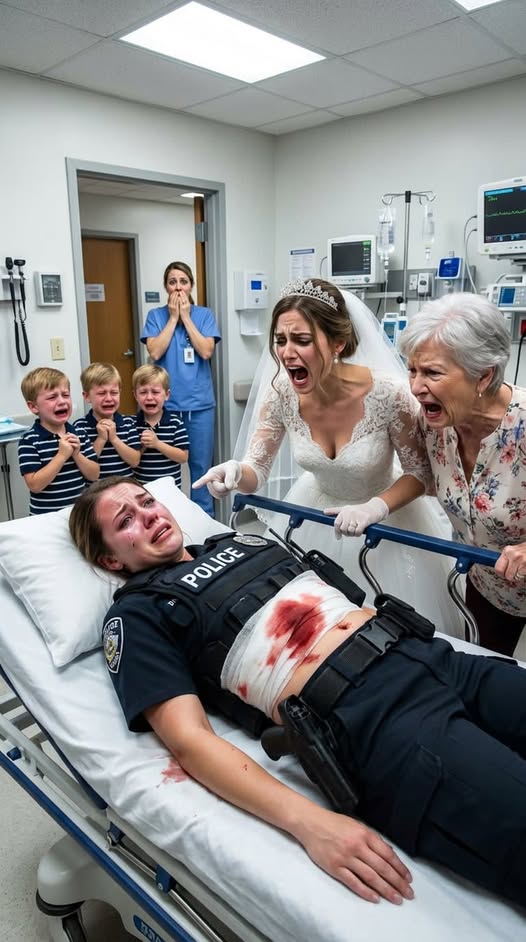
threatening to pull our reservation. You are creating a massive family division right before the most important day of Chloe’s life.” I looked at her, and the last, desperate, childlike hope inside me—the fragile hope that she might finally act like a mother, that she might finally see me, acknowledge my worth, prioritize my life over a party—withered and died, a final, necessary death. “I canceled the checks to pay the surgeon who saved my life, Eleanor,” I said, the words ringing with a finality that brooked no argument. She flinched at the use of her first name, a subtle shift
in the power dynamic that she clearly detested. “Harper, do not be cruel. I know emotions were high in the ER—” “You told a trauma doctor that Chloe needed my money more than I needed a CT scan,” I stated, my voice echoing coldly in the small living room, the words a stark condemnation of her actions.
“I was panicking!” she defended, her voice rising, a frantic attempt to justify the unjustifiable.
“No. You were prioritizing,” I corrected her, my tone unwavering. “I worked double shifts for almost a year. I sold my motorcycle. I saved twenty-three thousand dollars because some pathetic part of my brain believed that if I bought Chloe’s dream wedding, you two would finally love me. But in that ER, you proved exactly what my life is worth to you.”
The room went deathly silent, the weight of the truth hanging heavy in the air.
Eleanor stood up, her face flushing dark red, the mask of the refined matriarch crumbling to reveal the petty, vindictive woman beneath. “You have always been jealous of her. You make everything difficult. We are your family!”
“Not anymore,” I said, pointing a trembling finger at the front door, a decisive gesture that finalized the severance. “Get out. And don’t ever come back.”
She stared at me, realizing with a growing sense of panic that I wasn’t backing down, that the old Harper, the compliant, self-sacrificing Harper, was gone. She grabbed her designer bag, her movements sharp and jerky. “You will deeply regret this, Harper.”
“Maybe,” I said, looking her dead in the eye, my gaze steady and unflinching. “But I’d regret it more if I let you keep treating me like a walking ATM.”
Riley opened the door, a silent sentinel enforcing my boundaries. Eleanor walked out, her heels clicking furiously down the hallway, the sound fading into the distance, a final, satisfying retreat.
When the door clicked shut, the silence in the apartment was deafening, a profound, expansive silence that held the promise of a new beginning. I didn’t cry. I didn’t feel the familiar pangs of guilt or obligation. I just felt incredibly, wonderfully light, as if a massive, suffocating weight had been lifted from my shoulders.
Saturday arrived. The day of the royal wedding. The culmination of a year of stress, planning, and misplaced priorities.
The weather in Columbus was completely perfect—70 degrees and sunny, a beautiful day that stood in stark contrast to the ugliness that had unfolded over the past week. I sat on my couch in loose sweatpants, eating a bowl of Riley’s soup, feeling the dull ache of my healing incision, a physical reminder of the trauma I had survived and the boundaries I had finally established.
There was a time when missing a family event, especially one of this magnitude, would have destroyed me with guilt, a gnawing sense of failure and inadequacy. But today, my absence felt like absolute justice, a necessary assertion of my self-worth.
At 2:00 PM, my phone buzzed on the coffee table. It was a text from Liam.
LIAM: I thought you should know. I canceled the wedding.
I set my spoon down, staring at the glowing screen, the words slowly sinking in.
A second text popped up.
LIAM: What Chloe did in the hospital wasn’t wedding stress. It was a revelation of her character. I refuse to marry someone who would watch her own sister die over a catering bill. I hope you heal well, Harper.
I didn’t feel gleeful. I didn’t laugh. I didn’t feel a sense of vindictive triumph. I just felt a profound, quiet sadness. Sadness for the man who had to learn the truth about his fiancé through such cruelty, a painful revelation that shattered his illusions. And sadness for the family I had spent my whole life trying to fix, a family that was fundamentally broken, beyond my capacity to repair.
Thirty minutes later, my phone began ringing frantically. It was an unknown number, but I knew exactly who it was. The frantic, persistent ringing was a testament to the chaos unfolding in the wake of Liam’s decision. I let it go to voicemail, refusing to be drawn back into their toxicity.
When I listened to it later, Chloe’s voice was hysterical, a raw, unfiltered scream of rage and despair. She screamed that I had ruined her life, that Liam had walked out, that the embarrassment was entirely my fault, a frantic attempt to assign blame and evade accountability.
I deleted the voicemail and permanently blocked the number, severing the final tie, closing the door on a chapter of my life that I would never revisit.
Six months later.
My scar had faded from a violent, angry red to a pale, silver line cutting across my stomach, a permanent mark, a daily reminder of the day I stopped dying and finally started living. It was a testament to my resilience, a physical manifestation of the boundaries I had drawn and the life I had reclaimed.
I had moved into a brighter apartment on the other side of the city, a fresh start, a clean slate. I was back to working logistics contracts, my bank account was recovering, the funds I had saved for a wedding now investing in my future. And my medical proxies were legally updated so Eleanor could never, ever make a decision for me again, ensuring that my autonomy was protected, my choices respected.
I was standing in my new bedroom, getting ready to go out, the evening sun casting long, golden shadows across the room. My phone buzzed on the nightstand.
RILEY: Dinner at my place tonight. Bring that cornbread you make. And don’t be late.
I smiled, a genuine, unburdened smile. I walked over to my closet and pulled out the olive-green tactical jacket, the garment that had been a silent witness to the most pivotal moment of my life.
I had almost thrown it in the trash after the hospital. It felt too heavy, too soaked in the trauma of that day, a painful reminder of the near-fatal consequences of my misplaced loyalty. But holding it now, feeling the familiar, durable fabric, I realized the jacket wasn’t the problem. The jacket had held the truth, the tangible evidence that had finally shattered the illusions and forced a reckoning.
I unzipped the hidden pockets. They were completely empty, the secrets they once held now exposed, the burdens they once carried now lifted.
I slipped my arms into the sleeves. It fit perfectly, a comfortable, familiar embrace. I grabbed my keys, locked my apartment door, and walked out into the cool evening air, the city lights twinkling in the twilight.
I didn’t wear the jacket as armor anymore. I didn’t need armor. The walls I had built, the defenses I had erected, were no longer necessary.
Now, it was just a jacket. And I was just a woman who had survived the fire, spoken the truth, and finally walked away, stepping into a future defined by my own choices, my own worth, and my own enduring strength.
If you want more stories like this, or if you’d like to share your thoughts about what you would have done in my situation, I’d love to hear from you. Your perspective helps these stories reach more people, so don’t be shy about commenting or sharing.