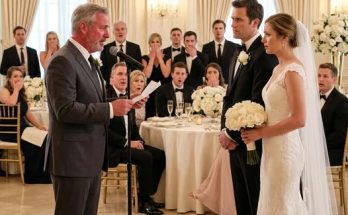
I went back to my base and tried to focus on my duties. A few months later, I was invited to a formal veterans recognition ceremony in a large hall filled with officers and flags. I wore my dress uniform and polished my boots until they reflected the dim light. I had the ring on my finger as I talked to a lieutenant colonel about base housing repairs. “Where did you get that ring, Sergeant?” a voice asked from behind me. I turned to see a general with four stars on his shoulders standing there with a shocked expression. “It belonged to my grandfather, Abner Pickett,” I answered. The general, whose name tag read Riggs, looked like the color had drained completely from his face. “We need to talk in private right now,” General Riggs said. He led me into a small side room and shut the door behind us. “Did your grandfather ever tell you why he refused the Medal of Honor?” he asked. I felt the world lurch under my feet and I had to sit down in a folding chair. “My grandfather never mentioned any medal to me or anyone else,” I said breathlessly. General Riggs sat down across from me and his eyes were suddenly wet with tears. “My name is Orson Riggs,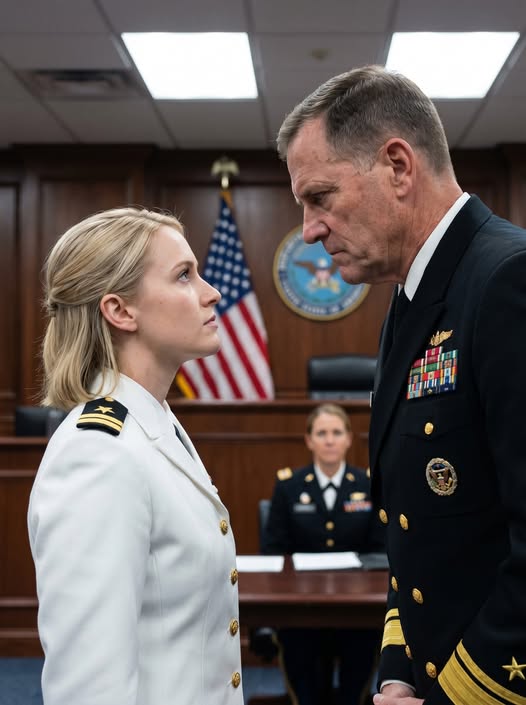
and your grandfather saved my life in the jungle forty years ago,” he explained. He told me about a mission that official paperwork had preferred to keep secret for a long time. There had been bad intelligence and a compromised extraction plan. My grandfather had gone back into the line of fire three times to rescue his team and the local scouts. “He got hit while doing it, but he refused to leave anyone behind,” Riggs said. The government wanted to give him the medal, but they wanted to change the story first. “They wanted a clean citation that left out the scouts and the
mistakes made by command,” the general continued. They were willing to honor him only if he was willing to accept a lie. “He told them he would not stand under lights for a medal built on missing names,” Riggs whispered. My grandfather had told them that if the country needed a hero
more than the truth, it could look elsewhere.
“I saw that ring and I knew it had to be his,” Riggs said as he looked at my hand. He told me that letters had been sent to my grandfather’s next of kin recently because the files were declassified.
I felt sick as I realized my parents must have seen those letters. “There is more information at the archives if you want to see it,” Riggs offered.
Two days later, I was at a facility outside the city. An archivist wheeled out a metal footlocker with my grandfather’s name stenciled on the side.
Inside were grainy photographs of young men in mud streaked uniforms. There were maps marked in pencil and a field notebook wrapped in waxed cloth.
General Riggs opened another handkerchief bundle that was inside the locker. It contained six silver rings that matched the one I was wearing.
“The team had these made after the war, one for each man who made it home,” Riggs explained. On the inside of each ring was a name like Cooper, Diaz, or Sutton.
“The blackened point on the compass meant that north no longer guaranteed a home,” he said softly. I picked up the field notebook and saw my grandfather’s tight handwriting.
“Do not let them vanish because someone needs clean paperwork,” one entry read. I sat there staring at the words until they blurred together.
The documents showed that my grandfather had spent forty years refusing to let his story be polished. He had never been two different men; he was just a man the world was not patient enough to see.
I called my mother that evening. “I know who Grandpa really was, and I know about the letters from the military,” I told her firmly.
“We didn’t know what those were, Cassidy,” she lied immediately. She tried to claim they hadn’t opened them, but her voice was full of a guilt she could not hide.
“You turned his moral refusal into simple shyness because it was easier for you to live with,” I said. My father took the phone and asked what I wanted from them now.
“I want the truth,” I replied, “and I don’t need your help to find it anymore.” The military began the process of officially correcting the record of that mission.
It was a long process involving boards and legal reviews. My mother was the legal next of kin, so she had to sign papers to delegate the authority to me.
She only did it because the local newspapers started calling for comments. “You got what you wanted,” she snapped at me after she signed the documents.
“No, Mother, Grandpa finally got what he deserved,” I told her before hanging up. The review took nine months of interviews and re examining old maps.
I discovered that my grandfather had sent money to the families of the fallen scouts for years. He had chosen that quiet town to become ordinary on purpose because he did not want to be a monument.
The ceremony to correct the record was held the following spring at a military museum. It was not for the Medal of Honor, but for a Navy Cross under a citation that finally told the whole truth.
My parents showed up in their best clothes to perform for the cameras. My mother cried into a silk handkerchief, and my father tried to act like he had always been proud.
General Riggs stood at the podium and told the real story of the ridge and the men who were saved. “He refused a version of honor that required a lie,” the general told the crowd.
“His granddaughter is the reason this correction became possible,” he added while looking directly at me. I stood up as the citation was read, and I did not look at my parents once.
When Riggs handed me the presentation case, he whispered that my grandfather would have been proud. I felt a sense of presence in the room that was stronger than any ghost.
Outside on the terrace, my father approached me with a look I had never seen before. “I really didn’t know it mattered that much,” he admitted quietly.
“It mattered,” I said, looking at him as an equal for the first time. He nodded and walked away, looking smaller than I had ever remembered him.
My mother never apologized for the hospital, but she apologized for how complicated things became. I stopped waiting for more because waiting for an apology from her was a waste of time.
Shane visited me a few months later and sat at my kitchen table. “I realized I was just borrowing Mom and Dad’s laziness and calling it my own opinion,” he confessed.
The last piece of my grandfather arrived in a box found in the crawl space of his old house. It contained spare buttons, an old pocketknife, and one final envelope.
“For my granddaughter, if she ever asks the right question,” the front of the envelope said. Inside was a letter that told me he was proud of me for learning to ask why before learning to obey.
“I did what I could, then I came home and tried to be decent,” the letter concluded. He had seen the shape of me before I even knew who I was.
I still wear the silver ring every day. Some people notice it, but most do not, and that feels right.
He was the quietest man I ever knew, but he was also the bravest. He taught me that silence is not surrender if you know who you are inside of it.
I miss the ordinary version of him the most. I miss the sound of his screen door and the smell of his strong coffee.
I miss the man who dried his hands on a perfectly folded towel. I keep his memory true by asking why instead of just following the crowd.
I no longer let anyone make me smaller for their convenience. That is his final inheritance to me, and it is worth more than any medal.
THE END.