For a fraction of a second, the ground vanished beneath my feet. If the amendment was authentic, I was paralyzed. Then, the seasoned attorney in me took over. I poured a glass of ice water, sat down, and dissected the document. It took me less than ninety seconds to spot three fatal anomalies. First, the trust was irrevocable upon my mother’s death. You legally cannot amend the wishes of a woman who has been buried for half a decade. Second, any valid amendment required the explicit, countersigned consent of the independent trustee—Marian’s signature was glaringly absent. Third, the amateur draftsman had referred to the charity as the Diane Townsend Foundation. My mother exclusively called it the Fund. The forger had sloppily copied Vivian’s current marketing materials instead of checking the historical records. Gregory Pace had arrogantly mailed a fabricated, fraudulent legal instrument to a forensic real estate attorney, assuming I would be too intimidated to read the fine print. I called Marian, my voice buzzing with dark adrenaline. “They just handed me the weapon,” I said. “They handed you a federal courtroom,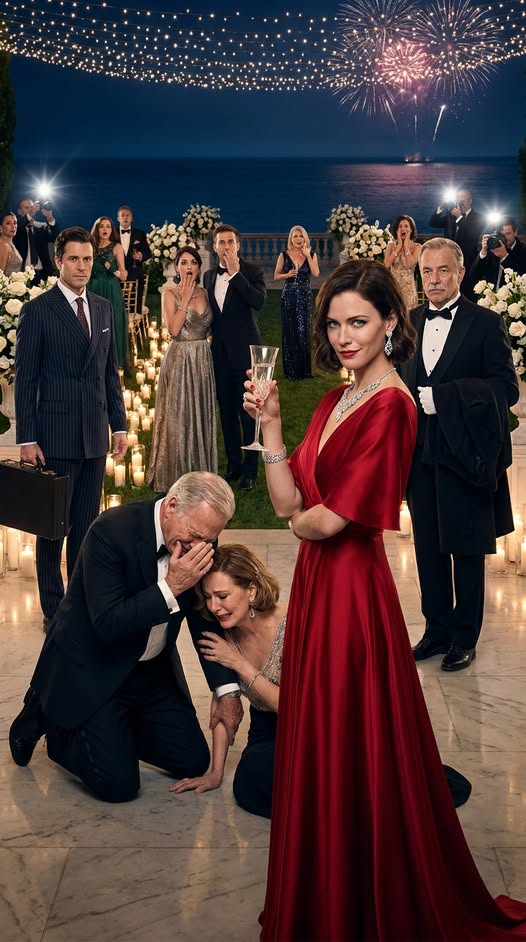
Gabriel,” Marian replied. “No,” I corrected, staring at the fraudulent signature. “I don’t want a courtroom. I’m going to finish this where it started.” Chapter 5: Midnight at the Harbor I needed to see the building one last time before the storm broke. I called Sal. He met me at the rusted service entrance at eleven o’clock that night, ushering me silently into the groaning freight elevator. “Fourth floor,” he murmured, his eyes heavy with decades of secrets. The storage room smelled of mildewed linens and discarded ambition. Stacked haphazardly behind three plastic bins of glossy
Hail Collection promotional materials, leaning face-down against the raw drywall like a punished child, was the heavy brass plaque. I flipped it over. The metal had oxidized, the brilliant shine dulled by years of neglect, but the deep engraving remained untouchable. Built on the water, kept
by the people who mean it. Out the dusty window, gazing across the black expanse of the harbor, the buoy bell tolled. It didn’t sound mournful tonight. It sounded like a battle cry. Whoever stays. I knelt on the concrete, tracing the cold lettering, and made my final decision. I wasn’t going to
burn my father to the ground in a criminal fraud trial. I wasn’t going to seek vindictive ruin. I was simply going to bolt this plaque back onto the lobby wall as the undisputed owner of the bricks.
The following morning, my father requested a meeting. We sat in a sterile, neutral diner halfway between the harbor and my office. He looked hollowed out, nervously shredding a paper napkin into tiny white ribbons.
“Your mother set something up… didn’t she?” he asked, refusing to meet my gaze. “Before you knew.”
“They forced you to sign a forged amendment, Dad,” I said quietly. “Eleven years ago.”
His hands instantly froze. The terrified stillness confirmed he remembered the exact conference room where Vivian had assured him everything was fine. His eyes glossed over with panicked tears. “I miss her. Your mother. I am not the man she thought I was.”
It was the closest he had ever flirted with the truth. For a fleeting second, I almost reached across the formica table to comfort him. But then, his self-preservation kicked in.
“Gabby, please,” he begged, leaning forward. “Whatever legal loophole you found… please don’t blow up the family. Vivian did her best for us. Just don’t make a scene.”
There it was. The eternal mantra. Protect the illusion at all costs.
“I am not going to make a scene, Dad,” I replied, sliding out of the booth. “I’m just going to file some paperwork.”
I returned to my apartment and arranged the lethal stack of documents on my kitchen table. I unscrewed the cap of my fountain pen. Vivian utilized spectacle. She weaponized public humiliation. I would weaponize public truth. She had a microphone and a hired guard; I possessed the deed, the lease, and the unyielding weight of state law.
At exactly ten in the morning, in total silence, I signed the Acceptance of Trusteeship. I became the absolute landlord of the Harbor Crown. Marian immediately transmitted the Certification of Trust directly to the commercial lender, obliterating the forty-million-dollar loan in a keystroke. Simultaneously, I issued the formal Notice of Default to the Hail Collection’s board of directors, citing the rebrand and the missing plaque.
Then, I placed my phone face down on the granite counter and went for a long, quiet walk. By the time I returned and flipped the device over, the screen was a graveyard of panic.
Sixty-eight missed calls.
Chapter 6: The Landlord
I listened to the voicemails in chronological order, tracking the desperate collapse of their empire. Gregory Pace was first, issuing cold, toothless legal threats about “reckless interference.” Brooke followed, her voice shrill with entitlement, demanding to know how I could “steal” the hotel from the Creative Director. My father left three stuttering, frantic messages, weeping that the bank had pulled the massive loan.
And finally, Vivian. Her first message dripped with synthetic syrup. Honey, Gabriel, sweetheart, there has been a terrible misunderstanding. Her third message, left an hour later, was pure venom. You ungrateful little bitch. We will bury you in court. Do you hear me?
I deleted all sixty-eight messages and made a cup of tea. At exactly ten minutes past midnight, the security buzzer in my apartment shrieked.
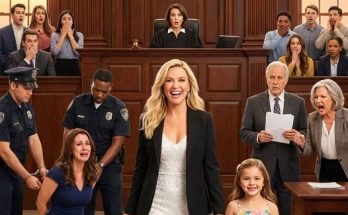
I checked the peephole. All three of them were crammed into my narrow hallway. Vivian was swathed in a hastily thrown-on trench coat; my father looked gray and physically ill; Brooke had her smartphone raised, already recording. I pulled the deadbolt back and opened the door.
“You don’t get to do this!” Vivian hissed, physically shoving her way into my entryway before I could step aside. “You don’t get to crawl back out of the woodwork after sixteen years and steal what we built!”
“I didn’t steal a single brick,” I replied, my voice dangerously soft. “Come into the kitchen. You’re letting the draft in.”
My eerie calm derailed her momentum. They filed into the kitchen, their eyes immediately locking onto the pristine original deed resting squarely on the table.
“The bank pulled the financing,” my father stammered, his hands trembling violently. “Forty million gone, Gabby. They are claiming we don’t own the property. That’s impossible. I’ve run that hotel for sixteen years.”
“You managed it,” I corrected. “You never owned it. Mom did. Now I do.”
“This is blatant fraud!” Vivian shrieked, pointing a shaking finger at me. “We have highly paid lawyers!”
“You already deployed one,” I countered smoothly. I picked up the fabricated trust document and slid it across the island. “Gregory Pace sent me this. A trust amendment dated five years after my mother was buried, lacking an independent trustee signature, referring to a foundation that didn’t exist. It isn’t even a competent forgery, Vivian. It is a signed confession.”
The kitchen oxygen evaporated. Brooke slowly lowered her glowing phone. My father stared in absolute horror at the document, finally comprehending the immense criminality of what he had blindly signed a decade ago to keep his new wife happy.
“I didn’t know,” he whispered, stepping back from the table. “Vivian… I didn’t know.”
“Shut up, Richard!” she snapped viciously.
In that three-word command, the entire mythology of the Hail era shattered. He was never the patriarch; he was a hostage who paid his ransom with his silence.
Vivian rallied, her survival instincts kicking in. She straightened her posture, projecting false dominance. “Fine. You own the concrete. Congratulations. But the actual business is ours. The branding, the bookings, the staff. The building is worthless without my operating company. You will negotiate a new lease with us, and you will be reasonable, because an empty inn earns you zero dollars.”
It was a desperate, brilliant final bluff. She simply didn’t realize I had already burned her ships.
“There is no lease to negotiate,” I stated flatly. “There is only a lease currently in default. You breached the binding covenants the exact afternoon you stripped my mother’s name off the wall. I sent the formal termination notice this morning. The commercial lender has a copy. And so does your entire board of directors.”
“The board?” Vivian gasped, the color draining from her face.
“The investors from the gala,” my father moaned, sinking heavily into one of my dining chairs. “They’ve been blowing up my phone all evening. They thought we owned the dirt.”
“I sent them the true deed, the original lease, and the forged amendment,” I said, looking directly into Vivian’s terrified eyes. “No screaming. No scene. Just the unvarnished truth, delivered to the exact same audience who watched you throw me out.”
Vivian shattered. The imperious mask cracked, and she launched into a hyperventilating, theatrical sob story. “You have no idea what I sacrificed! I held this broken family together! I built a luxury brand out of a rotting inn with a dead woman’s name plastered on it! And you sweep in to humiliate us!”
“You called my mother a dead woman in front of her daughter, inside an apartment funded by a building she still owns,” I said, my voice dropping to a frozen whisper. I stood up, leaning over the granite island. “You told a security guard to remove me. You boldly declared I wasn’t family. Do you remember?”
She stared at me, her mouth working uselessly.
“You were entirely right,” I concluded. “I am not family. I am the landlord.”
Chapter 7: The Brass Plaque
They evacuated the apartment shortly after. Vivian stormed out first, followed by a pale, silent Brooke. My father lingered in the doorway for a long, agonizing minute, frantically searching my face for a pardon I was completely unwilling to grant, before disappearing into the hallway.
The ultimate fallout was remarkably quiet and ruthlessly total. The commercial lender permanently killed the forty-million-dollar financing. Stripped of the loan and suffocating under a fatal notice of default, the operating company faced total collapse. I offered them the choice my mother’s letter demanded: negotiate a punishing fair-market lease where I commanded total creative control, or walk away. Vivian’s bruised ego couldn’t stomach becoming a subservient tenant. She walked. Brooke and her redesigned napkins followed. Gregory Pace quietly resigned to deal with the inevitable licensing board inquiries regarding his amateur forgery.
I allowed my father to retain a small, toothless, honorary title. Not out of weakness, but because he was still my father, and Diane Townsend had explicitly ordered me not to hate him.
Two weeks later, the crisp harbor air smelled of salt and victory. I stood in the grand lobby of the Harbor Crown, directly beside the towering window that overlooked the docks. The sterile chrome panel was gone. Mounted in its place, polished until it gleamed like liquid gold, was the original brass plaque. I had it installed a few inches lower than before, ensuring that a passing child could easily trace the engraving: Built on the water, kept by the people who mean it.
Sal stood faithfully at my right shoulder, his weathered hands respectfully folded behind his back. “She would have deeply appreciated this,” he murmured, his eyes shining. “You doing it all without shouting.”
“She wrote the playbook,” I replied.
Out past the icy docks, the buoy bell tolled. It didn’t sound like an eviction notice anymore. It sounded like an anchor dropping into solid rock. I hadn’t burned their lives down, though I possessed the legal ammunition to do so. I let them keep their private bank accounts, their luxury cars, their suburban house. I only reclaimed what had been stolen.
The cedar box now rests permanently on my office desk, the brass latch flipped open. The Harbor Crown thrives under the trust, managed by the veterans who know how to bleed the boiler. When people occasionally ask if I ever forgave my family, I tell them they are asking the wrong question. True boundaries are not constructed from forgiveness or lingering grudges. They are forged from deeds, names, and the absolute refusal to ever pretend again. Because an empire built upon another person’s silence is destined to collapse the very second they decide to speak.