Chapter 1: The Porcelain Doll: The sharp, antiseptic sting of bleach and the low hum of life-support monitors were practically baked into my DNA. Ending a twelve-hour night shift in the pediatric wing at St. Mary’s Hospital in Boston usually left me feeling like a hollowed-out shell, running on nothing but stale breakroom coffee and adrenaline. My feet throbbed, a dull, rhythmic ache pulsing against the soles of my sensible nursing clogs. I was already calculating the precise number of hours I could sleep before I had to be back on the floor, tending to fragile lungs and feverish brows. Then, my phone vibrated in the depths of my scrub pocket. The caller ID flashed my sister’s name: Kate. The morning air was crisp, biting at my cheeks as I stepped out into the concrete parking garage. Kate and I weren’t exactly close; our relationship was a delicate dance of holiday pleasantries and thinly veiled judgments about my “chaotic” lifestyle versus her immaculate, suburban existence. But the tight, breathy tension in her voice immediately severed the early-morning quiet. “Lisa, my water just broke. It’s early. Mike is panicking. We need you.” She was going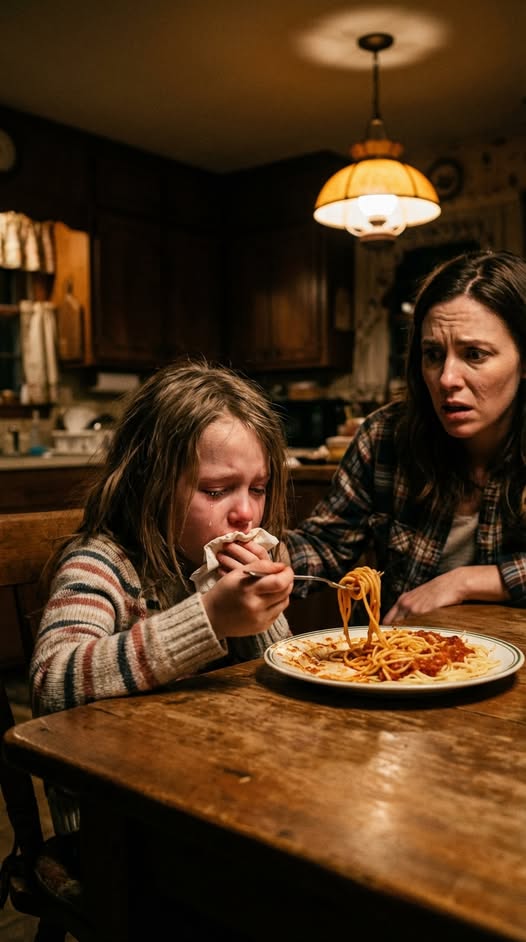
into labor with her second child. The crisis wasn’t the delivery itself, but the collateral logistics. She needed someone to immediately take custody of her seven-year-old daughter, Emily, for the duration of her hospitalization. I didn’t hesitate. Despite the chasm between Kate and me, Emily was the brightest spark in my universe. The mere thought of having my niece to myself for a week felt less like an imposition and more like a lottery win. Twenty-four hours later, after catching a fractured night of sleep, I pulled my beat-up sedan into the driveway of Kate and Mike‘s home. It
was a pristine, aggressively symmetrical suburban box. The manicured hydrangeas out front looked so flawlessly arranged they bordered on synthetic. Everything about my sister’s life was curated for a magazine spread that didn’t exist. Before I even reached the porch, the heavy oak door
swung open, and Emily darted out.
“Aunt Lisa!”
I knelt on the immaculate concrete walkway, opening my arms to catch her. When she collided with my chest, my breath hitched, though I masked it with a wide, reassuring smile. I wrapped my arms around her small frame, and a sudden, chilling realization prickled the back of my neck. She felt entirely wrong. There was no substance to her. Through the thick cotton of her meticulously ironed sweater, she felt like a collection of hollow, bird-like bones, fragile enough to snap under the slightest pressure.
She’s just going through a lanky phase, I rationalized silently, forcing the clinical, diagnostic part of my brain to shut down. She’s seven. Kids stretch out.
Dinner that evening, before Kate and Mike departed for the maternity ward, was an exercise in suffocating tension. The dining room was silent save for the clinking of heavy silver against imported porcelain. Emily sat rigidly at the far end of the long table. She spoke only when directly addressed, her voice a muted, hesitant whisper. When she ate, it was with agonizing slowness, moving her fork with the mechanical precision of a wind-up toy.
“She really is such a good girl,” Mike announced, dabbing his mouth with a linen napkin. He didn’t look at his daughter; he looked at me, as if presenting a well-trained show dog. “Never a fuss. Always obedient. Highly cooperative.”
Kate, pale and gripping her swollen belly, nodded in agreement. “She knows how to behave. Don’t let her manipulate you into any bad habits, Lisa. We have a system here.”
I smiled politely, but a cold knot formed in my stomach. I watched my niece. She wasn’t just well-behaved; she was invisible. She was desperately trying not to exist. Some children are naturally shy, yes. But as Kate and Mike finally gathered their overnight bags and left, the profound, unnatural stillness of the house settled over us, and I realized I wasn’t just looking at a shy child. I was looking at a shadow. And shadows only form when something is blocking the light.
Chapter 2: The Apology Reflex
The transition from the sterile perfection of the suburbs to the warm, cluttered chaos of my city apartment should have been a relief for a kid. My place was filled with mismatched throw pillows, stacks of medical journals, and a chronically overfed tabby cat named Barnaby. It was a place designed for messy living.
But from the moment Emily crossed my threshold, the strange, suffocating aura she carried only intensified. She didn’t drop her small duffel bag; she placed it gently on the floor, perfectly parallel to the baseboards.
“You can put your stuff in the guest room, Em,” I called out from the kitchen, tossing my keys into a ceramic bowl. “Make yourself at home. Seriously, jump on the couch if you want.”
“Okay. Thank you, Aunt Lisa. I’m sorry.”
I paused, halfway to the refrigerator. “Sorry for what, sweetie?”
“I don’t know,” she murmured, eyes fixed on the scuffed hardwood floor. “Just… sorry.”
Over the next forty-eight hours, the word became a phantom limb she couldn’t stop twitching. She followed every instruction with terrifying exactitude. When I suggested we make pancakes on her first morning, a standard aunt-and-niece bonding ritual, she stood rigidly on the stepping stool, hands clasped tightly behind her back, refusing to touch the batter or the whisk unless I explicitly commanded her to.
When the golden, fluffy disks were finally plated and set before her, the real horror began. Emily didn’t dive in with the reckless abandon of a hungry child. She picked up her knife and fork and began to dissect the pancake. She cut it into microscopic, perfectly uniform squares. She chewed each tiny bite mathematically, her jaw working slowly, her eyes darting nervously toward me as if expecting a reprimand. She managed perhaps three bites before pushing the plate away by a fraction of an inch.
“I’m full, thank you. I’m sorry,” she whispered.
I took her to the neighborhood park later that afternoon, hoping the crisp autumn air and the raucous laughter of other children would thaw the ice around her. Instead, she stood frozen near the edge of the sandbox. She refused to swing. She refused the slide. She chose a small, shaded bench and sat perfectly still, hands folded in her lap, observing the chaotic joy of her peers as if watching an alien species through soundproof glass. She was terrified of taking up space.
At the grocery store, the pattern continued. We walked down the candy aisle—a gauntlet of temptation for any first-grader.
“Pick something out,” I nudged her, pointing to the vibrant displays of chocolate and gummy worms. “Aunt’s treat.”
Her eyes widened, flashing with genuine panic. “No, thank you. I don’t need anything. I’m good.”
I told myself I was projecting my pediatric trauma onto my niece. I saw sick kids all day; it was my job to look for the worst. She’s just unusually disciplined, I lied to myself. But the profound silence of her existence, the instant compliance, the endless loop of apologies—it began to gnaw at the edges of my sanity.
On the evening of her third day with me, I decided to break the cycle. I sat down beside her on the rug, where she was meticulously coloring inside the lines of a drawing book, never once letting the crayon stray.
“Em, we’ve been eating whatever I decide to make. Tonight, you are the boss. What is your absolute favorite dinner in the world? You name it, I cook it.”
She froze. The crayon halted on the paper. I could see the cogs turning in her mind, terrified of giving the wrong answer. Finally, she looked up, her blue eyes wide and pleading.
“Spaghetti?” she whispered, framing it as a question rather than a demand.
It was the first actual preference she had expressed in seventy-two hours. I practically leaped off the floor. I poured my entire soul into that meal. I simmered garlic and crushed tomatoes, letting the rich, savory scent fill the apartment. I wanted this to be a triumph.
I set the steaming bowl of pasta on the table in front of her. “Ta-da! Chef Lisa’s special.”
Emily stared at the red sauce. She didn’t smile. Her breathing grew shallow. She looked at the spaghetti not as food, but as a live grenade. Her small, trembling hand reached for the fork. She twisted a few strands of pasta around the tines, lifted it to her lips, and tentatively touched the tip of her tongue to the sauce.
Instantly, her body betrayed her. Her throat constricted violently. She gagged, a harsh, wet sound, and the fork clattered against the ceramic bowl. The spaghetti slipped back into the sauce.
Before I could even speak, Emily violently shoved her chair back. She collapsed to her knees on the kitchen floor, her hands gripping her hair, her small shoulders heaving with sudden, explosive sobs.
“I’m sorry!” she wailed, rocking back and forth in pure, unfiltered agony. “I’m so sorry! I didn’t mean to! I’m sorry, I’m bad, I’m sorry!”
The sight of her, shattered and begging for forgiveness over a biological reflex, sent a surge of pure adrenaline straight to my heart. My aunt-persona evaporated; the ER nurse took the wheel. I dropped to the floor, pulling her trembling body into my chest. Her heart was hammering against her ribs like a trapped bird.
“Emily, sweetheart, listen to me,” I commanded softly, gripping her shoulders. “What is happening? Does your tummy hurt? Are you sick?”
“I can’t!” she choked out through the tears, her eyes squeezed shut. “I’m not allowed! I’ll be bad!”
This wasn’t a picky eater. This wasn’t a behavioral quirk. This was deep, systemic terror.
I scooped her up. She weighed nothing. My medical instincts screamed a diagnosis I didn’t want to believe. I grabbed my keys from the ceramic bowl, wrapped her in a blanket, and carried her out the door. The drive to the emergency room was a blur of neon streetlights and the sound of my niece whimpering in the passenger seat, begging me not to take her, promising she would be “good” if we just went back. But my foot stayed heavy on the gas, driving us straight toward a truth that would shatter my family forever.
Chapter 3: The Anatomy of Starvation
The harsh, fluorescent glare of the St. Mary’s emergency department was my second home, but walking through the sliding glass doors as a civilian—as a panicked guardian—warped the familiar space into a nightmare.
Emily clung to my neck like a terrified monkey, her face buried in my collarbone. Yet, the moment the triage nurse approached, the eerie, robotic obedience snapped back into place. She stopped crying instantly. She let the nurse wrap the blood pressure cuff around her spindly arm without a single flinch. When they needed to draw blood, a procedure that usually requires two nurses to hold down a screaming seven-year-old, Emily simply extended her arm, stared blankly at the far wall, and didn’t make a sound as the needle pierced her skin.
It was the silence of a prisoner of war.
I requested Dr. Marcus Wilson, a senior attending physician and a close friend who trusted my instincts as much as his own. When he walked into Trauma Room 3, his warm, grandfatherly smile faded the moment he laid eyes on Emily.
“Hey there, kiddo,” Marcus said gently, pulling up a rolling stool. “Your aunt Lisa tells me your tummy is giving you some trouble.”
Emily nodded once, a sharp, jerky motion. “I’m sorry.”
Marcus flicked a glance at me, his brow furrowing slightly. He proceeded with the physical exam. He checked her reflexes, listened to her heart, and pressed gently on her abdomen. With every touch, Emily braced herself, her jaw clenched tight.
“Alright, Emily,” Marcus said softly, clicking his penlight off. “We’re going to run a few tests, see what those labs say. You just sit tight with Aunt Lisa, okay?”
We waited for two agonizing hours. Emily curled into a tight ball on the plastic visitor’s chair, refusing the juice box and crackers the nurses offered. She looked like a fading photograph, slowly losing her color and contrast.