Chapter 1: The Anatomy of Grief: They tell you that blood is an unbreakable tether. They swear that family is the safety net waiting to catch you when the floorboards of your life suddenly rot away. I used to subscribe to that comforting delusion. My name is Sarah. Not so long ago, I lost my husband, Michael, to an aggressive, unapologetic strike of liver cancer. When the earth finally stopped crumbling, it was just me and my ten-year-old daughter, Lily. My spirit was entirely shattered, pulverized into a fine dust, and that was precisely when my family moved in to sweep up the pieces. The moment the heart monitor flatlines, every person in your orbit suddenly earns an honorary Ph.D. in grief counseling. You need a change of scenery, Sarah. You have to stay strong for the kid. You can’t just evaporate into your living room. The voices became a persistent, droning choir, eventually drowning out my own instincts. It had been eight agonizing weeks since Michael was lowered into the ground. We had built Timber & Bean from an absolute fever dream into an empire. What started as a drafty, exposed-brick coffee shop in downtown Seattle—where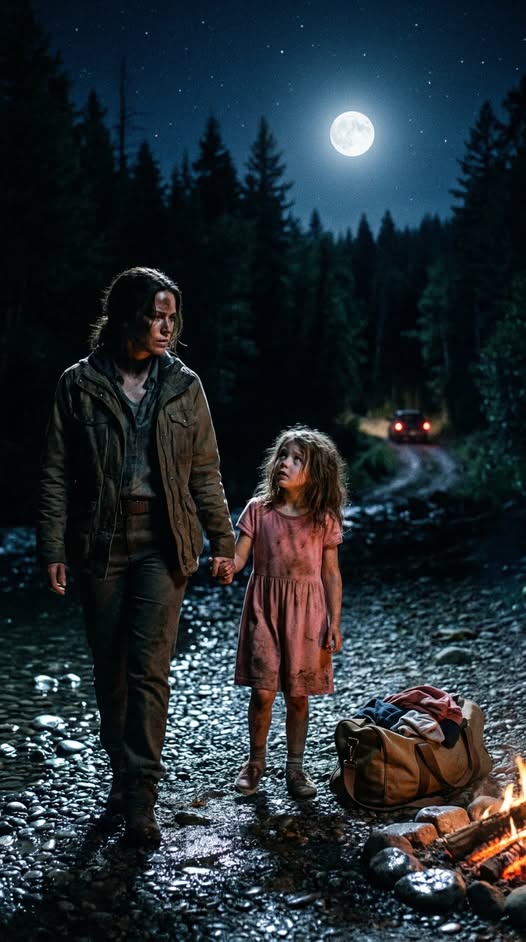
Michael used to stubbornly insist on hand-pouring every macchiato—had metastasized into twenty-seven prime locations across the Pacific Northwest. I was now the sole proprietor of a multi-million-dollar enterprise. It meant absolutely nothing. Success is a hollow, echoing chamber when the person you built it for is no longer there to walk through the doors. Lily was my only anchor. At ten, she was a terrifyingly observant adult trapped in a child’s frame. One rainy Tuesday, she found me standing on our apartment balcony, staring blankly at the gridlock below.
She gently pushed a mug of chamomile into my frozen fingers. “Mom, you skipped breakfast again,” she murmured, her dark eyes—an exact, painful replica of Michael’s—studying my face. “I’m just not hungry, baby,” I whispered. “Then just hold the mug,” she replied, wrapping my hands
around the ceramic. “Daddy always said tea doesn’t fix the broken things, but it keeps your hands warm while you figure it out.” That was Lily. Uncomplaining. Stoic. Silently bearing the immense weight of the world because she could see her mother buckling under it. The intervention
arrived on a Thursday. My mother, Eleanor, cornered me in the kitchen, her manicured hands gripping my shoulders a fraction too tightly. “Just a weekend, Sarah. Two nights,” she insisted. “Your brother Jason is handling all the logistics. Tents. A pristine lake. Complete isolation. No cell
towers, no emails.”
I let out a dry, humorless laugh. “I am barely keeping my head above water in a climate-controlled apartment, Mom. Your grand solution is to shove me into a sleeping bag in the damp wilderness?”
“It’s not about the sleeping bags,” my father, Richard, chimed in from the doorway, his tone carrying the precise, modulated cadence he used during corporate board meetings. “It’s about stillness. Reconnecting with nature. With us.”
Jason hovered behind him, wearing that perpetual, arrogant half-smirk that had defined his youth, accompanied by his wife, Vanessa. Vanessa smelled overwhelmingly of expensive coconut sunscreen and looked at me with the thinly veiled pity of someone observing a wounded animal in a zoo.
“Lily is going to lose her mind over it,” Jason said smoothly. “You need to break out of this concrete mausoleum, Sarah. If you don’t do it for yourself, do it for her.”
It was a brilliant tactical strike. They didn’t argue logic; they weaponized my daughter. When I tentatively floated the idea to Lily, her face illuminated like a struck match. She practically vibrated with excitement at the prospect of seeing the ancient pines and glassy lakes Michael had always promised to show her. Seeing her smile—a real, unforced smile—loosened the iron band around my chest.
Saturday morning, the convoy departed. Jason and Vanessa led the charge in their silver Subaru, while Lily and I rode with my parents in their sprawling SUV. The trunk was heavy with high-end coolers, camping gear, and falsely cheerful banter. As we crossed the threshold into Olympic National Park, the chaotic static of the city faded, replaced by a dense, suffocating green silence. I glanced down at my phone. No Service. It was supposed to feel liberating. Instead, a cold prickle of unease washed down my spine.
We established camp near the edge of Lake Crescent. The air was sharp and smelled of damp earth and pine needles. Jason swung a titanium hatchet with performative masculinity while Vanessa meticulously wiped her designer sunglasses with a microfiber cloth. “This is it,” she announced to the trees. “No headlines, no stress. Just family.”
Just family.
As twilight bled into a spectacular, starry night, the illusion almost took hold. I sat swathed in a heavy wool blanket, watching Lily and my eight-year-old nephew, Tyler, wage a fierce, messy war over the perfect marshmallow roasting technique. My father and Jason bickered over the structural integrity of the fire pit. Eleanor was fussing with an unnecessary, floral camping apron. The firelight flickered across their faces, and for a fleeting, desperate second, I allowed myself to believe them. I allowed myself to believe this was an act of salvation.
Later, inside our tent, Lily curled against my side, a warm, steady weight. I stroked her hair, listening to the dying crackle of the embers outside, and a fragile seed of hope took root in my chest. We are going to survive this, I thought, closing my eyes. We are going to be okay.
But the woods are deceptive, and monsters rarely wear fangs. I drifted into a deep, exhausted sleep, entirely unaware that the trap had already snapped shut.
Because when the morning mist finally broke, I unzipped the tent flap and stepped out into a nightmare of absolute, deafening silence.
The roaring campfire was a dead ring of ash.
The Subaru was gone. The SUV was gone. The towering stacks of coolers, the folding chairs, the first-aid kits—vanished.
There was no trace of them. Except for a single, folded piece of paper weighted down by a smooth river stone on the center of the wooden picnic table.
Chapter 2: The Silence of the Pines
“Mom?”
Lily’s voice was a frail, sleepy whisper from behind the mesh screen of the tent. “Where is Uncle Jason? Did they go fishing?”
My brain violently misfired, struggling to process the visual data. The campsite was entirely hollowed out. The tire tracks in the damp soil were deep and deliberate, heading straight back toward the main access road. I moved toward the picnic table on legs that felt like they were cast in lead.
I picked up the note. It wasn’t sealed in an envelope. It was just a jagged sheet torn carelessly from a legal pad. The handwriting was unmistakably Jason’s tight, aggressive scrawl.
This is a necessary reset. Trust me.
I stared at the blue ink until the letters began to swim. A necessary reset. The words were packaged as something therapeutic, but the underlying frequency was pure, unadulterated malice.
“Mom?” Lily emerged from the tent, her small boots crunching on the gravel. She looked at the empty expanse where the cars had been parked. The color rapidly drained from her cheeks. “Mom… why are all their things gone?”
A heavy, suffocating panic clawed at my throat. I wanted to scream until my vocal cords shredded. I wanted to fall to my knees and tear at the moss. But Lily was watching me. If I shattered now, the shards would cut her to pieces.
“They had to leave, sweetie,” I choked out, forcing my facial muscles into a mask of absolute calm. “But we are going to be just fine.”
I immediately audited our inventory. It was a terrifyingly brief process. My canvas backpack contained exactly two plastic water bottles, three crushed granola bars, a half-empty pack of tissues, a cheap butane lighter, and a decorative compass Michael had given me years ago. That was our entire arsenal against the vast, unforgiving expanse of the Pacific Northwest.
They hadn’t left us enough supplies to survive. They had left us just enough to delay the inevitable.
“Pack your bag, Lily,” I ordered, my voice hardening into a steel rod. “We aren’t staying here.”
Day One. I made the only logical tactical decision available: follow the descending slope of the terrain to find moving water, and follow the water until we found civilization. We hiked for six agonizing hours. By dusk, I managed to spark a pitiful, smoking fire near a narrow stream. I broke one granola bar perfectly in half.
“Aren’t you eating yours?” she asked, eyeing my hands.
“I already ate while you were setting up your sleeping pad,” I lied flawlessly. She nodded, too exhausted to argue.
Day Three. The concept of hunger shifted. It was no longer a dull ache in the stomach; it became a sharp, physical presence, an invasive species chewing on my bone marrow. Lily’s pace degraded to a shuffle. Dark, bruised shadows blossomed beneath her eyes. We had to stop by mid-afternoon.
I left her resting against an ancient cedar and went hunting for miracles. Decades ago, my grandmother had obsessively taught me the local flora of Washington State. I combed the underbrush until my hands bled. Salal berries. Thimbleberries. A pathetic handful of wild huckleberries.
“Look what I found,” I said, dumping the bruised purple fruit into Lily’s lap. She managed a weak smile—the first expression she’d made in seventy-two hours. We ate them one by one, treating each berry like a communion wafer.
Day Five. The landscape began to blur. My legs operated purely on mechanical spite. We stumbled upon the rotting carcass of an old ranger outpost. The roof had partially caved in, and the floorboards were spongy with dark moss, but it possessed four walls to block the biting wind. Inside an overturned cabinet, I found a rusted tin of iodized salt. I wept over it.
That night, the true horror began.
I woke up to the sound of chattering teeth. I reached over in the pitch black and touched Lily’s forehead. My hand violently recoiled. She was radiating heat like a furnace.
“Mom… I’m so cold,” she whimpered, her tiny body convulsing violently beneath the thin sleeping bag.
I didn’t sleep. I practically tore the surrounding woods apart by moonlight. I found a cluster of white willow trees, stripped the bark with my bare hands, and used an old, dented tin cup I found in the shack to boil water over the fire. I brewed a vile, bitter tea of willow bark, praying to a god I hadn’t spoken to in years that it contained enough natural salicylic acid to act as an aspirin. I held her up, forcing the murky liquid down her throat, utterly terrified I was poisoning my own child to death.
She slumped back against my chest, her breathing shallow and ragged. I pressed my face into her damp hair, the terrifying realization washing over me like ice water. We were out of food. We were out of strength. If the fever didn’t break by morning, I was going to lose the only thing I had left in this world.
Chapter 3: Ash and Embers
Day Seven. The fever finally surrendered, breaking in the suffocating heat of the afternoon. Lily opened her eyes, clear but impossibly sunken, and asked for water. I cried so hard I couldn’t draw breath. I fed her dandelion greens and the last of the salt. We had to keep moving. If we stayed in that rotting shack, it would become our tomb.
Day Eight. The sky turned the color of bruised iron, and the forest erupted.
The storm didn’t just rain; it assaulted us. It was a solid, freezing wall of water. Thunder detonated so loudly it felt like the earth was cracking open. We huddled beneath the roots of a massive, overturned Douglas Fir, wrapped tightly in both sleeping bags. The wind howled like a wounded animal.
To drown out the terrifying roar, I pulled Lily against my chest and began to talk. I recited every commercial jingle I knew. I narrated the plot of terrible romantic comedies. I told her stories about Michael—how he once accidentally set a batch of espresso beans on fire and blamed it on a faulty outlet. I talked until my voice was a raw, bloody rasp.
And somewhere, in the deafening chaos of the downpour, a hallucination crept into my mind. You have to stand up, Sarah, a voice whispered. It sounded exactly like Michael. You know how to build things. Build a way out.
Day Ten. The rain had stopped, leaving a heavy, dense fog in its wake. We were operating on pure adrenaline and muscle degradation. We crested a steep ridge, and through the mist, I saw the stark, geometric lines of a fire watchtower.
Lily’s knees finally buckled. She couldn’t walk another step.
“Get on my back,” I commanded.
“You can’t carry me, Mom,” she croaked. “You’re too tired.”
“Do you trust me?” I demanded, my eyes locking onto hers.
“Always.”
I hauled my ten-year-old daughter onto my back, locking my arms under her knees. My spine screamed in protest. My vision tunneled, the edges bleeding into blackness. I walked. I dragged my boots through the mud, fueled by an icy, nuclear rage. I will not die here, I chanted internally. I will survive this, and I will burn their lives to the ground.
We reached the clearing beneath the watchtower. The structure was locked tight, but the ground was littered with dry kindling under the protective eaves, and old, yellowed newspapers stuffed into a recycling bin.
Then, the low, rhythmic thumping vibrated through my chest cavity.
A helicopter.
I dropped to my knees, frantic. Survival rule: Three fires, or an H. I didn’t have time for three. I dragged massive pine branches, arranging them into a massive “H” in the center of the clearing. I stuffed the newspaper beneath the damp wood and struck the cheap butane lighter.
It sparked. It caught.
Here is the full ending of the story 👉 Part2: I went camping with my parents and my brother’s family. After a short walk with my 10-year-old daughter, everything was gone — the people, the tents, the food, the cars. No cell service. Just a note on the table: “This is for the best. Trust me.” They left us to die in the forest. Ten days later, they regretted it.