The kitchen suddenly felt ten degrees colder. I didn’t panic. I didn’t call the bank in a hysterical fit of tears. I simply went to work. I connected my laptop to my wireless printer and began churning through reams of paper. I meticulously printed every single failed login attempt, the IP address logs, the fraudulent department store statements, and the digital signature verifying the unauthorized credit application. I slid the mounting stack of undeniable felonies into a thick, manila envelope, taking a thick black Sharpie and writing the word BOUNDARIES across the front in block letters. I wasn’t just protecting my credit score anymore. I was rapidly constructing a federal case. At exactly midnight, my screen lit up with an unsaved number, though the arrogant syntax was unmistakable. Tyler: You think a new house makes you better than us now? Watch your back.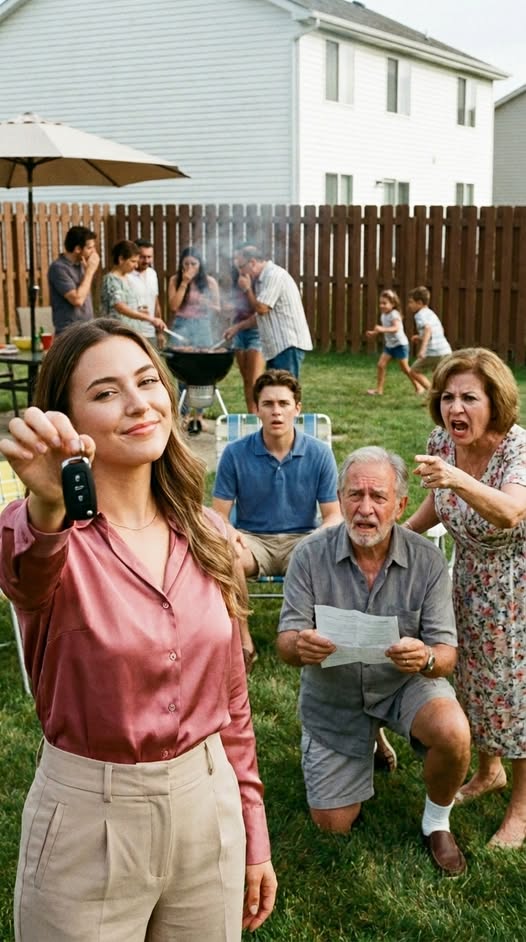
And watch your mailbox. I stared at the glowing pixels in the dark kitchen. The simmering anger in my chest didn’t explode; it sharpened, crystallizing into something infinitely colder and far more lethal. They weren’t simply losing access to my money; they were rapidly losing their grip on
reality. And the more they thrashed against the constraints of their new poverty, the uglier this war was going to become. The subsequent forty-eight hours were eerily, unnervingly quiet. By the third morning, the dam finally broke, but not with a physical confrontation. The psychological
warfare shifted to the digital realm. My phone began buzzing relentlessly with incoming screenshots from deeply uncomfortable friends, old high school acquaintances, and gossiping neighbors.
Denise had taken to Facebook.
Her posts were masterclasses in manipulative, passive-aggressive victimhood, written in that sickeningly sweet, self-pitying tone she had spent decades perfecting:
It just breaks a mother’s heart to see how cruel the world has become. Some people genuinely believe they can just turn their backs on the family that raised them. After everything we’ve sacrificed, everything we’ve done, they just leave us entirely in the dark. Literally. Please pray for our household during this deeply challenging transition.
The comments beneath her posts were entirely predictable—a chorus of sympathetic emojis and misguided outrage. But the most telling, fascinating detail of the entire smear campaign? Not a single one of them had the courage to actually tag my name. They desperately wanted to paint a tragic masterpiece, but they were absolutely terrified to hand me the brush.
I refused to take the bait. I didn’t post a rebuttal. Instead, I spent the afternoon on the phone with customer service representatives, securing double-authentication on every piece of data attached to my identity, ensuring they possessed zero leverage.
Just past noon, the doorbell chimed.
I checked the security feed. Denise stood on my welcome mat alone. She was hiding half of her face behind massive, oversized tortoiseshell sunglasses, her posture radiating an anxious, jittery energy.
I opened the door, leaving the security chain firmly in place. “What do you want, Denise?”
Her smile was incredibly forced, the edges of it brittle and trembling. “Madison, sweetheart. We just… we really need the auto insurance policy kept in your name for just a few more days. Tyler has a massive job interview across town on Thursday, and he legally can’t drive the sedan without proof of coverage.”
I slowly shook my head. “I already formally transferred the policy to this address. It is my policy, covering my vehicle. If Tyler intends to operate a car on state roads, he needs to secure his own premium.”
A muscle in her jaw twitched violently. “You are actively, intentionally punishing us.”
“No,” I replied, leaning comfortably against the doorframe. “I am simply refusing to be the designated victim of your punishment anymore. There is a massive difference.”
She blinked behind the dark lenses, entirely caught off guard by the icy calm radiating from me. She tried a different tactic. “Your father is absolutely furious, Maddie. He’s… he’s only lashing out like this because he’s under immense psychological stress about the mechanic shop closing.”
“That shop permanently closed its bay doors exactly three years ago, Denise,” I cut in, slicing through her revisionist history. “He has had thirty-six months to figure out a viable career path, and instead, he chose to use my bank account as his personal crutch.”
For a fraction of a second, the faux-maternal mask completely slipped. Her eyes hardened into obsidian chips. “You are going to deeply regret this, Madison. Much sooner than you think.”
I closed the door without offering a single word in response.
That evening, my phone buzzed with an incoming call from Mrs. Gable, the elderly widow who lived directly next door to my father’s house. Her voice was hushed, vibrating with scandalous excitement.
“Maddie, honey, I just thought you should know,” she whispered conspiratorially. “They were out in the concrete driveway screaming at each other for twenty minutes. Loud enough to wake the dead. Something about Arthur’s debit card declining at the gas station. Denise was absolutely shrieking that she couldn’t afford to buy groceries for the week.”
I thanked Mrs. Gable for her vigilance and ended the call.
The suffocating, crushing weight of financial anxiety that I had carried completely alone for four agonizing years was finally, systematically pressing down on their shoulders. They were feeling the true gravity of my absence.
Saturday morning arrived with a heavy, unseasonal rain. I was sitting at the kitchen island, sipping tea and sorting through the mail that had been forwarded from the old address, when a specific envelope stopped my heart.
It was a stark, austere envelope from the primary mortgage lending company, addressed to my father’s residence, but formally listing me as the secondary emergency contact. Stamped across the front in aggressive, red ink was the phrase: URGENT: TIME SENSITIVE MATERIAL.
I tore the flap open. The legal jargon was blunt, merciless, and terrifying.
Notice of Default. Past Due Balance: 60 Days. Notice of Public Auction.
My eyes scanned the heavy black text. Two consecutive mortgage payments had been entirely missed. A hard auction date had been officially set by the county for exactly thirty days from the postage date.
This was it. This piece of paper was the ultimate, undeniable proof that the universe had just handed me. All of their loud, booming confidence, all of Arthur’s backyard arrogance—it was nothing but a fragile smokescreen hiding total financial ruin.
Months ago, if I had intercepted this letter, I would have experienced a debilitating panic attack. I would have frantically logged into my savings portal, drained every last cent I possessed, and rushed over to play the silent savior just to keep a roof over their heads.
Now?
I calmly walked over to the printer, made a high-resolution photocopy of the foreclosure notice, and slid the original document right into the center of the BOUNDARIES folder.
As the rain lashed against the windows of my beautiful, fully-paid-for sanctuary, I heard the undeniable screech of worn brake pads stopping in front of my house. I looked through the blinds. Arthur, Denise, and Tyler were all marching up my front walkway, the desperate, unhinged look of trapped animals radiating from their faces, entirely unaware that I was already holding the executioner’s axe.
Chapter 4: The Final Eviction
The aggressive, rhythmic pounding against my fiberglass front door echoed through the hallway like artillery fire.
They hadn’t come to negotiate. They had come to demand salvation.
I didn’t cower behind the peephole. I grabbed the BOUNDARIES folder from the kitchen counter, unlocked the deadbolt, and stepped fully out onto the covered porch, pulling the heavy door shut behind me until it latched with a definitive click.
All three of them were crowding the top step, effectively cornering me. Arthur’s face was flushed a dangerous, mottled crimson, his breathing shallow and rapid. Denise stood with her arms tightly crossed over her chest, her lips pressed into a thin, bloodless line. Tyler lurked in the back, sporting a nervous, arrogant smirk, like a child who still fundamentally believed he was playing a game with cheat codes.
Arthur didn’t bother with a greeting. He went straight for the jugular.
“You saw the notice in the mail,” he demanded, his voice thick with a terrifying cocktail of panic and entitlement. “We cannot lose the house, Maddie. The bank is threatening an auction. You are going to initiate a wire transfer and help fix this right now.”
I planted my feet firmly on the wooden deck boards, folding my arms over the manila folder. “No, Arthur. I am not.”
“You are still family!” he roared, the volume of his voice echoing off the neighboring houses, desperate to invoke the very word he had spent years desecrating.
I didn’t flinch, nor did I lower my own voice to appease his embarrassment.
“Family does not use its offspring as an ATM machine,” I shot back, my words striking like physical blows. “Family does not publicly humiliate you while you are serving them food. And family certainly does not commit federal identity fraud in your name, open fraudulent credit lines, and expect you to just silently absorb the financial ruin.”
I locked eyes entirely on Tyler. His arrogant smirk instantly vanished, his face draining to a sickly, chalky white.
Denise took a frantic step forward, her hands raised in a placating gesture. “Madison, please. Do you really have to make a scene out here in the open?”
“Yes,” I stated, my voice as flat and unyielding as a steel beam. “Because you had absolutely no problem making a public spectacle out of me when it suited your narrative at the barbecue.”
“This is completely unbelievable,” Tyler muttered under his breath, taking a step backward toward the stairs.
“You’re entirely right, Tyler,” I snapped, whipping my gaze back to him. “It is mathematically unbelievable that I allowed this parasitic dynamic to continue for as long as I did. But that era officially ended.”
Arthur took a menacing half-step forward, his massive frame looming over me. He dropped his voice to that quiet, dangerous, gravelly tone he had successfully used to intimidate me since childhood.
“Listen to me very carefully,” he hissed. “If you walk away from this house, if you let the bank take it… you will be absolutely nothing to us. You will be dead to this family.”
A profound, weightless sensation suddenly bloomed inside my chest. It was the feeling of a massive chain finally snapping.
I smiled, though my eyes remained perfectly cold. “Then I will gladly be nothing to you, Arthur. Because it means I will finally be everything to myself.”
I took a deliberate step backward, reaching for the brass handle of my front door. But before I retreated into the safety of my home, I opened the manila folder. I extracted the crisp, red-stamped Notice of Public Auction, alongside the meticulously printed evidence of Tyler’s credit card fraud.
I held the documents up in the gray afternoon light, ensuring all three of them could see exactly what I was holding.
“This,” I said, my voice cutting cleanly through the ambient sound of the falling rain, “is exactly what happens when the vital organ you have been ruthlessly draining finally decides to stop pumping blood into your system.”
I didn’t hand it to them. I simply let the papers slip from my fingers.
They fluttered down onto the damp wooden planks of the porch, landing directly at Arthur’s work boots.
I turned around, walked inside, and shut the door. The heavy deadbolt sliding into place was the most satisfying, definitive sound I had ever heard. I didn’t walk away immediately. I stood perfectly still, peering through the narrow slits of the window blinds.
I watched the aftermath unfold. Arthur stood completely frozen, staring down at the foreclosure notice as if it were a venomous snake. Denise was frantically glancing over her shoulder, terrified that the neighbors were watching their kingdom collapse. Tyler nervously nudged the fraud evidence with the toe of his sneaker, realizing his own legal nightmare was only just beginning.
They didn’t knock again. They didn’t scream. They silently turned around, walked back to the sputtering truck, and drove out of my cul-de-sac for the very last time.
That evening, as the rain cleared and a spectacular, bruising sunset painted the sky over my new neighborhood, I sat on my plush living room sofa with a glass of wine. I opened my social media application—the same one Denise had weaponized against me—and typed a single, declarative sentence.
Sometimes, the greatest act of love you can offer someone is the devastating opportunity to finally stand entirely on their own two feet.
I hit publish. The notifications began rolling in almost immediately—likes, hearts, and comments from friends genuinely congratulating me on the beautiful new house.
Not once did I explicitly name Arthur, Denise, or Tyler. I didn’t air the dirty laundry of the fraud or the impending auction. I simply didn’t need to. Their spectacular, self-inflicted downfall was no longer my heavy story to carry. It was finally, entirely theirs to live.