My Fiancé Left Me When I Became Terminally Ill — So I Paid a Man to Marry Me as My Dying Wish My fiancé planned our wedding with me for almost a year. My father paid for everything — the venue, the flowers, the dress, the food for 120 guests. Invitations had already been sent, people had booked flights, and my mother had cried during my final dress fitting. Then the doctor said the word no one ever wants to hear: terminal. I remember sitting in that sterile white room, holding my fiancé’s hand so tightly I thought I might break his fingers. I expected him to squeeze back.
Instead, two days later, he stood in our kitchen with red eyes and a packed bag by the door. “I’m sorry,” he whispered. “I can’t do this.” At first, I thought he meant he couldn’t handle the diagnosis. Then I realized he meant me. He walked out before the wedding, before the sickness got worse,
before I became too hard to love. And suddenly I was a dying woman with a wedding dress, a paid venue, and no groom. Maybe I’m a bad feminist for saying this, but all I ever dreamed of was having a beautiful wedding. I cried for days until one night the strangest idea came to my mind. The wedding didn’t have to be canceled. I just needed to find another groom. So I opened my laptop and started searching through acting agencies. It was ridiculous, desperate, and probably humiliating, but I had a few years left, maybe less, and I had nothing to lose. I picked the cheapest actor available on the day my wedding was booked and sent him an email explaining everything.
I expected him to ignore it or reject the awkward job. Who would want to fake-marry a dying woman? But the next morning, he replied, and his message made my whole body freeze:
“I will only do it under ONE CONDITION”
“I can’t do this.”
At first, I thought Daniel meant the diagnosis.
Not me or us.
Just the cancer, timelines, and the awful, clean language doctors use when they are trying to be kind while delivering heartbreaking news.
I was 29, sitting at our kitchen table in leggings and one of his old college sweatshirts, still trying to process the words “advanced” and “terminal” from two days earlier. My tea had gone cold. My head had not stopped ringing since the appointment.
Daniel stood by the door with red eyes and a packed overnight bag.
I remember staring at the bag first.
Because some stupid part of me thought, No, that can’t be right. He must be going to his brother’s for the night. He must just need air.
Then he said it again, quieter.
“I can’t do this, Serah.”
And that was when I understood.
He did not mean he couldn’t handle the news.
He meant he couldn’t handle me.
“You said we would get through anything,” I whispered.
He looked wrecked. I want to be fair to him, even now. He looked wrecked, ashamed, and scared in a way that made him seem younger, smaller, and not at all like the man I had spent 11 months planning a wedding with.
“I know,” he said. “I know what I said.”
I stood up so fast my chair scraped.
“So that’s it?” My voice cracked. “You leave before I get worse? Before I lose my hair? Before I stop looking like the version of me you were comfortable loving?”
He flinched. “Please don’t do that.”
I laughed then. A horrible little laugh.
“Do what? Say it out loud for you?”
He covered his face for a second. “I’m sorry.”
“You already said that.”
Then he picked up the bag and walked out of our apartment while I stood there in his sweatshirt with my whole life breaking in real time.
The wedding was 12 days away.
My father had already paid for everything. The venue, the flowers, my dress, the string quartet my mother insisted on, the food for 120 guests, and the hotel rooms for relatives flying in from two states away.
My mother’s friends had already started asking what color of lipstick I planned to wear. My father had practiced his speech three separate times and cried during one of them, though he denied it every time.
I spent three days in bed. I cried until my face hurt and then lay still because crying takes energy you no longer have.
On the fourth night, I opened the closet and looked at my wedding dress.
Then I sat on the floor in front of it and thought something so insane I actually said “no” out loud to myself.
Then I thought it again.
The wedding didn’t have to be canceled.
I just needed another groom.
Maybe that makes me sound unhinged. Maybe I was. But here’s the thing nobody tells you about being told you’re dying: Embarrassment loses a lot of power.
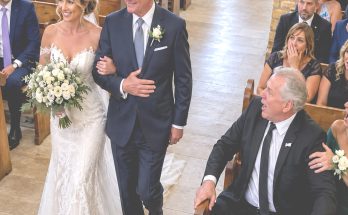
I had wanted a wedding since I was little. Not a husband, specifically, though hopefully one of those, too. I wanted the dress, the music, the flowers, my father walking me down the aisle, my mother crying in the front row, and the photographs that would say I had been the center of something beautiful once.
I wasn’t ready to bury that dream just because the man who promised it had turned out to be weak.
So, in the morning, I opened my laptop and started searching for acting agencies.
I found one that handled commercials, local theater, private events, corporate hosts, and “special request performance bookings.”
I picked the cheapest man available on my wedding date. His headshot showed dark hair, kind eyes, and a face that looked gentle.
His name was Peter.
I sent the most humiliating email of my life.
I told him I was supposed to be getting married in a few days, but that my fiancé had left after my diagnosis. That I was not asking for a real marriage or anything indecent or weird.
Just a day, a ceremony, some pictures, and a dance.
A kind man in a suit, willing to stand beside me so my family would not have to watch me lose this, too.
I ended by saying I understood if it was too strange.
The next morning, I woke up to a reply.
“I will only do it under one condition.”
My whole body froze.
I opened it.
“I won’t lie to your family. That’s it. That’s the condition.”
“If I do this, they know exactly what I am and exactly why I’m there. No tricking your family. No humiliating anyone in public. If they still want the day, I will show up and do it properly.”
“Peter.”
I stared at the screen for a long time.
Then I cried again, but differently.
Because that one line told me more about him than any headshot could have.
He wasn’t going to help me scam my family.
He was only willing to help me achieve my goal honestly.
My father took the idea better than expected and worse than hoped.
At first, he just blinked at me across the dining room table like his brain had slipped a gear.
“You want to hire a man,” he said carefully, “to marry you.”
“Not really, marry me. Just to be the man waiting at the end of the aisle.”
“At the ceremony.”
“Yes.”
My mother burst into tears.
I grabbed her hand. “Mom, please don’t cry like that. It makes it sound crazier.”
“It is crazy,” she sobbed.
“I am dying. What do I care about being seen as crazy?”
My father looked exhausted.
“Serah,” he said quietly, “you do not have to perform happiness for us.”
I swallowed hard. “I’m not performing it. I want one good day. I want one day when I am not the sick girl everyone feels sorry for. I want to wear the dress you paid for, eat the cake, dance with you, and let Mom fuss over my veil. I want the wedding. I still want it.”
He looked at me for a long time.
Then he asked, “And this actor? He suggested we be told?”
“Yes.”
Something in my father’s face softened then.
“All right,” he said.
My mother stopped crying just long enough to gasp, “Frank.”
He turned to her. “What exactly are we afraid of now? The worst could happen any day, and we could lose our daughter.”
Then he looked back at me.
“If this is what you want, we will do it with our heads up.”
I will love him forever for that.
Peter came over the next evening.
He arrived in a plain navy shirt with a folder in his hand. Up close, he looked older than his headshot.
My mother made tea. My father asked him questions with the terrifying politeness fathers use when trying not to frighten a man in their house.
Peter answered everything.
Yes, he had done event work before. No, nothing exactly like this.
Yes, he understood how strange it was. No, he would not take the full payment if I changed my mind. Yes, he could dance. No, he would not kiss me unless I asked him to for the photographs, and even then, only if I was comfortable.
My mother actually looked relieved at that.
Then my father asked, “Why did you say yes?”
Peter was quiet for a second.
Then he said, “Because I understood her request. I would want someone to grant what could be my last wish.”
That landed in the room like a prayer.
After my parents went upstairs, Peter and I stayed in the living room to go over details.
He asked practical questions first. Favorite flowers, first dance song, and whether I wanted him to memorize a story about how we met in case I wanted it included in the vows.
Then he looked at me and said, “You don’t have to entertain me. If this feels too hard, I can just show up on the day and do my job.”
That should have made things easier.
Instead, I found myself asking, “Do you think this is pathetic?”
He shook his head immediately. “No.”
“Not even a little?”
“Not even a little.”
I laughed weakly. “You must be a very good actor.”
He held my gaze. “I’m not acting right now.”
That was the first crack in something I had been holding together with force.
Over the next week, he came by three times.
Once for a menu tasting because my mother insisted “the groom” should share his opinions. Once for a dance lesson because apparently I had forgotten how feet worked while undergoing treatment.
Once, just to sit on the back porch with me while I admitted I was terrified no one would ever look at me again without pity in it.
He didn’t rush to contradict me.
He just said, “Pity from a place of love is not such a bad thing.”
It turns out he didn’t start his career as an actor.
Two nights before the wedding, I asked what role he had played that prepared him for this.
He smiled for the first time in a way that reached his eyes.
“I should probably tell you before your aunt asks where I’ve performed.”
I waited.