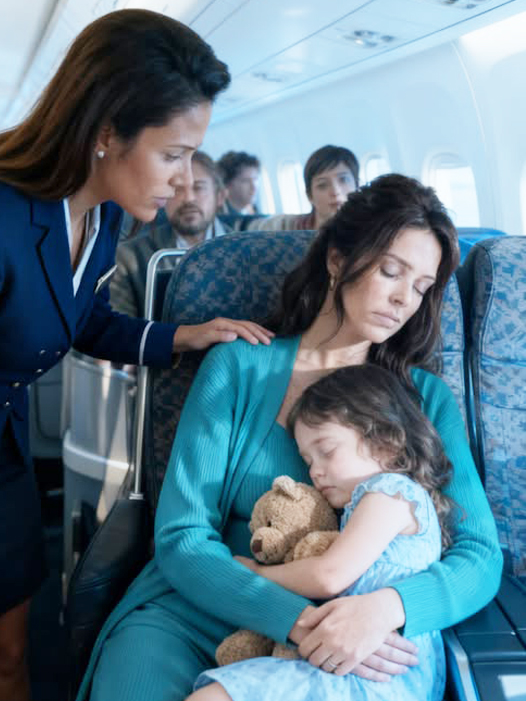
The reading light over seat 8A flickered twice, then settled into a low, yellow hum that made the pages of Laura Vance’s paperback look like old parchment. In the cabin of Atlantic Flight 412, a flight that had cost her eight hundred and forty dollars, the only constant sound was the wet, heavy snore of the man in seat 8B. Laura pulled her worn green sweater tighter around her chest to shut out the draft from the overhead nozzle. The fabric smelled faintly of cedar and the damp wool of passenger coats packed into the overhead bins. She turned a page she had already read
three times, focusing on the cheap black ink rather than the cold air pressing against her ankles. Her mind was not on the print, but on the subtle, irregular shudder beneath her boots, a tremor that did not match the steady drone of the dual Turbofan engines. She touched her left wrist, tracing the pale skin where her heavy military watch used to be. She had left the watch in a drawer in San Antonio, along with her flight suit and the letters from Gabriel’s mother. Gabriel had been gone eighteen months, but the silence of his final descent still filled her ears whenever she
was in the air. She had spent every day since then convincing herself that she had made the wrong call over the desert, that she had guided him into the ridge. “Excuse me, ma’am,” a soft voice said from the aisle. Laura looked up to see a flight attendant with a silver tray. The woman was smoothing her dark blue uniform apron with a quick, nervous palm. “Are you finished with your water cup, ma’am?” the attendant asked, her voice high and rapid. Laura handed over the plastic cup, letting her fingers brush the cold condensation on the rim. “Is the autopilot having trouble with the climb, or are we just catching a headwind?” The attendant paused, her fingers tightening on the edge of the silver tray until her knuckles turned white. “Just some light weather over the coast, ma’am.”
“We are at twenty-eight thousand feet,” Laura said, keeping her voice level. “The air is clear. But the lateral trim is hunting.”
“The captain has everything under control,” the attendant said, her smile remaining perfectly in place as she backed away.
She moved down the aisle before Laura could ask about the slight yaw she had felt three minutes earlier. It was a four-degree slip to the left, corrected too slowly by the automated systems.
The man in 8B shifted his weight, his shoulder pressing against Laura’s sleeve. He let out a long, whistling breath and went quiet again.
Laura looked back at her book, but the words blurred. The aircraft was climbing through twenty-eight thousand feet, heading out over the cold Atlantic, and the trim was off. She could feel it in the small of her back.
The cabin was dark, saved only by the small reading lamps of the few passengers who remained awake. A child wept softly three rows ahead, a dry, tired sound that quickly faded.
Laura stood up to stretch her legs, walking toward the forward galley where the air was colder and smelled of stale coffee.
Through the narrow gap of the curtain, she saw the cabin service door and the solid bulkhead of the flight deck. Sarah Jenkins, the lead flight attendant, stood by the beverage counter holding a fresh pot of coffee.
The cockpit door was unlatched, open just a few inches to let the heat circulate from the cabin.
Inside, the green and red glow of the instrument panels reflected off the glass screens. Captain Andrew Vance was leaning forward in his seat, his broad shoulders tense under his dark uniform.
“The primary channel is still fluctuating,” Andrew said, his radio-trained baritone carrying clearly through the gap. “It is fighting the trim.”
“Do we need to switch to the backup?” another voice asked, quieter and tighter.
“Not yet,” Andrew said. “Monitor the backup, but keep your hand near the override.”
Sarah tapped her knuckles against the doorframe before stepping inside with the coffee pot. The door clicked shut behind her, cutting off the low hum of the flight deck instruments.
Laura stood near the lavatory, her eyes fixed on the gray laminate of the door. The vibration in the floorboards was growing more distinct, a rhythmic thrumming that felt like a loose stabilization collar on a turbine shaft.
She knew that vibration. She had felt it once before over the Arizona desert, eighteen months ago, right before the sky turned upside down.
The memory of Gabriel’s voice over the radio, high and panicked as his F-16 rolled into the canyon, flashed through her mind. She had told him to pull up, but his controls had locked. She had been his wingman, and she had failed to save him.
She shook her head, forcing the memory back into the dark. She was a civilian now, a passenger in seat 8A, traveling to Spain to escape the ghosts of her past.
She watched the heavy lock of the cockpit door, wondering why the flight systems of a brand-new commercial liner would struggle so early in the flight. The weather was calm, yet the airframe was shivering.
The overhead lights in the main cabin suddenly shifted, the bright white tubes dimming to a dull, amber twilight.
A soft murmur rippled through the rows of sleeping passengers as several people stirred.
Sarah Jenkins emerged from the cockpit, her face pale under the harsh galley light. She walked down the aisle with rapid, shallow steps, her eyes scanning the rows but seeing nothing.
Laura stepped into the aisle, blocking the flight attendant’s path back to the rear of the aircraft.
“The cabin pressure is holding, but the air mix changed,” Laura said, keeping her voice low. “Why did the captain drop the generator load?”
Sarah stopped, her customer service smile slipping for a fraction of a second. “We are just managing our power distribution for the descent, ma’am.”
“You don’t drop the cabin bus unless you are isolating an electrical fault,” Laura said.
Sarah smoothed her apron twice, her fingers catching on the seam. “Please return to your seat, ma’am. The captain has everything under control.”
“He doesn’t,” Laura said softly. “The right stabilizer is hunting for center.”
Sarah stared at her, her lips parted as if to speak, but she remained silent.
She moved past Laura, her uniform brushing against the green sweater.
Laura sat back down in 8A. The man beside her was awake now, rubbing his eyes and looking out the dark window.
“Are we there yet?” he asked, his voice thick with sleep.
“Not yet,” Laura said.
The cabin grew colder as the ventilation system adjusted to the lower power draw. Laura looked out the double-paned window, but there was only blackness below, the vast, empty stretch of the ocean.
She could hear the faint, high-pitched whine of the hydraulic pumps working overtime beneath the cabin floor. The system was hunting, searching for a neutral point that the flight computers could not seem to find.
It was the same sound she had heard in the simulator before a total flight control computer failure.
She reached down and touched her carry-on bag, feeling the stiff corner of her worn green Air Force flight manual inside. She had brought it with her out of some twisted sense of loyalty, a relic of a life she had tried to leave behind in Texas.
The overhead speaker clicked, and the deep, reassuring voice of Captain Andrew Vance filled the cabin.
“Ladies and gentlemen, this is the captain speaking. We are experiencing a minor technical issue with our secondary navigation systems.”
He paused, and the silence in the cabin seemed to stretch.
“We are asking if we have any active or former military aviation personnel on board tonight. Specifically, anyone with experience operating high-performance fighter aircraft.”
A whisper rose from the rows behind Laura. People began to turn in their seats, looking at each other in the dim light.
“If we have any such personnel on board,” the captain continued, “please ring your call button or make yourself known to the cabin crew immediately.”
The passenger in 8B looked at Laura. “Fighter pilots? On a commercial flight?”
Laura did not answer. She stared at the small plastic call button above her head, her hand resting on her lap.
She knew what would happen if she stood up. Her hard-won anonymity among these strangers would be gone. She would have to explain what she was, what she had done, and why she had stopped flying.
She looked at her bare wrist again. The skin was pale, a constant reminder of the uniform she had discarded.
The speaker clicked again. This time, the captain’s voice was different. The slow, professional cadence was gone, replaced by a flat, urgent tone.
“This is Captain Vance. If there is a fighter pilot on this aircraft, please come to the forward galley now. This is an active operational emergency.”
The cabin went completely quiet.
Laura stood up, her movement deliberate. She stepped past the man in 8B, who stared at her with his mouth slightly open.
Sarah Jenkins was standing by the forward galley curtain, her face entirely white now.
Laura walked straight to her.
“I am a former United States Air Force fighter pilot,” Laura said.
Sarah did not speak. She simply nodded, her fingers fumbling on the plastic keys of the security keypad on the cockpit door.
Laura stood up and followed the flight attendant toward the cockpit.
Sarah swiped her keycard and typed the four-digit security code into the panel. The heavy armored door clicked, and she pushed it open, stepping into the narrow entryway of the flight deck.
Captain Andrew Vance turned his head, his pale face illuminated by the green and blue light of the main instrument panel. He looked past Sarah, his eyes landing on Laura’s faded green sweater and her mud-stained sneakers.
“Sarah, I asked for someone with military flight experience,” Andrew said, his voice deep and slow but tight at the edges.
“I have seven hundred hours in the F-16 Falcon, Captain,” Laura said, stepping into the cramped space.
She reached into her small canvas purse and pulled out her green military identification card, holding it under the small map light on the bulkhead.
Andrew took the card, squinting at the laminated plastic in the dim cabin light before passing it back to her.
“The Air Force retired that tactical unit three years ago,” he said.
“I left the service eighteen months ago,” Laura said, keeping her voice level as she tucked the card back into her purse.
Andrew looked back at his screens, where the main horizon line was tilting slightly to the left. “I don’t have time to verify your record with flight ops.”
“You don’t have to,” Laura said. “But your copilot is out, and your flight computer is steering by a broken compass.”
The first officer remained slumped forward in the right-hand seat, his forehead resting against the glare shield. His breathing was shallow, his hands hanging limp toward the rudder pedals.
“Help me move him,” Sarah said, her rapid customer service voice cracking under the strain.
Andrew looked from the unconscious man to the primary flight display, where a yellow caution box was flashing.
“Get him out of the seat,” Andrew told Sarah.
Sarah squeezed into the tight space between the pedestal and the side console, her fingers smoothing her apron as she worked the harness buckles. Laura stepped forward to help, gritting her teeth as she dragged the heavy, limp weight of the co-pilot onto the cockpit floor.
The first officer felt cold, his skin clammy under the light of the instruments.
“He went down ten minutes ago,” Andrew said, his eyes fixed on the horizon indicator. “Right after we cleared the pressure ridge over the coast.”
“What are the computers doing?” Laura asked, sliding into the right-hand seat.
The leather was still warm from the previous occupant, and the physical shape of the controls made her throat tighten. She reached down and adjusted the rudder pedals forward, her feet finding the metal plates with practiced familiarity.
“The primary flight control computer is spitting out pitch-trim errors,” Andrew said, pointing to the central display. “It thinks we are in a high-alpha stall, but our airspeed is two hundred and eighty knots.”
“It is trying to force the nose down,” Laura said, watching the digital tape slide.
“Every time I pull back, the autopilot overrides my input,” Andrew said.
The control yoke in Laura’s hands twitched, a cold mechanical shrug that traveled up her forearms.
“Is the secondary bus online?” she asked.
“It should be automatic,” Andrew said, but his hand hovered over the overhead panel, undecided.
A sharp vibration rattled the floorboards beneath their feet, starting as a low hum and rising to a rhythmic metal slap.
“What is that?” Sarah asked from the doorway, her voice rising an octave.
“Go back to the cabin, Sarah,” Andrew said. “Keep the passengers in their seats.”
The door clicked shut behind her, leaving the cockpit in a tense, humming silence.
Laura pressed her face near the thick acrylic of the side window, staring out into the dark.
The right wing was barely visible against the black sky, but she could see the silhouette of the trailing edge flaps vibrating. They were cycling up and down in three-inch arcs, fighting the airflow.
“The right wing flaps are shedding lift,” Laura said, her voice dropping into her old radio cadence.
“I have no lateral control,” Andrew said, his knuckles white on the yoke.
“The actuator is cycling,” Laura said. “It is trying to dump pressure on the right side.”
“I am going to override the hydraulic pumps,” Andrew said.
“If you drop hydraulic pressure now, we lose the spoilerons,” Laura said.
The vibration grew louder, a deep structural groan that she could feel in her teeth.
Andrew reached for the yellow hydraulic isolation switches on the center pedestal.
“Wait,” Laura said, her hand reaching out to block his arm.
Andrew stared at her, his jaw tight, his thirty years of commercial seniority bristling at her touch.
“We are losing the wing, Captain,” he said.
“The system is correcting against you,” Laura said.
“The computer is receiving bad data from the angle-of-attack sensor on the right side,” she continued. “It thinks the wing is stalled, so it is flapping the control surfaces to find clean air.”
“If I do not cut the hydraulics, the brackets will shear,” Andrew said.
“Switch off the secondary flight computer channel,” Laura said, pointing to the small gray toggle on the lower left of the pedestal. “Isolate the digital feed.”
“That drops us to mechanical backup,” Andrew said.
“It stops the computer from steering us into the ocean,” Laura said.
Andrew looked at the digital display, then at Laura, his hand shifting away from the hydraulic valves. He reached down and flicked the secondary channel toggle to off.
The violent shuddering in the floorboards stopped instantly.
The aircraft rose slightly, stabilizing on a steady, heavy glide path.
Laura exhaled, her palms slick against the gray plastic of the control wheel.
“Thank you,” Andrew said, his voice dropping an octave as he wiped his brow.
“Look at the fuel totalizer,” Laura said, pointing to the lower corner of the engine indications screen.
The digital numbers were rolling backward, losing fifty pounds of fuel every three seconds.
The low ceiling of the forward galley smelled of damp wool coats and stale ginger ale. Sarah Jenkins stood by the metal beverage counters, her fingers pulling at the edge of her blue polyester apron while she shifted her weight from one foot to the other. Across from her, Dr. Peter Whitman unzipped a small black leather medical case on the preparation shelf. He moved slowly, his shoulders slightly hunched against the steady vibration of the cabin floor.
“I need three clean bottles of still water,” Dr. Whitman said, his voice flat and quiet, lacking the urgency Sarah seemed to expect.
Sarah reached into a low plastic crate and pulled out two plastic bottles, then began searching behind a stack of folded paper napkins for a third. Her movements were too fast, her high-pitched customer service voice thin when she spoke. “The first officer was fine when we left New York, doctor. He had a cup of coffee and some water, and then he just drifted off. I thought he was just exhausted from the delay.”
Dr. Whitman pulled a small metal penlight from his leather case and clicked the switch twice against his thumb to test the bulb. “How long has he been unresponsive?”
“Ten minutes, maybe twelve,” Sarah said, finally finding a third bottle at the back of the drawer.
She handed them over, her eyes fixed on the silver zipper of the doctor’s bag. She smoothed the front of her uniform apron again, her breathing quick and shallow. “Is it a heart attack?”
“I cannot determine that from the galley,” Dr. Whitman said, his diagnostic sentences dry and measured. He took the bottles and placed them into the side pockets of his tweed jacket. “Bring the oxygen bottle from the forward closet and follow me.”
They moved into the short, carpeted transition space between the galley and the flight deck door. The air here was colder, vibrating with the deep hum of the two engines hanging under the wings.
Laura stood just inside the flight deck entrance, her shoulder pressed against the bulkheads to stay out of the way. Captain Andrew Vance remained in the left seat, his hands resting on the control wheel while his eyes flicked between the primary flight display and the fuel indicator. On the right side of the cockpit, the first officer lay back in his harness, his chin resting against his chest, his breathing shallow and loud.
Dr. Whitman squeezed past Laura, his shoulder brushing her green sweater. He knelt beside the unconscious pilot, his knees resting on the hard metal tracks of the seat. He peeled back the first officer’s right eyelid with a thumb, shining the penlight directly into the pupil.
“Is he having a stroke?” Andrew asked, not looking back from the windshield. His voice was deep and slow, but the tightness in his jaw was visible in the faint green glow of the instrument panel.
“No,” Dr. Whitman said.
He checked the first officer’s pulse, holding the cold wrist for fifteen seconds while looking at his own watch. He leaned closer to the pilot’s face, his nose inches from the man’s mouth.
“His pupils are pinpoint,” Dr. Whitman said, polishing his wire-rimmed glasses with a white handkerchief before putting them back on. “His skin is cool, and there is a distinct chemical odor on his breath, like synthetic oil.”
Andrew kept his eyes on the dark sky outside. “What are we looking at, Peter?”
“His symptoms are consistent with chemical poisoning,” Dr. Whitman said.
Laura leaned closer to the seat terminal, her eyes fixed on the limp form of the first officer. “Poisoning from what?”
“An organophosphate, most likely,” Dr. Whitman said, adjusting the strap on the pilot’s oxygen mask. “It mimics a sudden cardiovascular collapse, but the respiratory suppression is too localized. He did not eat the crew meal, did he?”
“Only the coffee,” Andrew said, his voice dropping an octave. “He brought his own thermos from the terminal. He always does.”
Laura looked down at the center console between the two pilot seats. The metal cup holders were clean and dry. A small yellow plastic cap sat on the floorboard near the rudder pedals, partially obscured by the shadow of the pedestal. Laura noticed the bright yellow plastic but left it alone for a moment, her eyes searching for the larger object. The large insulated stainless steel thermos the first officer always kept by his side was gone.
“Andrew, where is his thermos?” Laura asked.
Andrew glanced down at the console, his brow furrowing as he scanned the lower side panels. “He had it when we went through our preflight checks at JFK. It was sitting right behind the throttle quadrant.”
“It is not here now,” Laura said.
She knelt on the floorboard, her fingers brushing the cold metal of the seat tracks. She searched under the seat adjustment levers and behind the flight bag storage bins, but the grey metal thermos was nowhere in the small cabin.
“Maybe it rolled back into the galley during the climb,” Andrew said.
“Thermotic steel does not roll uphill,” Laura said.
She stood up and looked at the narrow space behind the captain’s seat. Only the emergency axe and the spare oxygen cylinders remained in their brackets.
“Someone took it,” Laura said.
Andrew stared at her, his hands tightening on the control wheel. “Why would anyone take a coffee thermos?”
“Because whatever is inside it is the only proof of what just happened to your co-pilot,” Laura said.
She stepped out of the cockpit, pulling the heavy door closed behind her. The forward cabin was dark, the first class passengers sleeping under thin blue blankets, their faces illuminated only by the occasional flicker of the reading lights. Sarah was waiting near the galley entrance, her hands still smoothing the fabric of her apron.
“Sarah,” Laura said, keeping her voice to a low whisper.
The flight attendant took a step closer, her head tilted down. “Is he going to make it?”
“The doctor is working on him,” Laura said. “But I need to know about the coffee. Who prepared it?”
“The catering crew brings the pots pre-filled,” Sarah said. “We just brew them on the galley plates. The first officer always asks for a fresh pot right before we push back.”
“And who had access to that pot?” Laura asked.
“Anyone who walked past the galley,” Sarah said. “It sits right on the outer counter while it brews. I was in the back of the cabin helping a passenger with their overhead bag for about five minutes.”
“Did you see anyone near the counter when you came back?” Laura asked.
“Mr. Sterling,” Sarah whispered, her eyes widening slightly. “He was standing right by the coffee maker. He said he was looking for a napkin.”
“Richard Sterling?” Laura asked.
“Yes,” Sarah said. “He had his briefcase with him. He was just standing there.”
Laura turned back toward the cockpit door, the pieces of the puzzle starting to fit together with a terrifying coldness. The fuel system failure, the failing computers, and now an unconscious co-pilot.
“He wanted the captain alone,” Laura said.
Sarah looked at her, her voice shaking. “Why would he do that?”
“Lock the door,” Laura said, her voice dropping into a hard military tone. “Lock the cockpit door immediately.”
The lock engaged with a heavy thud, sealing the flight deck from the rest of the cabin.
Andrew sat in the left seat with his shoulders hunched, his hands clamped tight around the control yoke as the aircraft rolled five degrees to the left.
The flight path vector on the screen was drifting away from the centerline.
“The elevator feel is too stiff,” Andrew said, his voice flat with exertion. “I am having to use excessive force to maintain altitude.”
Laura stepped closer to the center console, her eyes scanning the primary flight display and the system indicator lights.
“The secondary channel is still showing active interference,” Laura said. “The flight control computer is fighting your manual inputs.”
Andrew pulled back on the yoke, his knuckles turning white under the cockpit lights.
The aircraft nose rose slowly, but the response was sluggish, as if the controls were submerged in thick oil.
“I need you to monitor the airspeed,” Andrew said. “If we drop below two hundred knots in this turbulence, we will lose the pitch authority entirely.”
Laura adjusted the radar range to sixty miles, revealing a solid band of heavy precipitation directly along their path.
“We have twenty-four minutes before we hit the leading edge of the front,” she said.
The digital display for the fuel remaining showed a steady, even drop that did not match their current throttle settings.
The green numbers flickered, then settled on a lower value.
“Our burn rate is six percent higher than the flight plan calculated,” Laura said.
Andrew did not look at her, his eyes locked on the horizon line of the flight display.
“The drag is coming from the stabilizer,” Andrew said. “The trim is running in the opposite direction of my pull.”
A sharp red light began to flash on the overhead panel.
Before Laura could reach for the quick reference handbook, the interphone speaker on the center pedestal buzzed.
A grey face appeared in the small, thick glass window of the cockpit door.
Richard Sterling stood in the narrow galley corridor, his fingers pressing against the reinforced panel.
He leaned toward the small lens of the security camera, his features distorted by the wide-angle view on the console monitor.
Andrew glanced at the screen and reached for his microphone.
“Mr. Sterling, we are in an active emergency situation and the flight deck is closed,” Andrew said.
Sterling did not move away from the glass.
His voice came through the cabin interphone speaker, smooth and quiet despite the low rumble of the engines.
“Andrew, I understand you have a medical situation with the first officer,” Sterling said. “But you are drifting thirty miles north of the commercial corridor.”
“I am steering around a localized convective cell,” Andrew said.
“Our operations center in New York is tracking your transponder,” Sterling said. “You need to return to the assigned route immediately to preserve your fuel margin.”
Laura watched the radar screen, where the purple core of the storm was expanding.
“If we turn back now, we enter severe turbulence with a compromised control system,” Laura said to Andrew.
Andrew kept his eyes on the instruments, his jaw set.
“We are remaining on this heading, Richard,” Andrew said into the microphone.
“I have the authority to make routing decisions for this company during irregular operations,” Sterling said.
The line went silent for three seconds, the static humming in the small space.
Then a sharp, high-pitched voice came through the speaker, accompanied by the sound of shifting weight in the galley.
Sarah Jenkins was speaking to someone just outside the door.
“Sir, you cannot stand in the forward entry area while the seatbelt sign is illuminated,” Sarah said.
“I am not a typical passenger, young lady,” Sterling replied, his voice rising in volume.
Laura leaned closer to the door partition, listening to the muffled argument.
“Mr. Sterling says his executive position gives him authority,” Sarah said, her voice crackling through the interphone as she held the call button.
“Tell him to return to his seat,” Andrew said.
“He is refusing to sit down,” Sarah said. “He is demanding to speak with the captain directly.”
Andrew did not reply, his focus divided between the stiff control yoke and the rising level of noise from the galley.
“If you do not comply with crew instructions, I will have law enforcement meet the aircraft,” Andrew said.
Through the glass window, Sterling reached into his pocket and pulled out a small black leather wallet.
He pressed his company identification card against the glass.
“I have a master security clearance for all fleet cockpits, Andrew,” Sterling said. “I am coming in to assist.”
Andrew turned his head slightly toward the door.
“The cockpit remains secure,” Andrew said.
“This is an operational directive,” Sterling said. “You are jeopardizing thirty years of service with this airline over a minor system fluctuation.”
Andrew looked down at the altitude display, which had dropped another fifty feet.
His hands remained steady on the yoke, but his breathing had become shallow.
“He can terminate my contract before we touch down,” Andrew said to Laura.
“He cannot fly this airplane from the cabin,” Laura said.
A loud electronic chime sounded from the door panel as the security system processed an entry attempt.
The red indicator light on the lock console turned orange.
“He is entering the emergency bypass code,” Laura said.
The system was designed to allow entry if the crew became incapacitated, starting a thirty-second countdown before the latch released automatically.
The digital timer on the console began counting down from thirty.
“He has the executive override sequence,” Andrew said.
“We cannot let him in,” Laura said.
Andrew looked at the countdown timer as it reached fifteen.
The electronic hum of the door motor began to pitch upward.
Andrew reached down below the main throttle quadrant, his fingers searching for the manual lock control.
He found the mechanical slide lever that bypassed all digital inputs.
He pulled the metal handle toward the rear bulkhead with a firm, deliberate motion.
The deadbolt slides into place with a heavy metallic click.
After the deadbolt clicked, the space inside the cockpit grew very quiet, save for the constant rush of high-altitude air against the nose.
Andrew did not look back. He kept his eyes on the primary flight display, his hands resting lightly on the control wheel.
“Sit down, Laura,” he said.
She looked at the empty right-hand seat. The sheepskin cover was worn grey at the edges where dozens of first officers had rubbed against it over millions of miles.
“I cannot fly this plane, Andrew,” she said.
“I am not asking you to fly it,” he said. “I am asking you to be my crew.”
“The last time I sat in an ejection seat, a man died because of my choice,” she said.
“This is not an F-16,” Andrew said. “And nobody is ejecting tonight.”
She stepped over the central pedestal, careful not to bump the yellow engine thrust levers. Her knees felt stiff as she lowered herself into the sheepskin.
The seat was adjusted too low for her height. She reached down, found the mechanical lever, and raised the seat until her eyes lined up with the white reference guide on the center pillar.
The shoulder harness felt heavy. She pulled the black straps down, clicking the metal tabs into the circular buckle at her waist.
“Radios are on your side,” Andrew said. “Keep our altitude reports current with Madrid Control.”
“Madrid Control, Atlantic Four-Twelve, maintaining flight level two-zero-zero,” Laura said into her headset.
Her voice sounded steady, the clipped military cadence returning before she could stop it.
“They want us on the localizer for runway seventeen,” she said.
“The storm is moving faster than the forecast,” Andrew said.
He pointed to the wind vector indicator on his screen, which showed a forty-five-knot crosswind from the west.
“I am going to disconnect the autopilot,” Andrew said. “The servos are fighting the turbulence too hard.”
“I have the throttles,” Laura said. “But I know how to keep an aircraft straight.”
“Just watch my airspeed,” Andrew said. “If we drop below one hundred and forty, tell me immediately.”
Behind them, on the narrow cabin floor, Dr. Whitman adjusted his wire-rimmed glasses. He was kneeling next to the unconscious first officer, his fingers pressed against the man’s neck.
Sarah Jenkins stood beside him, holding a small flashlight from the galley.
“Is he breathing easier?” Sarah asked.
“His respiration is shallow,” Dr. Whitman said. “But his pulse is steadying.”
Sarah leaned down to move a black leather navigation bag out of the doctor’s way. Her hand brushed against something small on the metal track.
She picked up a yellow plastic cap, no larger than a dime, and held it under the flashlight beam.
“Did this drop from your bag, Dr. Whitman?” she asked.
The doctor took the small yellow cap and turned it over in his hand, looking at the tiny ridges on the edge.
“That is from a standard pharmaceutical vial,” the doctor said. “The kind used for injectable sedatives.”
Laura turned her head slightly, keeping her left hand on the engine controls.
“What kind of sedative?” Laura asked.
“Fast-acting,” Dr. Whitman said. “Something that would put a man to sleep in less than five minutes if it was mixed into a warm drink.”
Sarah looked down at the empty metal cup holder next to the copilot seat.
“The thermos is gone,” Sarah said.
“What thermos?” Laura asked.
“The first officer always carries a silver thermos of black coffee,” Sarah said. “It was on his side of the console when we departed JFK.”
“Where is it now?” Laura asked.
“It is not on the floor,” Sarah said.
The rain began to rattle against the windshield like handfuls of gravel. The nose of the aircraft pitched down five degrees as they entered the upper limit of the Spanish airspace.
“Madrid, Atlantic Four-Twelve is descending through twelve thousand feet,” Laura said.
“We are cleared for the approach,” the Spanish controller replied. “Be advised, wind shear reports from the previous landing.”
Andrew gripped the control wheel tighter, his knuckles turning white in the dim green light of the instrument panel.
“The air is getting thick,” Andrew said.
“We are five miles from the outer marker,” Laura said. “We need to get the wheels down.”
Through the dark water running down the side windows, Laura could see the wet gloss of the wings. The red navigation light on the left wingtip blinked against the thick cloud.
“Flaps five,” Andrew said.
Laura selected the flap lever, moving it back two notches. The hum of the hydraulic pumps sounded thin and strained.
“Speed is stable at one hundred and fifty,” Laura said.
“Give me flaps fifteen,” Andrew said.
She moved the lever again, watching the flap indicator needle creep toward the center mark.
“The runway lights are active,” Laura said. “Ten miles ahead.”
Through the grey curtain of rain, a faint line of orange and white lights appeared on the dark coast.
“Gear down,” Andrew said.
Laura grabbed the heavy plastic landing gear lever. She pulled it outward and pushed it down into the detent.
The cockpit filled with the deep rumble of three massive landing gear assemblies dropping into the airstream.
The nose gear light turned green.
The left main gear light turned green.
The right main gear light remained dark.
“We have a red light on the right main,” Laura said.
Andrew looked at the panel, then back at the windshield.
“Cycle it,” Andrew said.
Laura pulled the lever back up, felt the rumble subside as the gear retracted, and then pushed it down again.
The left and nose lights showed green. The right main gear light stayed red, then began to flash.
“The lock is not engaging,” Laura said.
“We cannot land on one main gear,” Andrew said. “The wing will drag and the fuel tank will rupture.”
“We have to land,” Laura said. “The fuel reserve gauge is at minimums.”
“We will drop the nose first,” Andrew said. “Try to keep the weight off the right side as long as we can.”
“Check the circuit breakers behind your seat, Laura,” Andrew said. “Look for the landing gear indication system.”
Laura turned her torso, her harness straining against her shoulders. She scanned the rows of small black buttons on the back wall of the cockpit. Her eyes found the panel labeled landing gear.
“The breaker is in,” Laura said. “It has not popped.”
“We have no alternate gear extension handle on this aircraft,” Andrew said. “It is all electronic through the secondary bus.”
“The secondary bus is what failed when the computer glitched earlier,” Laura said.
She looked at the fuel flow indicators. The numbers were dropping too fast.
“We have eighteen hundred pounds left,” Laura said. “That is ten minutes of flight time at this altitude.”
“We do not have enough to go around,” Andrew said.
“I know,” Laura said.
“Are you ready for this?” Andrew asked.
“I have landed in worse,” Laura said. “But the runway was longer.”
“The runway in Santiago is eighty-five hundred feet,” Andrew said. “We will need every inch if we have to use the brakes on one side to keep her straight.”
“I will handle the rudder,” Laura said. “You keep the nose down.”
The aircraft descended into the violent crosswinds above the Spanish runway.
Laura gripped the secondary controls, her boots heavy on the rudder pedals. The wind shear from the Atlantic sheared across the nose of Flight 412, throwing the massive frame thirty feet to the left in a single breath.
“Correcting,” Laura said, her voice tight but flat.
“I have the nose,” Andrew said, his eyes locked on the runway lights cutting through the dark Spanish rain. “Give me three degrees of right rudder.”
She pushed her right foot forward, feeling the hydraulic resistance fight against her calf. The crosswind was sixty knots, gusting to seventy, a wall of invisible water shoving the metal nose away from the centerline.
“Steady,” Andrew said. “Hold that angle.”
“The landing gear indicator is still showing red on the right main,” Laura said, looking at the small glowing bulb on the panel. “The nose gear and the left main are green.”
“We do not have the fuel to circle again,” Andrew said.
He was right. The digital fuel readout was blinking, a tiny yellow number reminding them that the tanks were nearly dry.
“We land first,” Laura said, her voice dropping into the steady rhythm she used when she flew missions over the desert.
Andrew did not reply. He kept his hands high on the yoke, his knuckles white under the dim cockpit lights.
Back in the main cabin, Sarah Jenkins checked the harness on her jumpseat one last time. Across the aisle, Dr. Peter Whitman sat with his head bowed, his fingers laced together over his knees.
“Is everyone secure, Sarah?” Dr. Whitman asked, his voice barely carrying over the roar of the engines.
“Yes, Doctor,” Sarah said, her hands smoothing the fabric of her apron. “Everyone is strapped in.”
A woman in row twelve began to pray aloud, her words a soft, rhythmic chant in Spanish. Other passengers joined in, their voices rising and falling as the cabin tilted sharply to the side.
Dr. Whitman reached into his pocket and pulled out a clean handkerchief to wipe his glasses, though the cabin was cold. He polished the wire frames slowly, his eyes fixed on the floorboards as the metal groaned beneath them.
“The young officer,” the doctor said, referring to the unconscious man in the cockpit. “His pulse is steady, but we need to get him to a hospital as soon as we touch down.”
“The Captain says we are five minutes out,” Sarah said.
She looked down the long aisle of the cabin. The overhead lights flickered, then dimmed to a dull orange glow as the generators shifted load.
“Just five minutes,” Sarah repeated.
The runway appeared through the sheets of rain, a narrow ladder of white and green lights surrounded by black water.
“Fifty feet,” the automated cockpit voice announced, its electronic tone cold and indifferent.
“Keep the left wing low,” Laura said, her boots working the rudders with tiny, rapid movements. “Let the left main touch first.”
“Forty feet,” the voice said.
Andrew pulled back on the yoke, leveling the nose just as a violent gust of wind caught the tail. The aircraft ballooned upward for a second, then dropped heavily.
“Thirty feet.”
“Hold it,” Laura said.
The left tires hit the wet asphalt with a loud chirp, followed immediately by a sickening tilt as the right side of the plane settled.
A sharp, metallic groan echoed from beneath the floorboards on the right side. The right landing gear was dragging, refusing to lock into its vertical position.
“It is buckling,” Andrew said, his voice rising a fraction of an octave.
“Keep the pressure off it,” Laura said. “Use the left brake and the rudder. Keep us straight.”
The metal on metal screech grew louder, a high-pitched scream that vibrated through the cockpit seats. Laura held her breath, her eyes fixed on the digital airspeed indicator as it tumbled down.
Then, with a heavy, hydraulic thud that shook the entire fuselage, the right gear lock finally engaged. The red light on the instrument panel snapped to green.
“We are locked,” Andrew said.
He pulled the thrust levers back into reverse, and the engines roared with a deafening, hollow sound that threw them both forward against their shoulder straps.
The plane slowed, water spraying in great silver sheets past the cockpit windows as they rolled down the center of the runway.
From behind the locked cockpit door, the sound of passengers clapping and cheering filtered through the thick wood.
Andrew let his head fall back against his headrest, his chest rising and falling in deep, ragged breaths.
“We are down,” Andrew said. “We are on the ground.”
Laura did not let go of her controls immediately. She stared at the blinking computer terminal on the center console.
The secondary channel was completely dead, but the primary channel had suddenly cleared its error codes the moment the landing gear locked.
“Andrew,” Laura said, pointing to the screen.
“What is it?” he asked, his voice thick with exhaustion.
“The system did not just fail,” she said, her voice dropping to a whisper. “The code was bypassed. The landing gear solenoid was overridden from the forward galley terminal.”
Andrew sat up, his brow furrowing as he looked at the computer logs.
“That is impossible,” Andrew said. “Only maintenance personnel have those access codes.”
“Or someone with executive clearance,” Laura said.
The plane taxied slowly toward the terminal lights, the rain still lashing against the glass.
Laura looked down at her lap, her mind racing through the events of the last four hours.
The poisoned coffee, the missing thermos, the locked controls, and the deliberate attempt by Richard Sterling to enter the cockpit.
She realized with a sudden, chilling certainty that the danger had not ended with the landing.
Sterling was still on board, just fifty feet behind her in the first class cabin, and he had the resources of an entire airline to cover his tracks.
“We need to contact the local authorities before anyone deplanes,” Laura said.
“I am already on with the tower,” Andrew said, lifting his headset. “They have emergency services waiting at the gate.”
The aircraft turned slowly onto the taxiway, its nose wheel splashing through deep puddles of rainwater.
Laura looked out her side window at the low concrete buildings of the Spanish airport.3
She was tired, her muscles aching from the tension of the flight, but her mind was sharper than it had been in eighteen months.
The counterfeit parts that had failed tonight were not a random manufacturing defect.
They were part of something much larger, and the man who knew the truth was waiting just outside the cockpit door.
“Keep the deadbolt locked until the police are at the door,” Laura said.
Andrew nodded, his hand resting on the manual latch.
The aircraft came to a complete stop as emergency blue lights surround them.
The metal passenger stairs groaned under the weight of three Spanish national police officers climbing toward the upper deck.
Cold rain swept sideways across the tarmac, catching the glare of the flashing blue roof lights of the emergency vehicles surrounding the aircraft.
Andrew stood by the forward exit door, his hand resting on the aluminum frame, his face drawn with fatigue.
Richard Sterling was already halfway down the wet metal steps, his heavy leather briefcase clutched tight against his ribcage.
He did not look back at the passengers crowding the exit behind him, his pace hurried but deliberate.
One of the officers, a tall man with a dark mustache and a heavy wool patrol coat, held up a flat hand to block the descent.
“Senor Sterling, please step back up to the platform,” the officer said, his voice carrying over the idle whine of the remaining engine.
Sterling stopped on the third step down, his shoes slick on the wet metal.
“I have a diplomatic connection to Madrid in forty minutes,” Sterling said, his voice carrying that familiar, smooth executive tone.
The officer did not move his hand.
“The airport is closed to departing flights,” the officer said.
“We have received a priority message from the tower regarding this aircraft.”
Sterling looked up toward the cockpit window, then turned his gaze slowly back toward the cabin door where Laura stood.
His fingers tightened on the leather strap of his bag, his knuckles turning white under the terminal lights.
The second officer reached for the briefcase.
“We will take the bag now, Senor,” the officer said.
Sterling let go of the leather strap without a fight, but his eyes never left Laura’s face as the metal cuffs clicked around his wrists.
The third officer guided him back up the stairs and into the deplaning corridor, his boots squeaking against the wet linoleum.
The terminal corridor smelled of damp carpets, floor wax, and the stale coffee of a night shift.
Two guard officers walked on either side of Sterling, directing him toward a glass-walled security office near the empty baggage carousels.
Laura walked ten paces behind them, her worn green sweater damp from the sprint down the stairs.
Andrew kept pace with her, his uniform cap tucked under his arm, his slow steps heavy with exhaustion.
Sterling stopped at the threshold of the glass office and waited for the guards to open the heavy double door.
He turned his head to look back at Laura, his posture still straight, though his coat was wet from the rain.
“I never imagined you would be sitting in 8A tonight,” Sterling said, his voice flat and quiet in the empty terminal.
Laura did not answer him, her arms crossed tightly over her chest.
“A small world,” Sterling added, his lips twisting into a hard, narrow line.
“But a very crowded flight.”
“Why did you try to enter the cockpit, Richard?” Andrew asked, stepping between Sterling and Laura.
Sterling looked at Andrew’s uniform collar, then back to Laura, his eyes remaining entirely cold.
“I had an interest in the performance of the flight control system,” Sterling said.
“Nothing more.”
“You poisoned the first officer’s coffee,” Laura said, her voice steady and technical.
“You needed the captain alone to ensure the plane went down.”
Sterling did not flinch, his eyes locked onto hers with a quiet, calculating intensity.
“The air is always full of unpredictable variables, Captain Vance,” Sterling said.
The guard nudged Sterling through the doorway, and the thick glass door clicked shut behind them.
Andrew turned to Laura, his face pale under the harsh fluorescent lights of the terminal.
“He knew you,” Andrew said.
“He knew my unit,” Laura said, her voice dropping to a whisper.
A young Spanish investigator in a grey suit walked toward them from the far end of the corridor, holding a blue plastic folder under his arm.
The holding room contained only a square laminate table, three plastic chairs, and a small high window that showed the wet tarmac.
The investigator, who introduced himself as Inspector Vargas, laid the blue folder on the table.
“The mechanics have already examined the primary avionics bay,” Vargas said, opening the folder to reveal a series of close-up color photographs.
Laura leaned forward, her eyes instantly scanning the technical schematics.
“The backup channel failed because the command signals were blocked,” Laura said.
Vargas nodded, pointing his pen at a photograph of a small circuit board with a burnt black mark across the center chip.
“The main computer received false altitude data because this processor was defective,” Vargas said.
The photograph showed a serial number stamped into the metal casing of the processor chip.
“That is a commercial grade component,” Laura said, her finger tracing the edge of the printed circuit board.
“Yes,” Vargas said.
“It is not certified for aviation use.”
“Andrew told me the system was correcting against him during the descent,” Laura said.
“It was,” Vargas said.
“The software is designed to override the manual controls if it detects a structural separation, but the chip was sending a fake signal that the tail section had already detached.”
Laura looked up from the photograph, her mind tracing the logic of the failure.
“A chip like that does not get installed by accident during routine maintenance,” Laura said.
Vargas turned the page to reveal a shipping manifest from a warehouse in New Jersey.
“It was supplied by an executive logistics firm three months ago,” Vargas said.
“Sterling’s firm,” Laura said.
“Exactly,” Vargas said, closing the folder with a sharp snap.
“But why now?” Andrew asked, leaning against the wall of the small room.
“The airline scheduled a full audit of all flight control systems, to begin tomorrow morning in Madrid,” Vargas said.
“If the plane crashed, the audit would never happen,” Laura said, the pieces falling into place.
“And the counterfeit parts would be buried under the sea,” Vargas said.
The investigator led Laura into an inner office where three computer screens displayed the inventory records of Atlantic Flight 412.
On the corner of the metal desk sat a clear plastic evidence bag containing a second circuit board, identical to the one in the photograph.
“The shipping firm is registered under the name of Sterling Global Logistics,” Vargas said, clicking through a database of corporate filings.
Laura felt the room go cold.
“Sterling,” she repeated.
“He has been under investigation by the federal authorities in New York for six months,” Vargas said, tapping the computer screen.
“They suspect his firm has been sourcing cheap, uncertified electronics from overseas and labeling them as military-grade components.”
“Military-grade,” Laura said, her mind flashing to the desert runway in Texas eighteen months ago.
“He knew the audit would expose the entire supply chain,” Vargas said, showing a list of subcontracted parts.
“The airline ordered a full audit of all flight control systems, scheduled for tomorrow morning in Madrid.”
“If the plane crashed, the audit would never happen,” Laura said.
“And the counterfeit parts would be buried under the sea,” Vargas said.
He reached into his desk drawer and pulled out a manila folder marked with a red stripe.
“We received these files from the American defense attaché an hour ago,” Vargas said.
He opened the folder and slid a technical report across the desk toward Laura.
The top page bore the official seal of the United States Air Force.
Laura looked at the date on the report: May fourteenth, eighteen months ago.
It was the crash report for Gabriel’s F-16.
“The investigation concluded it was pilot error,” Laura said, her fingers tightening on the edge of the desk.
“They said he failed to recover from a high speed dive.”
Vargas shook his head slowly.
“Look at the part numbers on page four,” Vargas said.
Laura turned the page, her eyes scanning the columns of military supply codes until she stopped at the flight control actuator assembly.
The serial number matched the counterfeit chip from the Boeing 757.
“The actuator locked,” Laura whispered.
“He did not freeze.”
“The supplier for that wing’s replacement parts was Sterling Global Logistics,” Vargas said.
Laura stared at the corporate logos on the seized maintenance documents in disbelief.
The Spanish investigator closed the folder, the cardboard clasp snapping shut with a sharp, dry pop in the quiet room.
By six in the morning, the high glass windows of the Barcelona airport terminal were turning a pale, watery gray, casting a cold light over the rows of empty plastic seats.
Andrew slid a paper cup of black coffee across the metal bench, the heat rising in a thin, twisting column of steam.
“Drink some,” he said.
Laura did not reach for the cup.
The shipping manifests they had just seen in the back office of the airport guard station were dated back two full years, each one bearing the corporate stamp of Sterling’s defense supply firm.
“The right wing panel,” Laura said, her voice flat in the cavernous, empty terminal. “The actuator on Gabriel’s F-16 came from that exact production run.”
Andrew leaned his elbows on his knees, staring down at the polished terrazzo floor where the reflection of the fluorescent lights stretched into long, broken white lines.
“We survived the landing tonight because you isolated the secondary channel before the computer locked the rudder,” he said.
“Gabriel didn’t have a secondary channel to isolate,” she said.
Andrew did not reply, his eyes tracking a cleaning machine as it hummed slowly past their bench, leaving a dark trail of wet concrete behind it.
“The Spanish police are holding Sterling in a room near the main gate,” Andrew said, breaking the silence after a minute.
“The investigator said they will transfer him to the federal custody unit by noon,” Laura said.
She looked down at her hands, which were empty and cold against her knees.
“I need to get to the hotel,” she said.
The airport hotel room was small and square, smelling of cheap lavender disinfectant and the damp wool of her green sweater.
Laura unzipped her canvas suitcase, the brass zipper catching on a loose thread near the corner.
Beneath her spare clothes lay her old military flight suit, neatly folded, the heavy Nomex fabric stiff from eighteen months of dark storage in the back of her closet.
She lifted it out, her fingers running over the empty velcro patch on the sleeve where her squadron patch had once been.
The weight of the green fabric in her lap felt like a physical accusation.
For eighteen months, she had carried the conviction that her turn radius had been too wide during the training run, that her slow reaction time had left her wingman to die in the Texas scrub.
Now, she sat on the edge of the mattress and pressed the rough fabric to her face, the faint scent of oxygen mask rubber and old laundry starch still clinging to the collar.
The tears came without any sound, shaking her shoulders in the dim light of the single bedside lamp.
She had built an entire life out of her guilt, using it as a shield to keep her feet on the ground and her mind far away from the sky she used to love.
But the wall of her self-blame had been crushed by a stack of shipping manifests and counterfeit part numbers.
A sharp, double knock on the heavy wooden door broke the quiet of the room.
Laura stood up, wiping her face with the back of her sleeve, and laid the flight suit back into the suitcase before locking the brass clasps.
She opened the door to find Señor Ortega standing in the carpeted hallway with a thick manila envelope held in his right hand.
“The military attaché just arrived from Madrid,” Ortega said.
Ortega sat at the small laminated desk near the window, his dark wool coat still buttoned up to his chin despite the warmth of the radiator.
He placed the manila envelope on the desk, the metal clasp facing upward.
“The American authorities released this to our department under the mutual assistance treaty,” Ortega said.
“What is inside?” Laura asked, standing near the foot of the bed.
“The cockpit voice recorder transcript from the afternoon of the crash,” he said.
Laura looked at the brown paper envelope, her hands tucked into the pockets of her trousers.
“I was his flight lead,” she said. “I heard his last radio transmission on the tactical frequency before he went into the ground.”
“You heard what he sent to you, Captain Vance,” Ortega said, his voice quiet. “This is the cabin microphone tape, the words he spoke to himself when the radio button was not pressed.”
The silence in the room became heavy, filled only with the distant, muffled roar of a departing commercial jet.
“He was twenty-four years old,” Laura said to the empty air.
“The trial will begin in New York once the extradition is processed,” Ortega said, rising from his chair.
He adjusted his glasses and picked up his leather briefcase from the floor.
“The prosecutor will require your testimony regarding the technical specifications of the flight control system,” Ortega added.
“I will be there,” she said.
Ortega nodded once, his expression serious, and walked out into the corridor.
The latch of the door clicked into place, leaving her alone with the envelope on the desk.
For so long, I believed I left him behind.
The thought was a physical presence in the room, blocking out the gray light from the window.
She walked to the desk but did not touch the paper.
By six in the evening, the sky over the airfield had turned the color of wet slate, with the first yellow lights of the runway beginning to blink in the distance.
Andrew stood against the concrete railing of the balcony, his tie loosened and his white pilot shirt unbuttoned at the collar.
“The vice president of flight operations called my cell phone,” Andrew said, not looking back as she stepped onto the concrete.
Laura leaned her hands against the cool railing, her eyes fixed on the distant hangars where the emergency trucks were still parked.
“They are keeping my route assignment,” Andrew said. “The technical team confirmed the manual override was the only way to save the airframe.”
“I am glad, Andrew,” she said.
“But you look hollowed out,” he said, turning his head to study her profile in the fading light.
“The investigator left the file,” she said.
Andrew looked down at the brown envelope she was holding against her side.
“Are you going to open it?” he asked.
“I don’t know if I can,” she said.
“Gabriel knew you were there,” Andrew said gently. “Whatever is in that transcript, it won’t change the fact that you tried to pull him through.”
“I was his leader,” she said. “My job was to bring him home.”
The wind off the tarmac carried the bitter smell of burnt aviation fuel, cold and sharp in the autumn air.
She looked down at the white paper she had slipped out of the manila envelope.
The official government seal was stamped at the top in faded blue ink.
Her hands shake as she unfolds the official government transcript sheet.
The black ink of the official stamp on the top right corner of the document was still slightly smeared. Underneath the bold header for the Department of the Air Force, three rows of capital letters spelled out the final five minutes of Gabriel Torres’s life.
Laura read the first line twice to make sure she was not misinterpreting the military abbreviation. It was the transcript of the cockpit voice recorder, recovered from the wreckage in the Utah desert eighteen months ago, printed on heavy legal paper.
Gabriel had spoken to the tower in Salt Lake City at exactly fourteen minutes past three.
“Hydraulics are completely unresponsive on the right side,” Gabriel had said. “Attempting manual reversion now.”
Laura stared at the next line, where the tower officer asked if his wingman was clear of the descent path. Gabriel had responded immediately, his words clear on the white paper.
“Vance is clear,” Gabriel said. “She tried to hook my wing to level us out. The failure is in my stick. Tell her she did everything by the book.”
The paper remained steady in her fingers, though the air in the hotel room felt suddenly thin. For eighteen months, she had carried the weight of that afternoon, believing her reaction time had cost him his life.
The failure had not been hers.
The realization did not bring a rush of warmth, but rather a cold, quiet stillness that settled deep into her joints. She set the document down on the dark wood of the hotel desk next to her room key.
An envelope lay beside the transcript, postmarked from the federal courthouse in New York. Inside was a federal subpoena, signed by an assistant prosecutor named Marcus Vance, who had left three urgent messages on her hotel phone.
She picked up the receiver of the hotel telephone and dialed the number written on the blue message slip.
The receptionist did not ask her to hold, and within five seconds, a man’s deep voice came through the line.
“This is Marcus Vance,” the man said.
“This is Laura Vance,” Laura said. “I am holding the transcript you sent to my hotel.”
There was a brief pause on the line, followed by the sound of heavy paper folders shifting in the background.
“We need you in the office, Captain,” the prosecutor said. “The defense is already trying to suppress the maintenance records from the New York hangar.”
“I will be there in twenty minutes,” Laura said.
She hung up the receiver and stood up, her hand brushing against the green wool sweater she had laid over the back of the chair. She folded the sweater carefully and placed it into her small canvas bag before walking out of the room.
The federal building was six blocks away, its grey concrete facade rising against the damp autumn sky. She walked past the security monitors, took the elevator to the fourth floor, and followed the yellow arrows on the floor tile to room four hundred and twelve.
Marcus Vance sat behind a metal desk cluttered with blue binder folders, each labeled with the name of Richard Sterling’s aerospace supply firm. He looked up as she entered, his eyes scanning her face with a quiet intensity before he offered her a chair.
“We need your testimony to connect the maintenance logs to the cockpit recordings,” the prosecutor said. “The defense is going to argue that the failure in Spain was a simple maintenance oversight.”
“It was not an oversight,” Laura said. “The secondary channel of the flight control computer was bypassed using a counterfeit chip with a shaved serial number.”
She reached into her pocket and placed a small slip of paper on the desk, showing the technical diagram she had drawn from memory.
Vance leaned forward, his eyes narrowing as he scanned her precise handwriting.
“We have the physical chip from Flight 412,” Vance said, opening a manila folder to reveal a photograph of a small black component with jagged edges. “But the defense will try to discredit the chain of custody.”
“I marked the serial number myself on the system diagnostic report before we landed,” Laura said. “The backup server in New York should have the automatic entry from thirteen minutes past midnight.”
The prosecutor nodded slowly, his thumb tracing the edge of her diagram.
“If you testify to this, the defense will bring up your own military record,” Vance said. “They will try to make the jury think you are a disgruntled former pilot looking for someone to blame.”
“They can ask whatever they want,” Laura said. “The telemetry from Gabriel’s crash matches the computer logs from Flight 412. The same counterfeit batch of actuators was sold to both the military and the commercial hangar in New York.”
“We go to grand jury on Tuesday,” Vance said. “Are you prepared to stay in the city until then?”
“I have somewhere I need to go first,” Laura said. “But I will be back by Monday morning.”
“Where are you going?” Vance asked.
Laura did not answer the question, instead rising from her chair and adjusting the strap of her small shoulder bag.
She walked out of the office before the prosecutor could stand up to shake her hand.
The afternoon sun slanted through the high glass windows of Gate 12 at JFK, casting long shadows across the rows of blue vinyl seats.
Captain Andrew Vance sat near the window, his uniform jacket folded neatly across his lap as he watched a fuel truck pull away from an departing aircraft.
“The company cleared me of any pilot error,” Andrew said when Laura sat down in the empty seat beside him. “The preliminary report is already on the FAA database.”
“And Sterling?” Laura asked.
“His lawyers are trying to get him out on bail, but the judge is holding him because of the flight risk,” Andrew said. “They found his passport in his briefcase at the airport.”
“Did they find the first officer’s coffee thermos?” Laura asked.
“Not yet,” Andrew said, adjusting his watch strap. “The police searched the entire galley, but it wasn’t there.”
He looked at Laura, his gaze lingering on her face, which was pale but steady in the bright afternoon light.
“You look different than you did in the cockpit,” Andrew said. “You look like you’ve finally landed.”
“I have a flight to catch,” Laura said.
“The airline offered you a complimentary first class seat on any of our routes,” Andrew said, reaching into his pocket and pulling out a gold-trimmed envelope. “The CEO personally signed the voucher.”
Laura looked at the envelope but did not reach out to take it from his hand.
“I already bought my ticket,” Laura said.
“Where are you flying to, Laura?” Andrew asked.
“San Antonio,” Laura said. “There is a house on a quiet street near the base.”
Andrew nodded, the understanding clear in his eyes as he slowly tucked the gold envelope back into his pocket.
The gate agent began the boarding announcement for his own flight back to Chicago.
“Take care of yourself, Captain Vance,” Andrew said, using her military rank for the first time.
“You too, Andrew,” Laura said.
She watched him walk down the jet bridge, his shoulders straight under his pilot uniform, before she turned toward the domestic ticket counter.
The terminal was crowded with holiday travelers, their voices blending into a low hum beneath the high arched ceiling.
The ticket agent at the domestic counter had a silver name tag that read Evelyn.
“I have a seat available in row fourteen, window,” Evelyn said. “Is that acceptable for your flight to San Antonio?”
“Fourteen is fine,” Laura said.
“That will be three hundred and twelve dollars,” Evelyn said.
Laura slid her credit card across the black counter without hesitation.
“Are you checking any bags today, Ms. Vance?” the agent asked.
“Just this one,” Laura said, gesturing to the small canvas bag at her feet.
The agent typed a series of commands into her keyboard, the rapid clicking sound filling the brief silence between them.
She printed the boarding pass and slid it across the counter, her finger pointing to the gate number.
“Your boarding time is in twenty minutes,” Evelyn said. “Have a safe flight.”
Laura took the paper boarding pass and held it between her thumb and forefinger.
She felt the weight of her decision, knowing that once she stepped onto that plane, her quiet life of anonymity would be gone forever.
She walked toward the security line, her stride rhythmic and measured, the way she used to walk toward her aircraft on the flight line in Arizona.
The other travelers parted around her, sensing the quiet determination in her movements.
When she reached the gate, the boarding line was already moving down the jet bridge.
She joined the queue, her boarding pass ready in her hand as the agent scanned the barcode.
The machine beeped with a short, positive tone.
Laura walked down the carpeted ramp toward the open aircraft door, her head held high.
The limestone corridor of the federal courthouse was cold despite the morning rush of lawyers. High windows let in the pale, grey light of the city, illuminating the dust motes that drifted above the polished marble floor.
Andrew Vance stood beside Laura, his dark civilian suit smelling faintly of cedar and dry cleaning. He held a paper cup of water, his eyes fixed on the heavy double doors at the end of the hallway. He had taken two days of personal leave from his airline to be here, his presence a quiet anchor in the busy corridor.
“His lawyers arrived forty minutes ago,” Andrew said.
Laura looked down at her polished black shoes, the ones she had kept in her closet since her military discharge hearing. She did not feel the familiar weight of her aviation watch on her wrist, only the smooth skin where it used to sit.
“They brought three rolling briefcases of files,” Andrew added, his voice low. “I saw them in the lobby.”
Across the hall, Dr. Peter Whitman sat on a wooden bench, his leather medical bag resting between his feet. He took off his wire-rimmed glasses and polished them with a clean white handkerchief, his movements methodical and slow. Beside him stood Sarah Jenkins, her fingers constantly smoothing her blue uniform apron as she watched the corridor fill with people.
“They said the jury is already in the box,” Sarah said, her voice high and rapid. “The bailiff told me we would be called in sequence.”
“It is a standard evidentiary hearing,” Dr. Whitman said, replacing his glasses on his nose. “They must establish the physical chain of custody before the formal trial begins.”
A group of men in charcoal suits swept past them, their leather shoes clicking against the stone. Richard Sterling was in the center of the cluster, his head tilted back as he listened to a tall attorney. Sterling did not look toward the bench where Laura sat, but his thumb was busy, spinning the heavy gold signet ring on his pinky finger.
“The prosecutor wants you on the stand first,” Andrew said, setting his paper cup down. “Are you ready for this?”
“I am ready,” Laura said.
The heavy wooden doors swung open with a dull creak, and a bailiff in a grey uniform signaled for the witness party to enter.
The courtroom was smaller than Laura had expected, dominated by dark oak paneling and the scent of floor wax. She walked down the center aisle, her back straight, and took her place behind the prosecutor’s table.
Sterling sat thirty feet away at the defense table, his hands flat on the polished wood. He looked smaller without his executive desk, his expensive wool suit hanging slightly loose on his shoulders. He did not look at the gallery where Andrew and Sarah took their seats.
The prosecutor, a quiet woman named Miller who wore a plain navy suit, adjusted her glasses as the judge took the bench.
“The state calls Laura Vance,” Miller said.
The witness stand felt cold under Laura’s hands as she sat down and took the oath. She kept her eyes on the back wall of the courtroom, focusing on the bronze seal of the United States. She had spent eighteen months running from this very room, believing she belonged in the dark.
“Can you describe the events of twelve thirty AM on the night of the flight,” Miller asked, standing at the podium.
Laura took a slow breath, her technical training taking over.
“The right wing flaps were vibrating at an abnormal frequency,” Laura said, her voice carrying the clipped, precise rhythm of her military training. “The flight control display indicated a primary channel failure, but the manual override was being resisted by the system.”
She explained the sequence of the computer errors, her technical vocabulary filling the quiet room. She described the pressure of the control column under her hands, the weight of the aircraft resisting every command. She spoke of the damp wool sweaters of the passengers, the smell of cold airport coffee, and the terrifying realization that the flight computer was actively fighting her inputs.
“Past accomplishments won’t save you during an emergency,” Laura said, repeating the rule her instructor had drilled into her fifteen years ago. “The machine only responds to physics, not to your rank.”
Miller reached into a cardboard box on her table and pulled out a small evidence bag. Inside was the yellow plastic vial cap.
“Do you recognize this object,” Miller asked.
“Yes,” Laura said. “It is the cap from a clinical sedative vial, found beneath the copilot seat during our post-flight inspection.”
Sterling whispered something to his attorney, his face tightening as he leaned close to the table.
“And what was the state of the flight control systems during this period,” Miller asked.
“They were actively fighting our inputs,” Laura said. “The counterfeit parts installed in the secondary actuator were sending conflicting data to the main computer. It was the same failure mode that occurred eighteen months ago in the Arizona desert.”
A murmur went through the back rows of the gallery.
Laura looked at Sterling, but his eyes were fixed on the legal pad in front of him.
“The military investigation was closed as pilot error,” Miller said. “Why?”
“Because the maintenance records were falsified,” Laura said. “The parts were certified as genuine military-grade components, but they were civilian scrap.”
The defense attorney stood up, his hand raised.
“Objection,” the attorney said. “The witness is testifying to matters outside her personal knowledge.”
“Overruled,” the judge said. “The witness is a certified accident investigator.”
Laura felt the weight of the room shifting, the quiet attention of the jury turning toward the man at the defense table. She thought of her green Air Force flight manual, the hours she had spent in the fluorescent light of the archive room, and the green sweater she had worn when she first read the true maintenance records.
By eleven thirty, the room had grown warm, the radiator beneath the tall windows clinking at regular intervals.
Miller turned toward the defense table, holding a second evidence bag that was much larger than the first. Inside was a stainless steel coffee thermos, its green paint chipped near the handle.
“This was recovered from the defendant’s first-class carry-on bag during his arrest,” Miller said to the judge.
Sterling leaned forward, his hands flat on the table. His attorney stood up to object, but the judge waved him down with a brief motion of her hand.
“The state laboratory confirmed traces of the same sedative on the rim of this thermos,” Miller said. “The same substance found in the first officer’s bloodstream.”
Laura watched Sterling’s hand stop moving. The gold ring on his pinky finger stayed perfectly still against the dark wood of the defense table. He had believed the thermos had been safely destroyed, left behind in the confusion of the emergency landing in Spain. He did not know that the Spanish authorities had secured his luggage before he could exit the terminal.
“He believed the thermos had been disposed of in the galley trash,” Miller said. “Instead, he kept it in his own luggage to avoid detection by the ground crew.”
The attorney beside Sterling began flipping through a blue folder, his movements sudden and disorganized.
“We also have the maintenance registry for the military airframe,” Miller continued, placing a stack of paper on the podium. “These documents show that the defendant personally authorized the acquisition of the counterfeit parts.”
Laura returned to the gallery, sitting beside Andrew in the third row of wooden benches. She could hear the faint, steady sound of her own breathing, no longer hurried by the shadow of her past.
The judge, a grey-haired woman with wire-rimmed glasses, looked over her desk at the defense table.
“The evidence of deliberate tampering with a commercial flight is substantial,” the judge said.
She ordered that the maintenance records and the medical reports be sealed pending the formal trial.
“The defendant will be held without bail,” the judge said, striking her gavel once against the wooden block.
The sound was loud and final in the high-ceilinged room. Two federal marshals stepped up behind Sterling, their hands resting near their belts.
Sterling stood up slowly, his shoulders dropping as the marshals stepped closer. He did not look back at the gallery, keeping his eyes fixed on the exit door behind the jury box.
Laura felt Andrew’s hand touch her shoulder, a brief, steady weight.
“It is over,” Andrew said.
Sterling was led out of the courtroom in handcuffs, refusing to meet Laura’s gaze.
The San Antonio air was thick and dry, carrying the scent of parched grass, hot asphalt, and the sweet, heavy pollen of the cedar trees.
Laura Vance walked slowly down Pecan Street, her black overnight bag in her right hand, her boots clicking against the cracked concrete.
The afternoon sun at two o’clock was relentless, baking the sidewalks until the heat radiated through the soles of her leather shoes.
She wore the green wool sweater, despite the temperature, because it was the one piece of her old life she had kept.
It was faded at the elbows, the cuffs slightly frayed from years of service in drafty military hangars and pre-dawn briefings.
She stopped in front of the small white house with the neat green lawn, her heart beating in a steady, heavy rhythm.
A single wooden rocking chair sat on the porch, next to a black mailbox with the name Torres painted in white letters that had begun to peel from the Texas sun.
This was the place Gabriel had talked about during the quiet hours of their pre-flight briefings in the squadron ready room.
He had spoken of the old pecan tree in the backyard that shaded the garage, and the way the kitchen always smelled of toasted cumin and fresh tortillas.
Laura took a slow, deep breath, her lungs filling with the dry Texas air, before she walked up the three wooden steps to the porch.
Her hand hesitated for a fraction of a second before she knocked on the screen door, her fingers resting against the worn wooden frame.
Inside, the faint murmur of a local television announcer was the only sound, reporting the afternoon news from the city.
A moment later, the inner wooden door swung open with a slight creak, releasing a draft of cool air from the house.
Mrs. Maria Torres stood in the doorway, her petite frame silhouetted against the dark interior of the hallway.
She was sixty-five years old, her dark hair streaked with silver and pulled back into a neat, tight bun at the nape of her neck.
She looked through the wire mesh of the screen door, her eyes resting first on Laura’s face, then dropping to the green wool of the sweater.
“Laura,” she said, her voice carrying the soft, lyrical accent of South Texas that Gabriel had always used when he was tired.
“Hello, Mrs. Torres,” Laura said, her voice steady but quiet.
The older woman unlatched the screen door and pushed it open, her movements slow but deliberate as she stepped aside.
“I knew you would come eventually,” Mrs. Torres said, gesturing for her to enter. “Your brother Andrew said you were on your way.”
Laura stepped into the cool hallway, the transition from the glare of the street making her squint for a moment as her eyes adjusted.
The house smelled of cedar, old paper, and dried lavender, a quiet sanctuary from the harsh light of the afternoon.
“I have the final documents from the federal investigation,” Laura said, keeping her voice level and technical as they walked.
Mrs. Torres led the way into the small living room, where a ceiling fan turned with a low, rhythmic hum on its brass mounting.
A framed portrait of Gabriel in his Air Force dress uniform sat on a small mahogany table in the corner of the room.
Next to the portrait was a small glass bowl filled with polished river stones he had collected during his survival training in the mountains.
“Please, sit down,” Mrs. Torres said, gesturing to a green velvet armchair near the window.
Laura sat, placing her black overnight bag on the floor beside her feet and smoothing the front of her green sweater.
She reached into her jacket pocket and pulled out the folded white transcript sheet, its edges crisp and clean.
“This is the official record of his final radio transmissions,” Laura said, holding it out across the short space between them. “The court unsealed it yesterday morning.”
Mrs. Torres sat on the edge of the matching sofa, her hands clasped tightly in her lap as she looked at the paper.
She did not reach for it immediately; instead, she looked at the portrait of her son, her expression unreadable.
“The newspapers in San Antonio said the parts were counterfeit,” Mrs. Torres said, her voice dropping to a whisper.
“They were,” Laura said, her technical military training taking over to keep her emotions steady. “The elevator control assembly was fitted with non-specification bearings sold by Richard Sterling’s firm.”
She held the paper steady, waiting for the older woman to find the strength to take it.
“They seized the maintenance logs from his warehouse in Chicago,” Laura added. “The bearings were designed to fail under high aerodynamic loads.”
Mrs. Torres finally reached out and took the sheet of paper, her fingers brushing against Laura’s hand with a light, warm touch.
Her skin was cool and soft, lined with the work of many years spent tending her garden and her home.
She unfolded the paper slowly, the white page reflecting the dim light from the window as she began to read.
Laura watched her eyes move across the typed lines of the transcript, recognizing the exact moments where the flight had gone out of control.
The room was completely quiet except for the steady, soft tick of a clock on the mantelpiece and the hum of the fan.
“He was trying to save the aircraft,” Mrs. Torres said, her finger pausing on a line of dialogue near the bottom of the page.
“He did everything by the book,” Laura said. “The transcript shows he told the tower his stick was frozen, but he kept trying to trim the nose down.”
Mrs. Torres looked up, her eyes bright with tears that she did not let fall, her gaze holding Laura’s.
“He told them you were clear,” she said.
“Yes,” Laura said, her throat tightening as she recalled the telemetry. “He wanted to make sure I didn’t get caught in the debris field.”
“He loved you like a sister, Laura,” Mrs. Torres said. “He told me you were the toughest pilot in the squadron.”
“I should have recognized the bearing failure sooner,” Laura said, the old familiar guilt rising in her throat like dust.
“No,” Mrs. Torres said, her voice suddenly firm and clear. “You could not fly a plane with broken steel.”
She folded the paper carefully and set it on the table beside Gabriel’s portrait, next to the glass bowl of river stones.
“For eighteen months, I stayed in this house and wondered if you had turned your back on him,” Mrs. Torres said. “I thought you had forgotten.”
“I was afraid to call you,” Laura said. “I thought you would look at me and see the person who came home when he did not.”
Mrs. Torres stood up, her apron strings fluttering slightly in the draft from the ceiling fan.
“Come into the kitchen,” she said, her tone softening. “I have sweet tea, and we have things to discuss.”
Laura rose and followed her through the short hallway into the bright kitchen, where a yellow oilcloth covered the square wooden table.
Two tall glasses of iced tea were already waiting, the condensation running down the glass and pooling on the yellow vinyl.
In the center of the table lay a worn silver pocket watch with a cracked crystal, its face yellowed with age.
“Gabriel’s father gave him that when he entered the academy,” Mrs. Torres said, sitting down and gesturing for Laura to do the same.
Laura sat opposite her, her eyes drawn to the silver watch, which she had seen Gabriel wind a hundred times before flights.
“He kept it in his flight suit pocket,” Laura said, her voice softening as the memory came back. “He said it was his backup instrument.”
“He left it on his nightstand the morning of his last flight,” Mrs. Torres said. “He told me he didn’t need it because his lead pilot never missed a time hack.”
She picked up the watch and held it in her palm, her thumb tracing the scratched silver casing with a gentle, rhythmic motion.
“He trusted you with his life, Laura,” she said, her eyes meeting Laura’s across the table. “And I have to trust his judgment.”
Laura looked at the older woman’s lined face, seeing the same quiet determination she had seen in Gabriel during their training flights in Nevada.
“The trial is over,” Laura said. “Sterling will be sentenced next month, and the FAA is auditing the entire supply chain.”
“Will it change anything?” Mrs. Torres asked, her voice quiet.
“It means they have to inspect every airframe in the fleet,” Laura said. “No more young pilots will fly with those parts.”
Mrs. Torres nodded slowly, her shoulders dropping as if a great weight had been lifted from her small frame.
“Then his death was not just a mistake,” she said.
“It was a crime,” Laura said. “But now it is a matter of record, and they can never hide it again.”
The older woman reached across the yellow oilcloth and covered Laura’s hand with her own, her touch warm and reassuring.
“You don’t have to stop living because he died,” Mrs. Torres said, her voice steady and full of grace.
The words were simple, but they broke through the remaining layers of Laura’s self-imposed exile, releasing the knot in her chest.
She let out a long, shuddering breath, her fingers tightening around Mrs. Torres’s hand as the tears finally came.
They sat in the quiet kitchen for another hour, talking about Gabriel’s early days, his stubbornness during flight school, and his love for the Texas sky.
The shadows on the yellow oilcloth grew longer as the sun began its descent toward the western horizon.
Laura stood up to leave, her heart lighter than it had been since the night in the desert eighteen months ago.
“I am going to teach,” Laura said, looking at the silver watch on the table. “An aviation academy near the coast offered me a position last week.”
“Teach them well,” Mrs. Torres said, walking her to the front door and letting the screen door swing open. “Teach them how to be safe.”
“I will,” Laura said, stepping out onto the wooden porch.
The air was finally starting to cool as the evening approached, the sky painted in shades of orange and deep purple.
Laura leaves the house as the warm Texas sun sets over the yard.
The heavy oak door of the director’s office at the San Antonio Aviation Academy clicked shut behind Laura. Outside the window, the morning air was still cool, the early commuter traffic humming on the distant interstate.
Director Thomas Hayes sat behind a metal desk stacked with training manuals. He adjusted his wire-rimmed glasses and slid a three-page document across the desk toward her.
“The salary is thirty-eight thousand a year,” Hayes said. “It is less than the commercial carriers offer to people with your level of experience.”
Laura picked up the heavy plastic pen from the desk. “The terms are acceptable.”
“You have forty-eight students in the introductory block,” Hayes said, tapping the blue folder. “They are young, Vance. Most of them have never handled anything heavier than a single-engine trainer on a clear afternoon.”
Laura turned to the signature page. She read the clauses regarding curriculum control and safety oversight. Her thumb brushed her sleeve, steady and deliberate.
“They do not need to fly heavy metal to learn the basics of system integrity,” Laura said.
Hayes leaned back in his vinyl chair. It squeaked against the linoleum. “The board was surprised you did not take the consultant position with the federal safety board in Washington.”
“The investigation is finished,” Laura said.
“They wanted you for the congressional panel next month,” Hayes said. “They said your testimony would be the center of the regulatory review.”
“My written statement is already in the record,” Laura said.
She signed her name on the bottom line. The black ink was wet against the white paper.
“Sterling is going to trial next week,” Hayes said, looking down at the signature. “The newspapers are calling it the largest aviation fraud in thirty years.”
“The federal prosecutor has the transcripts from the cockpit recorder,” Laura said. “The defense has no leverage left.”
Hayes took the signed contract and placed it in a green filing cabinet behind him. “Your classroom is down the hall on the left. Room one-fourteen.”
“Thank you, Director,” Laura said.
She stood up and picked up her black leather bag from the floor. Inside the bag, wrapped in a soft green flannel cloth, was her old flight helmet.
“Vance,” Hayes said as she reached the door.
She turned back to him, her hand on the brass latch.
“They are going to ask you about the F-16,” Hayes said. “They are going to ask you about Atlantic Four-Twelve.”
Laura looked at the blank whiteboard on his wall. “They will get the manual.”
She stepped out into the quiet corridor.
The hallway smelled of pine cleaner and floor wax. To her right, a glass display case held model airplanes, their silver wings catching the bright fluorescent light from the ceiling.
Laura walked past the portraits of past academy instructors. They were men and women with gray hair and stern eyes, their achievements listed on small brass plaques below their frames.
She stopped outside the door marked with a plastic sign that read Room 114. The brass doorknob was cold against her palm.
Through the small square window in the door, she could see the rows of laminate desks. Several students were already seated, their notebooks open, their heads bent over their digital tablets.
She let her hand rest on the brass knob without turning it.
For eighteen months, she had believed her own error had caused the crash in the desert that killed Gabriel. She had lived in a small apartment, avoiding the sound of engines, waiting for a judgment that had already been decided by a counterfeit part.
Now, the weight of that guilt was gone, but the quiet remained.
A student inside the room looked up and met her gaze through the glass. It was a young woman with her hair pulled back in a tight bun, similar to how Laura had worn hers during her first week at the military academy.
Laura took a slow breath, filling her lungs with the dry, air-conditioned air of the building.
She knew she would never sit in the cockpit of a commercial airliner again. She had no desire to feel the thrust of engines or see the clouds slip beneath a titanium nose.
The ground was where she belonged now.
She turned the knob and walked inside.
The low murmur of conversation stopped the moment she entered. Twelve pairs of eyes followed her as she walked to the front of the room.
The classroom was small, containing twenty desks arranged in a semicircle. On the back wall, a large map of Texas airspace was pinned with blue tacks.
Laura set her leather bag on the edge of the heavy wooden desk.
“Good morning,” she said.
“Good morning, Captain Vance,” several students said in unison.
A young man in the front row, whose nametag read Miller, cleared his throat. “We saw the news about the federal grand jury, ma’am.”
Laura did not answer. She unzipped her bag and reached inside, her hand finding the cold, smooth surface of her old helmet.
She pulled the black F-16 helmet out of the flannel wrap and placed it on the corner of the desk. The heavy fiberglass shell made a dull thud against the wood.
The students stared at the helmet, their eyes widening at the faded military markings and the dark visor.
“Is that the one you wore in the squadron, Captain?” Miller asked.
“Yes,” Laura said.
“My uncle flew Phantoms,” Miller said, leaning forward. “He said there is nothing like the feeling of pulling six Gs on a low-level run.”
“The physical sensation is secondary to the checklist,” Laura said.
She walked behind the desk and opened the course syllabus.
“We are here to study basic aerodynamics and emergency procedures,” Laura said. “The syllabus covers sixty hours of classroom instruction before you touch a simulator.”
A student in the second row, Cadet Cooper, raised his hand. “Are we going to study the Atlantic Four-Twelve landing?”
“No,” Laura said.
“But the reports said you isolated the secondary channel while the system was failing,” Cooper said. “That is not in the standard manual.”
“It is in the engineering blueprints,” Laura said. “If you understand the system, you do not need to guess.”
She picked up a box of whiteboard markers from the desk drawer.
“Many of you are here because you want to fly fast,” Laura said, looking at each of them in turn. “You want the uniform, and you want the authority.”
The room remained completely silent.
“The sky does not respect your ambition,” she said.
She walked to the large whiteboard that covered the front wall.
“The machinery is indifferent to your skill,” Laura said.
She took a blue dry-erase marker from the box and uncapped it. The sharp scent of alcohol filled the air around the desk.
“We will begin with the fuel manifold,” Laura said, turning back to the class. “Who can tell me the pressure threshold for the secondary transfer valve on a standard trainer?”
A student near the window, Cadet Henderson, looked down at his binder. “Three hundred pounds per square inch, ma’am.”
“Two hundred and eighty,” Laura corrected. “At three hundred, the seal begins to degrade. If the seal degrades, fuel bypasses the return line. What happens to the cockpit indicator?”
“It stays green,” Henderson said.
“It stays green until the manifold is dry,” Laura said. “You must learn to read the secondary indicators. You must look at the flow rate, not just the master caution light.”
She walked to the side of the desk and picked up the black helmet. She held it in both hands, feeling the familiar weight of the composite shell.
“Every piece of equipment on an aircraft is manufactured by a supplier,” Laura said. “Some of those suppliers are honest. Some of them are not. Your job is not to trust the machine. Your job is to verify it.”
She set the helmet back down on the desk.
The student pilots watched her in silence, their eyes fixed on the heavy black helmet on the corner of the desk. The romantic ideas of combat glory seemed to fade from the room, replaced by the sober reality of the technical specifications.
Laura looked out at the young faces, seeing her own past reflected in their eager expressions. The guilt that had haunted her for eighteen months was gone, replaced by a quiet determination to teach them how to survive the mistakes of others.
She knew she had made the right choice.
Richard Sterling was sentenced to twenty years in federal prison for conspiracy and sabotage.
Laura Vance chose to remain on the ground as an aviation instructor, helping young pilots understand the heavy responsibility of command.
She refused to sue the airline for the emotional distress caused by their executive’s actions.
Instead, she kept her focus on the quiet classroom where she placed her worn flight helmet on the corner of her desk.
She turned to the board and wrote her first lesson.