“NO CHILD IS A SECOND-CLASS CITIZEN IN THEIR OWN FAMILY, AND TODAY, THE PRICE OF YOUR CRUELTY HAS FINALLY COME DUE.“ I stood in the center of my parents’ sprawling marble foyer, my voice a steady, chilling blade that sliced through the cloying scent of expensive lilies and lemon-scented floor wax. For thirty-five years, I had been the “reliable” one—the daughter who managed the crises, balanced the ledgers, and swallowed her own needs to maintain the fragile peace of the Harrison dynasty. I had functioned as the invisible foundation of their lives, lighting myself on fire to keep them warm. But as I looked at my daughter’s pale, trembling face, I realized that I had been raising her in a house built on poison. This is the chronicle of my final act as a daughter, and my first true act as a mother. It is a story of how the “strong” finally break, and how the “forgotten” find their voice in the roar of a calculated justice. I. The Mountain of Gilded Indifference: Easter Sunday at the Harrison Estate in suburban Ohio was always an exercise in ostentatious tradition. My parents, George and Martha Harrison, treated holidays like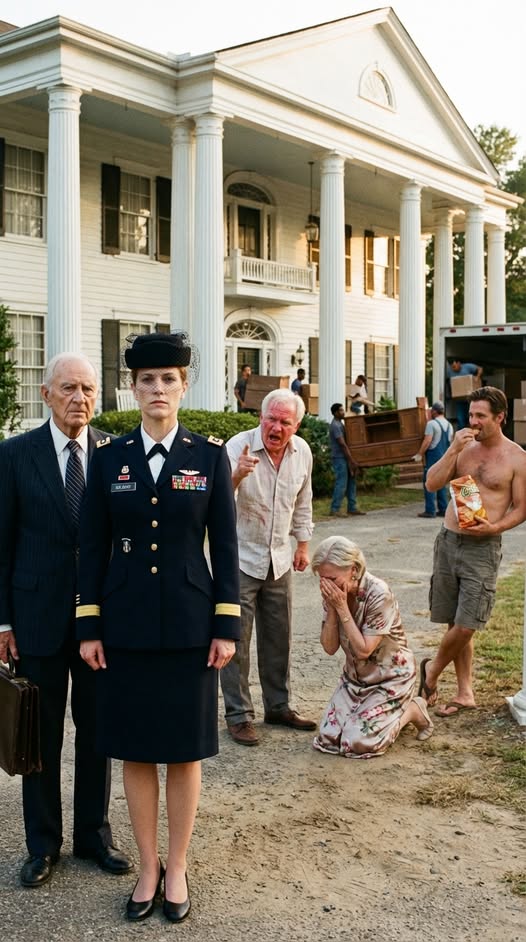
corporate mergers—grand displays of wealth designed to reinforce the family hierarchy. The mansion, a neo-colonial monstrosity of white pillars and manicured hedges, felt more like a museum than a home. The air inside was thick with the smell of roasting lamb and the desperate need for social validation.
The living room looked like a high-end toy store had suffered a colorful, chaotic explosion. Mountains of gold-foil wrapping paper lay discarded like autumn leaves across the Persian rug. My sister, Megan, the perpetual “golden child,” squealed with a practiced, high-pitched delight as her three children ripped into their spoils. George and Martha stood back, arms crossed, beaming with a pride they had never once directed toward my professional accomplishments or my life’s milestones.
“Look at the motorized Jeep! It has real leather seats!” Megan cried, already positioning her toddler for an Instagram photo that would surely be captioned #Blessed #GrandparentsLove. “And the iPads! Oh, Mom, you really shouldn’t have! This is too much!”
“Nonsense,” Martha said, waving a manicured hand as if she were dismissing a peasant’s plea. “We want our grandbabies to have the very best. Only the best for the Harrison legacy.”
In the corner, sitting on the very edge of a velvet sofa that likely cost more than my first three years of college tuition, was my eight-year-old daughter, Lily. Her hands were empty. Her Easter basket sat at her feet, containing nothing but the neon-green plastic straw I had bought from the local grocery store. I had been explicitly told not to bring gifts this year, that “Grandma and Grandpa had everything handled.”
Lily watched her cousins unwrap designer clothes from Burberry, high-end electronics, and toy cars that cost a thousand dollars a piece. She sat perfectly still, her small chest rising and falling in shallow, rhythmic breaths. She didn’t cry. She didn’t beg. She simply observed the mountain of gold growing in front of her cousins and the deafening silence surrounding her own person.
Martha glanced at Lily briefly, her eyes skating over my daughter as if she were a smudge on a windowpane. She then turned back to Megan’s chaos. “Oh, Sarah,” she said to me, her tone dismissive and airy. “We figured you’d have the ‘practical’ stuff covered. You’ve always been so self-sufficient and… well, frugal. We didn’t want to overstimulate Lily with too much fluff. You understand, don’t you? Megan’s brood… well, they need the extra magic to keep them spirited.”
I felt a cold, sharp lump form in my throat, a physical manifestation of a decade’s worth of swallowed resentment. It wasn’t about the toys. I could buy Lily a tablet. It was about the fundamental erasure of my daughter’s value. They hadn’t even bought her a single chocolate egg. To them, I was the daughter who didn’t “need” anything because I was “strong,” and by extension, my child was a ghost in her own family tree. I watched my father hand Megan a thick envelope—likely the “travel stipend” for their next unearned vacation—while Lily reached down to touch the empty straw in her basket.
Cliffhanger: As the celebration roared on, I caught Lily staring at her cousins. She didn’t look envious; she looked hollow. It was the look of a child who had just realized she was an afterthought, a realization that once settled, never truly leaves the soul. And as George toasted to “the future of the family,” I saw Lily whisper something to herself that made my blood turn to ice.
II. The CVS Sanctity and the Breaking Point
The drive home was suffocating. The silence in the car was a living thing, heavy and humid. I looked at Lily in the rearview mirror; she was staring out the window at the passing suburban sprawl, her reflection ghost-like against the glass. Every time we passed a house with Easter decorations, I felt a fresh surge of nausea.
I couldn’t bear the thought of Lily going to bed with that hollow look on her face. I pulled into a 24-hour CVS under the harsh, buzzing fluorescent lights of the pharmacy parking lot. The air smelled of rain, old asphalt, and exhaust. It was the least magical place on earth, a stark contrast to the Harrison mansion.
I walked the aisles with a frantic, desperate energy. My heart hammered against my ribs like a trapped bird. I found a $60 professional-grade coloring book set with metallic markers and a large bag of high-end chocolates. It was pathetic compared to the motorized Jeeps and the iPads, but it was all I could give her in the moment. The plastic bag crinkled sharply in the quiet car as I handed it to her.
“Here, baby,” I said, my voice thick. “An extra surprise.”
Lily sat in the passenger seat, clutching the coloring book to her chest as if it were a shield against a hostile world. She didn’t open it. Her voice was barely a breath, fragile and breaking into the stagnant air of the SUV.
“Mommy… did I do something wrong? Am I not a good girl like my cousins?”
The question shattered my heart into a million jagged pieces. The guilt I had suppressed for years—the guilt of subjecting her to these people in hopes of gaining their scraps of affection—boiled over into a sudden, icy clarity. I stopped the car, unbuckled my seatbelt, and knelt on the dirty floor mat of the passenger side. I took Lily’s face in my hands. Her cheeks were cold, stained with the salt of silent tears she hadn’t dared to shed in her grandfather’s house.
“No, baby,” I whispered, my voice vibrating with a new, dangerous edge. “You are perfect. You are the smartest, kindest, best thing in this entire world. But Grandma and Grandpa just did something very, very wrong. They forgot that love isn’t something you earn. And they aren’t going to get away with it. I promise you, Lily, you will never feel like this again.”
In that moment, the “Reliable Daughter” died. I realized that my silence wasn’t strength; it was complicity. I had allowed my parents to treat my daughter as a second-class citizen to maintain a facade of family unity that only benefited the people at the top. I realized that George and Martha didn’t love my “strength”—they loved my lack of maintenance. They loved that I was a free resource they didn’t have to emotional invest in.
Cliffhanger: As I pulled the car back onto the main road, I began a mental audit. I didn’t just see my parents; I saw their assets, their tax loopholes, and the decade of free professional labor I had provided to keep their estate solvent. I realized I held the keys to their kingdom, and I was about to change the locks.
III. The Auditor’s Extraction
By trade, I am a Certified Public Accountant, a specialist in high-net-worth forensic auditing. For ten years, I had managed the Harrison Family Trust and my parents’ complex investment portfolios for free. I had saved them nearly $200,000 in professional fees, spending my weekends and late nights optimizing their wealth so they could afford to subsidize Megan’s luxury lifestyle—a lifestyle of excess fueled entirely by my unpaid labor.
The next morning, I didn’t wake up as a grieving daughter. I woke up as a strategist. I spent four hours in my home office, the blue light of the monitor reflecting in my eyes. I changed passwords to every digital portal I managed. I moved my personal files to an encrypted drive. I prepared a formal “Termination of Services” notice that was as cold and final as a morgue slab.
I looked through the ledgers of the Harrison Trust. My grandfather had set it up to be split equally between the “descendants of the Harrison line.” But as I dug deeper, I found the “borrowing.” George had been treating the trust like a personal piggy bank. There were “loans” for Megan’s wedding, “advances” for her mortgage, and “stipends” for her children’s private schools—all taken from the principal that was legally supposed to be protected for all beneficiaries, including Lily.
My phone buzzed on the mahogany desk. It was Martha.
“Sarah, dear,” she said, her voice airy, entitled, and utterly oblivious to the storm. “Megan left a complete disaster in the playroom yesterday—sticky fingers on everything, you know how it is. And George and I have that charity brunch this afternoon. Could you pop over and handle the cleanup? Oh, and bring those tax returns for us to sign. George wants them filed by Wednesday to avoid the rush.”
I looked at the spreadsheet on my laptop—the one that showed exactly how George had “borrowed” $50,000 from the family trust just last month to pay for Megan’s new designer kitchen.
“No, Mom,” I said. My voice was smooth as polished glass, devoid of the usual tremor of “trying to please.”
“Excuse me? What did you say?”
“I’m afraid I’m busy. In fact, I’m going to be very busy for a long time. You’ll find everything you need in the mail tomorrow. Don’t call me again today, Martha. I have a lot of work to do for my actual clients.”
“Sarah, don’t be dramatic. It was just a few toys. You’ve always been the strong one, the one we can count on. Don’t start being difficult and emotional now—it doesn’t suit you.”
I hung up without saying another word. I didn’t feel the usual surge of nausea or the cold sweat of anxiety. I felt a profound, heavy peace. I then hit “Send” on an email to a top forensic accountant I had known since college, a man who specialized in trust litigation. The subject line: Fiduciary Negligence and Embezzlement Inquiry: Harrison Family Trust.
Cliffhanger: I watched the “Sent” notification flicker on the screen. My parents thought their power came from the name on the gate. They were about to learn that their bank account only existed because I was the one who knew where the bodies were buried—and I was the one who had just handed the map to the authorities.
IV. The Settlement of Souls
Forty-eight hours later, the “Emergency Meeting” took place. I refused to go to the mansion. I forced them to come to my modest two-bedroom apartment. My parents and Megan arrived looking like they had been summoned to a deposition. Megan was clutching her Birkin bag like she was afraid the modest air in my living room would stain the leather.
“This is ridiculous, Sarah,” George blustered, pacing my small living area. He threw a folder onto my coffee table. “You sent us an invoice for $195,000? For backdated accounting fees? We’re your parents! You don’t bill your own blood!”
“And I am a professional,” I replied, sitting across from them with a level of stillness that clearly terrified them. “For ten years, I have acted as your CFO. I have tracked your investments, filed your taxes, and managed a trust that you have systematically looted to fund Megan’s failures.”
I slid a single sheet of paper across the table. It was a summary of the illegal “loans” George had taken from the trust.