“You spent $2,300 on Easter gifts for Megan’s kids,” I said, my voice dropping to a whisper that commanded the room. “That money was taken from a trust fund that half-belongs to Lily. You didn’t just neglect my daughter; you stole from her future to buy her cousins’ affection. You committed fiduciary negligence, Dad. That’s a felony.” George’s face turned a ghostly, mottled shade of gray. Megan looked like she was about to faint, her hand moving instinctively to her stomach as if she could protect her own interests. “You have forty-eight hours to replenish the trust,” I continued, standing up. I was taller than all of them in that moment. “And you will pay my invoice for services rendered. If you don’t, the forensic report I’ve prepared—along with the evidence of the co-mingling of funds—goes to the state board and the IRS. I’m not asking, George. I’m telling you. You will never treat my daughter as ‘less than’ again, because you are going to pay for the privilege of having had me in your life at all.” Martha reached out to touch my arm, her eyes filling with a performative, watery grief. “Sarah, please, we’re family… Lily loves us… we can make this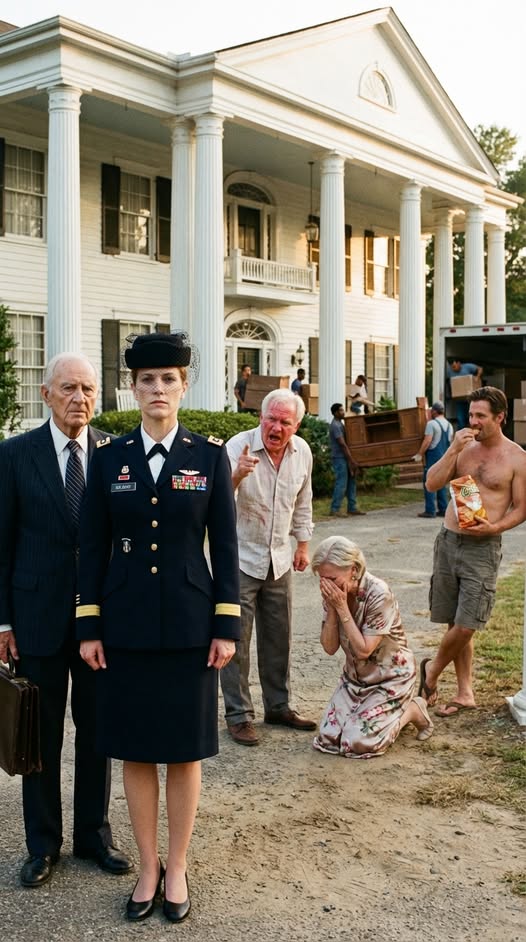
right. We’ll buy her the Jeep! We’ll buy two!” I pulled away, my eyes as cold as a winter morning. “We were a family, Martha. Now, we’re just a settlement. You traded a loyal daughter for a greedy one, and you traded a granddaughter’s heart for a motorized Jeep. I hope it was worth the price, because it’s the most expensive toy you’ve ever bought.”
Cliffhanger: George looked at the invoice, then at the evidence of his own fraud. He realized that the daughter he had dismissed as “self-sufficient” was the only person in the world who could keep him out of a federal courtroom. He looked at me, and for the first time in my life, I saw him truly see me—and he was absolutely terrified.
V. The Freedom of the Shelf
I didn’t wait for them to apologize. I knew a “sorry” from people who calculate love in dollars was just a down payment on the next betrayal. I took the settlement money—every single cent of it—and moved Lily and me three hours away, to a vibrant, progressive school district with a heavy emphasis on arts and character. I opened my own private firm, Miller & Associates, taking my highest-paying clients with me.
Six months later, a massive, glittery box arrived at our new doorstep. It was an elaborate, five-story dollhouse that must have cost five thousand dollars. There was a card from Martha, written in her elegant, shaky script: To our darling Lily, with all our love. We miss you every day. Please call.
Lily came home from school, her backpack slung over her shoulder, her face flushed from playing soccer. She looked at the box, then looked at the shelf in her room. On that shelf sat the $60 coloring book from CVS, its pages now filled with vibrant, chaotic, and beautiful art we had created together on the floor of our new, peaceful living room.
“Do you want to open it, Lily?” I asked, watching her closely. I wouldn’t stop her. I wanted her to choose.
Lily shook her head. There was a newfound confidence in her posture, a light in her eyes that hadn’t been there on that dark Easter Sunday. “No, thanks, Mommy. It looks like the kind of toy that comes with a lot of rules and expectations. Can we just go to the park and use the new soccer ball instead?”
I felt a surge of triumph that no bank balance could ever match. I hadn’t just won a legal battle; I had successfully deprogrammed my daughter from the cult of “performance love.” I realized that the most expensive gift I had ever received was that drugstore coloring book—it was the key that unlocked the door to our freedom.
The Harrisons’ lives, meanwhile, were predictably crumbling. Without my free labor, George had botched their tax filings, leading to a massive audit that cost them a third of their remaining estate. Megan, realizing the well had finally run dry, had moved to Florida to find a “wealthier circle” and stopped taking Martha’s calls. The “Golden Child” had no interest in parents who couldn’t pay for the gold. They were alone in their museum of pillars and silk.
Cliffhanger: Just as we were leaving for the park, my phone buzzed in my pocket. It was a text from my father, sent from a number I hadn’t yet blocked: Megan is suing us for the deed to the mansion. She says we promised it to her in writing. We’re going to lose everything, Sarah. We’re old and sick. We need your help. Please come home.
VI. The Cost of Silence
I sat on my new porch that evening, the air smelling of cut grass and lilac. I watched Lily run through the sprinklers with the neighborhood kids, her laughter the only music I needed. I thought about the $2,300 my parents had spent on that Easter Sunday—a price they thought was for gifts, but was actually the price they paid to lose their only loyal child.
I picked up my phone. I didn’t reply to my father. I didn’t feel pity, and I didn’t feel spite. I felt nothing at all, which was the greatest victory of all. I blocked the last remaining number from my old life. I was no longer the “strong one” who carried their burdens so they could remain light. I was simply a woman who knew her worth.
I realized then that the toxic legacy of favoritism only survives as long as the “unfavored” one agrees to play the game. The moment you stop seeking their validation, their power evaporates like mist in the sun. My parents were left with a daughter who hated them and a granddaughter who didn’t even recognize their names.
I picked up a new, leather-bound notebook. On the first page, in clear, bold script, I wrote: Chapter One: The Cost of Silence. For the first time in thirty-five years, I knew exactly what the next page would say, and I knew I would be the one to write it. I wasn’t a character in the Harrison story anymore. I was the author of the Miller one.
“You did it, Mommy!” Lily yelled, running up to me, soaking wet and grinning like a sunbeam. “I kicked the ball all the way to the fence!”
“I saw you, baby,” I whispered, tucking a wet, smelling-of-summer strand of hair behind her ear. “You’re incredible. And you did it all on your own.”
The sun set over our new life, casting long, golden shadows that felt like a promise kept. I was free. Lily was safe. And the Harrisons were finally learning that you can’t buy a legacy when you’ve already spent your soul.
If you want more stories like this, or if you’d like to share your thoughts about what you would have done in my situation, I’d love to hear from you. Your perspective helps these stories reach more people, so don’t be shy about commenting or sharing.