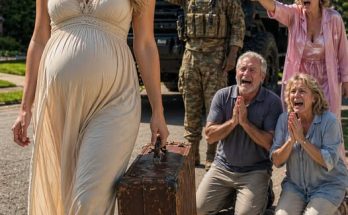
Chapter 5: The Echoes of Cowardice: The dismantling of Marcos’s life did not happen in a single, cinematic courtroom explosion. True legal ruin is a slow, methodical asphyxiation by paperwork. It arrived in manila envelopes, sworn bank affidavits, grueling depositions, and the suffocating exhaustion of repeatedly explaining to a stoic judge how casually a family decided my survival was a nuisance to their itinerary. Marcos’s defense strategy fractured into three pathetic stages. First came the panic phase. He claimed he was overwhelmed by the sudden medical emergency, that Pilar had pressured him into leaving, and that he fully intended to dispatch a private ambulance from the airport tarmac. Next came minimization. His lawyer attempted to argue that Marcos locked the deadbolts for my safety, terrified that in my delirious pain, I might wander into the street. Finally, when the lies collapsed, he resorted to weaponized self-pity. He sat in mediation, weeping into his hands, pleading that “one terrible morning” shouldn’t permanently vaporize his marriage and his standing in the community. Allison Reed dismantled every single narrative with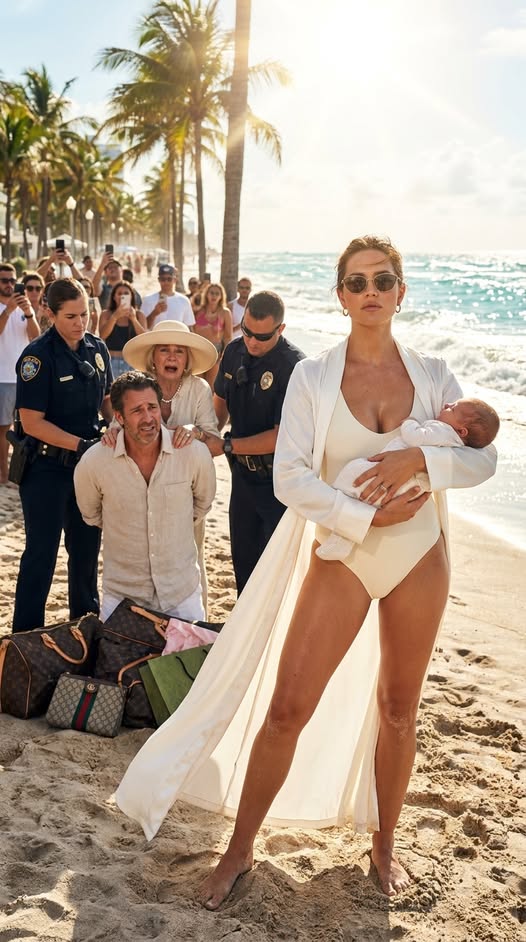
the cold efficiency of a sniper. The 911 dispatch logs annihilated his timeline. The paramedics’ sworn testimony documented my critical condition. The credit card timestamps proved their immediate priority upon landing in Florida was purchasing resort wear, not calling a hospital. And Pilar’s own social media—a
grinning, cocktail-in-hand selfie captioned Finally, a week where nobody ruins anything—obliterated any claim of familial concern.
But the absolute fatal blow was dealt during the preliminary custody hearing.
The courtroom was vast, smelling of lemon polish and old paper. Marcos sat at the respondent’s table in a tailored navy suit, aggressively refusing to make eye contact with me. His lawyer was in the middle of a grand speech about Marcos’s “deep paternal devotion” when Allison stood up and requested to enter Exhibit C into the record.
The judge nodded. Allison pressed play on her laptop.
The audio from my front porch security camera hissed through the courtroom speakers. It was grainy, but the voices were unmistakable.
“Lock both deadbolts, Marcos.” Pilar’s voice, sharp and venomous. A faint, agonizing scream from inside the house—my scream. Then, the heavy, metallic CLACK of the first lock. The CLACK of the second lock. “Let her have the baby quietly.”
The silence that blanketed the courtroom after the audio stopped was absolute. I watched Marcos’s attorney slowly close his legal pad, place his pen down, and rub his temples. He knew the case was dead.
I looked at the man I had married. I didn’t feel a triumphant rush of vengeance. I felt a hollow, unsettling recognition. The man shrinking into his chair, utterly paralyzed by his own exposed cruelty, was the exact same man who had looked away when I begged for an ambulance. His entire existence was powered by weakness. I had just spent years mistakenly romanticizing it as gentleness.
The divorce petition was filed the next morning. It wasn’t an act of revenge; it was an alignment of reality.
Before the final decree was drafted, the court mandated one supervised visitation session at a neutral family center downtown. Marcos arrived looking meticulously wrecked. His pale button-down shirt was slightly wrinkled, his hair unkempt—a carefully curated performance of a man hoping his visible exhaustion might successfully substitute for genuine remorse.
When the court-appointed social worker carried Leo into the sterile, fluorescent-lit room, Marcos immediately burst into tears.
He fell to his knees beside the bassinet, sobbing loudly. For one microscopic, painful second, the ghost of the life we were supposed to have flickered in my mind. Then, Marcos looked up at me, his face wet, and choked out, “I never wanted this to happen to us.”
The illusion shattered instantly. Even now, staring at the son he abandoned, he was mourning the consequences of his actions, not the actions themselves.
“You locked the door, Marcos,” I said, my voice so dangerously soft that the social worker paused taking notes.
He flinched as if I had struck him. “My mother… my mother told me to—”
“No,” I interrupted, stepping forward until my shadow fell over him. “Your mother gave an order. But you executed it. If you are old enough to call yourself a husband and a father, you are old enough to take ownership of the verb.”
That was the last time I spoke to him outside of a courtroom.
A month later, I sat in Allison’s office as she slid the final judgment across her mahogany desk. The court had granted Marcos strictly supervised, highly limited visitation, heavily contingent upon mandatory psychological counseling and relentless financial compliance. Pilar and Beatriz were legally excised from Leo’s life entirely. They were granted zero access, zero holiday rights, and zero legal standing.
I picked up the heavy, embossed pen Allison offered me. I flipped to the final page of the decree. My hand didn’t shake. I signed my name, the ink bleeding dark and permanent into the paper, sealing the tomb on my old life.
Allison smiled grimly and closed the folder. “It’s done. But there’s one more thing,” she said, sliding a sealed envelope across the desk. “This arrived at my office this morning. Addressed to you. Return address is Pilar’s new condo.”
Chapter 6: The Weight of the Lock
I didn’t open Pilar’s envelope immediately. I left it sitting on the passenger seat of my car as I drove back to the quiet, gated neighborhood in Houston.
The house was legally, indisputably mine again, but the atomic structure of the air inside it had changed. It no longer felt tainted by their memory; it felt aggressively reclaimed. Sofía and I had spent a weekend stripping the wallpaper in the guest room Pilar used to haunt, painting it a soft, vibrant sage green. We converted the massive closet where Beatriz used to hoard her unpaid-for luggage into a meticulously organized sanctuary for Leo’s supplies. Order had been violently restored.
I walked into the kitchen, the late afternoon sun casting long, golden beams across the marble island. I balanced Leo on my hip, the rhythmic hum of the dishwasher vibrating beneath my bare feet. I smelled the faint, comforting scent of lavender baby detergent. There was no cinematic orchestra playing in the background. There was just the profound, staggering weight of peace.
This is what actual freedom looked like. A quiet house. A locked door that answered only to my fingerprint. The absolute certainty that nobody breathing the oxygen in this space believed my physical agony was less critical than a brunch reservation.
Months blurred into a year.
On the evening of Leo’s first birthday, Sofía showed up at my front door holding a slightly crushed grocery-store cake and a bottle of expensive champagne. Leo was already asleep upstairs in his crib, having exhausted himself systematically destroying the wrapping paper of three small gifts. The living room was a beautiful, chaotic mosaic of wooden blocks, discarded burp cloths, and a plush fox stuffed under the sofa.
Sofía popped the cork, poured two glasses, and raised hers into the air. “To the absolute best decision you ever made, executed on the absolute worst day of your life.”
I clinked my glass against hers, a genuine smile breaking across my face. She was right. But the best decision wasn’t hiring Allison, or changing the locks, or even filing the protective order. Those were just logistics.
The greatest decision was a quiet, internal vow I made the moment I first held my son in the hospital. I promised myself I would never force him to grow up in a house that taught him love meant silently absorbing cruelty just because the abuser shared your last name.
Later that night, after Sofía had gone home, I walked to the front entryway.
I reached out and ran my fingers over the brushed steel of the biometric keypad. The red, laminated trespass notice had been taken down months ago, its legal purpose fulfilled. But sometimes, when the porch light hit the heavy mahogany door just right, I could still see the phantom imprint of that bold, yellow word: STOP. It was the first physical manifestation of my refusal to be a victim.
A soft, distressed whimper drifted down the staircase from the nursery. Leo was stirring in his sleep.
I didn’t hesitate. I didn’t weigh his need against my exhaustion. I didn’t look for an excuse to ignore him. I turned my back on the front door and walked up the stairs, moving swiftly toward the sound of my child.
I lifted his warm, heavy body from the mattress, pressing his cheek against my collarbone. He settled instantly, his breathing returning to a slow, steady rhythm. Standing there in the shadows of the nursery, holding the only thing that truly mattered, the final architecture of the tragedy became crystal clear.
Pilar and Marcos had locked the deadbolts because they believed trapping me inside would preserve the convenience of their lives.
They never realized that by locking me in, they had permanently locked themselves out.
I laid Leo back down, the silence of the house wrapping around us like a shield. As I turned to leave the room, my eyes caught the unopened envelope from Pilar, still sitting on my dresser where I had dumped it months ago. I picked it up, feeling the thick, expensive cardstock between my fingers. I didn’t need to open it to know what was inside—threats, guilt trips, or perhaps a new, insidious angle of attack.
I walked downstairs, opened the lid of the kitchen trash can, and dropped it in, unopened. The war was over. And I had won the only territory worth keeping.