Alexander sat beside me in a winged leather chair. He looked exhausted, the sharp edges of his corporate persona softened by a desperate, protective love. For hours, he recounted the story I had been denied. He told me about my mother, his late wife, who died in a horrific car accident when I was four. He explained how, in the chaos of the crash and a subsequent hospital mix-up involving an unidentified child, I was incorrectly registered into the state system as a Jane Doe. By the time he clawed his way out of a six-month coma, the foster system had moved me four times, losing my paperwork in the bureaucratic machine. He had spent twenty years and millions of dollars tearing the country apart looking for me. “I promised her I would find you,” Alexander murmured, his eyes fixed on Victoria’s sleeping form. “I just… I’m so sorry I was late.” “You weren’t late,” I replied softly, reaching out to squeeze his hand. “You were exactly on time.” Across town, in a stark, brutal contrast of reality, it was pouring rain. My newly appointed legal team had provided me with a detailed dossier of the fallout, complete with surveillance photos. Mark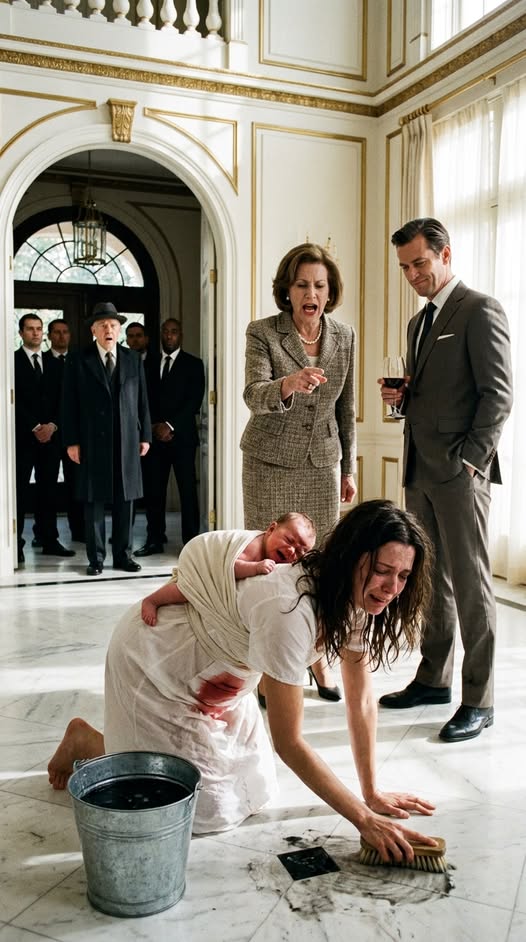
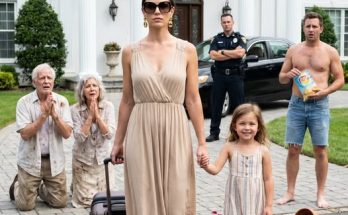
stood on the sidewalk outside our foreclosed Lake Forest home, his expensive suit soaked and clinging to his frame. The wrought-iron gates were padlocked shut by the bank. The locks on the front door had been drilled and replaced. Sitting on a cheap, scuffed nylon suitcase on the curb was Eleanor. She was openly weeping, her mascara running down her cheeks in thick black rivers. Through the lens of the private investigator’s camera, I watched as several of her former country club friends drove past in their Range Rovers. None of them stopped. They didn’t even roll
down their windows. In their elite circle, financial ruin was a contagious disease, and Eleanor was now Patient Zero. My tablet, resting on the glass table beside me, softly chimed. I picked it up. It was an email forwarded by my security team. It was from Mark. He had managed to send it from a cheap burner phone he had bought at a gas station with loose change. Chloe, please. I am begging you. They took everything. My accounts, my cars, the firm. My mother is sleeping in a motel. I know I made mistakes, but please, remember our vows. You are my beloved wife. Have mercy. Just ask him to give me a fraction of my equity back. Please, Chloe. I love you.
I stared at the glowing words on the screen. A week ago, those words might have triggered a trauma response. They might have made me doubt myself. But sitting in the light, surrounded by true protection and the bloodline I had bled for, I felt nothing. I didn’t feel anger. I didn’t feel pity.
I felt a profound, overwhelming, beautiful indifference.
I calmly tapped the screen, dragging the email to the ‘Trash’ icon, and permanently deleted Mark from my existence.
Just as the screen went black, a sharp, authoritative knock echoed on the heavy mahogany doors of the solarium. My father’s chief of staff stepped into the room, holding a thick leather portfolio, his eyes serious and waiting for my command. The true weight of the Vance empire was waiting for me, and I had to decide if I was ready to wield it.
Chapter 6: The Unbreakable Legacy
Two years had passed since the day the convoy of black SUVs shattered the illusion of my captivity.
The woman known as Chloe—the terrified, bleeding foster child kneeling in dirty mop water—was dead. She had been buried in the ashes of Mark’s destroyed life.
Evangeline Vance stood at the head of the massive, polished obsidian boardroom table on the top floor of the Vance Tower in downtown Chicago. I wore a pristine, tailored white designer suit that cut a sharp, commanding silhouette against the skyline blazing through the floor-to-ceiling windows. My heart, which had stopped twice on a cold delivery table, now beat with a steady, unshakeable rhythm.
“The signatures are finalized, Ms. Vance,” my lead attorney stated, sliding a thick stack of documents toward me. “The Evangeline Trust is officially endowed with the initial fifty million. It will provide full-ride scholarships, housing, and legal advocacy for aged-out foster youth across the Midwest.”
I picked up the solid gold fountain pen my father had gifted me and signed my name with a fluid, confident stroke. “See to it that the first round of grants is expedited,” I instructed, my voice clear and authoritative. “No child gets left in the dark. Not on my watch.”
Later that afternoon, I sat in the spacious, leather-scented interior of my chauffeured Maybach. We navigated the congested arteries of downtown Chicago, the rain slicking the streets in a familiar, rhythmic patter.
As the car idled at a red light near the financial district, I happened to glance out the tinted, bulletproof window.
Standing on the street corner, seeking shelter under the awning of a defunct pawn shop, was a man. He was wearing a scuffed, ill-fitting gray suit that had clearly been bought from a thrift store. He held a piece of damp cardboard with jagged marker handwriting advertising a cheap, pop-up tax preparation service. His shoulders were slumped, his hair thinning, his face aged by decades of stress compressed into two short years. He looked defeated, a transparent ghost of the arrogant, narcissistic CEO who once checked his Rolex while I bled.
It was Mark.
He didn’t recognize the Maybach. He didn’t know that the woman sitting mere feet away from him could buy the entire city block he was standing on and still have enough leftover to burn his life down a second time.
I didn’t ask the driver to stop. I didn’t roll down the window to gloat, or toss a hundred-dollar bill at his wet shoes. He wasn’t a villain anymore. He was just a tragic, irrelevant consequence of his own hubris.
I simply turned my attention away from the window and looked down at the seat beside me. Victoria, now a vibrant, laughing two-year-old with my father’s sharp, intelligent eyes, was playing happily with a silver rattle.
“Look at the cars, Mommy,” she babbled, pointing a tiny finger.
I smiled, a genuine, radiant warmth blooming in my chest. I reached out and gently kissed her forehead, smoothing her hair.
“We don’t look back, my love,” I whispered softly, my voice filled with the quiet, terrifying power of a survivor who had inherited the earth. “We only look forward.”
As the light turned green, the sleek black car surged forward, merging onto the highway and leaving the pathetic remnants of my past entirely in the rearview mirror. I looked out at the boundless horizon of the city, knowing that the heart that had once stopped in a sterile, forgotten hospital room was now strong enough to conquer the world.
If you want more stories like this, or if you’d like to share your thoughts about what you would have done in my situation, I’d love to hear from you. Your perspective helps these stories reach more people, so don’t be shy about commenting or sharing.