He laughed again, shaking his head.
“Don’t come crying to us when your pockets are empty in a foreign city, because London is far too expensive for a girl with no trust fund.”
The next day, I stood at the airport gate where the attendant looked at my ticket and her eyes widened in surprise.
“Ms. Rhodes, you’ve been moved to the executive suite, courtesy of the British Diplomatic Corps,” she told me with a respectful nod.
I boarded the plane in a daze, wondering how a retired American general had such pull with a foreign government. When the wheels finally touched the rain slicked tarmac of Heathrow, I walked through the arrivals gate and stopped in my tracks.
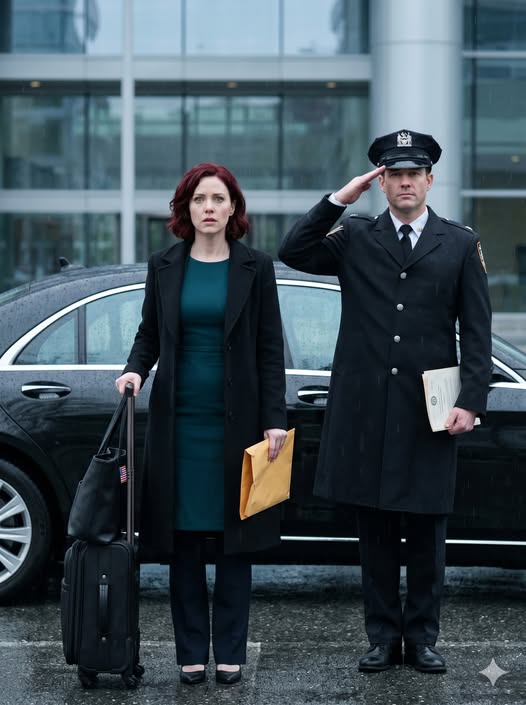
A man in a sharp black suit held a sign that read LT. JOSEPHINE RHODES, and as soon as our eyes met, he snapped into a crisp British salute.
“Ma’am, I am Commander George Harrison, and I have orders to escort you directly to the Palace,” he said, his accent as polished as his shoes.
“The Palace? Why would the King want to see me?” I asked, my heart hammering against my ribs.
“You were expected, Lieutenant, as the General made very specific arrangements for this transition,” he replied while opening the door to a black Jaguar.
As we drove through the historic streets, the Commander explained that my grandfather had led a top secret joint task force during the late eighties that saved dozens of lives. He had turned down every medal offered to him by the British Crown, requesting instead that the honor be held until his successor arrived.
“So, you are the granddaughter Joseph spoke so highly of during our correspondence,” she said, gesturing for me to sit.
“I had no idea he even knew you, Your Majesty,” I admitted, feeling the weight of my simple traveling clothes in such a grand room.
“Your grandfather was a man of immense shadow and even greater light, and he wanted you to carry the torch he spent his life protecting,” she explained gently.
She handed me a velvet box containing a magnificent gold cross and a set of keys to a local archive where my grandfather’s secret records were kept. She told me that he had established a massive fund for veterans that had been frozen by his own son’s greed back in America.
“He knew your father would try to bury the foundation, so he moved the legal authority here to ensure you were the only one who could unlock it,” she said.
I spent the next two days in the archives with a legal aide named Julian, uncovering the truth about how my father had been siphoning money from charity accounts for years. The records were undeniable, showing that the wealth my parents were currently celebrating back in Maryland was actually stolen from the men and women my grandfather had sworn to protect.
“If you sign these papers, you will effectively seize every cent of the diverted funds and return them to the veterans’ trust,” Julian explained, handing me a pen.
“My father will lose everything,” I whispered, looking at the staggering numbers on the ledger.
“He will lose what was never his to begin with, Lieutenant,” Julian replied firmly.
I signed the documents with a steady hand, feeling the final piece of my grandfather’s plan fall into place. When I flew back to the United States, I didn’t go to the mansion to argue; I went straight to the federal building in Washington to file the international recovery act.
A week later, I drove up the long driveway of the family estate to find my father standing on the lawn, looking pale as he held a stack of legal notices.
“What have you done, Josephine? The bank just froze our primary accounts and there are federal auditors at the office!” he screamed as I stepped out of the car.
“I didn’t do anything but fulfill the General’s last order, Dad,” I said, handing him a copy of the new foundation charter.
My mother came running out of the house, her face streaked with tears.
“They say we have thirty days to vacate the property because the land is being deeded to a veterans’ retreat center!” she wailed.
“Grandfather bought this land for the soldiers, not for a private vineyard, and it’s time it served its real purpose,” I told them both.
My father looked at me with a mixture of rage and sudden, crushing realization.
“He never loved us, did he? He was planning this the whole time,” he muttered, dropping the papers into the dirt.
“He loved the truth more than he loved your comfort, and he knew I was the only one who wouldn’t be afraid to tell it,” I replied before turning back to my car.
I moved into a small apartment near the new foundation headquarters, spending my days working with soldiers who had lost everything. A few months later, a small package arrived from London containing a photo of my grandfather and the King, taken decades ago in a bunker.
On the back, a final note was scrawled in the General’s hand.
“Well done, Josephine. You finally learned that the best inheritance isn’t a house, it’s the strength to do what is right.”
I looked out the window at the morning sky, feeling a sense of peace that no amount of money could ever buy. I was no longer the girl with the empty envelope; I was the guardian of a legacy that would outlive us all.