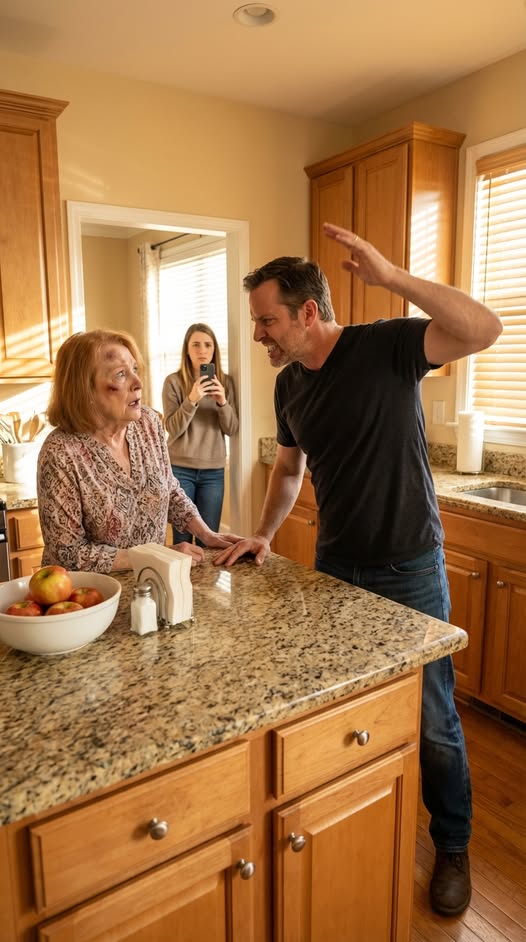
As we stood in the kitchen, Brandon’s name appeared on Amber’s phone screen. Amber looked at me uncertainly, and I nodded because avoidance would only delay what needed to happen.
Amber answered and placed the call on speaker. Brandon’s voice sounded strained and hoarse as he said, “I am coming home soon, so please do not create a scene and make everything awkward in front of your mother.”
Barbara leaned toward the phone and said calmly, “Brandon, this is Barbara speaking, and I need you to listen carefully.” Silence followed before he responded, “Yes, ma’am.”
Barbara continued, “Your stress at work does not give you permission to strike your own mother, and she is not fine today because she is injured due to your actions.” Brandon’s breathing quickened audibly as he said, “I already said I did not mean to.”
“And yet you did,” Barbara replied evenly. “You will not return to that house today, and you will find somewhere else to stay while you begin counseling and anger management classes, and you will apologize without asking her to protect your reputation.”
His voice cracked when he said, “Mom, I am sorry.” I closed my eyes briefly and answered, “You can be sorry and still not be welcome here until you prove that you are safe to be around.”
That afternoon Amber packed a suitcase and left with her mother to stay at Barbara’s home, and Brandon sent a message stating he had booked a motel room for the week and would comply with the counseling required by his employer. I arranged to change the locks on the townhouse not out of spite but out of recognition that boundaries were necessary for genuine safety.
In the weeks that followed, Brandon began attending anger management sessions and individual therapy, and he agreed to contribute financially to household expenses rather than relying entirely on me. We started family counseling with a licensed therapist who insisted that the incident not be minimized or rewritten as a misunderstanding.
The therapist asked Brandon to describe the moment before he struck me, and she required him to acknowledge that stress did not cause his hand to move because his choice did. I began learning that motherhood did not require absorbing harm quietly, and that protecting myself did not equate to abandoning my child.
Brandon has shown gradual progress, and he pauses more often before responding during tense conversations, though trust rebuilds slowly and with caution. I continue to love my son deeply, yet I now understand that love without boundaries becomes surrender rather than care.
If you are reading this in the United States and recognize a similar tension in your own family, consider where you draw the line between forgiveness and personal safety, because that boundary may determine whether healing is possible. Speaking honestly about violence within families feels uncomfortable, yet silence only strengthens what should be confronted.