He stared into his coffee, his jaw tight, and said nothing.
My brother Marcus, who was three years older and already attending Villanova, had received everything. Not loans. Not partial help. Full tuition, fully paid. An apartment near campus so he wouldn’t have to deal with dorm life. A Honda Accord so he could commute in comfort.
I got a list of entry-level jobs.
So I built my future myself.
I chased every scholarship I could find and secured enough to cover about seventy percent of Temple’s tuition. I worked two jobs through college—weeknight shifts at a call center and weekends at a coffee shop. I slept five hours a night. I ate ramen because proper groceries felt extravagant.
Still, I graduated with a 3.8 GPA and eventually earned the CPA license that now hangs on the wall of my studio apartment in Center City Philadelphia.
Every part of it, I earned.
After graduation, I stopped speaking to my family for two years.
Not to punish them, but because I couldn’t sit in the same room with them without feeling the weight of what they had chosen not to give me.
My mother used to repeat a phrase so often it became part of the wallpaper in our house:
“Sons are the pillars of a family. Daughters are only guests passing through.”
I heard it enough times to start believing it.
Over the next decade, I slowly allowed them back into my life—phone calls, the occasional holiday, always at a distance that felt manageable. I never really closed the gap.
Then one Tuesday in November, my phone rang at two in the morning.
My mother’s name flashed across the screen.
When I answered, she didn’t say hello.
“Your father collapsed. Jefferson Memorial. Come now.”
I drove forty-five minutes on empty highways in my 2015 Camry, the same one with the check-engine light I’d been ignoring for months. When I got to the hospital, Marcus’s black Mercedes was already sitting under the fluorescent lights.
It didn’t matter.
By the time I reached the ICU, Dad was gone.
The last conversation I’d had with him was three months earlier. It lasted maybe ninety seconds. He asked if I was okay. I said yes. Then we sat in awkward silence until one of us found a reason to end the call.
I didn’t know it would be the last time I’d ever hear his voice.
I wished I had said something different.
I wished I had said more.
The next morning I returned to the house where I’d grown up for the first time in three years.
It was a four-bedroom colonial in the suburbs, built in 1985, with a wraparound porch and a backyard where my father liked to sit in the evenings with ginger tea while the light faded. It was the sort of house that looked, from the outside, like proof of a happy family.
Marcus was waiting at the front door.
He gave me a one-armed hug, the kind people offer when obligation matters more than warmth.
“Long time, sis,” he said. “You look tired.”
I didn’t answer. I was looking past him—at the Louis Vuitton duffel in the hallway, the golf clubs leaning by the wall, the Gucci loafers at the foot of the stairs.
Marcus had been unemployed for eight months. Mom had mentioned it during one of her guilt-laced updates disguised as family concern.
My childhood bedroom had been turned into his storage room.
The pale blue walls were still there, but my bed was gone. In its place were stacks of designer luggage, shoeboxes, and a flat-screen TV still in the box.
I stood there staring at a collection of luxury items owned by a man with no income and felt something old and cold settle in my chest.
I took over the funeral arrangements.
I called the funeral home, wrote the obituary, contacted relatives, arranged flowers, confirmed catering, and made sure the programs were printed with the right photo—the one of Dad from ten years earlier, before his face began to look permanently worn out.
Marcus handled appearances.
Whenever neighbors arrived with casseroles or condolences, he appeared in doorways wearing grief like a tailored suit—perfectly measured, perfectly timed.
Behind closed doors, though, something else was happening.
I kept overhearing fragments of whispered conversations between him and Mom that stopped the second I entered the room. Words like real estate, quickly, and after the service.
On the fourth night, I passed the kitchen and heard Marcus on the phone.
“I know, I know,” he said, his voice tight with panic. “Just give me until after this week. I’ll have it.”
He saw me and hung up immediately.
“Work stuff,” he said.
He hadn’t worked in eight months.
The night before the funeral, I couldn’t sleep, so I went downstairs to Dad’s office in the basement and began sorting through his files.
It was the kind of task I’m good at—quiet, orderly, methodical. Something to keep my hands moving while my mind tried to settle.
The first filing cabinet held years of tax returns and household records.
The second contained photographs, report cards, and a folder marked IMPORTANT DOCUMENTS.
Inside, I found my birth certificate, a few baby pictures, and a single sheet of paper with a business letterhead I didn’t recognize.
Farwell Family Holdings LLC.
Dated 2009.
I stared at it.
The wording was dense, legal, and formal. My own name appeared in the body of the document. At the bottom was my signature—young, loopy, unmistakably mine.
Then I remembered.
Dad had called me home that year and asked me to sign some paperwork. “Administrative business stuff,” he’d said. “Nothing important.”
I had just finished college. I was still trusting enough to sign where he pointed.
Then I forgot all about it.
Until now.
I slipped the document into my purse.
The next morning, when I showed it to Mom and mentioned the company name, she dismissed it with a wave.
“That business dissolved years ago,” she said. “Don’t waste your time digging into old paperwork.”
She sounded so certain that I almost believed her.
Almost.
But I kept the document.
Something told me to.
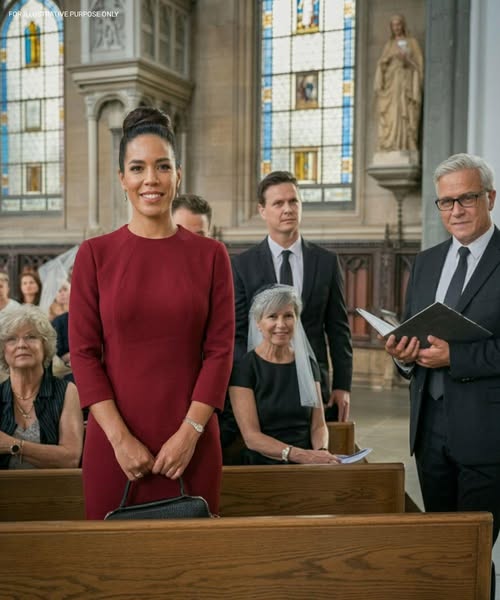
The funeral took place on a gray Thursday, the kind of November day that makes grief feel heavier. More than forty people filled Peterson and Sons Funeral Home—relatives, neighbors, and former colleagues from the construction company Dad had managed for twenty years.
Marcus delivered the eulogy in a Tom Ford suit that probably cost more than my monthly rent.
He spoke about Dad as though they had shared a deep and tender bond—fishing trips, meaningful talks, an unshakable father-son connection.
I sat in the back row listening to stories I had never heard before and wondering how many of them had actually happened.
The room was moved.
Women wiped at their eyes. Men nodded solemnly.
Marcus had always known how to perform.
Mom sat in the front row in black Chanel with her pearl necklace, receiving condolences with such composed sorrow it might have been admirable if I hadn’t known her better.
No one checked on me.
No one asked how I was holding up.
I was background.
The daughter who had been gone too long to count.
The real show began after the final prayer.
Most people were already collecting their coats when Marcus returned to the podium.
“If I could have everyone’s attention for just one more moment.”
The room quieted.
Mom gave him a small, practiced nod from the front row—the kind a director gives an actor who knows his lines.
“Our family has been discussing what comes next,” Marcus said. “And we’ve made a difficult decision. We’re selling the family home.”
Murmurs spread through the room.
My Aunt Patricia pressed a hand to her chest.
“The house on Maple?” she whispered. “Richard loved that house.”
“I know,” Marcus said, shaking his head with convincing sorrow. “But it’s time for a fresh start. Mom doesn’t want to live there alone with all those memories, and the upkeep is too much for her. We discussed it as a family. Mom, me, and Briana all agreed.”
I started to rise.
Mom turned toward me and gave me a look so sharp it didn’t need words.
Don’t you dare.
So I stayed seated.
I watched my brother announce the sale of our family home at our father’s funeral like he was giving a cheerful toast.
Then Mom stood up and stepped forward.
“I want to add something,” she said. “Some of you may be wondering about Briana.”
Dozens of eyes turned toward me.
My face burned.
“Briana is a capable, independent young woman,” Mom continued. “She has a good job and her own apartment. She left years ago and built her own life. Richard would be proud of that.”
Then she tilted her head just slightly.
“She doesn’t need the house. Not the way Marcus does. He’s had a few setbacks. He needs family support right now.”
Somewhere to my left, Aunt Dorothy murmured, “Well, she did walk away from them for years.”
Mom looked directly at me.
“Your dad would understand. Your sister can find another place.”
A distant cousin leaned toward me and said softly, “Honey, your mother’s right. You’ve done well for yourself.”
I wanted to tell them everything.
The scholarships. The double shifts. The years spent building a life from nothing while Marcus burned through every advantage handed to him.
But I stood there in silence, my throat locked, feeling smaller than I had in years.
Outside the funeral home, I watched through the glass as Marcus shook hands with a man in a gray tailored suit. They exchanged business cards. The man handed him a folder with a real estate logo.
A few minutes later, they drove off—toward the house.
They were showing the property before my father was even buried.
As I left, I noticed a COMING SOON real estate sign on the funeral home lawn.
This had been planned for weeks.
And no one had bothered to tell me.
I took a picture of the sign.
Three days later, Marcus slid a document across the dining room table during a so-called family meeting attended by fifteen relatives.
At the top it read:
Disclaimer of Interest in Estate Property
“It’s simple,” Mom said. “You sign this and formally give up any claim to the house or any profit from its sale. It keeps everything clean.”
“If I don’t have any rights to it,” I asked, “why do you need my signature?”
Marcus’s jaw tightened.
“Because we want this resolved fast. The buyer is ready. We don’t need some estranged daughter showing up six months from now claiming she deserves a portion.”
“You have twenty-four hours,” he added.
I picked up Dad’s Mont Blanc pen, hovered over the signature line, then set it back down.
“I need time to think.”
That night, I sat in the dark in my apartment while streetlights stretched shadows across the room and thought through my options.
I could sign.
Walk away.
Let them have it.
That would be easier.
But I kept thinking about the paper in my purse.
I found Dad’s old address book and looked up Gerald Whitmore, the family attorney listed in the funeral program.
It was too late to call, so I left a message.
Whitmore’s office was on the fourth floor of an old brick building downtown—brass nameplates, Persian rugs, the faint scent of old paper.
He was older than I expected—late sixties, wire-rimmed glasses, white hair—but his eyes were sharp.
“Miss Henderson,” he said as he shook my hand. “I was hoping you would call.”
I slid the LLC document across his desk.
“I found this in Dad’s files. I don’t know what it means, but my name is on it.”
Whitmore picked it up, and I saw recognition pass across his face—followed by something like relief.
“The house on Maple Street,” he said carefully, “is not part of your father’s estate.”
I stared at him.
“What?”
“In 2009, your father transferred the property into Farwell Family Holdings LLC. The house belongs to the company, not to him personally.”
He looked at me over his glasses.
“And you are the sole member of that LLC. You have been for fifteen years.”
The room went completely still.
“Your father created it while he was in perfect health,” Whitmore continued. “The documents were properly executed, notarized, witnessed by his accountant, and kept fully compliant every year since. He even set aside funds to keep the company active.”
“He thought of everything.”
I swallowed hard.
“But why didn’t he tell me?”
Whitmore opened a drawer and removed a thick folder.
“He came to me in 2008 because he was worried about Marcus. The early stages of what later became a serious gambling addiction. Your father loved your brother, but he didn’t trust him. He believed that if something happened to him, Marcus would eventually burn through every asset the family had. So he protected the most valuable one.”
Tears came before I could stop them.
For years I had mistaken my father’s silence for indifference.
Whitmore handed me a sealed envelope with my name on it in Dad’s handwriting—slightly shaky, like his hands had trembled when he wrote it.
“Three months ago,” Whitmore said. “Right after the diagnosis.”
I didn’t open it there.
I ran my thumb across my name and felt something shift inside me.
Whitmore arranged a formal will reading for the following Friday and invited everyone from the family meeting.
Marcus called the night before.
“Your twenty-four hours are up,” he said, smugness obvious in his voice. “Bring a pen tomorrow. Let’s finish this.”
“I’ll be there,” I said.
Then Mom called.
This time her voice was softer.
“Briana, I know things have been difficult. But Marcus is in real trouble. He owes dangerous people. Over three hundred thousand. Maybe three fifty. I’ve already given him everything I had. The house was supposed to be the last option.”
“Selling Dad’s house won’t save him,” I said. “It’ll only postpone the problem.”
“You don’t understand.”
“I understand exactly.”
After she hung up, I opened Dad’s letter.
His handwriting shook across the page.
He wrote that he knew my mother and Marcus had not treated me fairly, and that he was sorry he had never been brave enough to say it aloud. He admitted he hadn’t been the father I deserved. But he had tried to leave me something they could never take.
He wrote that I was the only one he trusted with what truly mattered.
I folded the letter and tucked it into the inside pocket of my blazer.
Whitmore’s conference room had a long mahogany table, oil paintings of Philadelphia landmarks, and the quiet formality of old money.
I arrived fifteen minutes early.
“Are you ready?” Whitmore asked.
“Yes.”