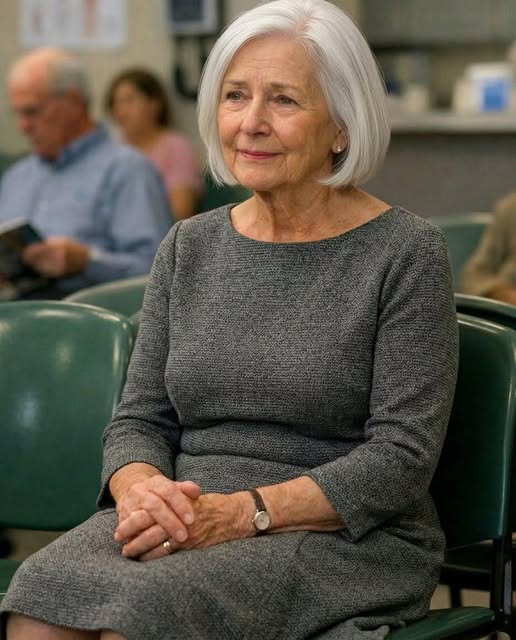
He had smiled, but not completely.
That should have warned you.
The bus arrives with a hiss of brakes, and you climb aboard slowly, feeling every one of your seventy-one years in your knees. The driver lowers the step without being asked. You thank him and take a seat near the middle, your purse resting on your lap while the city drifts past the window in faded colors and fractured reflections.
Your mind keeps returning to Ángela’s voice.
Not shaky. Not apologetic. Not even hurried.
Cold.
The kind of cold that doesn’t appear all at once. It forms slowly, like ice building inside hidden pipes, while everyone in the house keeps drinking from the tap and pretending the water tastes the same.
You think about all the afternoons she came by after Roberto died. The way she insisted on organizing your papers. The way she asked where the deed was kept, where the car title was, which bank Roberto preferred, whether you still remembered your passwords. At the time, it felt like help. A daughter stepping in to protect her widowed mother.
Now you can see the truth moving beneath those moments like a snake through tall grass.
She wasn’t helping.
She was mapping your life.
The bus jolts over a pothole, and your fingers tighten around your purse. You remember Eduardo’s face at Roberto’s funeral—how dry his eyes were, how impatient he seemed with grief, as though sorrow were just an inconvenience delaying other plans. He hugged you, but his arms stayed stiff. Later, while neighbors carried trays of food into your kitchen, you caught him studying the framed photo of your beach house with the same look men use when inspecting property they plan to buy cheap and flip fast.
You ignored it then.
Widowhood makes everything feel foggy.
By the time you reach your stop, the sun has dropped lower, bathing the street in dusty gold. Your house looks exactly the same from the outside: the small front garden Roberto trimmed every Saturday, the blue shutters that need repainting, the wind chime by the porch he once brought home from a roadside market because he said it sounded like laughter. You pause at the gate before opening it, and the stillness of the place wraps around you like a question.
Inside, the air carries a faint scent of lavender and old wood.
The silence is not empty. It is full of him. Roberto in the chair by the window reading the newspaper. Roberto humming off-key in the kitchen while making coffee. Roberto muttering at the television during baseball games as if the players could hear him.
For six months, that silence has cut you.
Today, it steadies you.
You walk straight to the bedroom without removing your shoes. The dresser stands against the wall beneath your wedding photograph, sturdy and familiar, its brass handles worn smooth by decades of use. Your heartbeat thickens as you pull open the top drawer.
At first, you see only handkerchiefs, an old rosary, a box of safety pins, and the folded scarves you haven’t worn since before the funeral.
Then your fingers brush against paper.
The envelope lies flat beneath a cream-colored shawl, exactly where Roberto said it would be. Your name is written across the front in his hand. Antonia. Just that. No flourish, no explanation. His handwriting looks so alive that for one terrible second, your throat tightens and you have to sit on the edge of the bed before opening it.
Inside are several documents and a letter folded in thirds.
Your hands tremble—not from age.
From the knowledge that a dead man is about to speak.
You open the letter first.
My love, it begins, and already your vision blurs. If you’re reading this, then either I was right to worry or God decided I should not be there to handle what comes next. I hope it is the first thing that is wrong and not you. If you are safe, keep reading carefully.
You press your lips together and keep going.
There are things I did not tell Ángela. I did not tell her because I began to notice changes in her, and I did not trust the influence around her. Especially Eduardo. I pray I was mistaken, but I have lived long enough to know when greed enters a house wearing the shoes of family.
You stop breathing for a second.
Roberto knew.
Maybe not everything. Maybe not this exact betrayal. But he knew enough to prepare for it.
You continue reading.
The beach house was never placed entirely in your name the way you believed. Years ago, after the tax issue we almost had, I followed the attorney’s advice and put the property into a family protection trust. You are the lifetime beneficiary and sole controller. No sale, transfer, mortgage, or use of funds connected to it can be valid without your personal in-person authorization before the trustee and notarized verification already on file. I did this to protect us if anyone ever tried to pressure you, deceive you, or act in your name.
A sound escapes you. Not quite a laugh. Not quite a sob.
Something fierce in between.
You set the paper down and pick up the official-looking documents beneath it. There it is in black ink. Trust papers. Names. Signatures. Stamps. The name of Roberto’s longtime attorney, Daniel Mercer, a man you and Roberto once invited to Christmas dinner after he helped settle a legal issue for a cousin. A business card slips free and lands on the bedspread.
Daniel Mercer, Esq.
You stare at it like it has just grown wings.
Then you read the rest of the letter.
The Volkswagen is also protected. The title was transferred two years ago into a historical vehicle holding agreement because I planned to restore it fully and wanted to shield it from probate complications. The car may be used by us, but it cannot be legally sold without a release code and identification packet I kept separate. Daniel knows where they are. So if someone tells you they sold the house or the car, that person is either lying, committing fraud, or both.
Your whole body goes cold, then hot.
Ángela did not sell them.
Or at least, she did not sell them legally.
Whatever she and Eduardo did, they did it believing you were too confused to know better.
The last paragraph is shorter.
If this letter becomes necessary, promise me one thing. Do not protect betrayal just because it came from your own blood. Love without truth becomes a weapon in the wrong hands. You have been generous your whole life. Now be wise. Daniel will help you. And Antonia… none of this changes who you are. It only reveals who others chose to become.
At the bottom, in smaller writing, he added: I love you in this life and whatever comes after it.
You fold over the letter and let yourself cry. Not the helpless sobbing from the funeral, not the drained tears from nights spent reaching for a body no longer beside you, but something raw and private that gathers love and anger into the same storm. When it fades, you wipe your face, straighten your back, and glance around the room as if the house itself has shifted.
The first thing you do is call Daniel Mercer.
His secretary answers. Her tone is brisk but kind—the voice of someone who has managed other people’s crises for years. When you give your name, there’s a pause, then a softening.
“Mrs. Valdez? Mr. Mercer told us that if you ever called, we were to put you through immediately.”
Your grip tightens around the receiver.
So Roberto had planned even more carefully than you realized.
Daniel’s voice comes on the line, warm and steady. He remembers you, asks how you are, says he was deeply sorry to hear about Roberto’s passing. For a moment, politeness almost pulls you into tears again, but you stay focused. You tell him what Ángela said. You tell him she claimed to have sold the beach house and the Volkswagen. You hear a chair scrape faintly on his end.
Then Daniel says, very quietly, “Antonia, listen to me carefully. Neither asset can be sold legally without you. If someone attempted this, we’re dealing with forged documents, fraudulent misrepresentation, or an illegal side transaction with a buyer who has been deceived. You need to come to my office tomorrow morning. Bring every paper in that envelope. Tonight, do not call your daughter back. Do not warn her.”
You close your eyes.
“Was Roberto expecting this?”
“I think Roberto feared the possibility,” Daniel says. “He never accused anyone directly. But he noticed unusual interest in your records. He wanted protections in place.”
The room suddenly feels smaller, as if memory itself is pressing in around you.
You thank him and hang up.
Then you sit there for a long time.
Not because you are unsure.
Because certainty hurts.
After a while, you stand and make yourself tea. The kettle whistles too sharply in the quiet kitchen. You set out one cup out of habit, then return it to the cupboard. The ache of that small motion nearly folds you in, but tonight grief must share space with something else.
Resolve.
You carry your tea into the living room and study the framed photos along the mantel. Ángela at seven, missing her front teeth, smiling with sand on her cheeks at the beach house. Ángela at sixteen, furious because you wouldn’t let her spend a weekend in another city. Ángela on her wedding day, veil drifting in the wind while you adjusted it with trembling hands because Roberto’s eyes had filled with tears and he could barely see.
You did not raise a monster.
You raised a daughter.
So when did she become a stranger?
The answer doesn’t come as a single moment, but as a trail. The first time Eduardo mocked the old furniture in your home and Ángela laughed instead of defending it. The time she rolled her eyes when Roberto talked about fixing the Volkswagen instead of buying something new. The Christmas she joked about who would get the beach house “when you two are finally tired of pretending you’re immortal.”
Back then, you told yourself young people speak without thinking.
Now you wonder how often carelessness is simply truth wearing makeup.
You barely sleep that night.
Around midnight, your phone lights up with a message from Ángela. Did you get home okay?
You stare at the screen until the words blur.
Another message comes two minutes later. Don’t be dramatic, mamá. We needed the money. You weren’t using those things anyway. We’ll talk when we get settled.
No apology.
No explanation of where she is.
No mention of permission—because she knows she never had it.
You turn the phone face down and leave it there.
The next morning, you dress with care. Not in black, not in widow’s softness, but in the cream blouse Roberto always said made you look elegant and the navy skirt you wore to baptisms, offices, and places where women remind the world they are not invisible. You pin your hair back, add a touch of lipstick, and slip the envelope into your purse.
When you step outside, the air smells of wet earth.
Roberto used to say weather like this meant something was changing.
Daniel Mercer’s office is on the second floor of an old downtown building with stone columns and brass directory plaques at the entrance. Inside, the elevator is slow, the carpet worn, and the receptionist young enough to be your granddaughter. She stands when you enter and offers you water. The courtesy makes you feel unexpectedly formal, like someone important.
Maybe you have forgotten that you are.