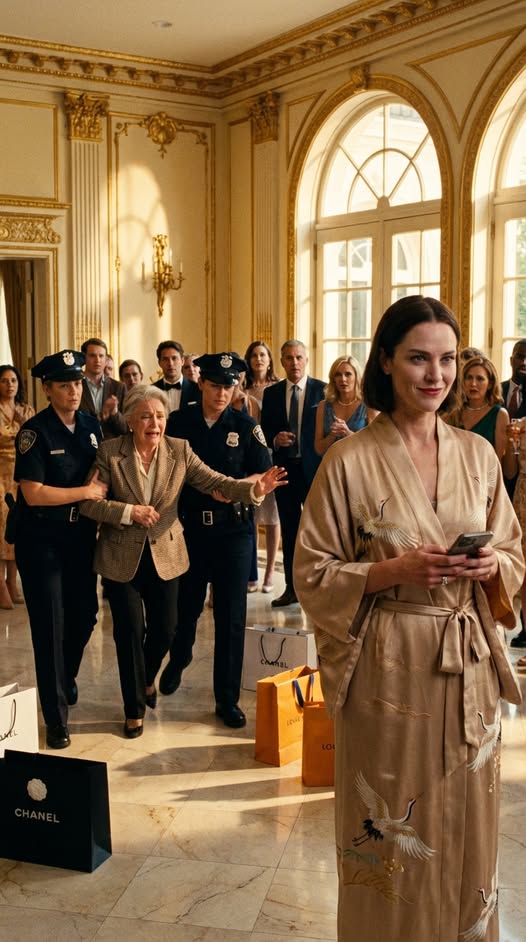
Not since the weekend my mother-in-law, Eleanor, had come over to “help” me pack my husband’s belongings.
My husband, Mark. Or rather, as of three weeks ago, my ex-husband.
I was currently navigating the raw, exhausting, and fiercely private aftermath of a brutal, silent divorce. After five years of marriage, I had come home early from a business trip to find Mark in our bed with his twenty-three-year-old marketing assistant. I didn’t scream. I didn’t throw his clothes onto the lawn. I had simply turned around, walked out, and called my ruthless, terrifyingly efficient corporate attorney, Arthur Sterling.
Mark had spent our entire marriage playing the role of the successful, providing husband to his friends and his mother, while actively, eagerly subsidizing his entire lifestyle with the massive dividends from my tech company.
I had allowed the illusion to persist because I loved him. But the moment I saw him with that girl, the illusion died, and the bank vault slammed permanently shut.
Eleanor, a woman whose entire personality was constructed from country club gossip, designer labels she couldn’t afford, and a toxic, smothering obsession with her “golden child” son, had arrived to collect Mark’s things while I was at the office.
She must have gone snooping through the guest room. She must have found the emergency card.
My hands shook slightly with a mixture of raw betrayal and sudden, explosive anger. The sheer, breathtaking audacity of the theft was staggering.
I immediately dialed the concierge desk at the Hôtel de Crillon in Paris. A polite, heavily accented voice answered. I requested to be connected to the suite registered under the name Eleanor Vance. The concierge confirmed the guest was in residence and transferred the call.
I didn’t wait for the hotel phone to be picked up. I hung up and dialed Eleanor’s personal cell phone number directly.
It rang four times. The connection was slightly staticky, carrying the distinct, echoing audio signature of an international call.
“Hello?” Eleanor trilled. She answered the phone with a loud, theatrical sigh, the unmistakable sounds of clinking champagne flutes, bright, sycophantic laughter, and the faint, romantic wheeze of accordion music drifting through the connection.
“Eleanor,” I said, my voice dangerously low, stripped of any familial warmth.
“Clara, darling!” Eleanor exclaimed, her voice dripping with a thick, sugary layer of aristocratic condescension. “Don’t you dare ruin my trip with your nagging. I’m sitting at a café near the Champs-Élysées with “the girls,” having the most marvelous time.”
“You stole my credit card, Eleanor,” I stated, the words cold and precise as a scalpel. “A charge for thirty-five thousand dollars just cleared at the Crillon. You committed grand larceny.”
Eleanor let out a loud, braying laugh, intentionally projecting her voice so her friends could hear her boasting.
“Oh, stop being so utterly dramatic, Clara!” Eleanor scoffed, waving off the accusation as if it were a minor social faux pas. “I found your little emergency card in the nightstand when I was packing up Mark’s things. Consider it a well-deserved bonus for the woman who raised the man who provides your luxurious life. I brought three of my closest friends. We are celebrating Mark’s success!”
She genuinely believed the lie. She had spent five years willfully ignoring my seventy-hour work weeks, convincing herself that my company was a “little hobby” and that her handsome, mediocre son was the true titan of industry funding our mansion.
“It is not a bonus,” I said, my grip tightening on the phone. “It is theft.”
“It’s my son’s money!” Eleanor snapped, the sugary facade slipping to reveal the arrogant, entitled monster beneath. “He works himself to the bone to keep you comfortable while you play on your computer all day! It’s only fair his mother gets to enjoy the fruits of his labor. We are staying in the Ambassador Suite, Clara. And we will come back to the States only after spending every last cent of the limit on this card. Mark would want me to have this.”
I listened to her laugh again, a grating, arrogant sound that had scraped against my nerves for five long years. She thought she was untouchable. She thought she was safely shielded by the invincible armor of her golden child.
She didn’t know that the armor had been completely, violently shattered three weeks ago in a mahogany-paneled lawyer’s office.
I took a slow, deliberate sip of my coffee. I stared out at the jagged city skyline, the towering buildings I practically owned, and prepared to drop the bomb that would turn her lavish Parisian dream into a terrifying, inescapable nightmare.
2. The Divorce Drop
“Eleanor,” I said.
My tone didn’t rise in anger. It didn’t tremble with betrayal. It dropped into a flat, glacial, and utterly terrifying register that cut through the transatlantic static and the cheerful accordion music like a guillotine blade.
The laughter on the other end of the line hesitated.
“Mark doesn’t provide my life,” I stated, articulating every single syllable with lethal, uncompromising clarity. “He never has. I own my tech firm. I own the commercial real estate it sits in. I own the five-bedroom house you packed his bags in. I own the cars he drove.”
I paused, letting the silence stretch across the ocean.
“And as of three weeks ago, Eleanor,” I continued, delivering the executioner’s blow, “Mark and I are officially, legally divorced.”
The lively background noise of the Parisian café suddenly seemed incredibly loud as Eleanor’s arrogant, booming laughter died instantly in her throat.
“What?” Eleanor gasped, her voice suddenly thin and reedy, stripped of all its condescending power. “What are you talking about? That’s a lie! That’s a disgusting lie! Mark would have told me! He wouldn’t get divorced without consulting his mother!”
“Mark didn’t tell you,” I replied mercilessly, picturing her pale, shocked face among her wealthy friends, “because he is currently too humiliated to admit he is living in a cheap, rented motel near the airport.”
“A motel?!” Eleanor shrieked, the panic finally breaching her aristocratic defenses. “Why is my son in a motel?!”
“Because I caught him sleeping with his twenty-three-year-old marketing assistant in our bed,” I explained, my voice devoid of any sorrow, presenting the facts like a forensic auditor. “And because of the infidelity and moral turpitude clauses written into our prenuptial agreement—the ironclad agreement I insisted upon before the wedding to protect my eight-figure assets—Mark walked away from our marriage with absolutely nothing.”
I heard a sharp, wet intake of breath on the other end of the line. The reality of the situation was crashing down on her like a collapsing building.
“He doesn’t get alimony, Eleanor. He doesn’t get a payout. He doesn’t have thirty-five thousand dollars to fund your luxury vacation,” I said softly, the words landing like heavy stones. “Right now, your successful, providing son barely has thirty-five dollars to his name. He is broke.”
The silence on the line was absolute, suffocating, and incredibly profound. The grand, majestic illusion she had built her entire identity around—the illusion of her son’s superiority and her own unearned elite status—had just been vaporized in less than sixty seconds.
“So,” I concluded, the cold, dark satisfaction finally settling into my chest, “you didn’t spend your son’s money, Eleanor. You stole a millionaire’s money. You committed grand larceny against a woman who no longer has any legal or moral obligation to tolerate your existence. And I am not nearly as forgiving as Mark.”
“You… you’re lying,” Eleanor stammered. Her voice was small, breathless, and trembling with a deep, primal terror. The reality of the $35,000 charge was suddenly a massive, physical weight around her neck. “I don’t believe you. I’m going to call Mark right now! He’ll fix this! He’ll make you pay the bill! You owe him for the best years of his life!”
I smiled. A cold, sharp, predatory smile that didn’t reach my eyes.
“Call him,” I whispered into the phone. “Ask him how the continental breakfast at the Airport Econo-Lodge is this morning. But make it quick, Eleanor. Make it very quick.”
I pulled my laptop closer to me on the desk, opening the secure American Express corporate portal.
“Because,” I added, my finger hovering over the mouse trackpad, “I am logging into my banking portal right now. And I think you know exactly what happens next.”
3. The Transatlantic Freeze
I didn’t wait for her hysterical response. I didn’t listen to her scream my name. I reached out and tapped the red button on my phone screen, severing the transatlantic connection instantly.
The silence in my office was beautiful. It was the sound of a tumor being excised.
I immediately picked up my desk phone and dialed the direct, priority concierge line for my American Express Platinum corporate account. It rang only once before a highly professional agent answered.
“Good afternoon, Ms. Vance. This is Julian at Platinum Services. How may I assist you today?”
“Julian, I have an urgent, critical security issue,” I stated clearly, my voice projecting absolute corporate authority. “I need to report a stolen physical card and massive fraudulent activity. The secondary card ending in 4092 was stolen from my private residence in the United States. The pending authorization for $35,000 at the Hôtel de Crillon in Paris, France, was entirely unauthorized.”
“I understand, Ms. Vance. I am so sorry for the inconvenience,” Julian replied, his fingers clicking rapidly on a keyboard in the background. “I am locking the card ending in 4092 immediately. I am flagging the $35,000 charge as fraudulent, and I am initiating an immediate, hard reversal of the pending authorization.”
“Thank you, Julian. Do not authorize any further charges under that card number under any circumstances. If the merchant attempts to force the charge through manually, decline it and notify their fraud department.”
“The card is permanently cancelled, and the funds have been released back to your available credit, Ms. Vance. The merchant in Paris will receive an immediate notification of the hard decline and the fraud flag.”
“Perfect. Have a good day, Julian.”
I hung up the phone.
Within sixty seconds, the terrifying $35,000 charge vanished from my digital ledger. The money was safe. The trap was set.
I knew exactly how high-end, ultra-luxury Parisian hotels operated. The Hôtel de Crillon was a palace, catering to billionaires, diplomats, and royalty. They did not tolerate financial irregularities.
The exact moment the primary credit card on file for the Ambassador Suite—a suite that cost roughly two thousand dollars a night—was hit with a hard fraud decline, a massive red flag would pop up on the screens of the hotel’s executive management and accounting department.
The management team would not wait politely until checkout. They would not send a gentle email. They would immediately, discreetly, but very firmly approach the guest to demand a new, valid form of payment to secure the astronomical bill they were rapidly racking up.
Eleanor was currently sitting in a lavish, gilded suite, surrounded by three wealthy, judgmental country club friends she had promised to treat to a “trip of a lifetime.” And the credit card she was relying on to fund her grand illusion was now nothing more than a useless, deactivated piece of plastic.
I leaned back in my ergonomic leather chair, interlacing my fingers, and watched the screen of my personal cell phone resting on the desk.
Exactly twelve minutes later, it began to ring.
The caller ID flashed: Eleanor Cell.
I didn’t answer. I watched it ring until it went to voicemail.
Two minutes later, the phone rang again. This time, the caller ID flashed a different name.
Mark (Ex-Husband).
He must have received her frantic, sobbing, panicked phone call from Paris. He must have finally been forced to confess to his mother that he was broke, that he was living in a motel, and that he had absolutely no power to stop me or pay the hotel bill.
I watched his name flash on the screen, the vibrating phone slowly inching across the polished oak desk.
I remembered the night I found the texts on his phone. The sickening, graphic messages he had sent to his assistant, mocking my long work hours, complaining that I was “too tired” to be fun anymore. I remembered the sheer, arrogant assumption that I would never find out, that I would just continue to blindly fund his comfortable, deceitful life.
I felt a profound, beautiful, unshakeable sense of peace settle deep into my bones.
I reached out and tapped the red ‘Decline’ button.
I opened my phone’s settings, navigated to Mark’s contact, and hit Block Caller. I did the exact same thing for Eleanor’s number.
I was not going to listen to their excuses. I was not going to endure their begging, their manipulation, or their desperate attempts to gaslight me into bailing them out. They were dead to me.
The transatlantic freeze was absolute.