I was nineteen years old when my father told me my aunt was moving into our house. My mother, Sarah, had been dead for exactly eleven months, and grief had permanently altered the geography of every room we lived in. Her pale yellow cardigan still hung by its collar on the hook behind the pantry door because neither my father nor I possessed the emotional courage to move it. Her chipped ceramic mug—the one with the faded blue robins—still sat at the very back of the top kitchen cupboard, gathering a fine layer of dust. If I opened the hall closet and stood there long enough in the dark, closing my eyes and breathing in, I could still catch the faint, lingering ghost of the soft jasmine perfume she used to wear on Sunday mornings. The house had become a museum of interrupted habits. I had spent the better part of a year learning how to move through it carefully, stepping softly on the hardwood floors, as if one sudden movement or one wrong breath might disturb what little essence of her remained trapped in the drywall. So, when my father, Robert, cleared his throat over a plate of burnt toast at breakfast and said, “Valerie is moving in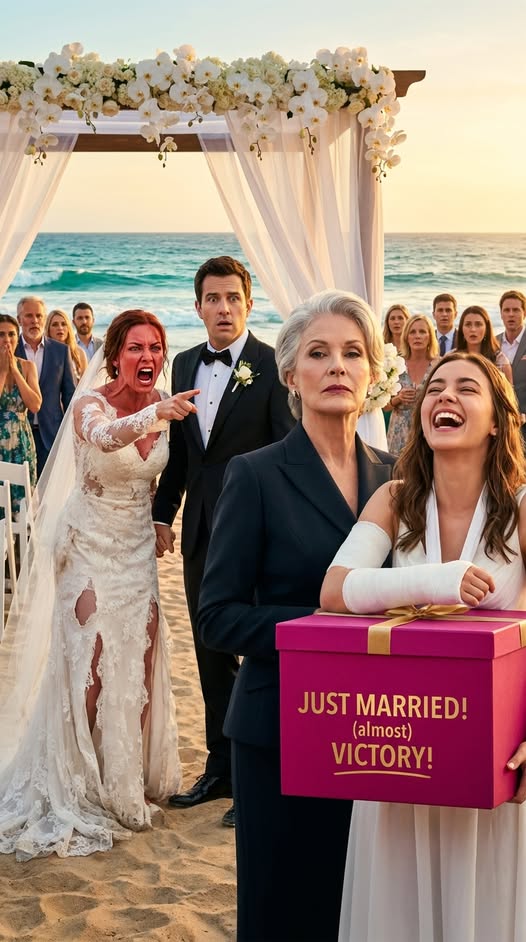
for a while,” I naturally assumed he meant a visit. A long weekend. Maybe, at worst, a week to help sort through old family photographs. “For a while how?” I asked, keeping my voice neutral. I took a sip of my coffee, the bitter liquid burning the back of my throat. He didn’t look at me. He stared down at his ceramic plate, tracing the rim with his thumb. “Indefinitely.”
I set my mug down. The ceramic clinked sharply against the granite countertop, sounding like a gunshot in the quiet kitchen. “Why would she move in here? She has her own condo downtown. She has a life, Dad.”
He exhaled slowly. It was a heavy, exhausted sound, the kind of sigh a man makes when he has practiced a conversation in the mirror a dozen times and still dreads the execution of it. “Because we’re together,” he said, his voice dropping an octave. “Valerie and I. We’re both lonely, Chloe. We understand each other’s pain.”
I remember the exact, visceral sensation that tore through my chest in that moment. It was not merely shock. It was a violent cocktail of revulsion mixed with profound disbelief. It was the terrifying sensation of the floor suddenly dropping out from beneath your feet when you were absolutely certain you were standing on solid, unshakeable ground.
“She’s Mom’s sister,” I whispered, the words tasting like ash in my mouth.
He rubbed his jaw, avoiding my eyes. “Life is complicated, Chloe. It doesn’t follow the rules we set for it. Someday, when you’re older, you’ll understand that people find comfort wherever they can in the dark.”
There are precise moments in life when you realize you are no longer operating in the same reality as someone you deeply love. I sat there, paralyzed, wanting to scream at him. I wanted to grab him by the collar and ask him how he could possibly look at my mother’s smiling face in the framed photographs lining the hallway, and then willingly choose to sleep next to her sister. I wanted to tell him that there were billions of people on this planet, and he had actively selected the one single person guaranteed to mutate our shared grief into something twisted and ugly.
Instead, I did what I had done far too often since the cancer took my mother. I swallowed my fury, burying it deep in my gut, so someone else could remain comfortable.
Valerie arrived three days later. She didn’t arrive like a guest; she arrived like a conquering general. Her luggage looked significantly more expensive than my entire car. She stepped through the front door, wearing a sharp, tailored blazer that smelled of expensive department stores, completely overpowering the lingering scent of my mother’s jasmine.
My father hovered behind her, looking like an anxious, eager teenager. Valerie smiled radiantly, dropping her designer leather tote bag onto the entryway bench. She walked straight toward me, wrapping her arms around my stiff shoulders in a suffocating embrace.
“Oh, Chloe,” she cooed loudly, making sure my father could hear the maternal warmth in her tone. “You have Sarah’s beautiful eyes. We are going to heal together, sweet girl. I promise you.”
But as my father turned his back to pick up her heavy suitcases, Valerie leaned in closer. Her lips brushed against my ear, the warm breath sending a cold shiver down my spine. The maternal warmth vanished instantly, replaced by a whisper so sharp and venomous it felt like a physical blade.
“Get used to the new management, little girl,” she hissed, her fingers digging painfully into my collarbone. “Because I’m never leaving.”
For the first few weeks, the psychological warfare was so subtle I questioned my own sanity.
When my father was in the room, Valerie was the epitome of polished warmth and sympathetic grace. She complimented my grades at the local college. She praised the way I managed to balance my rigorous design major with my grueling shifts at the downtown café. She made a theatrical show of helping my father in the kitchen, chopping vegetables and laughing softly at his mundane jokes, lightly touching his forearm as if she had been standing in my mother’s rightful place for a decade.
She even brought me a bowl of hot chicken soup once when I was struck down by a blinding migraine, making sure to leave the bedroom door open so my father could witness her saintly caretaking from the hallway.
But the moment the front door clicked shut behind him as he left for work, the temperature in the house plummeted.
It started on a Tuesday evening. My father was working a late shift at the firm, and I came home after a brutal ten-hour closing shift at the café. My feet were throbbing in my cheap sneakers, my hair smelled intensely of burnt espresso and stale milk, and my back ached from lifting heavy milk crates. I had collapsed onto the living room sofa, allowing myself ten minutes of motionless silence before I intended to tackle the laundry.
Valerie walked into the room, a glass of chilled white wine in her hand. She wore pristine cashmere loungewear. She stopped in the center of the rug, her eyes dropping to the basket of clean, unfolded clothes sitting near the armchair.
She looked at the basket, then at my exhausted, slumped posture, and her upper lip curled into a sneer. The sweetness in her voice was entirely gone, replaced by a tone stripped of all humanity.
“Honestly,” she said, taking a slow sip of her wine. “You are just as utterly useless as your mother was.”
I blinked, my exhausted brain struggling to process the sheer cruelty of the statement. I thought I had misheard her. “What did you just say?”
Valerie walked over, picked up one of my simple cotton blouses from the basket, flicked it open with disdain, and dropped it back into the pile. She offered me a thin, bloodless smile. “Your mother was lovely to look at, sure. But she was hopeless with practical things. No discipline. No order. All fragile feelings and no backbone. I suppose that pathetic weakness rubbed off on you.”
The blood rushed to my face, my cheeks burning hot. I pushed myself off the couch, my fists clenched at my sides. “Don’t you ever talk about her that way in this house.”
Valerie merely shrugged, swirling the wine in her glass as if I had just commented on the humidity. “Then stop giving me so many reasons to compare you to her. Fold your damn laundry and stop being a parasite.”
That was the true beginning of the nightmare. After that night, she officially wore two faces. When my father was home, I was her “sweet niece.” When he left, she picked my self-esteem apart with surgical, relentless precision.
My room was declared a “disgusting mess” if a single textbook was left open on my desk. I was labeled “lazy and entitled” if I slept past 8:00 AM on a Sunday after a Saturday night closing shift. I was “rude and antisocial” if I wore earbuds while scrubbing the kitchen floor.
And whenever she grew bored, or whenever she noticed I was feeling particularly confident about a school project, she reached for her favorite, sharpest weapon.
Useless.
It is a terrifying phenomenon how quickly a cruel word can metastasize into the truth when you hear it repeated often enough in your own home. I began second-guessing my own mind. Did I actually leave things undone? Was I too emotional? Was I holding onto my grief too tightly? That was the insidious trick of living with a predator like Valerie. She forced you to spend all your limited energy arguing with yourself, leaving you too exhausted to defend yourself from her attacks.
I tried to tell my father. I cornered him one afternoon while Valerie was out getting a manicure.
“Dad, she’s completely different when you’re not here,” I said, my voice trembling with suppressed desperation. “She says awful, cruel things to me. About me. And about Mom.”
He frowned, looking deeply uncomfortable. He began to shuffle a stack of mail on the counter to avoid making eye contact. “Valerie? No, Chloe. You’re misunderstanding her. She has been trying so incredibly hard to connect with you.”
“She called me useless, Dad! She said Mom was hopeless and pathetic!”
Before he could process the accusation, the front door swung open. Valerie strolled in, carrying three heavy shopping bags from high-end boutiques. She took one glance at my tear-streaked face, and her expression instantly melted into a mask of perfect, worried concern.
“Robert? Is everything all right? Is Chloe okay?” she asked, her voice dripping with faux-anxiety.
My father looked at Valerie’s beautiful, composed face, and then looked back at my red, crying eyes. I watched the cowardly decision settle right behind his pupils. It was infinitely easier for him to believe the polished, attractive woman offering him a fresh start than the grieving, complicated daughter forcing him to look at the wreckage of his past.
“We’re fine, Val,” he said softly.
Valerie smiled at me over his shoulder. Only I saw the razor blade hidden in the curve of her lips.
A month later, my father proposed to her.
He announced it over a tense Sunday dinner. Valerie proudly held her hand out so the massive diamond would catch the dining room chandelier’s light. “We’re keeping it small,” she declared, her eyes locked onto mine. “Just close family and a few important friends. Simple, tasteful, intimate.”
What “intimate” meant, I learned the very next morning, was inexpensive for them and labor-intensive for me. Because I was a design major and allegedly “good with aesthetic details,” Valerie unilaterally decided I would act as her unpaid, full-time wedding planner.
Guest lists, invitation paper samples, floral quotes, cake tastings, rental comparisons, table layouts, music options. She presented each grueling, time-consuming task as if it were a generous, rare opportunity for me to prove my worth.
When I finally pushed back, explaining that it was midterm season and I was drowning in assignments and café shifts, she slammed a heavy, three-inch wedding binder down onto the kitchen island right in front of me.
“You live under my roof for free,” she sneered, leaning in close so I could smell the peppermint on her breath. “The very least you can do is make yourself useful. Do the work, Chloe. Because once this ring is made official and my name is on the deed, the master bedroom is mine, and I’m moving your useless baggage into the unfinished basement.”
The accident happened on a sweltering Friday night in late August.
I had just worked a punishing fourteen-hour double shift because a coworker had called in sick. I dragged myself through the front door, every muscle in my body aching, my eyelids heavy as lead. All I wanted was a hot shower and the oblivion of sleep.
Instead, Valerie met me in the hallway. Her face was tight with impatient energy. She was holding her phone, scrolling rapidly through Pinterest boards. She claimed she had just remembered a set of vintage, decorative glass boxes stored deep in the garage attic—boxes that she had suddenly decided were absolutely critical for the reception centerpieces.
“I need them brought down tonight,” she demanded, not even looking up from her screen. “The rental consultant is coming tomorrow morning at eight, and I want the visual spread fully ready.”
I leaned against the wall, fighting a wave of dizziness. “Valerie, please. Can it wait until tomorrow morning? I’m exhausted. My legs are shaking.”
She crossed her arms, her manicured nails tapping against her phone case. “Chloe, do not start being difficult and dramatic. It’s one small, simple favor. Unless climbing a ladder is too conceptually difficult for a college student.”
The attic ladder folded down from the ceiling of our detached garage. It was an old, wooden mechanism that had always been notoriously unsteady, lacking proper rubber grips on the rungs. The garage was dimly lit by a single, flickering bulb, and the heat trapped in the rafters made the air feel incredibly stale, thick, and suffocating.
I climbed up anyway. I did it because I was simply too exhausted to engage in another psychological battle, and because she had successfully conditioned me over the past few months to constantly try to prove I was not the lazy parasite she claimed I was.
The heavy cardboard boxes were shoved all the way to the darkest back corner of the attic, wedged tightly behind old holiday decorations, a broken floor lamp, and stacks of my mother’s old books. Crouching in the oppressive heat, sweat stinging my eyes, I managed to drag the largest box toward the rectangular opening.
Below me, standing on the cool concrete floor of the garage, Valerie was audibly sighing, checking her watch, and barking at me to hurry up because she wanted to take a bath before my father got home.
I reached the edge of the opening. I turned my body to grip the top rung of the wooden ladder with my left hand, pulling the heavy box with my right.
My cheap, worn-out sneaker slipped off the edge of the rung.
The old wooden ladder violently jerked sideways. The heavy box tipped forward, throwing off my center of gravity completely. I grabbed frantically for the wooden frame, but my fingers closed around empty air.
Then, I was falling.
It was only ten feet, but it felt like an eternity in the dark. The impact hit me in one blinding, agonizing wave of white-hot pain. My right wrist twisted sickeningly underneath my body weight as I hit the concrete. My lower left leg landed at a horrific, unnatural angle against the bottom step of the ladder. I heard a loud crack that echoed off the garage walls.
I remember screaming—a raw, guttural sound tearing from my throat—and seeing the edges of the garage ceiling go fuzzy and dark.
Valerie rushed forward. But as I writhed on the floor, gasping for breath through the blinding agony, I realized she wasn’t looking at me. She was looking at the cardboard box that had crashed down beside me.
“Oh my God!” she snapped, her voice shrill with irritation. “Did you break the vintage glass vases? Those are irreplaceable!”
I couldn’t breathe. The pain in my leg was radiating up my spine in sickening pulses. “My leg,” I gasped, tears streaming down my face. “Please… call an ambulance. I think it’s broken.”
Valerie finally looked down at me. She rolled her eyes, though her voice wavered slightly. “Stop being so incredibly dramatic, Chloe. You just twisted it.”
She didn’t call 911. A neighbor, an older man named Mr. Henderson who had been walking his dog, heard my screams through the open side door of the garage and came running. He took one look at my unnaturally pale face and the gruesome angle of my shin, pulled out his phone, and called the paramedics himself while glaring at Valerie.
My father met us at the emergency room, having abandoned his shift in a panic. The X-rays confirmed a severe fracture in my right wrist and a clean, brutal break in my lower left fibula.
I was sent home hours later in a heavy plaster leg cast, my arm in a specialized sling, heavily medicated on painkillers, and given strict, non-negotiable instructions by the orthopedic surgeon to remain off my feet for weeks.
For the first three days, my father hovered around my bed guiltily. He brought me water, adjusted my pillows, and asked if I needed anything. Valerie, of course, performed the role of the devastated, caring aunt perfectly whenever he was in the room. She wiped fake tears from her eyes, telling relatives on the phone how terrible she felt, loudly blaming herself for not physically stopping me from climbing the ladder.
But on the fourth day, my father’s guilt ran its course, and he went back to his full-time shifts.
That very afternoon, I was lying on the living room couch, my heavy cast elevated on three pillows, my head swimming from the hydrocodone. Valerie walked into the room. The mask of the caring aunt was gone.
She stood over me, looking down with pure disgust. “This is an absolute nightmare,” she hissed. “You were barely helpful before, and now you’re completely, utterly useless. You are a burden.”
I stared up at her, my vision slightly blurred. “I fell because you forced me up into that dark attic.”
She let out a sharp, mocking laugh. “No, sweetheart. You fell because you are clumsy and you don’t pay attention. Try not to rewrite reality just because you’re bored and want attention.”
Then, she unceremoniously dropped a heavy laptop, her three-inch wedding binder, and a stack of unaddressed envelopes directly onto my lap, right over my bruised ribs.
“Since you’re going to be just sitting around here like a useless lump for the next month,” she commanded, “you can finish the catering spreadsheets, call the florist to negotiate the roses, and reorganize the seating chart. The wedding isn’t going to plan itself, and you owe me for the vases you shattered.”
That became my fresh hell for the next two weeks. I swallowed pain pills and fielded calls from angry wedding vendors. I typed frantic emails with my left hand, my fractured right wrist throbbing in its sling. Valerie made me hand-address fifty wedding invitations left-handed. When my unfamiliar handwriting inevitably looked shaky and uneven, she ripped the envelopes up in front of my face, sighed loudly, and told me to stop deliberately trying to embarrass her.
If I begged for a break to ice my leg, she accused me of milking the injury. If I winced in pain, she reminded me that she was under immense wedding stress too, and nobody was catering to her needs.
One sweltering Thursday afternoon, while my father was at the office, I was on my cell phone with my grandmother, Eleanor. My mother’s mother lived in Chicago and had spent the past year traveling between her own home and my uncle’s house after my grandfather passed away. We spoke often, but I had deliberately hidden the dark reality of my home life from her. I didn’t want to burden her grieving heart.
That day, however, the pain meds had worn off, and I was raw, exhausted, and physically hurting. I had my phone on speaker, resting on the couch cushion, while I tried to balance Valerie’s massive seating chart board on my knees.
Valerie swept into the living room, a storm cloud of irritation. She glanced at the chart I was holding and slapped it hard, knocking it off my lap.
“Stop staring at it like a braindead idiot and fix table six!” she snapped, her voice echoing in the room. “God, you can’t do anything right. Honestly, useless girl.” She stormed out toward the kitchen.
The living room went dead silent.
On the speakerphone, my grandmother’s voice came through. It was not her usual warm, grand-maternal tone. It was a voice made of cold iron.
“Chloe,” Eleanor said softly. “Who was that?”
I should have lied. I had spent months lying. I almost opened my mouth to say it was the television.
But then, the dam finally broke. The tears came fast and hot, choking my throat before the words could form. And once I started speaking, I couldn’t stop. I told her everything. I told her about the terrifying speed of the relationship. I told her about the horrific way Valerie spoke about my dead mother. I told her about my father’s cowardly refusal to protect me.
I told her about the attic. About the broken bones. About the wedding labor piled onto my broken body. I sobbed into the phone, confessing how incredibly small and worthless I felt in my own childhood home, and how ashamed I was that a dark part of my brain had actually started believing Valerie’s toxic words.
Eleanor did not interrupt me once. She listened in absolute, terrifying silence.
When I finally ran out of breath, my chest heaving, she didn’t offer me platitudes. She asked a series of sharp, tactical questions.
Had Valerie ever insulted me in writing? Did she send text messages making demands while I was injured? Had I taken any photos of my setup on the couch? Did the neighbor actually witness the immediate aftermath of the fall? Did the deed to the house belong to Robert before he married Sarah, or to Sarah before she married Robert?
I answered her through hiccuping breaths, my mind racing.
Then, Eleanor delivered an order that would change the trajectory of my life.
“Do not warn them, Chloe,” she said, her voice vibrating with a quiet, lethal fury. “Do not argue with Valerie anymore. Start saving every single piece of evidence. Take photos. Save texts. Record her if you can. I’m booking a flight. I will be there on Saturday.”
I spent the next three agonizing days quietly, methodically documenting my own abuse.
It felt incredibly dangerous, like moving through a minefield blindfolded. While Valerie was busy inspecting floral arrangements or trying on shoes in her bedroom, I used my phone to take dozens of photos of the massive wedding binders and the stacks of hand-addressed envelopes piled high beside my heavy plaster cast. I took screenshots of every single demanding, degrading text message she had sent me from the other room (“Bring me my water, I don’t care if you have to hop,” “Redo the spreadsheet, it looks like a child did it”).
The most terrifying part was securing the audio.
I managed to secretly record two separate conversations on my phone by leaving the voice memo app running face-down on the coffee table. During one of them, I caught her explicitly calling me a “useless cripple” and mocking my mother’s “pathetic, weak genes.”
But the most damning recording happened on Friday evening. She was furious about a delayed catering quote. She stood over the couch, jabbing her manicured finger toward my face.
“Your mother never knew how to hold a house together, Chloe,” her recorded voice sneered. “She was a ghost in her own life. I’m not letting you become dead weight in mine.”
Mine. Hearing her claim the house as her own chilled my blood far more than the personal insults.
Saturday night arrived. Valerie had planned to host a small, elegant engagement dinner at our house for a few local relatives and my father’s wealthy colleagues. She wore a stunning cream silk dress and vintage pearl earrings, floating around the dining room, constantly smoothing invisible wrinkles from the pristine white tablecloth.
I was parked out of sight on the living room couch, my heavy leg propped up on pillows, a laptop balanced awkwardly on my thighs. Valerie had decreed that the digital escort cards still needed to be completely reformatted before they served dessert, and she forbade me from joining the dinner until it was perfect.
My father moved through the dining room, greeting guests with a tight, strained smile. I think, on some deep, subconscious level, he could sense how much toxic tension had gathered in the walls of our home. But he was deeply committed to his strategy of pretending that if he ignored the cracks in the foundation long enough, the house wouldn’t collapse.
The doorbell rang sharply at 7:15 PM.
My father opened the heavy wooden door, and my grandmother, Eleanor, stepped into the foyer. She was carrying a flat, rectangular cedar wood box wrapped elegantly in silver paper.
Eleanor was a petite woman, impeccably dressed in a tailored navy wool coat despite the warm evening, her silver hair perfectly styled. But she possessed the kind of immense, commanding presence that instantly dropped the barometric pressure in whatever room she entered.
Valerie rushed forward from the dining room, her face breaking into a bright, theatrical laugh. “Eleanor! You made it! And you brought a gift! You absolutely didn’t have to do that, you know we don’t expect anything!”
Eleanor did not smile. Her sharp, intelligent eyes moved slowly over the room, absorbing every single detail. She noted the expensive floral centerpieces. The crystal champagne flutes. Then, her gaze shifted to the living room, landing on me. She took in the heavy plaster cast, the medical sling, and the spreadsheet glowing on the laptop screen illuminating my exhausted face.
Her gaze lingered on me for one heavy beat. A silent promise passed between us.
Then, she turned back and thrust the silver-wrapped box into Valerie’s hands.
“This is for the bride and groom,” Eleanor said, her voice ringing out clearly over the chatter of the guests. “Open it now. In front of everyone.”
Valerie blinked, caught off guard by the commanding tone, but she quickly recovered her bright smile. She set the heavy wooden box on the center of the dining table, drawing the attention of every guest in the room. She untied the silver ribbon with a flourish.
She lifted the lid.
And she completely froze.
My father stepped up, leaning over her shoulder to inspect the gift. The forced smile on his face vanished instantly, replaced by a look of sheer, unadulterated confusion.
Inside the velvet-lined box were no silver platters or crystal glasses. There were three distinct items: a thick, legal-sized envelope bearing the seal of a prominent Chicago law firm, a manila folder containing the original deed to our house, and a handwritten letter penned in my mother’s unmistakable, elegant slanted script.
Valerie looked up first, her silk dress rustling in the sudden, dead silence of the dining room. “Eleanor… what is this?”
Eleanor removed her leather gloves, peeling them off one finger at a time with terrifying slowness.
“That is your wedding gift,” Eleanor said, her voice slicing through the tension like a scalpel. “And it is a formal, legal reminder that neither of you actually owns this house.”
My father straightened up so fast his hip slammed into the dining chair, scraping it loudly across the hardwood floor. “What the hell are you talking about, Eleanor?”
Eleanor looked at him with complete, terrifying calm. “This house was mine long before it was your wife’s, Robert. I transferred the deed entirely to Sarah before your marriage, as her separate property. When my daughter knew the cancer was terminal, she updated her will. She left you a conditional life estate—a right to remain living here only until Chloe turned twenty-one.”
The guests were staring, completely paralyzed.
Eleanor took a step closer to the table. “However, Sarah included strict, ironclad conditions to ensure this house remained her child’s safe sanctuary. No live-in romantic partners. No misuse of family property. And absolutely no hostile environment created for Chloe. Violate those terms, Robert, and the property transfers immediately and irrevocably into the blind trust that I manage on Chloe’s behalf.”
Valerie let out a high, incredulous, frantic laugh. Her eyes darted around the room, desperate to maintain her elegant facade. “That’s absurd! You are delusional! You can’t just make up fake legal rules because you’re a bitter old woman who doesn’t approve of us moving on!”
Eleanor tapped the thick legal envelope resting in the box.
“I don’t need to make anything up, Valerie. The trust has already been legally activated. The transfer of the deed was officially filed with the county clerk on Wednesday afternoon. Chloe is the sole beneficial owner of this property now. Those papers you are staring at are certified, notarized copies of your eviction.”
All the blood violently drained from my father’s face. He gripped the edge of the dining table, his knuckles turning white. “You did this behind my back, Eleanor? You stole my home?”
Eleanor’s stoic expression did not shift a millimeter. “No, Robert. Sarah did this before she took her last breath, because she knew exactly what kind of weak man you were. I simply enforced her dying wishes after I learned that you had moved her vicious sister into this home, and then stood by while you allowed your own grieving daughter to be abused under this roof.”
Valerie slammed the flat of her hand down hard on the dining table, rattling the crystal glasses. The elegant facade completely shattered, revealing the feral rage underneath. “Abused? How dare you! I have taken care of her! She is a lazy, dramatic liar!”
Eleanor slowly turned her head and looked past the guests, directly into the living room.
“Chloe.”
My hands were shaking so violently I could barely hold my phone. My heart was hammering against my bruised ribs like a trapped bird. But I reached down beside my pillow, unlocked the screen, and pressed play on the audio file. I turned the volume all the way up.
Valerie’s recorded voice instantly filled the dead-silent dining room, sharp and cruel.
“Honestly, you are just as utterly useless as your mother was.”
The guests gasped collectively. I hit the next file.
“Stop milking your fake injury and finish the seating chart, you useless girl.”
I swallowed hard, my thumb trembling as I selected the final, most damning recording.
“Your mother never knew how to hold a house together, Chloe. She was a ghost in her own life. I’m not letting you become dead weight in mine.”
The silence that followed landed so heavily it felt like physical pressure crushing the room.
My father slowly turned his head. He stared at Valerie as if he were looking at a terrifying stranger who had just broken into his home. Valerie’s face morphed in rapid, ugly stages: from outrage, to desperate calculation, and finally, settling into pure, venomous fury.
“You little bitch,” Valerie hissed, lunging a step toward the living room. “She secretly recorded me? In my own house? That’s illegal!”
Eleanor stepped smoothly into her path, blocking her. “It is not your house, Valerie. It never was. And no one held a gun to your head and forced you to speak that way to a grieving teenager with broken bones.”
“I’m not a child!” I yelled from the couch, my voice cracking, tears of rage finally spilling hot down my cheeks. “And I told you, Dad! I begged you to listen! I told you exactly what she was doing to me when you weren’t looking, and you decided it was easier to close your eyes and call me a liar!”