1. The Glass House of Horrors: The chronicle of my own coup d’état began not with a grand declaration, but with the suffocating silence of a pristine kitchen. As an architect, I used to believe that light was the ultimate truth in design. But the house we lived in—a sprawling masterpiece of cantilevered glass and cold, brushed steel in Westchester, New York—taught me that light can be a weapon. It was an upscale tomb where there were no shadows to hide in, no corners to retreat to. Every surface reflected my own deteriorating image back at me. It was only the tenth day since I had been discharged from the hospital. My abdomen was a raw, aching landscape, held together by three layers of heavy-duty surgical thread and a fading reservoir of hope. I sat at the kitchen island, a marble slab that felt like a coroner’s table, nursing my newborn son, Noah. My spine throbbed. My hands shook from exhaustion and a deeply enforced isolation. My phone had been missing for three days—misplaced, my husband claimed, to help me disconnect and heal. Footsteps clicked sharply against the tile. Lydia, my mother-in-law, glided into the kitchen. She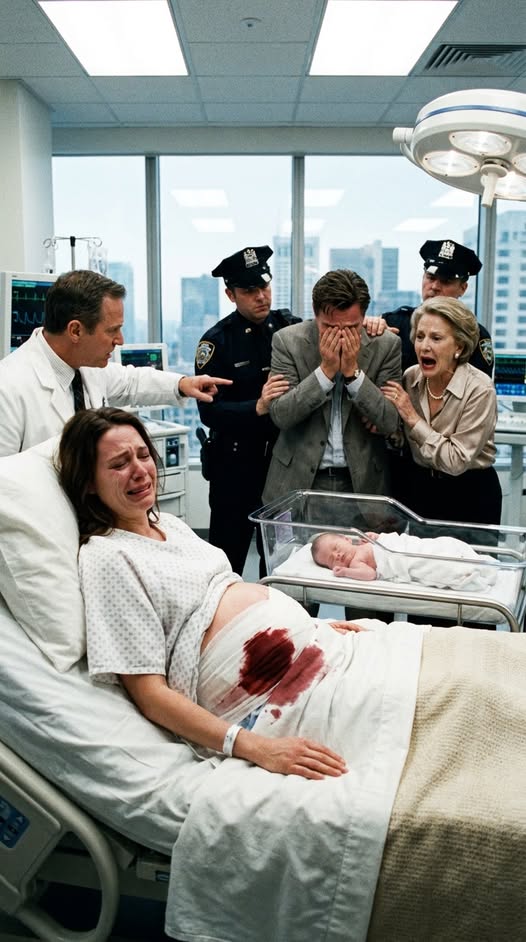
was draped in immaculate white silk, her silver hair pulled into a severe chignon, her face carrying an expression of pure, unfiltered disdain. She didn’t look at Noah. She looked at the floor. “The grout in the foyer is discolored, Maya,” Lydia said, her voice a sharp, surgical blade. “I won’t have the neighbors see such filth when they come for the viewing tomorrow. It reflects incredibly poorly on the family.” I looked up at her, the exhaustion pulling at my eyelids. “I can barely walk, Lydia. The doctor was very clear. No lifting, no straining, no bending. My incision is barely closed.”
The heavy oak door of the home office swung open, and Caleb walked in. My husband was a high-frequency trading executive, a man whose entire life was built on risk management and public perception. He was handsome in that sharp, predatory way, always wearing a suit like a second skin. He leaned casually against the edge of the island. He didn’t look at me, his wife, the mother of his child. He looked at his mother.
“She’s just being dramatic again, Mom,” Caleb sighed, swirling the dark amber liquid in his crystal glass. “It’s the hormones. The doctors warned me about this. She needs to keep busy so she doesn’t spiral into that ‘dark place’ she keeps talking about.”
He finally turned to me. His lips curved into a smile, but the expression was entirely dead behind his cold, calculating eyes. It was the look of a man appraising a depreciating asset. “Go on, honey. Scrub the floor. It’ll help you feel ‘normal’ again. Stop wallowing.”
A cold dread coiled in my gut. This wasn’t just cruelty; it was a systematic dismantling of my reality. They were building a narrative. The missing phone. The canceled visits from my friends. The constant whispering just outside my door about my “instability.” They were preparing to strip me of everything.
I handed a sleeping Noah to his bassinet. Every movement was a negotiation with the searing pain in my lower stomach. I slowly lowered myself onto the freezing stone floor of the foyer, a scrub brush gripped in my trembling hand. The cold seeped through my sweatpants, chilling the fresh surgical wound.
As I dragged the bristled brush across the tile, a faint electronic beep caught my attention. I paused, peering through the reflection of the glass balustrade. Caleb was standing half-hidden in the hallway shadow. He had his phone raised, the red recording light blinking steadily. He was filming me on my hands and knees.
“Log entry, day ten,” Caleb whispered into the microphone, his voice dripping with fabricated sorrow. “The subject is exhibiting compulsive behavior again. Highly agitated. Refuses to rest…”
2. The Breaking Point at Midnight
Midnight in the glass house always felt like the bottom of the ocean—crushing pressure and absolute darkness beyond the windows.
My back was screaming. The skin around my incision felt unnaturally tight, pulsing with a dull, sickening heat. The scrubbing had taken whatever meager reserves of energy my body possessed. I was lying in the guest bedroom—Caleb had insisted we sleep apart so my “tossing and turning” wouldn’t affect his work schedule—when the sharp, desperate wail of Noah crying shattered the quiet.
I threw off the thin blanket and tried to stand. A sharp spike of agony shot up from my pelvis. I gasped, leaning heavily against the doorframe, waiting for the dark spots to clear from my vision. I felt a warm, terrifying dampness blooming against the cotton of my pajama pants. The incision was weeping.
“Let me go to him!” I screamed, my voice raw, the sound of Noah’s hunger-cries echoing frantically from the nursery down the hall.
I stumbled into the corridor, but Lydia was already there, blocking the nursery door like a stone sentinel.
“Go back to your room, Maya,” Lydia commanded.
“He needs to eat. I need to feed him.” I lunged forward, desperate, reaching for the brass doorknob.
Lydia didn’t just step in my way; she shoved me. Her palm slammed hard into my collarbone, sending me staggering backward. “You aren’t fit to touch that child in this state! Look at you. You’re a hysterical, bleeding mess.”
Caleb emerged from the master suite. He didn’t ask what was wrong. He moved with terrifying, practiced efficiency. He stepped behind me and grabbed my wrists.
“Let go!” I thrashed, panic flooding my system.
Caleb twisted my arms, pinning them violently behind my back. The force made the bones in my shoulders groan in protest. “Calm down! You’re having an episode!” he shouted, projecting his voice as if performing for a hidden audience.
“Caleb, you’re hurting me! My stomach—!”
I planted my feet, fighting the leverage he had on my upper body, trying to twist out of his iron grip. Lydia stepped forward and grabbed my shoulders, pushing my upper body backward while Caleb wrenched my arms up. The biomechanical stress on my core was immense.
And then, it happened.
A sickening, wet pop echoed in the hallway. It was followed by a rapid succession of tearing sounds—heavy-duty surgical thread snapping under impossible tension, ripping through the healing layers of fascia and muscle.
A searing, jagged explosion of heat tore across my lower abdomen. The pain was so absolute, so blinding, that it robbed me of my breath. I couldn’t even scream. I just collapsed.
The world turned a static, violent gray. I was vaguely aware of my knees hitting the hardwood. Through the suffocating haze of agony, my cheek pressed against the floorboards, I opened my eyes. I saw a thick, dark pool of blood rapidly expanding across the pristine white wood.
I saw Lydia calmly step over the blood. She picked up a decorative ceramic vase from the hall table and smashed it against the wall. Then, she retrieved the bloody scrub brush from the foyer and dropped it near my hand.
“Now, Caleb, remember the plan,” the older woman whispered, her voice entirely devoid of panic. “She became hysterical. She broke the vase. She tried to open her own wound because she ‘couldn’t be a mother.’ We are the victims here. We are the ones trying to save her from herself.”
My vision tunneled. The sound of sirens began to wail in the distance. As the paramedics loaded me onto the stretcher, Caleb leaned over me, his face close to mine. He gripped my hand, his thumb digging viciously into my knuckles.
“If you say a single wrong word to the doctors,” he whispered into my ear, his breath hot against my cold skin, “I will make sure you never see Noah again. I have the video of you acting like a lunatic on the floor. Remember?”
3. The Silent Language of Trauma
The trauma bay at the hospital was a chaotic symphony of glaring lights, beeping monitors, and the sharp scent of iodine. I lay on the gurney, shivering uncontrollably. My hospital gown was soaked with blood, the pain in my stomach a raging, relentless fire that made every breath a battle.
Dr. Elias Thorne walked into the room. He wasn’t like the other frantic emergency room staff. He moved with a heavy, deliberate calm that felt like a localized force field. He was a veteran trauma surgeon, a man with deep lines etched around his eyes and a gaze that didn’t just look at you; it looked through you. He operated on a fundamental, unshakeable belief that while people lie, human tissue never does.
Caleb immediately rushed to him, his performance flawless. He aggressively wiped away fake tears, his voice trembling with manufactured exhaustion.
“Doctor, please, you have to help her,” Caleb pleaded, clutching the lapels of his designer jacket. “She’s postpartum crazy. It’s the psychosis. She just… she started thrashing around, breaking things. She started clawing at her own incision, saying she wanted the ‘pain out.’ It’s been a nightmare trying to keep her safe.”
Lydia stood by the door, wringing her hands, playing the role of the devastated, deeply concerned matriarch to perfection.
Dr. Thorne didn’t offer a comforting pat on the shoulder. He didn’t respond to Caleb at all. He stepped around my husband and moved to the edge of my bed.
I couldn’t meet his eyes. I was trapped in a suffocating paralysis of fear. Caleb’s threat echoed in my skull. You will never see Noah again. I kept my gaze fixed on the blinding fluorescent panels on the ceiling, my face locked in a thousand-yard stare.
“Let’s see what we have here, Maya,” Dr. Thorne murmured, his voice a low, steady rumble. He gloved up and gently peeled back the temporary gauze the paramedics had hastily applied.
He didn’t just look at the catastrophic ruin of the incision. He looked at the surrounding canvas of my skin.
He traced his gloved fingers incredibly lightly over my inner biceps. There, blooming dark purple against my pale skin, were unmistakable, oval-shaped bruises. Fingerprints. They were deep, indicating massive force, and the thumbprints were facing inward, toward my chest. It was the undeniable physical signature of someone being forcefully restrained from behind, their arms wrenched backward.
Then, Dr. Thorne looked closely at the torn flesh of the abdomen. The skin hadn’t been scratched open by fingernails. The tearing was lateral. The staples and internal sutures had blown out from massive, opposing mechanical tension—the kind of tension created when a body is violently stretched, not when it collapses or claws at itself.
Stitches don’t rip like this from a fall. They rip from a struggle. “A fall or self-mutilation would leave entirely different anatomical markers, Mr. Miller,” Dr. Thorne said. His voice had dropped an octave, settling into a low, dangerous register.
Dr. Thorne slowly turned his head. He looked at Caleb’s pristine, uninjured hands. He looked at Lydia’s rigid posture. He looked back at the defensive bruising on my arms. The pieces of the puzzle slammed together in his mind with forensic precision. He realized in that profound, silent moment that the bleeding woman on his table wasn’t a psychiatric patient spiraling into madness. She was a prisoner who had just been tortured.
Dr. Thorne didn’t ask Caleb another question. He didn’t argue. He calmly pulled off his bloody gloves, tossed them into the biohazard bin, and walked to the communications panel on the wall. He pressed the heavy red button.
“Code Gray,” Dr. Thorne said into the intercom, his eyes locked dead onto Caleb’s face. “I need security at Trauma Room 4 immediately. Lock down the wing. Do not let these two visitors leave the building.”
4. The Lockdown of Truth
The heavy motorized doors to the trauma bay slid shut with a definitive, mechanical thud, sealing the room.
The color instantly drained from Caleb’s face, replaced a second later by a flush of mottled, indignant rage. The carefully crafted mask of the grieving husband disintegrated.
“You have no right!” Caleb roared, taking a threatening step toward the doctor. “Do you know who I am? I pay for half the damn equipment in this cardiac wing! I am taking my wife out of this butcher shop right now, and I want a different doctor! One who understands postpartum psychosis!”
He lunged toward my bed.
Dr. Thorne didn’t flinch. He simply stepped sideways, placing his body squarely between Caleb and my gurney. “Take one more step toward my patient,” Thorne said, his voice terrifyingly quiet, “and I will break your jaw before security even gets through that door.”
Through the reinforced glass of the bay doors, three massive hospital security guards appeared, effectively barricading the exit.
Lydia stepped forward, her silver hair trembling slightly. The polished veneer of the society matriarch cracked, revealing the ugly, rotting entitlement beneath. “She is a broken, useless girl, Doctor!” Lydia spat, pointing a manicured finger at me. “She can’t even clean her own house. We were just trying to fix what Caleb bought! You are interfering in private family business!”