My labor. I was officially the wife of Leo Thorne, a high-powered acquisitions executive whose brilliance in the boardroom provided the multi-million-dollar roof over our heads. But practically, daily, I was the indentured servant to his toxic bloodline. When Leo and I first married, his mother, Agnes, had suffered a “minor financial setback.” “Just for a few months, Maya,” Leo had pleaded, his handsome face etched with filial guilt as we stood in our newly purchased kitchen. “Just until they get back on their feet. I can’t leave them with nothing.” Four years later, the temporary arrangement had metastasized into a permanent, hostile occupation. Agnes, a woman whose vanity was only eclipsed by her casual cruelty, had claimed the master guest suite. Her daughter, my sister-in-law Chloe—a twenty-six-year-old aspiring influencer who had never held a job for more than a single pay cycle—occupied the entire east wing. And Leo’s father, Arthur, a man made entirely of apathy and cheap scotch, haunted the living room sofa like a permanent architectural fixture. They did not work. They did not clean. They did not contribute a single dime or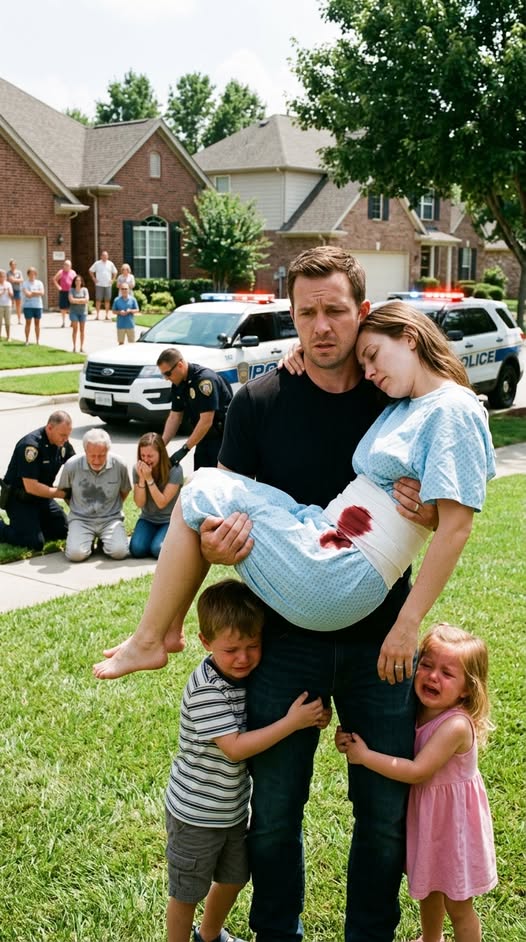
a solitary moment of gratitude to the household. Instead, they spun an elaborate, masterful web of illusions for Leo. Whenever my husband’s black town car pulled into the driveway after a grueling international trip, Agnes would suddenly materialize at the stove, stirring a pot of soup I had spent two hours preparing. Chloe would hug me, flashing a brilliant, rehearsed smile for Leo’s benefit. “We take such good care of her while you’re gone, Leo,” Agnes would purr, kissing his cheek.
And Leo, blinded by his desperate, deep-seated desire for a functional family and exhausted from seventy-hour work weeks, believed them. He saw the spotless Brazilian hardwood floors, the neatly folded laundry, the hot meals, and assumed his family was a village of mutual support. He never saw the bruises on my soul. He never saw how, the exact second his car vanished down the street toward the airport, the masks hit the floor.
It was a Tuesday in late October when the illusion finally, violently shattered.
Leo was in Tokyo, negotiating a corporate merger that would likely secure his position as a senior partner. I had been feeling a dull, throbbing ache in my lower abdomen for days. I tried to rest, but Agnes had demanded I deep-clean the heavy Persian rugs in the dining room before her afternoon bridge club arrived, so I had pushed through the discomfort with painkillers and black coffee.
I was standing at the kitchen island, chopping celery for Arthur’s mandatory afternoon stew, when the pain shifted from a dull ache to an explosive, tearing agony.
It hit me like a jagged, rusted knife twisting violently behind my navel. I gasped, the heavy chef’s knife clattering onto the granite countertop. The kitchen spun in a sickening carousel of stainless steel and white marble. My knees buckled, and I collapsed onto the hardwood floor. I curled into a tight fetal position, my hands clutching my stomach, panting rapidly as a cold, clammy sweat broke out across my forehead.
Then, I felt the wetness. Warm, sudden, and terrifying.
I looked down, my vision swimming, to see a dark stain rapidly expanding across the fabric of my light grey sweatpants.
Something is rupturing. The thought cut through the haze of agony. The pain was blinding, white-hot, consuming my entire consciousness. I tried to scream for help, but only a pathetic, gurgling wheeze escaped my lips.
From the living room, the deafening blast of a reality television show blared unabated.
“Maya!” Agnes’s sharp, grating voice cut through the synthetic television drama. “The Earl Grey is supposed to be steeped for exactly four minutes! Where is it?”
I heard her heavy, slippered footsteps approaching the kitchen. I managed to pry one eye open, my cheek pressed flat against the cold floorboards.
Agnes walked through the archway, holding an empty porcelain mug. She stopped. She looked down at me, shivering and gasping on the floor. Her expression did not register shock, or fear, or maternal concern. Her face twisted into a mask of profound, unadulterated annoyance.
“Oh, for heaven’s sake,” Agnes sneered.
She literally stepped her right foot over my trembling, curled body to reach the electric kettle.
“Stop being so dramatic, Maya. If you wanted a nap, you could have gone to your room. That floor better not be stained. You know how much Leo paid for that wood.”
She poured her hot water, stepped over me a second time, and walked back out. “And chop that celery faster!” she called over her shoulder.
A wave of nausea washed over me, a physical reaction to the sheer sociopathy I had just witnessed. I was dying. I could feel my consciousness draining out of me, and she cared only about the hardwood.
I am going to die here, a voice whispered in the back of my fading mind. I am going to die on the kitchen floor while they watch TV.
Survival instinct, raw and primal, overrode the pain. I dug my fingernails into the microscopic grooves of the floorboards. Dragging my dead weight, I pulled myself toward the kitchen island. My arm shook violently as I reached blindly up the cabinet face, my slick fingers fumbling until they hit my cell phone resting on the edge.
I knocked it down. It hit my nose. With trembling, unresponsive thumbs, I dialed 911.
“Help,” I whispered into the speaker, the room fading to black at the edges. “Medical emergency. 42 Oakwood Lane. Please.”
Ten minutes later, the wail of sirens pierced the suburban quiet. As the paramedics burst through the heavy front doors, shouting for the patient, I felt rough, urgent hands lifting me onto a canvas stretcher. An oxygen mask was strapped firmly over my face.
Through the haze of agonizing pain, as they wheeled me toward the door, I saw Chloe standing at the bottom of the grand staircase. She was wearing silk pajamas, her arms crossed defensively.
She didn’t ask the paramedics what was wrong. She didn’t ask which hospital they were taking me to. She just glared at the flashing red lights reflecting off the living room windows.
“Could you guys turn those sirens off?” Chloe whined loudly to the EMT holding my IV bag. “I’m trying to film a makeup tutorial and the noise is literally giving me a migraine.”
The EMT stared at her in absolute disbelief before shouting to his partner, “Let’s move, her pressure is bottoming out!”
The heavy doors of the ambulance slammed shut, completely severing my sight of my toxic household. As the vehicle lurched forward, speeding toward the emergency room, the darkness finally overtook me. I plummeted into a void, terrified, realizing that if my heart stopped beating in this ambulance, the people in my home would only complain about the inconvenience of the funeral.
And as the monitor beside my head let out a single, continuous, terrifying tone, my eyes rolled back into the dark.
The sterile, chemical smell of iodine and institutional bleach is the scent of a profound reckoning.
I woke up in the surgical ward of St. Jude’s Hospital, my mouth tasting like dry cotton and old copper. The rhythmic beep-beep-beep of the heart monitor was the only sound in the dim, private room. I tried to shift my weight, but a searing, agonizing pull across my lower abdomen made me cry out, a sharp hiss of air through my teeth.
A nurse materialized at my bedside instantly, her hands gently adjusting my IV line. “Easy, honey,” she whispered, her eyes full of a soft, heartbreaking pity. “You had a ruptured ectopic pregnancy. It caused severe internal hemorrhaging. We had to perform emergency surgery. You lost a lot of blood, Maya. But you’re safe now.”
A ruptured ectopic pregnancy.
The words hung in the air, heavy and suffocating. I hadn’t even known I was pregnant. The relentless stress of the household, the constant physical exhaustion, the erratic sleep—I had missed the subtle signs. And now, the child was gone before I even knew it existed, and I had nearly followed it into the dark.
I turned my head toward the corner of the room. There was a cheap vinyl visitor’s chair sitting beneath the window.
It was empty.
“Did anyone…” I started, my voice raspy and impossibly weak. “Is anyone outside in the waiting room?”
The nurse’s eyes dropped to the linoleum floor. She hesitated, adjusting a blanket that didn’t need adjusting. “No, sweetie. You’ve been here for forty-eight hours. The police went to the house to notify your family after the ambulance brought you in. A woman… an older woman answered the door. She said they were busy and would come by later. That was two days ago.”
Agnes.
She knew I had been rushed away in an ambulance. She knew I had collapsed. And she had looked a police officer in the eye and told him she was busy. No calls. No texts. No flowers. No visits. For forty-eight hours, the only hands that had touched me, the only voices that had comforted me, belonged to strangers earning an hourly wage.
As the nurse quietly left the room to give me space, something inside of me broke.
It wasn’t a loud, shattering, hysterical break. It was a silent, irreversible snap. It was the death of Maya the peacemaker. The death of Maya the dutiful wife who swallowed her pride, her dignity, and her exhaustion to keep her husband’s family together.
I lay in that hospital bed, pale, hollowed out, and wrapped in thick white surgical binders, and I saw my life with terrifying, crystal clarity. I was a married woman living like an orphan. I was a human shield, absorbing the daily, psychological blows of Leo’s parasitic family so he could live in the delusion of domestic bliss.
The trauma burned away the thick fog of my compliance. I realized that my silence wasn’t protecting my marriage; it was actively killing me. If I went back to that house and resumed my role, I would eventually leave it in a body bag.
I reached with a trembling hand for my belongings bag resting on the plastic tray table. I pulled out my cell phone. It was dead. I rang the nurse and asked for a charging cable.
When the screen finally illuminated, the lock screen mocked me. Zero missed calls from Agnes. Zero from Chloe. Zero from Arthur.
I looked at the digital clock on the wall. It was 8:00 AM in Seattle. That meant it was midnight in Tokyo.
I opened my contacts and pressed Leo’s name.
The phone rang internationally, a long, hollow tone that mirrored the absolute emptiness in my chest. He picked up on the second ring.
“Hey, honey,” Leo’s voice came through the speaker. He sounded exhausted, his voice gravelly, but deeply warm. The sound of his voice used to bring me immense comfort. Now, it just made me realize how utterly, hopelessly disconnected he was from my reality. “I’m just getting out of the final merger dinner. We closed the deal. I was going to call you when I got back to the hotel. How are things at home? Is my mom driving you crazy yet?”
He chuckled softly. A light, easy, oblivious laugh.
The contrast between his luxury corporate dinner and my solitary hospital bed was the final catalyst.
“Leo,” I said. My voice did not shake. It was not thick with tears. It was as cold, flat, and absolute as a judge reading a life sentence.
“Maya? You sound strange. Are you okay?” The warmth in his voice instantly vanished, replaced by a sharp edge of corporate alertness.
“I am in the surgical ward at St. Jude’s Hospital,” I stated, staring at the blank white ceiling tiles. “I had a ruptured ectopic pregnancy. I had emergency surgery. I have been out of the operating room for two days.”
There was a dead, terrifying silence on the line. I could hear the faint sound of Tokyo traffic in the background, but Leo had stopped breathing.
“What?” he finally whispered, the word strangled, ripped forcefully from his throat. “Maya… a baby? Surgery? Where is my mother? Why didn’t anyone call me? I’m—I’m calling the hospital right now, I’m getting my assistant to book a jet—”
“Leo, listen to me,” I cut him off, my voice slicing through his rising panic like a scalpel. I bypassed the drama. I didn’t complain about his family. I didn’t whine. I delivered the executioner’s blow.
“I have been here for forty-eight hours. Nobody came. Not Agnes. Not Chloe. Not Arthur. They stepped over me on the kitchen floor, Leo. And they never came to the hospital.”
“Maya, that’s impossible. My mother would never—”
“I am discharging myself today,” I interrupted again, refusing to let him defend his bloodline for one more second. “I am going back to the house to pack my things. And when you get back from Tokyo, Leo, I want a divorce.”
“Maya, no! Please, wait, let me—”
Before he could finish the sentence, I pulled the phone away from my ear and pressed end.
I dropped the phone onto the sterile blanket. I didn’t cry. I felt incredibly light. The illusion was dead.
Thousands of miles away, I knew exactly what was happening. He was standing on a bustling sidewalk in the neon glare of Shinjuku, staring at a disconnected phone. I knew the realization of his family’s true nature had just hit him like a high-speed freight train.
I pressed the call button for the nurse.
“Yes, Maya?” she asked, appearing at the door.
“Bring me the AMA discharge papers,” I said, swinging my bruised, heavy legs over the side of the bed. Pain flared through my abdomen, hot and vicious, but I gritted my teeth. “I am leaving against medical advice. I have to go home.”
“Maya, you can’t, your incisions—”
“I am leaving,” I repeated, my eyes locking onto hers with a fierce, unbreakable resolve. “I have a trap to spring, and I cannot do it from this bed.”
She nodded slowly, recognizing the dangerous look in my eyes. But as I signed the papers and dressed in the cheap sweatpants the hospital provided, I had no idea that my trap was about to spring much faster, and much more violently, than I had ever calculated.
The journey home was a grueling, agonizing test of physical endurance.
I wore baggy grey sweatpants and an oversized sweater provided by the hospital social worker, my own clothes having been destroyed by the surgeons’ trauma shears. Every pothole the Uber hit on the damp Seattle roads sent a shockwave of fiery pain through my surgical binders. I was physically fragile, my skin the color of skim milk.
But mentally, my spine was made of titanium.
As the car pulled up to the wrought-iron gates of the estate, I felt a strange, chilling sense of calm. I knew Leo. I knew the man I had married beneath the corporate polish. Beneath his desperate desire for a loving family, Leo was a ruthless, fiercely protective man. I knew he was currently tearing through the skies over the Pacific Ocean, driven by a lethal, blinding panic.
But Agnes, Chloe, and Arthur didn’t know that. They thought Leo was safely tucked away in Tokyo for another four days. They thought they were untouchable in their stolen castle.
I paid the driver and slowly stepped out of the car. The damp autumn air bit at my face. I walked up the long, winding driveway, clutching my abdomen, forcing one foot in front of the other.
I pushed the heavy oak front door open.
The stench hit me before my eyes even adjusted to the dim light of the foyer. The house, usually pristine from my constant, forced labor, was a disaster zone. The scent of stale, greasy takeout boxes mixed with the sour smell of unwashed wine glasses. The floor was sticky beneath my shoes.
From the living room, the familiar, obnoxious blare of Chloe’s television echoed off the high vaulted ceilings.
I stepped fully into the foyer, letting the heavy door click shut behind me.
“Who’s that?” Arthur’s groggy voice slurred from the living room sofa.
Agnes marched out of the kitchen, wiping her hands aggressively on a dish towel. When she saw me, she didn’t gasp in relief. She didn’t run forward to ask if I was okay. Her face, already harsh and lined with perpetual dissatisfaction, contorted into a mask of pure, indignant rage.
“Where the hell have you been?!” Agnes screamed, her voice echoing shrilly in the vast space.
I stared at her, my hand resting protectively over the thick bandages hidden beneath my sweater. “I was in the hospital, Agnes. I had surgery. I almost died.”
“Oh, spare me the theatrics!” she spat, storming toward me. She reached back into the kitchen and grabbed the first thing her hand found resting on the island—a heavy, black, cast-iron frying pan. She marched back into the foyer, wielding it like a weapon. “You left a disgusting mess on my floor! You’ve been gone for three days! We’ve been starving! Chloe had to order delivery, and Arthur hasn’t had his laundry done!”
Chloe sauntered out of the living room, a half-eaten slice of pizza in one hand, her phone in the other. She looked me up and down, taking in my pale, bruised face and trembling posture. She scoffed, a cruel, ugly sound.
“Look at her, Mom. She’s faking it for attention. She probably just went to a spa to get out of doing her chores.” Chloe rolled her eyes, not even looking away from her screen. “You are such a lazy burden, Maya. Go make us lunch. Now.”
Arthur didn’t even bother coming into the foyer. He just yelled from the sofa, “Tell her to bring me a scotch!”
I stood there, hurting beneath my bandages, looking at the monsters who had stolen years of my life. This was it. This was the grotesque reality of familial parasitism. They viewed me as machinery. When the machine broke down, they didn’t try to fix it; they kicked it.
“I am not making you anything,” I said, my voice barely above a whisper, but laced with a lethal venom they had never heard from me before. “I am going upstairs. I am packing my bags. And I am leaving you in the filth you created.”
Agnes’s face turned a violent shade of purple. The idea of her servant defying her broke her fragile, arrogant mind.
“You ungrateful little bitch!” Agnes roared.
In a flash of unhinged, violent fury, she raised the heavy cast-iron frying pan above her shoulder and hurled it directly at my head.
Time seemed to slow down. I saw the black iron spinning through the air, heavy and lethal. I couldn’t move fast enough. I braced for the impact, throwing my arms up over my face.
The pan missed my skull by less than three inches. It smashed with explosive, deafening force into the priceless Ming dynasty ceramic vase resting on the display pedestal right next to my head.
The vase detonated. Shards of razor-sharp porcelain exploded outward, showering over me, raining down onto my hair and shoulders. The heavy iron pan hit the hardwood floor with a sickening crack, gouging a deep, ugly trench into the wood Leo had paid so much for.
I stood frozen, my heart hammering against my ribs like a trapped bird.
Agnes stood panting, pointing a trembling finger at me. “Get into that kitchen right now, or the next one hits your teeth!”
Chloe laughed from the velvet sofa, tossing a throw pillow onto the floor just to add to the mess. “Don’t just stand there crying, Maya,” she mocked, taking a bite of her pizza. “Who are you gonna tell? Leo is in Japan. He’s not here to save you. And even if he was, he wouldn’t believe you anyway. He knows we love you.”
The absolute, sociopathic confidence in Chloe’s voice hung in the stale air. They truly believed they had won. They believed my silence was permanent, and Leo’s blindness was eternal.
But as Chloe finished her sentence, a shadow detached itself from the gloom of the open doorway leading to the mudroom behind me. The side entrance. The entrance someone would use if they had arrived via a private car from the airport and bypassed the front gate.
A voice, deeper than the ocean, trembling with a pure, unadulterated, lethal rage, whispered from the shadows.
“I don’t need to believe her, Chloe. I just watched you do it.”
If hell has a temperature, it is not fire. It is the absolute, freezing zero of a man who has just realized his entire life is a lie.
Leo stepped out of the shadows of the mudroom hallway and into the foyer.
He looked terrifying. He was still wearing the bespoke charcoal suit he had worn to his Tokyo board meeting, but it was rumpled and creased from a fourteen-hour frantic flight. His silk tie was ripped off. His hair, usually perfectly styled, was a chaotic mess.
But it was his face that stopped the air in the room. His skin was the color of wet ash. His jaw was clenched so tight I thought his teeth might shatter under the pressure. His eyes, usually warm and calculating, were completely devoid of all humanity. They were black, burning pits of realization and wrath.
He looked at the shattered remains of the priceless vase. He looked at the heavy cast-iron pan embedded in the gouged hardwood floor. He looked at my pale, trembling frame.
The silence in the foyer was absolute, save for the ragged sound of Leo’s breathing.
Agnes gasped, a sharp, pathetic sound. The color drained from her face so fast she looked like a corpse. She stumbled backward, her arrogant posture instantly collapsing.
“Leo!” she stuttered, her voice pitching up into a hysterical squeak. “Sweetheart! You’re… you’re home early! We were just… we were just having a disagreement. Maya is acting crazy, she—”
Leo didn’t yell. A screaming man is out of control. Leo was not out of control. He was a surgeon about to perform a brutal amputation without anesthesia.
“You threw a pan at my wife,” Leo said. His voice was a guttural growl that vibrated in the floorboards.
He stepped forward, moving with a predatory grace, and positioned his large frame directly in front of me. He became a literal, physical shield of muscle and bone between me and his mother. I could feel the heat radiating off his back.
“Leo, please,” Chloe jumped up, dropping her pizza on the expensive rug, her hands shaking violently. “It’s a misunderstanding! She disappeared for three days! We were worried sick!”
Leo slowly turned his head to look at his sister. “She called me from the surgical ward of St. Jude’s. We lost a child. And you,” he pointed a rigid, unyielding finger at Chloe, “told her to go make you lunch.”
The word child hung in the air, a ghost that instantly sucked the remaining oxygen from the room. Agnes let out a choked sob, pressing her hands over her mouth, realizing the absolute magnitude of her miscalculation.
Arthur finally emerged from the living room, holding his glass of scotch, trying to muster a false sense of paternal authority. “Now see here, Leo. You’re upset. But you don’t speak to your mother and sister that way. Maya is just being dramatic—”
“Shut your mouth, Arthur,” Leo snapped, the venom in his voice forcing the older man to flinch backward. Leo didn’t even call him Dad. The bloodline was already dead.
Leo reached into his suit jacket and pulled out his phone. His thumb moved with terrifying, practiced speed across the screen.
“I bought this house,” Leo said, his voice eerily calm as he typed. “I pay for the groceries you let rot. I pay for the Mercedes you drive, Chloe. I fund your pathetic, useless, parasitic lives. I worked myself into the ground so you could live like royalty, and you treated my wife like a dog.”
“Leo, please, we love her!” Agnes sobbed, dropping to her knees on the sticky floor, her hands clasped together in desperate supplication. “We’ll be better! I’m sorry!”
Leo didn’t even look at her. He held up his phone so they could see the screen.
“I just canceled the supplementary American Express cards. I froze the joint checking accounts. I emailed my assistant from the jet; the leases on the cars will be terminated at 5:00 PM today.”
Chloe let out a high-pitched shriek of absolute terror. Her entire identity, her entire lifestyle, was evaporating in real-time. “You can’t do that! I have brand deals! I need that car!”
Leo lowered the phone. He looked at the three of them—the people who shared his DNA—and viewed them with the cold, detached disgust one reserves for a roach infestation.
“You have exactly fifteen minutes,” Leo said, looking at his platinum watch. “Fifteen minutes to go upstairs, pack whatever you can carry in two suitcases each, and get the hell out of my house.”