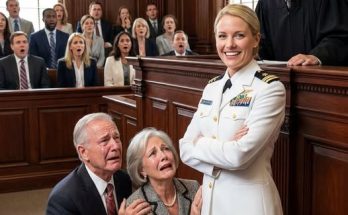
The call came on a Tuesday morning, slicing cleanly through the fragile peace I had spent the last three months carefully constructing. I was sitting at the massive oak island in my father’s kitchen, a cup of black coffee steaming in my hands, watching the early sunlight lean across the original hardwood floors in soft, golden bars. When Eleanor’s name flashed across my phone screen, the air in the room seemed to drop ten degrees. Nothing that came from Eleanor was ever pleasant, nor was it ever without an angle. She did not call to connect, to grieve, or to check in. She called to establish dominance. She called to remind people of the version of reality she preferred—the one where she was the undisputed matriarch, the center of gravity, and everyone else was either a useful asset or an obstacle to be cleared. I let the phone ring one extra beat. I took a slow, deliberate sip of my coffee, feeling the heat anchor me, and answered with a voice I had practiced cooling into absolute neutrality. “Hello, Eleanor.” “I’ve sold the house,” she announced. No greeting. No context. Not even the faintest pretense of courtesy. Her tone held that familiar, glossy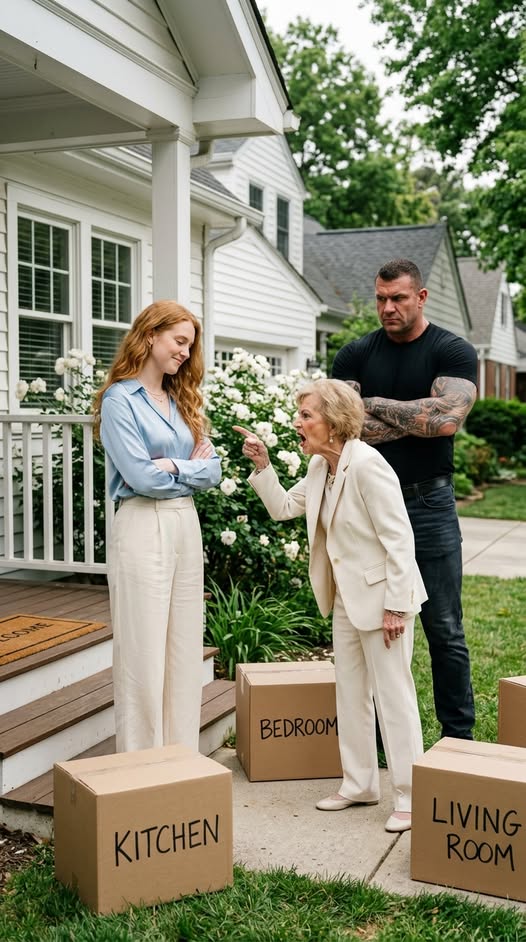
satisfaction, rich and impenetrable as fresh lacquer. “The papers are signed, and the new owners move in next week. I hope you’ve learned your lesson about respecting your elders, Harper.” For three full seconds, I said nothing at all. My name is Harper Sterling, and the house Eleanor was so smugly discussing was my childhood home. It was a sprawling, Victorian-craftsman hybrid with a wraparound porch, a breathtaking stained-glass landing window, a deep claw-foot tub upstairs, and a creaking back staircase that my father, Arthur, swore was the soul of the architecture. It was the house where I had learned to read by the fireplace, where I had once hidden under the mahogany dining table during a thunderstorm while Dad pretended the sky was just rearranging its heavy furniture.
It was also, according to Eleanor’s latest performance, a house she believed she
had just effortlessly ripped from my hands.
“The house?” I repeated, carefully keeping the dark, bubbling amusement out of
my voice. “You mean Dad’s house?”
“Don’t play dumb with me, Harper. You know exactly which house. The one you’ve
been squatting in rent-free since your father passed. Well, that little vacation
ends now. I found cash buyers. A lovely couple from out of state who will
actually appreciate the property and bring it into the twenty-first century.”
I lifted my mug again, letting her voice wash over me as my mind drifted to a
memory from just days after my father’s funeral. It was a quiet, highly
confidential meeting in a downtown high-rise with my father’s attorney, Benjamin
Vance. Eleanor had absolutely no idea about that meeting. She had no idea about
the thick manila folders, the notarized signatures, the irrevocable trusts, and
the iron-clad legal precautions my father had quietly arranged long before she
ever imagined she had him entirely figured out.
She had spent five years underestimating me. It had simply never occurred to her
ego that my father might have been doing exactly the same thing to her.
“That’s interesting,” I said smoothly. “And you’re entirely sure everything is
legal?”
She scoffed. Through the receiver, I could hear her moving—probably pacing the
expensive rugs of her rented luxury condo, probably smiling that sharp,
carnivorous smile she wore when she believed she was about to humiliate someone
publicly.
“Of course it’s legal, you insolent girl,” she snapped. “I am his widow. The
deed was in his name. You may have been his precious, over-coddled daughter, but
I have spousal rights. Maybe next time you’ll think twice before questioning my
authority regarding the remodeling.”
And there it was. The bruised ego. The real reason for her urgency.
Three months earlier, while my father was barely cold in his grave, I had
physically stood in the foyer and stopped Eleanor’s contractors from gutting the
historic features of the house. My father had spent two decades restoring it.
The hand-carved banisters. The original parquet flooring. The stained-glass
panels he had cleaned with a toothbrush, piece by piece, during a blizzard in
’98. Eleanor had wanted to rip it all out. She wanted sleek open shelving, gray
laminate, chrome fixtures, and bright, soulless lighting that would have made a
century-old home feel like an overpriced dermatologist’s waiting room.
I had looked her in the eye and told her no. She had never forgiven me for the
embarrassment of being dismissed in front of hired help.
“I see,” I said, tracing the rim of my mug. “Well, I hope you got a good price
for it.”
“Don’t you worry about the numbers,” she hissed. “Just make sure your bags are
packed and you are out by next Friday. Leave the keys on the kitchen island. The
new owners are eager to start their demolition.”
“Thanks for the heads-up,” I said. “Goodbye, Eleanor.”
When I hung up, I set the phone down and let out a laugh that echoed off the
high ceilings. It wasn’t a humorous laugh. It was the sound of a perfectly
designed trap snapping shut. Eleanor believed quiet always meant surrender. She
never understood that some of us go still not because we are beaten, but because
we are calculating the exact angle to slip the knife.
I picked up my phone and dialed Benjamin Vance. He answered on the second ring,
his voice warm, rich, and entirely unhurried, as though he had been sitting at
his desk waiting for this specific call all morning.
“Harper,” Benjamin said. “I was beginning to wonder how long her patience would
hold out.”
“She did it,” I told him, looking out the window at my father’s prized rose
garden. “She actually signed papers to sell the house.”
A small note of dry, professional amusement entered his voice. “Did she now?
Well, the audacity is almost commendable. Shall we set the dominoes in motion?”
“Yes, please,” I said. “And Benjamin? Make sure the buyers’ attorney understands
exactly what happened. I don’t want innocent people losing their escrow money
caught in Eleanor’s web.”
“Already planned,” he assured me. “I’ll contact their representation
immediately. Give it a few hours.”
I hung up, feeling a strange mixture of triumph and profound sorrow. I stood up
and began to walk through the house. My fingertips drifted over walls my father
had plastered himself, over the built-in library shelves he had reinforced
because he knew I would collect too many heavy, hardback books.
Every room held his ghost. But as I reached the top of the stairs, a heavy,
rhythmic knocking suddenly echoed from the solid oak of the front door. It was
too soon for it to be Eleanor. It was too aggressive to be a delivery.
I walked back down the stairs, my heart suddenly accelerating. Through the
frosted glass of the sidelights, I could see the silhouette of a man in a dark
suit. I unlocked the deadbolt and pulled the door open.
It was a process server. He held out a thick manila envelope. “Harper Sterling?
You’ve been served.”
I took the envelope, tearing it open as he walked away. It wasn’t about the sale
of the house. It was a petition filed by Eleanor to freeze all of my personal
bank accounts, claiming I was embezzling from the estate. She wasn’t just trying
to take the house; she was trying to financially suffocate me before I could
fight back.
The war hadn’t just started. It had escalated.
The rest of the morning was spent in Dad’s study, surrounded by the scent of old
paper and cedar. I ignored the frozen bank accounts for the moment—Benjamin
would handle that judicial overreach by the afternoon—and focused on sorting
through old photographs.
Eleanor had married my father five years ago, when I was twenty-four. In those
early months, she was an absolute masterclass in soft edges and warm concern.
She was all perfectly timed compliments, delicate laughter, and carefully
practiced kindness. She called me “sweetheart” in front of his colleagues. She
baked him low-sugar desserts.
But once the wedding ring was secured and the daily grind of life no longer
required her to charm the room, the cracks began to show. A comment about how
“unnaturally close” Dad and I were. A suggestion that it was time I stopped
leaning on him and moved across the country. She wanted distance between us—not
the healthy kind that comes with adulthood, but the strategic kind that leaves a
wealthy, aging man isolated.
My father saw more than he ever let on. He didn’t confront her with shouting
matches. He believed in evidence. He believed in timing.
By three o’clock, my phone began vibrating violently across the mahogany desk.
Missed calls. Voicemails. Texts arriving in rapid, unhinged succession.
What have you done, Harper? Answer the phone! You malicious little brat, you
call Benjamin Vance and fix this right now!
I muted the thread. The buyers’ attorney had clearly received Benjamin’s
cease-and-desist.
I was out in the garden, deadheading my father’s climbing roses, when she
finally arrived. I heard her silver Mercedes before I saw it. The tires spat
gravel as she tore into the driveway entirely too fast, the engine cutting off
with a violent shudder.
A moment later, Eleanor stormed around the side of the house. She had a sheaf of
legal papers clutched in her fist, her entire body rigid with a feral, barely
contained outrage. She had completely abandoned her usual country-club poise.
Her perfectly highlighted hair was windblown. One of her expensive stiletto
heels sank into the soft, damp earth near the stone path, leaving a raw,
inelegant gash in the lawn.
“You conniving little witch!” she screamed, her voice echoing harshly against
the brick exterior. “You knew about this all along! You set me up!”
I stayed kneeling in the dirt for one more beat, clipping a dead rose. Silence
is a weapon against people like Eleanor. It forces them to hear the hysteria in
their own voices.
I stood up slowly, brushing soil from the knees of my jeans. “Knew about what,
Eleanor?”
She shoved the papers toward me as if the ink itself was a weapon. “Don’t play
the innocent victim! The irrevocable trust! The property transfer! You and that
vulture Benjamin plotted this behind my back to steal my inheritance!”
“No,” I said, my voice eerily calm. “Dad and Benjamin arranged it. Three years
ago. I simply followed instructions.”
Her face changed. The pure rage faltered, replaced by a flicker of deep, buried
terror. “Your father would never do this to me,” she breathed. “He worshipped
me. This is a forgery. It has to be.”
“Actually,” I said, taking a step toward her, “Dad did exactly this to protect
me, and to protect this house. He saw right through your performance, Eleanor.
He knew exactly what you would try to do the moment his heart stopped beating.”
She took an involuntary step backward. Her heel sank into the mud again. “That’s
a lie,” she whispered, her voice trembling. “He trusted me. He loved me.”
“Did he?” I asked quietly, letting the words hang in the heavy afternoon air.
“Or did he just let you think he did so you wouldn’t realize he was building a
fortress around you?”
The silence that followed was exquisite. It was the visible collapse of her
entire reality. My father, the quiet, accommodating man she thought she had
outmaneuvered, had left protections in place so precise they had undressed her
greed from beyond the grave.
“The house was never in his name alone,” I explained clinically. “He transferred
the deed into a blind trust long before he signed your marriage certificate. I
am the sole beneficiary. You had absolutely no legal right to list it, let alone
sell it. The buyers are threatening to sue you for fraud, aren’t they?”
Her hands began to shake. “Do you have any idea how humiliating this is? My
reputation in this town…”
“Almost as humiliating,” I interrupted, “as trying to throw a grieving daughter
out onto the street. Or spending five years pretending to love a man just to get
your hands on his real estate portfolio.”
Her expression hardened, morphing from panic into pure malevolence. She looked
at me, her eyes narrowing into dark slits. “You think you’re so smart, Harper.
You think Arthur was this brilliant tactician.” She let out a dry, rattling
laugh that sent a chill down my spine. “You don’t understand anything. You think
he died of natural heart failure? You think he just faded away?”
My blood went ice cold. “What are you talking about?”
Eleanor leaned in close, her designer perfume cloying and suffocating. “He
didn’t build a fortress, Harper. He built his own tomb. And if you don’t sign
this house over to me by tomorrow, I’ll make sure the world knows exactly what
he was hiding in it.”
She turned and marched back toward her car, leaving me standing among the roses,
my heart pounding a frantic, terrifying rhythm against my ribs.
Eleanor’s silver Mercedes disappeared down the road, but the venom of her words
lingered in the garden like a toxic fog. You think he died of natural heart
failure?
I rushed back inside the house, locking the heavy deadbolt behind me. The
silence of the foyer, usually a comfort, suddenly felt oppressive. What did she
mean? My father had been sick for eight months. The doctors called it a rapid,
progressive cardiovascular decline. It was tragic, but it was documented.
I pulled out my phone and called Benjamin.
“Benjamin, she was just here,” I said, pacing the length of the hallway. “She
threatened me. But she said something strange. She implied Dad’s death wasn’t
natural, and that he was hiding something.”
There was a heavy pause on the other end of the line. “Harper,” Benjamin said,
his voice lowering to a serious, hushed register. “I was going to wait until
tomorrow to tell you this, but my private investigator just got back to me
regarding Eleanor’s past. The background check Arthur asked me to run before he
died.”
“Before he died? Dad was investigating her?”
“Yes. And Harper… Arthur wasn’t her first husband. He was her third. Both of
the previous men passed away under suddenly declining health conditions. Both
left her substantial, untethered assets. Arthur was the first one to use a blind
trust.”
I stopped pacing. The floorboards beneath my feet seemed to sway. “Are you
telling me she killed them?”
“I’m telling you there is a pattern, and your father saw it,” Benjamin said
carefully. “He asked me to secure the estate, but he told me he was handling the
‘Eleanor problem’ himself. He said he was leaving you a map. Have you found
anything in the house?”
“No,” I whispered. “Nothing.”
“Look harder,” Benjamin instructed. “Arthur was a methodical man. If he knew he
was in danger, he wouldn’t leave you unprotected.”
I hung up the phone. The house was settling around me, the wood groaning as the
evening air cooled the exterior. I walked into my father’s study. It was exactly
as he had left it. The walls were lined with floor-to-ceiling bookshelves. A
massive globe stood in the corner. The brick fireplace, cold and swept clean,
dominated the far wall.
A map.
I began to tear the room apart. I went through the desk drawers, shaking out old
ledgers and empty envelopes. I pulled books off the shelves, checking behind
them. Hours passed. The sun set, plunging the room into shadows until I finally
switched on the brass desk lamp. Dust motes danced in the beam of light.
I sat on the Persian rug, exhausted, running my hands through my hair. I looked
at the fireplace. My father used to sit in his leather armchair, staring into
the flames for hours when he was thinking.
I crawled over to the hearth. I ran my fingers along the rough, soot-stained
bricks. They felt solid, immovable. But as my hand brushed the lower right
quadrant, just behind the decorative iron grating, one of the bricks shifted. It
didn’t just slide; it depressed slightly, with a faint, mechanical click.
My breath hitched. I dug my fingernails into the mortar line and pulled. The
brick slid out smoothly, revealing a dark, rectangular cavity in the masonry.
I reached inside. The air in the hole was cool. My fingers brushed against a
thick, sealed envelope and a small, hard object made of metal and plastic.
I pulled them out into the light. It was a letter, addressed to me in my
father’s elegant, sloping handwriting. And resting on top of it was a silver USB
drive.
My hands trembled violently as I broke the wax seal on the envelope. I unfolded
the heavy parchment. The date at the top was exactly one week before he died.
My dearest Harper,
If you are reading this, then everything has unfolded more or less as I
expected. Eleanor has likely tried to steal the house, and Benjamin has
triggered the trust. I am so profoundly sorry I couldn’t tell you everything
while I was alive. She was watching me too closely, and I needed her to believe
she had the upper hand.
I swallowed hard, a tear spilling over my eyelashes and hitting the paper.
You see, my brave girl, the mysterious illness that is currently failing my
heart is not a mystery at all. I discovered her true nature a year ago. She is
poisoning me.
I dropped the letter. The paper fluttered to the rug like a dead leaf.
I stared at the words, my brain refusing to process the magnitude of the horror.
My father knew he was being murdered. And he had stayed.
Suddenly, the heavy oak front door—the one I had deadbolted hours ago—let out a
loud, distinct click. The sound of a key turning in the lock echoed through the
silent house.
Someone was inside.
Panic, sharp and metallic, flooded my veins. I scrambled backward on the rug,
clutching the letter and the USB drive to my chest.
Footsteps. Slow, deliberate, and muffled by the hallway runner.
I scrambled to my feet, my eyes darting around the study for a weapon. I grabbed
the heavy brass fire poker from the hearth. I stood behind the heavy mahogany
door of the study, holding my breath, my muscles coiled tight enough to snap.
The footsteps moved past the study, heading toward the kitchen. I waited until
the sound faded, then silently pushed the door closed and locked it from the
inside. It wouldn’t hold anyone for long, but it gave me a barrier.
I stumbled to the desk, flipped open my laptop, and jammed the silver USB drive
into the port. I needed to know exactly what I was dealing with. My father had
sacrificed himself to gather this evidence; I couldn’t let it be destroyed.
The drive opened on my screen. It was meticulously organized into folders named
by date. I clicked on a folder from four months ago. Inside were dozens of video
files.
I clicked the first one.
The video was black and white, shot from a high angle—likely a hidden camera
nestled in the crown molding of the kitchen. There was no audio, making the
scene feel like a macabre silent film.
It showed my father sitting at the kitchen island, his shoulders slumped,
looking frail. He was reading a newspaper. Eleanor walked into the frame. She
was wearing her silk robe, looking the picture of a devoted wife. She moved to
the stove and poured hot water into a teacup.
Then, she checked over her shoulder. My father’s back was turned.
With practiced, terrifying efficiency, Eleanor reached into the pocket of her
robe, pulled out a small glass vial, and tapped three drops of clear liquid into
the tea. She stirred it, slipped the vial back into her pocket, and carried the
mug to my father, kissing the top of his head as she set it down.
I pressed my hand over my mouth to stifle a sob. The sheer, banal evil of it was
staggering. He had known. He had sat there, feeling the poison slowly ravaging
his organs, and he had taken the cup anyway, playing the long game to ensure she
wouldn’t realize she was caught until his assets were entirely out of her reach.
He bought my safety with his life.
Leverage encourages carelessness, the letter had said. He gave her the illusion
of power so she would leave a trail of undeniable evidence.
I clicked out of the video and opened a document titled ‘Financials.’ It was a
web of screenshots, offshore routing numbers, and emails Eleanor had sent from a
burner account. She wasn’t just poisoning him; she had been siphoning cash from
his business accounts for years, funneling it to an account in the Cayman
Islands.
Suddenly, the handle of the study door rattled.
I froze.
“Harper,” Eleanor’s voice came through the thick wood, muffled but dripping with
a saccharine sweetness that made my skin crawl. “I know you’re in there. I saw
the light under the door. Be a good girl and unlock it.”
I gripped the fire poker tighter. “Get out of my house, Eleanor. I’m calling the
police.”