When the invitation came back shredded, I realized that blood was not a load bearing material and that I had been building on sand for thirty years. I called my father one last time, and he finally answered with a voice that sounded like he was exhausted by my existence. “Your mother is very upset that you are having such an expensive wedding when we are struggling with the cattle prices this year,” he said. I asked him if he actually wanted to be there to see me get married, but he only responded with a long and heavy silence. “It is complicated, Maya, and you know I cannot just leave your mother here alone while she is feeling so betrayed by your choices,” he finally muttered. I hung up the phone and realized that “complicated” was just another word for his refusal to ever stand up for me. My mother was even worse when she finally answered, using her church committee voice to tell me that I had abandoned the family. “We are not coming to California to watch you marry a boy we do not even know in a city that represents everything we hate,” she declared. She told me she would pray for my soul before she hung up to go to her weekly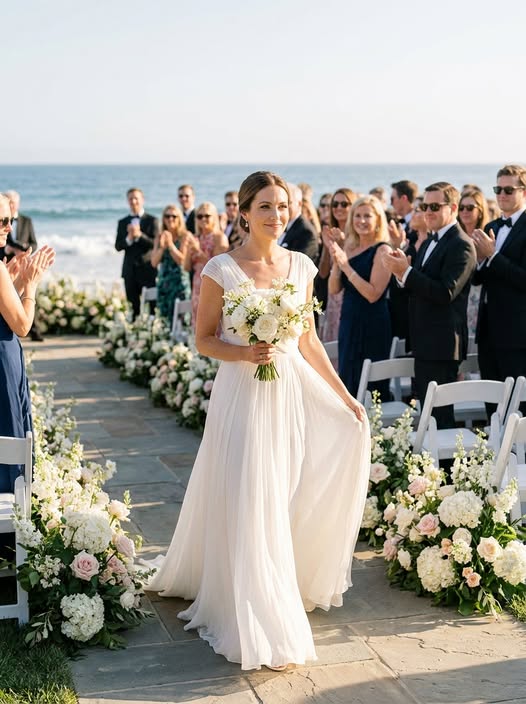
Bible study group. Kayla called me later that night to tell me that I was being selfish for expecting a standing ovation for a life I chose to build far away from them. “I am the one who stays here and does the work, Maya, so do not act like you are the victim just because you have a fancy job,” Kayla spat. I did not argue with her because I knew the math was finished and there was no reason to waste any more energy on a collapsed structure. I sat on my kitchen floor and felt my legs give out while Liam sat down beside me and placed his hand on my shoulder. “I am not going to tell
you it does not matter, but I am going to tell you that I am not leaving,” he whispered into the dark. The next morning, I told Liam that I wanted to cancel the whole wedding because I did not see the point of a celebration without a family. He was making coffee with a thermometer in the
water, and he stopped what he was doing to look me in the eyes. “Is this because you do not want to marry me, or is it because you are letting their absence define your presence?” he asked very calmly. I did not have an answer because my language of blueprints and equations had
completely deserted me in the face of my own grief. I went to work the next day and made a massive error on a soil classification report because my brain was too loud with the sound of my mother’s voice. Tasha caught the mistake before it became a disaster and pulled me into a private
office to ask what was really happening.
“My parents did not come to my citizenship ceremony because they said a piece of paper did not make me an American,” Tasha told me as she sat on the desk. She explained that sometimes home is the place where you are actually welcome and not just the place where you were born.
I went home and threw my T square at the wall in a fit of rage that I had been holding back since I was eleven years old. It stuck in the drywall like a spear, and I collapsed into a pile of tears that felt like they would never stop flowing until I was empty.
Three days later, Mei knocked on my door and walked into my kitchen with a giant pot of soup and enough side dishes to feed a whole neighborhood. She told me the story of how she left her home with nothing and how her own mother told her she was dead to the family.
“I did not see my mother for fourteen years, and by the time she came to visit, I had already built a world that she did not recognize,” Mei said. She pulled a thick photo album from her bag and showed me pictures of Liam as a child and photos of her dry cleaning shop.
Then she turned to the last page and showed me a photo of me at their house during a summer barbecue where I was laughing with a cob of corn. “You are already in our book, Maya, so stop looking for your name in a book that has been closed for a long time,” she commanded.
I realized then that family is not about who shares your DNA but about who shows up with soup when you are too tired to stand. I told Liam that the wedding was back on, but this time I was not doing it to prove anything to the people in Nebraska.
A wealthy client named Bernard, whose mansion I had saved from a landslide, heard about my situation and offered me his estate in Big Sur for the ceremony. “You made sure my house stayed on this cliff, so the least I can do is let you stand on that cliff to start your new life,” he said.
I picked out a simple silk dress and walked down an aisle lined with Nebraska wildflowers because they were the only part of my home that I wanted to keep. I walked alone because I realized that the person who had gotten me through every storm was the woman I saw in the mirror.
The ceremony was filmed by a friend of Liam’s, and the footage of the ocean crashing against the cliffs behind us went viral on the internet a few days later. National news outlets picked it up as a story about a self made woman who found her own family in the city.
My parents saw the broadcast in their living room in Clearwater and realized that my wedding was not a small party but a massive event at a forty million dollar estate. My mother called me fourteen times in one hour, and my father actually left a missed call for the first time in his life.
“We saw the video, Maya, and we had no idea it was going to be such a big deal,” my mother said in a voicemail that sounded more like a regret than an apology. She told me they would have come if they had known it was going to be televised and that they wanted to make things right.
I realized they did not want me, but they wanted the prestige of being the parents of the woman they saw on the television screen. I typed two words into my phone and sent them to my mother, my father, and my sister at the exact same time.
“Too late,” I wrote, and then I blocked their numbers so I could finally focus on the person who was standing right in front of me. I put my wedding photos into a new album with Mei and Liam and Tasha, and I realized that my structure was finally complete.
THE END.