I shoved the thick red folder tightly under my arm, snatched the flash drive from the lid, and dropped to my stomach. I crawled frantically through the jagged opening in the fence. A sharp barb of wire caught the shoulder of my silk blouse, tearing the fabric and slicing a shallow line into my skin, but I didn’t stop. The exact second I cleared the fence and scrambled into the muddy drainage ditch behind the facility, a massive, deafening BANG echoed behind me. They were using a sledgehammer on the corrugated door. I scrambled up the muddy embankment, tearing through overgrown weeds and discarded trash, running with a blind, frantic terror until my lungs screamed for mercy. I didn’t stop sprinting until I hit a deserted access road a half-mile away. I collapsed against a concrete barrier, gasping for air, clutching the red folder to my chest. My phone vibrated violently against my hip. I pulled it out. A second message from my mother’s ghost-number glowed on the cracked screen. Go to Daniel Brooks. County Recorder’s Office. Trust no one else. Before I could even process the name, a third message materialized instantly below it.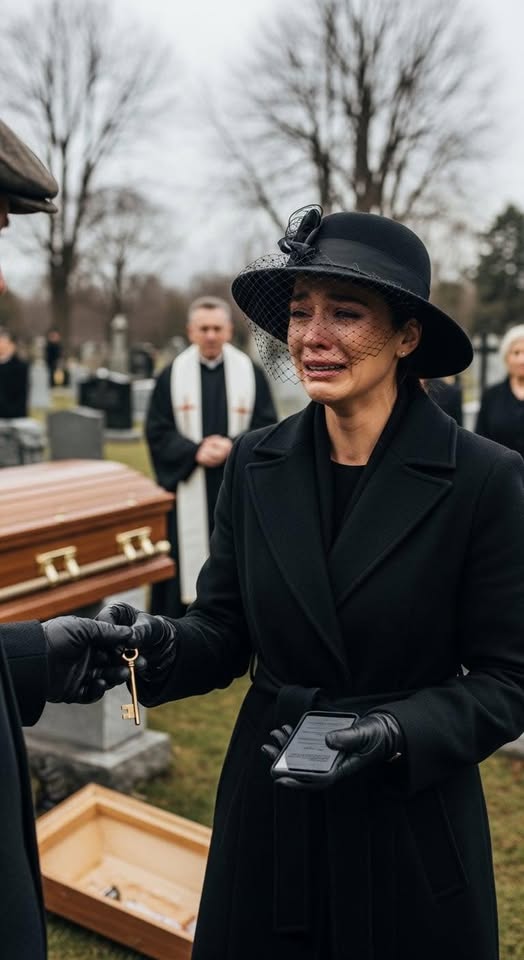
And Emily—if Hale finds you before you get there, burn everything. Even the drive. Chapter 4: The Architect of Secrets Daniel Brooks looked absolutely nothing like a man who should have been entrusted with holding the fragile pieces of my shattered life together. When I burst through the heavy glass doors of the County Recorder’s Office twenty minutes before closing time, he was sitting behind a mountain of dusty land deeds. He was a haggard, middle-aged bureaucrat wearing haphazardly rolled shirtsleeves and a cheap tie decorated with a massive coffee stain. His
reading glasses were perched precariously on the very tip of his nose. He looked up as I slammed the door shut behind me, chest heaving, my blouse torn and bleeding. “Emily Carter?” he asked, his voice cracking slightly. He stood up with such frantic, nervous energy that his rolling chair
shot backward, violently crashing into a metal filing cabinet. “Your mother said you might come.” I froze, my hand still gripping the brass doorknob. Not if. Might. The phrasing struck me like a physical blow. He didn’t sound surprised. He sounded like a man who had been sweating through a
rehearsed contingency plan. I aggressively threw the deadbolt on the office door, locking us inside. I marched across the room and slammed the thick red folder onto the center of his messy desk. “Start talking, Daniel. Right now.”
Daniel swallowed hard, his Adam’s apple bobbing nervously. He didn’t offer a defense. Instead, he pulled a small brass key from his pocket, unlocked his bottom desk drawer, and extracted a thick, sealed envelope. It was addressed to me, again in my mother’s elegant handwriting.
He handed it across the desk without a single word.
I ripped the seal open, unfolding the heavy parchment. The letter was dated exactly three weeks prior to the car crash.
Emily, If Daniel is reading this letter with you, then I failed to get far enough ahead of the blast radius. Lawson Financial has not been investing client portfolios. For the past six years, they have been systematically moving millions of dollars through untraceable shell accounts and forging the estate transfers of deceased clients. I found the shadow ledgers entirely by accident while auditing Richard Hale’s private server.
Richard used my administrative access credentials to hide the digital paper trail. When I confronted him and told him I was taking the documents to the FBI, he didn’t threaten me. He threatened you. He knew exactly where you lived. He knew your routines.
I pretended to cave. I pretended to cooperate while I secretly spent weeks copying every single file onto that drive. If the police or Richard told you I died suddenly in a crash, do not believe a word of it. I paid the gravedigger to arrange the empty coffin because if Hale and his network truly believed I was buried in the ground, they would stop hunting me just long enough for you to slip through the cracks and expose them all.
I read the final paragraph three times.
It wasn’t because the handwriting was illegible. It wasn’t because I misunderstood the complex financial jargon.
It was because I understood the horrific reality of it perfectly.
I slowly lowered the letter, looking up at Daniel, who was watching me with a mixture of profound pity and sheer terror. “She’s alive?” I whispered, my voice threatening to shatter.
“She was when I last communicated with her,” Daniel replied softly, wiping sweat from his forehead. “Four days ago. She called me from an untraceable prepaid phone operating out of a motel. She explicitly stated that if anything happened to her extraction plan, I was to help you get these specific files to a federal agent she had been secretly courting in Chicago.”
Every single emotion I had been desperately holding together with psychological duct tape since the funeral ruptured all at once. It was a violent, suffocating cocktail of unadulterated anger, profound relief, staggering disbelief, and a deep, aching grief that was rapidly rearranging itself into something infinitely sharper: rage.
My mother had deliberately let me mourn her. She had forced me to stand over an empty hole in the ground and weep for a wooden box while she hid in the shadows. She had done it to protect me, yes. But she had also weaponized my grief to use me as her blind courier.
I wasn’t entirely ready to forgive that level of emotional manipulation.
But as I looked down at the red folder, thinking of Richard Hale’s fake, comforting hug at the cemetery while his goons hunted me at a storage unit, I realized something else. I was absolutely ready to finish the war she started.
“Plug it in,” I commanded, tossing the black flash drive across the desk.
Daniel fumbled with his laptop, inserting the drive. A dizzying labyrinth of encrypted spreadsheets instantly populated the screen. It was a masterpiece of corporate theft. There were hundreds of fraudulent property filings, dozens of elderly clients whose life savings had been meticulously redirected to offshore accounts within hours of their deaths, and hundreds of authorization signatures flawlessly forged from archived documents.
One tab explicitly listed monthly cash payouts to local precinct officials—explaining exactly why the police had been so eager to close my mother’s car crash as an “accident.”
“So,” I asked, my voice deadly calm. “You just take this drive to the FBI contact?”
Daniel nodded, hastily ejecting the drive and slipping it into his breast pocket. “Tonight. I drive to the Chicago field office immediately.”
“No,” I said, stepping around the desk and grabbing my torn, mud-stained coat. I looked him dead in the eye, feeling the ghost of the terrified woman I was at the funeral evaporate completely. “We take it. Together.”
Chapter 5: The Resurrection
Seventy-two hours later, the illusion of Richard Hale’s untouchable empire collapsed with spectacular, devastating violence.
After a tense, paranoid drive across state lines, Daniel and I sat in a highly secure, windowless conference room in the heart of downtown Chicago. We handed over every single physical page, every forged signature, every digital record to a team of federal agents who looked at the evidence like they had just been handed the holy grail of white-collar crime.
Richard Hale was aggressively arrested in the lobby of his own pristine office building two days later. The FBI didn’t stop there. They swept up two of his senior vice presidents, a handful of corrupt local police officers, and the deputy county coroner who had been financially compensated to falsify the autopsy documents linked to my mother’s fabricated death certificate.
The official, sanitized story dominated the national news cycle for a solid week. Pundits in expensive suits called it “the most brazen financial scandal of the decade.”
For the rest of the world, it was an interesting headline. For me, it was the catastrophic week my entire life split violently down the middle, separating the naive daughter I used to be from the hardened survivor I was forced to become.
My mother finally broke her silence nine days after the arrests.
She contacted me from a secure, undisclosed witness protection facility somewhere in the sprawling deserts of Arizona. When I finally heard her voice filtering through the encrypted connection, it sounded profoundly different. It was older, smaller, hollowed out by fear, yet painfully, undeniably real.
We did not cry on that initial phone call. We did not yell. We did not say everything that needed to be said, because the wounds were simply too fresh, the betrayal of her silence too raw to articulate. But she was breathing. She was alive. And for that specific moment in time, as the adrenaline finally left my body, that had to be enough.
Sometimes, in the quiet, creeping hours of the night, my mind still drifts back to the surreal theater of that funeral. I vividly remember the cloying smell of the dying lilies, the droning pitch of the hymns, and the polished mahogany coffin sinking slowly into the dark earth. I remember standing above that void, utterly consumed by a soul-crushing despair, genuinely believing I had just buried the very last parent I had left in this world.
I learned a harsh, uncompromising lesson that week in the mud and the rain. Sometimes, the raw mechanics of survival look terrifyingly similar to absolute betrayal, at least until the truth finally catches up to the lie.
And if you have followed this story into the dark, if you felt the cold panic of that storage unit closing in on you, I have to ask: what would you have done? If you were standing in the gravel, holding a cryptic key and a message from a ghost, would you have opened Unit 16 and embraced the danger? Or would you have surrendered the key and gone straight to the police, hoping the authorities would save you?
A lot of Americans proudly claim they would inherently trust the system to protect them first. But after walking through the fire with Emily Carter, after seeing exactly who signs the checks that pay for the badges… I am no longer so sure.