Then, the pandemic descended. The bustling office fractured into a grid of digital faces on a laptop screen. The vibrant city froze into a silent, snow-covered globe. Initially, I feared the crushing isolation would break me. Instead, it became a forge. I weaponized my solitude. Sixty-hour weeks mutated into eighty. I consumed competitor analytics and spearheaded campaigns that the senior executives had deemed too volatile to touch. I was a machine running on the high-octane fuel of vindication. By mid-summer, I was promoted. But the ghosts still rattled their chains in the dark. I retained a trauma therapist, Dr. Sarah, meeting her weekly through the cold glass of my monitor. “It wasn’t just the betrayal,” I confessed during a bleak November session. “It was the absolute certainty in my father’s voice when he called me ‘too soft.’” Dr. Sarah tilted her head. “Emma, a narcissist’s assessment of your character is not a diagnosis. It is merely a reflection of what they cannot extract from you.” A week later, my mother called for our Sunday check-in. Her voice was cautious. “I need to tell you something,” she murmured. “Your father posted the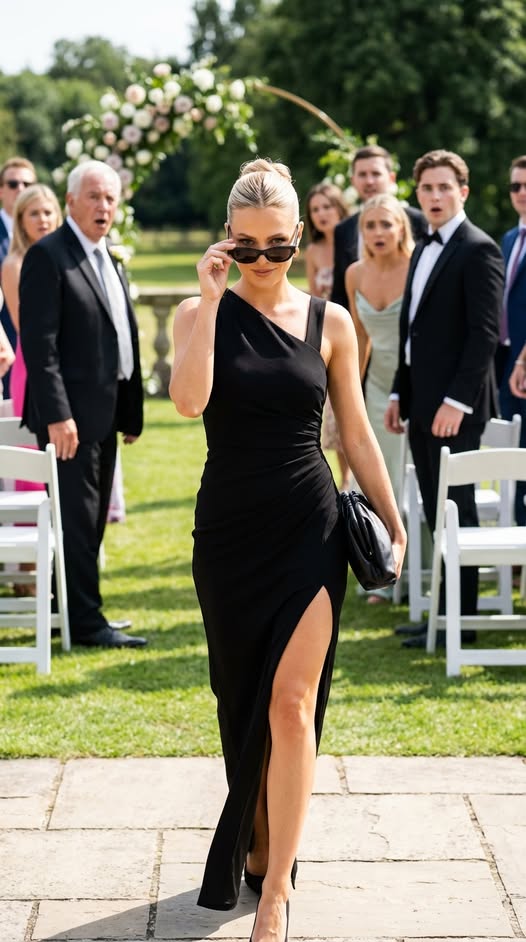
photos. Jessica and Alex. They were married at the courthouse yesterday.” I squeezed my eyes shut, bracing for the crippling wave of agony. But the wave never crashed. I pictured Jessica, draped in expensive white silk, clinging to a man who possessed a price tag. I felt nothing but a profound, chilling pity. “Mom,” I smiled into the phone. “The worst part of my life is already over.” Chapter 4: Thawing the Armor When the city unthawed, I hardly recognized the reflection in my mirror. The terrified animal behind my eyes had been euthanized. I looked anchored. Nadine
summoned me to a virtual boardroom following a massive corporate acquisition. A silver-haired man with a calculating gaze unmuted his microphone. “Emma, your analytics are staggering. We want you leading the combined global division.” He smiled. “Vice President of Marketing. Does
that interest you?” The title—Vice President. The exact currency used to purchase my heartbreak, now handed to me strictly on the merit of my own intellect. “I accept,” I answered smoothly. I moved into a sleek, glass-walled loft overlooking Lake Ontario. I started attending an aggressive
vinyasa yoga class, where I met Rachel, a merciless financial analyst with a razor-sharp bob. We became inseparable. “You’re a vault, Emma,” Rachel observed over martinis one evening. “You manage a massive corporate department, but you won’t let a man buy you a coffee. The drawbridge
is permanently up.” She wasn’t wrong. Dr. Sarah had been gently probing the same wound. What would it require for you to believe a space is safe?
I found the answer at a grueling tech summit. I was hovering near a pathetic display of pastries when a man in a navy blazer stepped beside me, analyzing a muffin with profound sorrow.
“It looks like it’s given up on life,” he muttered.
I let out a genuine laugh. He turned, revealing warm hazel eyes. “I’m David,” he introduced himself. His grip was firm, anchoring. He wasn’t a corporate drone; he was the founder of a streamlined project management startup.
We talked for three hours in a dimly lit lobby bar. He didn’t interrogate me or try to impress me. He listened with a quiet, devastating intensity.
“Can I take you to a proper dinner?” David asked as we walked into the biting wind. “No networking. Just you and me.”
The rusted gears of my internal drawbridge groaned. I heard Dr. Sarah’s voice echoing in my skull. Safe is a choice.
“I would like that,” I agreed.
We dated with agonizing, beautiful slowness. He never demanded a trespass into my trauma. He simply proved his consistency, day after day.
Spring bloomed, and with it came an unexpected ringtone. Michael, my younger brother.
“Em,” he began, his voice tight with anxiety. “I proposed to Sarah. We are getting married in July. At the country club back home.”
My stomach performed a violent somersault. The country club. The epicenter of my father’s kingdom.
“I know what Dad did,” Michael rushed out. “I am not asking you to forgive him. But you are my sister. I need you there.”
I stared out the floor-to-ceiling windows of my loft. “Will Dad be there?”
“Yes,” Michael admitted softly. “And Jessica. And Alex. But I will run interference.”
I closed my eyes. The little girl who used to hide in the study wanted to decline and disappear forever. But I was the Vice President of a global tech firm. I had survived the fire.
That night, David found me staring blankly at the wall. I unspooled the entire, ugly truth.
David didn’t offer toxic positivity. He took my hands and kissed my knuckles. “We don’t have to go,” he said fiercely. “But if you want to look them in the eye and show them what you built… I will stand right beside you.”
I dialed my brother. “I’m booking the flights,” I declared. “And I am bringing my partner.”
Chapter 5: Ghosts in the Garden
Stepping off the plane into my hometown felt like voluntarily walking into a pressurized cabin. But the moment my mother embraced me at the arrivals gate—her posture liberated from decades of subservience—the atmospheric pressure broke.
She took one look at David, assessed his quiet, protective stance, and beamed.
The rehearsal dinner at the country club was a collision of past and present. The mahogany-paneled room smelled intensely of roasted tenderloin and old money.
Michael practically tackled me the second I walked through the double doors. “You actually came,” he laughed. “Toronto turned you into a total boss, Em.”
I smiled, slipping my hand into David’s. “I had excellent motivation.”
I circulated the room until the hairs on the nape of my neck stood at attention. I turned slowly.
My father was standing by the mahogany bar, gripping a crystal tumbler of scotch. He wore a bespoke charcoal suit, but he looked diminished. Hollowed out. Our eyes locked across the crowded room.
For a fraction of a second, the mask slipped. I saw it clearly beneath the harsh chandeliers. Shame.
I did not flinch. I held his gaze with the cold, unyielding authority of a judge, until he was the one who physically looked down at his shoes.
Minutes later, I spotted the casualties. Jessica and Alex occupied a corner table, separated by a deafening physical distance. Jessica’s cheekbones were dangerously sharp, the vibrant spark in her eyes entirely extinguished. Alex looked like a man who had sold his soul to the devil and found the currency counterfeit.
When Alex’s eyes finally found mine, the blood drained from his face. He looked at my designer dress, my confident posture, and finally, at David. I didn’t glare at Alex. I simply lifted my champagne flute an inch into the air—a silent, devastating acknowledgment of my victory—and turned my back to him.
The wedding ceremony the following afternoon was breathtaking. During the reception, the heavy bass of the band drove me out into the manicured rose gardens to seek a moment of quiet.
“Emma.”
I pivoted. My father stood ten feet away, a shadow against the blooming hedges.
“Dad,” I replied, my voice dangerously calm.
He swallowed audibly. “You look… formidable.”
“I am,” I confirmed.
A heavy silence stretched. “I owe you an apology,” he rasped, the words clearly tasting like gravel. “The arrangement with Alex… it was an abhorrent miscalculation. I thought you would absorb the collateral damage. Because you were—”
“Because you believed I was disposable,” I interjected, slicing through his corporate spin.
He closed his eyes. “Yes.”
I felt my heart beating a slow, steady rhythm. “Why approach me now?”
“Because I looked at you last night,” he admitted, his voice breaking. “Jessica and Alex… their marriage is a toxic disaster. I shattered three lives with one check.”
“No,” I corrected softly. “You shattered two. You liberated mine.”
His eyes snapped open.
“You freed me,” I stated. “You gave me the necessary trauma to stop seeking your impossible approval. I don’t need your apologies, Dad.”
The patio doors swung open. David stepped into the garden, assessing the tension instantly. “Is everything alright here?” he asked, standing shoulder-to-shoulder with me.
“Perfectly fine,” I smiled. “Dad, I don’t believe you’ve been formally introduced. This is David. My fiancé.”
My father recoiled as if struck. “Fiancé?”
“He doesn’t have a price tag, Dad,” I added, twisting the knife with surgical precision. “I hope you and Mom find some version of peace. But I am finished being your sacrifice.”
I laced my fingers through David’s. We turned and walked back into the light, leaving the architect of my pain alone in the dark.
Chapter 6: The Unpurchased Life
The descent into Pearson International the next morning felt like a baptism. I watched the sprawling grid of Toronto emerge through the clouds, my hand anchored in David’s, the phantom weight of my hometown entirely eradicated.
David and I planned a wedding that was the antithesis of the Kingsley country club spectacles. We booked an intimate, sun-drenched botanical greenhouse.
One month after our honeymoon, a stiff, formal envelope arrived at the loft, bearing the Kingsley crest.
I sliced it open. A cashier’s check fluttered onto the marble counter.
Fifty Thousand Dollars.
There was no letter attached. No plea for reconciliation. Just capital. The only language my father truly spoke fluently.
David walked into the kitchen, spotting the absurd amount of zeroes. His jaw tightened instantly. “What is that?”
“A retroactive down payment on his conscience,” I mused.
“Are you going to shred it? Burn it?”
I stared at the signature that had once authorized the destruction of my future. “Neither,” I smiled.
The following afternoon, I visited a custom framer. I had the check mounted on a mat of midnight blue velvet, encased in a heavy frame of matte black iron. I hung it directly above my desk in my home office.
Three years post-exile, I stood under the blinding spotlights of a downtown Toronto theater, the keynote speaker for Northbyte’s Women in Leadership Summit.
“For a very long time, I operated under the delusion that being accommodating was synonymous with being loved,” I projected into the silent room. “I was told I was ‘too soft’ for the arenas of power. But true strength does not require you to be ruthless. Sometimes, the most terrifying, powerful maneuver you can execute is to walk away in absolute silence from a table where your worth is constantly being negotiated.”
I didn’t mention the bribe. I didn’t mention Alex, or Jessica, or the patriarch who tried to liquidate me. This narrative no longer belonged to them.
Later that evening, David and I walked back to our loft, the city lights reflecting off the wet pavement like scattered diamonds.
“You completely altered the molecular structure of that room,” David murmured, pulling me tight against his side.
“I spent my twenties trying to force one man to see my value,” I reflected. “Now, I get to help thousands of women see their own.”
When we walked into our apartment, the lights flickered on, illuminating the framed fifty-thousand-dollar check.
“Still haven’t cashed it, I see,” David teased.
“Never will,” I replied, staring at the artifact.
It wasn’t a monument to my trauma. It was undeniable, forensic evidence of a failed assassination. It was the exact numerical value of the bullet I had dodged.
If my father had never drafted that devil’s bargain, I might have stayed in that gilded cage. I might have married a ghost. I might have spent my existence quietly folding myself into smaller and smaller origami shapes.
Instead, he tried to buy my silence, and accidentally financed my entire revolution.
I looked around my beautiful, chaotic, love-filled sanctuary. I was Emma Kingsley. I was soft. I was unbending. And I had finally won the war.