Chapter 1: The 3 AM Knock: The sea breeze off the coast of Newport, Rhode Island, had carried a chilling, inescapable dampness that entire evening. It was the kind of coastal cold that bypassed the skin and settled directly into the marrow. As I stood on the sprawling, manicured lawns of the Oceancliff country club, nursing a glass of Laurent-Perrier I had no intention of drinking, I watched my twenty-two-year-old daughter, Lily, dance under a sprawling canopy of imported fairy lights. She looked ethereal, wrapped in layers of custom Vera Wang silk, a radiant testament to every sacrifice I had ever made. Yet, an icy apprehension coiled tight in my gut, a primal instinct that refused to be silenced by the string quartet or the clinking of Baccarat crystal. It wasn’t just the exhausting, hollow facade of high society that set my teeth on edge. It was them. Her new husband, Preston, moved with a practiced, predatory grace. He smiled a little too sharply, laughed a little too loudly for a man supposedly overwhelmed by the tender vulnerability of love. His mother, Beatrice, had spent the entire evening dripping poison disguised as aristocratic charm.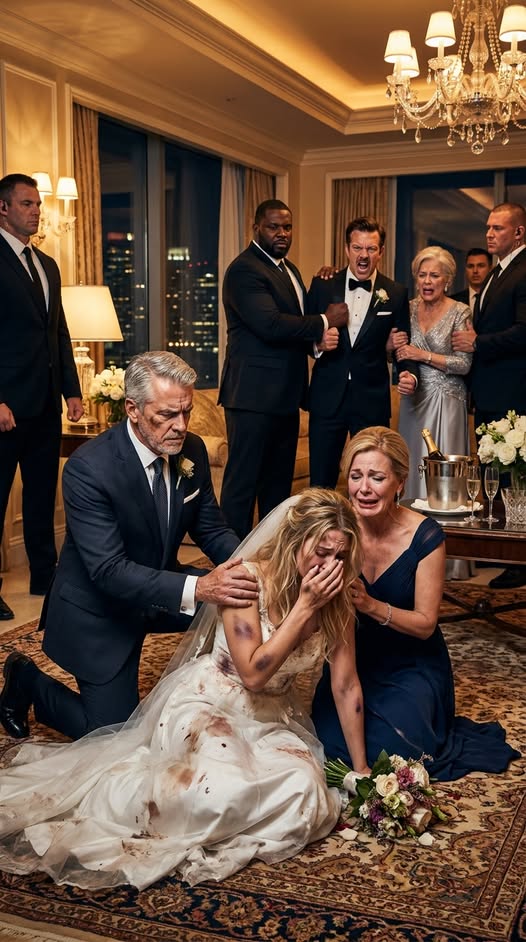
She was a woman constructed entirely of sharp angles and inherited arrogance, draped in emeralds that she wore like armor. She had cornered me near the ice sculpture earlier, her voice a condescending purr that landed with the precision of a surgeon’s scalpel. “It is truly remarkable, Victoria,” Beatrice had murmured, sipping her champagne without taking her eyes off me. “How you’ve managed to build such a… substantial portfolio from absolutely nothing. It gives one hope, doesn’t it? That even the most common of beginnings can buy their way into history. Though, of
course, old blood has a certain resilience that money simply cannot replicate.” I had smiled, my jaw tight enough to crack a tooth, playing the gracious mother of the bride. I didn’t mention that her “old blood” estate was crumbling, or that my “common” money had paid for the very
champagne she was currently drinking. I should have trusted the ice in my gut. I should have pulled Lily from the dance floor, dragged her to my car, and driven until the ocean was just a memory. At 3:00 AM, long after the last guest had departed and the caterers had packed away the
remnants of the false fairytale, a violent, rhythmic pounding shattered the sacred silence of my estate. The rain was coming down in sheets, a torrential deluge lashing against the heavy oak front door with the force of a hurricane. I awoke instantly. The instinct that had kept me alive during
my younger, darker years flared to life. I threw off the silk sheets, grabbed the heavy velvet robe from the armchair, and moved down the sweeping staircase. The pounding didn’t stop; it grew more frantic, accompanied by a muffled, desperate keening sound that froze the blood in my veins.
When I swung the heavy door open, the breath evaporated from my lungs. The world tilted on its axis. It was Lily.
She was still in her wedding gown, but the pristine, fifty-thousand-dollar silk was a ruined, terrifying canvas. The fabric was torn violently at the shoulder, soaked heavy and dark with rain, and smeared with a horrific, undeniable amount of blood. She was hyperventilating, her delicate frame wracked by violent tremors that shook the rainwater and blood from her hair onto the marble foyer.
“Mom,” she choked out, a wet, ragged sound, before her knees gave out.
I caught her before she hit the floor, the metallic scent of copper and damp silk flooding my senses, triggering a wave of nausea I brutally suppressed. I dragged her inside, my muscles screaming in protest, and slammed the heavy oak door against the raging storm, throwing the deadbolts with shaking, blood-slicked fingers.
Under the harsh, unforgiving glare of the crystal chandelier, the sheer brutality of her condition came into devastating focus. Her left cheekbone was a swollen, grotesque landscape of purple and black, the skin pulled taut and shiny over the bruised bone. Her lower lip was split deeply in two places, oozing a steady trail of crimson down her chin. Her eyes, usually so bright and full of gentle optimism, were blown wide with a hollow, animalistic terror.
“Lily, baby, look at me,” I commanded, my voice dropping an octave, finding a calm I did not feel. I wrapped a heavy cashmere blanket from the sofa around her shivering shoulders, my hands moving with mechanical efficiency while my mind began to detach, floating above the panic.
“He locked the suite,” Lily gasped, choking on a sob that seemed to tear at the shredded lining of her throat. She gripped my forearms, her manicured nails digging into my flesh hard enough to draw blood. “We got to the Grand Plaza. I went to change. When I came out, Preston… he locked the doors. He threw my phone against the wall. And then Beatrice stepped out of the bedroom.”
The air in the room grew completely thin, a vacuum of oxygen. “Beatrice was in your honeymoon suite?” I asked, my voice a hollow, unrecognizable whisper.
Lily nodded frantically, her teeth chattering so hard I feared they would shatter. “She held me down on the floor. Preston tied my wrists with his tie. She… she counted, Mom. She counted every single one. Forty. She slapped me forty times.”
“Why?” The single word scraped against the back of my throat.
“The downtown property,” she stammered, her eyes darting around the foyer as if expecting them to burst through the walls. “My condo. The one you bought me. Preston pulled out a deed transfer. He said if I didn’t sign it over by sunrise, they’d drag me to the balcony. They said they’d throw me over the edge. Beatrice laughed. She said they’d call it a tragic honeymoon suicide, that the pressure of the new money was too much for me.”
She broke down then, a guttural wail of pure agony. “He left me in the bathroom to stop the bleeding so I wouldn’t ruin the paperwork. I locked the door. I squeezed through the ventilation window. I climbed down the fire escape in the rain. I ran. I just ran.”
Any normal mother in the suburbs of Rhode Island would have screamed. Any normal mother would have dialed 911, screaming for the police, demanding ambulances, detectives, restraining orders, and the slow, grinding wheels of the justice system.
But I was not normal. I knew exactly what the law was: a shield for the rich, a labyrinth of bureaucracy where well-connected monsters like Beatrice could post bail, hire fixers, and spin a narrative of a hysterical, unstable young bride. The justice of the law is a slow, brittle, deeply flawed thing.
I didn’t scream. I didn’t cry. I merely pressed my thumb gently against Lily’s unbruised cheek, wiping away a smear of drying blood. My own heartbeat, which had been racing at a frantic tempo, suddenly slowed. It dropped into a glacial, predatory rhythm I hadn’t felt in nearly two decades.
I stood up, my bare feet silent on the marble, walked to the antique mahogany console table, and picked up my phone. I bypassed the emergency contacts. I bypassed my elite team of corporate lawyers and the heavily armed private security firms on my payroll. I scrolled to the very bottom of my hidden directory, to a number I hadn’t dialed in five long, meticulously peaceful years.
“Dominic,” I whispered into the receiver.
The silence on the other end was absolute, heavy with the terrifying weight of our shared, bloody history. Dominic was Lily’s father. He was also my estranged ex-husband, a man who controlled the city’s darkest, most violent underbelly with an iron fist. I had left him to give Lily a life in the light. Now, the light had failed her.
“They broke our little girl,” I said.
The dial tone clicked dead instantly. No questions. No hesitation. I set the phone down. Outside, the storm raged on, lightning fracturing the black sky, but in the distance, cutting through the thunder, I could already hear the faint, guttural roar of high-performance engines tearing down the coastal highway. I looked down at my bleeding daughter, shivering on the floor, and a terrifying realization washed over me: unleashing Dominic’s wrath was the easiest decision I had ever made. But once the devil was out of his cage, surviving the absolute massacre he was about to orchestrate was going to require every ounce of darkness I had spent my life trying to bury.
Chapter 2: The Tactical Mobilization
In the opulent, sprawling penthouse suite of the Grand Plaza Hotel, a completely different kind of storm was brewing—a quiet, insidious storm of delusional arrogance and unearned victory.
According to the comprehensive intelligence logs I would review in the days that followed, Beatrice was currently standing before the floor-to-ceiling windows overlooking the rain-slicked city skyline. She was swirling a glass of 2008 Cristal champagne, her reflection in the glass showcasing a woman who believed she had just orchestrated the coup of the century.
“Forty was exactly enough, Preston,” she purred, reaching up to adjust the heavy diamond necklace resting against her collarbone. “Any more, and the swelling would obscure her vision to the point where she wouldn’t be able to hold the pen. Any less, and she might still cling to that pathetic, bourgeois defiance.”
Preston lounged on the white leather sofa, wiping a microscopic speck of Lily’s blood from the immaculate sleeve of his custom Tom Ford tuxedo. He laughed, a dry, callous sound, and poured himself another glass. “She’s weak, Mother. Incredibly sentimental. She’s been in that bathroom for twenty minutes, crying her eyes out. She’ll sign the condo over just to make the pain stop. We flip the property, we pay off the debt, and I play the tragically grieving widower who lost his fragile bride to mental illness by Christmas.”
“Patience, darling,” Beatrice murmured, taking a slow sip. “Let the terror marinate. She has nowhere to go. We hold all the cards.”
They thought they had cornered a frightened rabbit in a gilded cage. They had no earthly idea they had just walked blindfolded into a dragon’s den, covered in the scent of its own blood.
Across the city, the heavy double doors of my private library swung open without a single creak.
Dominic stepped into the room. He didn’t bring wailing sirens or flashing red and blue lights. He brought a terrifying, disciplined silence that sucked the air out of the room. He was flanked by four men in impeccably tailored, dark suits. They moved with a synchronized, lethal fluidity, their eyes scanning the perimeter, identifying sightlines and exits with cold, mechanical precision.
Dominic hadn’t aged a day since our divorce; the years had merely calcified him. He was a monument of scar tissue, tailored wool, and dormant wrath. His dark eyes, usually unreadable, were currently burning with a quiet intensity that could melt steel.
He crossed the Persian rug and knelt before the leather sofa where Lily was now lying. The private trauma medic I had on staff—a discreet man who asked no questions and was paid exorbitantly for it—was in the middle of suturing her split lip. The medic took one look at Dominic’s approaching shadow and stepped back instantly, lowering his instruments.
Dominic’s massive hands—hands that I knew for a fact had dismantled rival empires, broken bones, and ended lives without a tremor—shook just once as he hovered over her bruised, ruined skin. He didn’t yell. He didn’t curse the heavens or scream for vengeance. His silence was infinitely more dangerous than any threat he could have uttered.
He leaned down, his lips brushing against her unbruised forehead, a kiss of absolute, terrifying devotion. When he stood up and turned his back to her, the gentle father was gone. The boss of the syndicate remained.
He looked at his lead operative, a ghost of a man named Silas, whose face was a map of old violence.
“Lock down the city,” Dominic commanded. His voice was a low, gravelly whisper that seemed to drop the ambient temperature of the library by ten degrees. “Cut their comms. Block their accounts. Seize their digital footprints. Nobody enters that hotel, and absolutely nobody leaves that penthouse. Find out exactly who they owe, who they belong to, and prepare to burn their entire lineage to the ash.”
I stepped forward from the shadows of the bookshelves, transitioning instantly from a grieving mother into the strategic anchor of his tactical storm. We had done this dance before, decades ago.
“I have my wealth managers pulling their public records and offshore dummy corporations now,” I said, handing Silas an encrypted tablet. “I want to know where they bleed financially before you make them bleed physically. We don’t just kill them, Dominic. We erase them.”
Dominic met my eyes, a silent, bloody pact sealing between us in the dim light of the library. The domestic drama of a ruined wedding had just violently shifted into a high-stakes, black-ops tactical operation.
Meanwhile, back at the Grand Plaza, Preston finally checked the gold Rolex on his wrist. Annoyed that his broken bride was taking too long to succumb, he stood up, straightened his lapels, and lazily walked toward the heavy double doors of the master bathroom. He intended to kick the door in and drag her out by her hair to sign the deed.
But before his hand could even brush the brass knob, the electronic lock on the suite’s main door emitted a sharp, final beep. The lights in the penthouse completely severed, plunging the room into absolute, suffocating darkness. The hum of the air conditioning died. The city lights outside the window seemed to mock them.
And then, a heavy, rhythmic, metallic knocking began echoing from the pitch-black hallway outside their door, signaling that the devil had arrived to collect his due.
Chapter 3: The Financial Guillotine
By 9:00 AM the following morning, the sun was shining brightly over Newport, but inside the Grand Plaza penthouse, a suffocating atmosphere of psychological torture had fully set in.
I sat in my leather wingback chair in the library, the storm outside having cleared, sipping a cup of black coffee that tasted like ash. Across the heavy mahogany desk from me, Dominic was methodically reviewing a heavily encrypted dossier on a laptop. Our operatives hadn’t breached the hotel room yet. Dominic possessed a predator’s patience; he preferred to let the terror marinate, to let them exhaust themselves against the bars of their cage before he snapped their necks.