When Jonathan puts love ahead of legacy, his mother turns her back on him without a second thought. Three years later, she comes back, judgment written across her face and not a single apology on her lips. But what she discovers beyond his front door is nothing like what she imagined… My mother didn’t shed a tear when my father walked away. She didn’t cry when he slammed the door, or when she took the wedding photograph from its frame and tossed it into the fireplace. Instead, she simply turned toward me. I was five years old and already discovering the power of
silence, and she gave me a cold smile. “Now it’s just us, Jonathan. And we don’t fall apart, son.” That became the standard she expected me to live by. Her love was never warm or gentle. It was calculated and strategic. I was thankful when she enrolled me in the finest schools, signed me up for piano lessons, and taught me to maintain eye contact, perfect my posture, and write flawless thank-you notes. She wasn’t raising me to be happy. She was raising me to be impossible to break. My mother didn’t cry when my father left. By the time I was 27, I had stopped trying to earn my
mother’s approval. The truth was, there was no real way to impress her. Whenever you accomplished something well, she simply expected you to achieve something even better. Still, I told her that I was seeing someone. We met at one of my mother’s preferred restaurants, a quiet establishment decorated with dark wood and starched linen napkins folded into intricate shapes.
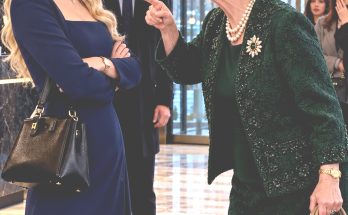
She was dressed in navy, the color she always wore when she wanted to command attention, and ordered a glass of wine before I had even managed to sit down.
“So?” she asked, tilting her head. “Is this a real-life update, Jonathan, or are we just catching up?”
“I’m seeing someone, Mom.”
“What’s she like?” she asked, her smile widening with sharp curiosity.
“Anna is a nurse,” I told her. “She works nights at a clinic near the hospital.”
In reality, there was no way to impress her.
My mother’s expression remained unchanged, though I noticed a brief flash of approval in her eyes.
“Smart, brave, I like that in a woman for you, Jonathan. Parents?”
“She has both parents. Mom’s a teacher and her dad is a doctor, but they live in another state.”
“Wonderful!” my mother exclaimed, clapping her hands once.
“She’s also a single mom. Her son, Aaron, is seven.”
The pause was almost impossible to notice. She raised her wine glass with flawless posture and took a small sip, as though she were reassessing everything. When she finally spoke, her voice was polite but distant.
“That’s a lot of responsibility for someone your age.”
“I guess, but she’s incredible,” I said, perhaps a little too quickly. “Anna is a wonderful mother. And Aaron… he’s a great kid. He told me I was his favorite grown-up last week.”
“She’s also a single mom. Her son, Aaron, is seven.”
“I’m sure she appreciates the help, Jonathan,” my mother replied, touching the corner of her mouth with her napkin. “A good man is hard to find.”
There was no warmth in her words and no indication that she wanted to hear more.
After that, we discussed other subjects—work, the weather, and a new art exhibition downtown—but she never mentioned Anna’s name. I didn’t push her.
Not yet.
***
A few weeks later, I brought them to meet her anyway. We chose a small coffee shop close to my apartment. Anna arrived ten minutes late, and with each passing minute, I could see my mother becoming more irritated.
But Anna hadn’t had a choice. Aaron’s sitter had canceled, so she had no option but to bring him with her.
When they finally arrived, Anna appeared flustered. Her hair was pulled into a loose bun, she had on jeans and a pale blouse, and one side of her collar had curled slightly. Aaron held tightly to her hand, his eyes moving toward the pastry counter as they entered.
“A good man is hard to find.”
“This is Anna,” I said, getting up to welcome them. “And this is Aaron.”
My mother rose, extended her hand, and gave Anna a smile completely devoid of warmth.
“You must be exhausted, Anna.”
“I am,” Anna answered with a quiet laugh. “It’s been one of those days.”
My mother asked Aaron just one question. “What’s your favorite subject in school?”
When he answered art class, she rolled her eyes and then paid no attention to him for the rest of the visit. When the check arrived, she covered only her own portion.
When the check came, she paid for herself.
In the car afterward, Anna glanced over at me.
“She doesn’t like me, Jon.”
She wasn’t upset, only truthful.
“She doesn’t know you, love.”
“Maybe, but it’s clear that she doesn’t want to.”
***
Two years later, I met my mother at the old piano showroom uptown.
When I was young, she used to bring me there on weekends, explaining that the acoustics were “clean enough to hear your mistakes.” She called it her favorite place to “imagine legacy,” as though owning the right piano could guarantee greatness.
Two years later, I met my mother at the old piano showroom uptown.
The room carried the scent of varnish and memories. The pianos stood in neat rows like prized horses, each one more immaculate than the previous.
“So, Jonathan,” she said, brushing her fingers across the lid of a grand piano, “is this going somewhere, or are we just wasting time?”
I answered without hesitation. “I asked Anna to marry me.”
My mother’s hand stopped in the air before slowly dropping to her side. “I see.”
“She said yes, of course.”
My mother straightened her salmon-colored blazer, smoothing out wrinkles that weren’t really there. She avoided looking directly at me.
“Is this going somewhere, or are we just wasting time?”
“Well,” she said cautiously, “then let me be very clear about something. If you marry her, don’t ever ask me for anything again. You’re choosing that life, Jonathan.”
I waited for something more—a breath, a tremor, anything that might reveal uncertainty. But her expression stayed impossible to read. She didn’t flinch or argue.
She simply released me. And I walked away.
***
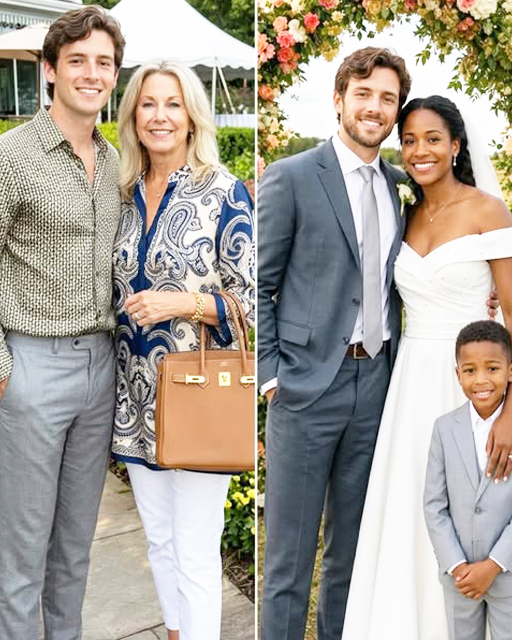
Anna and I married a few months later in the backyard of a friend’s home. There were string lights, folding chairs, and the kind of laughter shared by people who knew how to live without pretending.
We settled into a small rental with stubborn drawers and a lemon tree in the backyard. Aaron painted his bedroom green and left his handprints on the wall.
We moved into a small rental with sticky drawers.
Three months later, while we were choosing cereal at the grocery store, Aaron looked up at me and smiled.
“Can we get the marshmallow kind, Dad?”
He didn’t even realize what he had called me. But I did. That night, I cried into a pile of freshly washed laundry. And for the first time, I understood that grief and happiness could exist together in the same room.
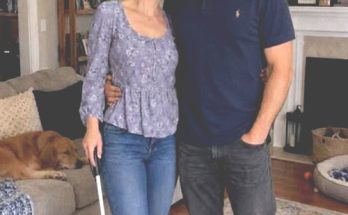
We lived a quiet life. Anna worked nights, while I took care of school pickups, packed lunches, and reheated dinners.
We watched cartoons on Saturdays, danced around the living room in our socks, and bought mismatched mugs at yard sales for absolutely no reason.
My mother never called—not to ask how I was doing, not to ask where I had gone. Then, last week, her name appeared on my phone. She called shortly after dinner, her voice sharp and controlled, as though no time had passed at all. “So this is really the life you chose, Jonathan.”
I paused, balancing the phone between my shoulder and cheek as I dried a pan.
My mother never called, not to ask how I was, not to ask where I’d gone.
“It is, Mom.”
“Well, I’m back in town after my vacation. I’ll stop by tomorrow. Send me the address. I’d like to see what you gave everything up for.”
When I told Anna, she didn’t even blink.
“You’re thinking of deep-cleaning the kitchen, aren’t you?” she asked, pouring herself a cup of tea.
“I don’t want her walking in here and twisting what she sees, honey.”
“She’s going to twist it either way. This is… this is who we are. Let her twist everything, it’s what she does.”
I cleaned anyway, but I didn’t try to make the house look staged.
The refrigerator covered in magnets remained exactly as it was. The cluttered shoe rack beside the door stayed, too.
“Send me the address. I’d like to see what you gave everything up for.”
***
My mother showed up the following afternoon, exactly on time. She wore a camel-colored coat and heels that clicked across our uneven walkway. I smelled her perfume before I even saw her.
I opened the door, and she stepped inside without greeting me. She glanced around once, then reached for the doorframe as though she needed something to steady herself.
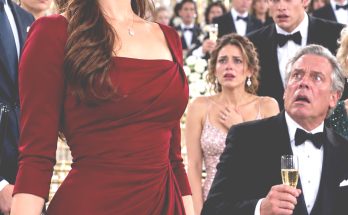
“Oh my God! What is this?”
She moved through the living room as though the floor beneath her heels might collapse.
Her eyes traveled over every surface, taking in the secondhand couch, the scratched coffee table, and the faint crayon marks Aaron had once drawn along the baseboards, which I had never bothered to remove.
She stopped in the hallway.
I opened the door, and she walked in without saying hello.
Her eyes settled on the faded handprints outside Aaron’s bedroom, green smudges he had left there himself after we painted his room together.
In the far corner stood the upright piano. Its lacquer was worn in several places, and the left pedal squeaked whenever it was pressed. One of the keys remained stuck halfway down.
Aaron came in from the kitchen carrying a juice box. He glanced at her, then looked toward the piano. Without saying a word, he climbed onto the bench and began to play. My mother turned toward the sound and froze.
The melody was slow and uncertain. Chopin. The same piece she had forced me to practice, hour after hour, until my hands went numb from repeating it.
“Where did he learn that?” she asked. Her voice was quieter now, but not gentle.
“He asked,” I said. “So, I taught him.”
Aaron climbed down and walked across the room, holding a sheet of paper in both hands.
***Chopin. ***The same piece she had drilled into me, hour after hour.
“I made you something,” he said. He lifted a drawing of our family standing on the front porch. My mother appeared in the upstairs window, surrounded by flower boxes.
“I didn’t know what kind of flowers you liked, so I drew all of them.”
“We don’t yell here,” he added. “Daddy says yelling makes the house forget how to breathe…”
Her jaw clenched. She blinked, but remained silent.
Later, we gathered around the kitchen table. My mother hardly touched her cup.
“We don’t yell here.”
“This could’ve been different,” she said. “You could have been* someone, something*. You could have been great, Jonathan.”
“I am someone, Mom,” I said. “I just stopped performing for you, for the one person who never clapped for me.”
My mother’s lips parted, then closed again. She lowered her eyes to the drawing. Across the table, Aaron smiled at me, while Anna squeezed my knee beside me.
“My father said the same thing when I brought your father home, you know?” she said. “He said I was throwing everything away. And when he left me…”
She swallowed with difficulty before continuing.
“I built a life you couldn’t question, Jonathan. I thought if everything was flawless, no one would leave. Not like he did. I thought control meant safety.”
“You lost us anyway,” I said, holding her gaze. “And that was because you didn’t give us any choice.”
“I just stopped performing for you, for the one person who never clapped for me.”
She flinched slightly. But she didn’t argue. For the first time in my life, my mother looked at me without searching for something to correct. Anna, who had barely spoken throughout the visit, finally looked across the table.
“Jonathan chose us. But we’re not a punishment. And you don’t have to be the villain, Margot. Not unless you keep acting like one.”
My mother said nothing. She left thirty minutes later. There was no hug and no apology.
There was only a quiet goodbye and a lingering glance at Aaron as he poured orange juice into a glass that was already full. He spilled some, and she opened her mouth as if she might say something, but she didn’t.
That night, I discovered an envelope beneath the doormat. Inside was a music store gift card, with a small folded note tucked behind it in my mother’s precise, slanted handwriting.
“For Aaron. Let him play because he wants to.”
I remained in the doorway for a long time, the note resting in my hand. For the first time in years, I didn’t feel as though something was broken. It wasn’t closure, not yet.
But maybe it was something better. Maybe it was the start of something new.
For the first time in years, I didn’t feel like something was broken.
If you could give one piece of advice to anyone in this story, what would it be? Let’s talk about it in the Facebook comments.
If you enjoyed this story, here’s another one for you: Lucas has spent his whole life keeping his head down and his heart guarded, especially when it comes to his grandmother’s job at his high school. But on prom night, one decision forces him to choose what truly matters… and who genuinely deserves to be seen.