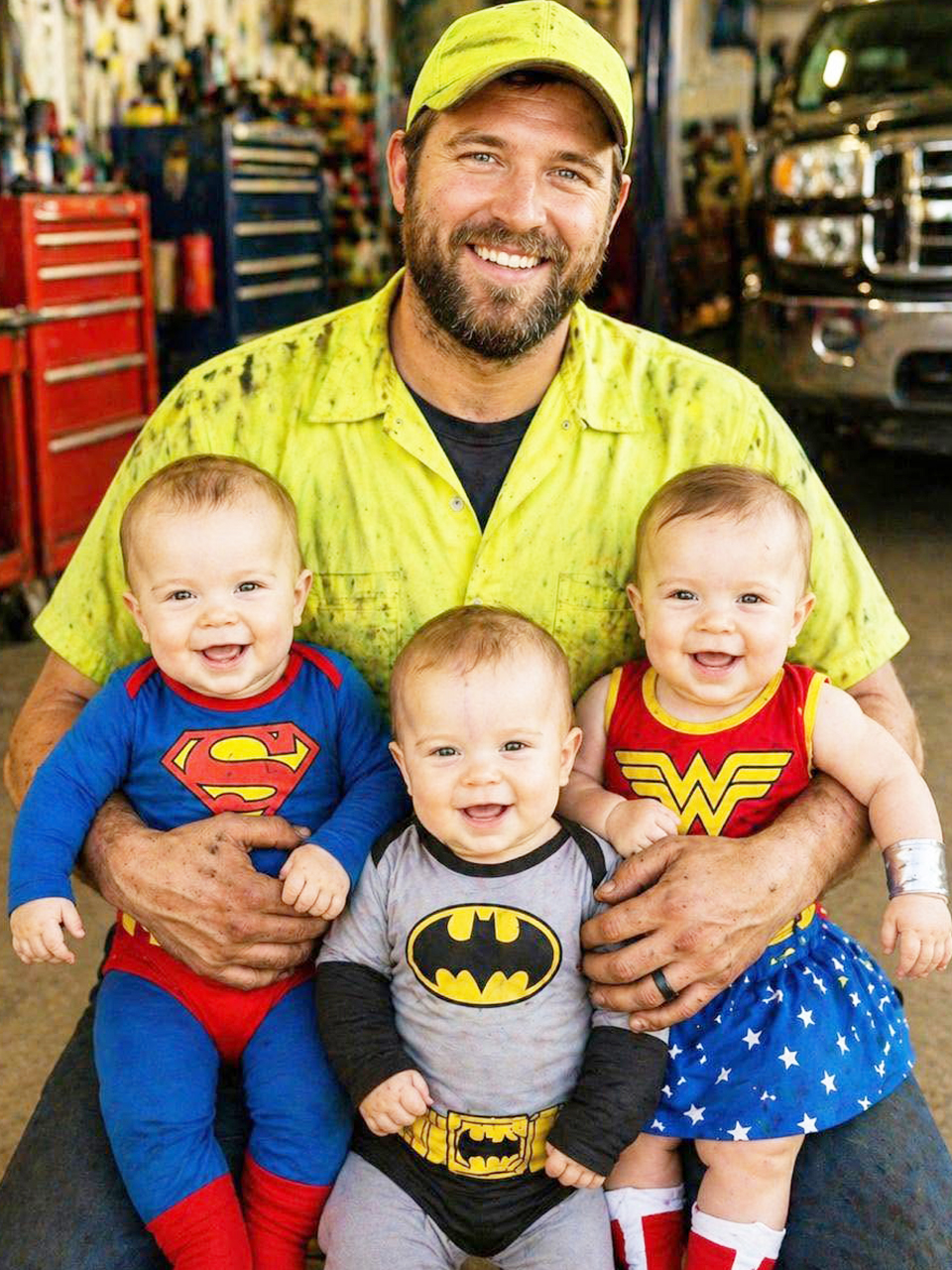
The metal teeth of the old pipe wrench sheared off with a dry snap. “That is forty dollars of my time I am not paying for,” Henderson said, his voice rising above the idle of a box truck out in the lot. I looked at the broken tool in my palm, then at his rusted Dodge Caravan up on the hydraulic lift. “The distributor cap is back-ordered from Cleveland,” I said. I rubbed my left wrist, where the strap of my Timex had left a pale strip of skin before I had to pawn it three weeks ago. “Cleveland is two hours away, Carter,” he said, slamming his hand against the faded red fender. “They do
not have the driver,” I said. He spat onto the gray concrete, right near a fresh puddle of dark transmission fluid, and turned toward the open bay door. “Put the old one back in,” he said, his work boots crunching on the damp autumn leaves outside. “The old cap is cracked into three pieces, Mr. Henderson,” I said. He did not turn around. The side door banged shut behind him, leaving the shop quiet except for the steady drip of water from the metal eaves. A pack of shop rags cost twelve dollars now, and the distributor cap was already charged to my commercial account.
I set the broken wrench on the workbench, right next to a cold mug of burnt chicory coffee. The bill for the parts was due by the end of the week, and my bank account was down to sixteen dollars. The drive home was five minutes of cold air coming through the rusted vents of my Ford pickup. The gallon of milk on my kitchen counter had four dollars and ten cents marked on the red cap in black marker. Liam clutched his green toy dinosaur against his chest, his eyes wide as he watched the milk pool around the toaster base.
“It is swimming,” Emma said, twirling a strand of brown hair around her finger.
Noah did not say anything, but he lined up four yellow plastic blocks in a perfect row on the dry end of the table.
I grabbed a blue shop rag from my pocket and threw it over the white puddle before it reached the edge.
The smell of burnt toast mixed with the heavy scent of the chicory coffee I had brewed that morning.
A thin trail of black smoke rose from the toaster slots, curling toward the low ceiling of our duplex kitchen.
“Nobody touch the plug,” I said.
I pulled the lever up on the toaster, but the bread was already black and hard as coal.
“Can we have cold toast?” Emma asked, her words coming in a rapid, breathless rush.
“We have plain bread,” I said.
I threw the charred slices into the plastic bin under the sink, the dry crusts hitting the bottom with a hollow thud.
On the refrigerator door, the pink utility shut-off notice held its place under a magnet shaped like a school bus.
November fifteenth was circled in thick black ink.
Three hundred dollars was the number written in the center of the page, and the deadline was five days away.
We sat down to the dry slices of white bread, the three of them chewing without making a sound.
“I am going back to the shop for an hour,” I said to the quiet room.
Noah looked up from his blocks, his small forehead wrinkling, but he only nodded once and moved the green block to the end of his line.
The wind outside the garage was pushing the wet oak leaves against the metal door with a sound like gravel hitting a shield.
I took the push broom and started at the back wall, behind the tire balancer where the dust gathered in thick rolls.
My boots made a dull scraping sound on the concrete as I pushed the pile toward the center of the bay.
Under the hydraulic lift, where Mr. Henderson’s Caravan had been parked, something caught the edge of the broom.
It was heavy enough to resist the soft bristles.
I nudged it with the toe of my work boot, expecting a discarded oil filter or a frozen caliper bolt from last week.
Instead, the toe of my leather boot kicked a thick black leather wallet.
It slid out from the shadow of the steel support beam and stopped near the floor drain.
The leather was old and scratched, but it was thick, the kind of tri-fold that did not bend easily.
I picked it up, expecting the weight of copper coins or a heavy brass key ring inside.
The grease on my thumb left a dark smudge across the grain of the cowhide.
I walked over to the desk by the tool chest, where the single yellow bulb of the desk lamp hummed.
My hand was steady until I unclipped the silver band that held the wallet closed.
Inside, there were no credit cards in the slots, and no driver’s license visible through the plastic window.
There was only paper, packed so tightly the seams of the leather were pulling apart.
I pulled the first stack out, my thumb catching on the clean edge of a hundred-dollar bill.
There was another stack behind it, and another behind that, all bound with thick tan rubber bands.
I counted ten bills in the first small pile before my hand started to shake.
“I just need one break, just one, to get us through the month,” I whispered to the empty garage.
The bills were all hundreds, smelling of old paper and the cedar lining of a drawer.
I counted fifteen thousand dollars in total, laid out on the greasy green blotter of my desk.
Three hundred dollars of this would keep the lights on in the duplex.
The rest would pay the rent through the winter, buy three new sets of coats for the triplets, and fix my truck.
I looked at the window, where the rain was starting to streak the glass in long, gray lines.
Nobody had called the shop since five o’clock.
Nobody was looking for it yet.
I stared at the thick stack of bills, my heart hammering against my ribs as I counted the money.
I slipped my thumb inside the leather sleeve behind the cash and pulled out a small piece of laminated plastic. The plastic was yellowed at the edges, scratched from years of sliding in and out of a tight slot. It was an Ohio driver’s license, showing a man with thin shoulders and a crown of white hair that looked like dry winter grass.
The name read Harold Lawson. Above the address on Cherry Street, the birth date confirmed he was seventy-eight years old, a retired postal worker who lived alone in that green cottage with the peeling paint on the corner of Elm. He lived less than a mile from my duplex, in a quiet neighborhood where the sidewalks were cracked and covered in yellow oak leaves.
I looked at his face in the photo. He was wearing a stiff collar, done up to the very top button, looking straight into the camera lens with a formal, old-fashioned politeness. It was the face of a man who still polished his shoes every Sunday morning, even if he had nowhere to go.
The wallet in my hands felt heavier now, its thick black leather smelling of old paper and cedar shaving cologne. Fifteen thousand dollars in crisp, banded hundred-dollar bills sat nestled in the main compartment, enough money to pay my rent for two full years and clear every grocery tab I had in town.
I rubbed my left wrist where my watch used to sit before I pawned it back in August. My fingers searched for a buckle that was no longer there, touching only the pale, smooth skin where the cheap strap had protected it from the grease of the shop floor.
The utility shut-off notice for my duplex was sitting on my kitchen counter at home, printed with a balance of three hundred dollars due on November fifteenth. That date was less than three weeks away, and my checking account had exactly twelve dollars and forty cents left after I bought a fresh pack of shop rags for twelve dollars on Tuesday.
A single hundred-dollar bill from this stack would buy a whole month of groceries, the real milk that cost four dollars and ten cents a gallon instead of the powdered stuff I had been mixing with tap water to make it stretch.
I stared at the license again, the old man’s eyes clear and steady under the laminated surface. If he had this much cash on him, he was either very rich or very foolish, and in Oak Creek, nobody got rich working for the postal service.
The silence of the garage was absolute, save for the occasional drip of transmission fluid hitting a metal drip pan in the corner of bay two. The concrete floor was cold under my boots, holding the chill of the Ohio autumn that was settling into the valley.
I reached down and touched the edge of the workbench, my fingers finding a stray lock washer and sliding it back and forth along the wood. The money was right there, unguarded, a simple mistake by an old man who probably had more than he could ever spend in his remaining years.
But my children would know if I brought home things we could not afford, or if they saw the sudden ease in my shoulders when I paid the electric bill. Noah, at five, was already too quick to notice when my chest went tight at the grocery checkout.
I closed the leather flap of the wallet, the thick black hide resisting the fold because of the sheer volume of cash stuffed inside. I could not bring myself to slide it into my front pocket, nor did I want to leave it sitting on the open workbench where the morning light would hit it through the high windows.
I walked over to the wooden desk in the corner of the office, my boots making a dull, hollow sound on the plywood floor of the small room. The desk was an old oak piece we had inherited from the previous owner, its surface scarred by cigarette burns and dark rings from decades of coffee cups.
In the bottom right drawer, buried under old tax forms from three years ago and a box of rusty oil filter wrenches, was a small brass key. I reached deep into the drawer, my fingers brushing against the tarnished metal of the key before I pulled it out.
The brass was dull, but the teeth were still sharp, fitting into the lock cylinder of the drawer with a dry, stiff click. I placed the black leather wallet inside the drawer, pushing it all the way to the back behind a stack of unused invoice books.
I slid the drawer shut and turned the key to the left, the internal latch dropping into place with a heavy thud that felt permanent. I tugged on the brass handle once, twice, ensuring the wood held tight and the secret was locked away in the dark.
The key went into my front pocket, sliding down next to my pocketknife and a loose valve stem cap. I knew I could not take the wallet home to the duplex, not with the kids running around and the constant fear that I might reach in and pull out a single bill just to buy a box of cereal.
I switched off the shop lights one by one, the glowing green exit sign casting long, distorted shadows across the hydraulic lifts and the tool chests. The cold air hit my face as I stepped out onto the gravel lot, locking the heavy chain-link gate behind me.
The walk back to the duplex was short, the wind kicking up dry maple leaves that scraped along the asphalt like small claws. When I opened the kitchen door, the smell of burnt chicory coffee and toasted bread hit me, a thick, heavy scent that seemed to hang in the low-ceilinged room.
Emma was sitting on the linoleum, her dark hair tangled as she twirled a single strand around her index finger, her eyes fixed on a picture book.
“You took a long time, Daddy,” she said, her voice rising in that rapid, breathless way she had when she was tired. “Did you find the green truck’s wheels?”
“Not tonight, Emma,” I said, setting my lunchbox on the counter next to the sink. “Just had to clean up the bay before morning.”
Noah was nearby, sitting on his heels, carefully lining up three blue plastic blocks in a perfectly straight line on the floor, his face completely serious as he adjusted the gap between them.
“We had toast,” Liam said, running out of the hallway with his green plastic dinosaur clutched in his hand. “Noah dropped his milk, but I helped clean it up.”
I looked at the counter where a wet dishcloth lay in a gray puddle, the white laminate stained with the grease from my own knuckles.
“You guys did a good job,” I said, kneeling down to scoop Liam up into my arms, his small body warm and smelling of baby soap. “Let’s get those shoes off and get ready for bed.”
The bedroom they shared was small, containing two metal cots and a single mattress on the floor where Emma slept. The window was drafty, a sheet of plastic taped over the frame to keep out the October wind, but the plastic was already coming loose at the corner, clicking softly against the glass.
I tucked the heavy flannel blankets around Noah, his small hand reaching out to touch my sleeve, his eyes wide and watchful in the dim light of the hallway.
“Are you still worried about the paper with the bold writing, Daddy?” he whispered, his eyes scanning my face for a sign of trouble.
“No, buddy,” I said, swallowing the lump in my throat as my fingers brushed the brass key in my pocket. “Everything is fine. You just go to sleep.”
Emma climbed into her bed, her eyes already half-closed as she pulled her pink blanket up to her chin, her finger still twirling her hair.
“Tell me about the yellow boat tomorrow?” she asked, her voice dropping into a soft murmur.
“I will,” I said, kissing her forehead. “Every single detail, I promise.”
I stayed in the doorway until all three of them were breathing in that slow, rhythmic way that meant they were sleeping.
I walked back into the kitchen, the silence of the duplex settling around me like a damp coat. The utility bill lay on the table, its bold block lettering reminding me that three hundred dollars was due in exactly eighteen days.
I sat down in the wooden chair, the wood creaking under my weight as I reached into my pocket and pulled out the brass drawer key. I set it in the center of the white formica table, right next to the salt shaker, where the yellow light from the overhead fixture made the tarnished metal look almost gold.
If I kept that money, no one would ever know. Harold Lawson had likely lost it hours ago, perhaps on his walk from the bank, and he had no way of tracing it to my shop floor under the hydraulic lift.
But then I thought about the way Harold looked in his driver’s license photo, his neat collar and the quiet, old-fashioned dignity in his eyes.
If I kept this, what kind of man am I teaching my children to be?
The question hung in the quiet room, unanswered, as the midnight hour came and went, the cold wind outside rattling the kitchen window pane.
I stared at the key for what felt like hours, my mind turning over the three hundred dollars we needed and the fifteen thousand dollars sitting in that dark oak drawer.
I stood up from the kitchen table, grabbed my truck keys, and walked out into the cold night.
The gravel of the narrow driveway crunched under my boots, each step sounding loud in the midnight quiet of Oak Creek. The streetlights on this block were spaced far apart, leaving the gaps between houses filled with deep, heavy shadows. Harold Lawson lived in a small, green-painted cottage at the end of a dead-end street, where the damp autumn leaves had gathered in thick, wet piles against the concrete foundation. The smell of rotting maple leaves and damp river silt hung in the air, a reminder of the cold winter that was only a few weeks away.
The porch light was not on, but a dim glow from a front window cut through the dark, throwing long, crooked shadows across the overgrown lawn. The green cottage had a small porch with two wicker chairs that had seen better days, their paint peeling in long strips. A single potted geranium sat on the railing, the flowers dead and black from the recent frost. I climbed the three concrete steps, my hand brushing against a rusted iron handrail. A crack ran down the middle of the top step, filled with dry weeds that had gone to seed.
I knocked on the heavy wooden door. The sound was flat and hollow, disappearing into the cold night.
For a long minute, nothing happened. I could hear the hum of a refrigerator through the window, but the house remained dark. I stood there under the overhang, my hands shoved deep into the pockets of my work jacket, the damp October air creeping up my sleeves. I was about to knock a second time when a floorboard creaked inside.
The deadbolt slid back with a heavy metallic click. The door opened a few inches, held by a brass security chain that rattled against the casing.
Harold Lawson peered through the gap, his eyes bloodshot and heavy with the kind of exhaustion that sleep cannot fix. His white hair was messy from lying down, and he wore a faded blue flannel bathrobe that looked too large for his thin shoulders. His face was lined with deep wrinkles, his jaw slightly slack as he tried to place my face in the dark.
“Who is it?” he asked, his voice raspy and sharp with a formal, old-fashioned politeness.
“My name is Evan Carter, Mr. Lawson,” I said, keeping my hands visible where the faint light from the window could reach them. “I run the repair shop down on Elm Street. You brought your old Buick in yesterday for the exhaust manifold.”
Harold squinted at me, his fingers rising to adjust the collar of his bathrobe, smoothing the flannel with a jerky, nervous motion.
“The shop is closed, Mr. Carter,” he said. “Is there something wrong with my car?”
“No, sir,” I said. “The car is fine. But I was sweeping up the floor under the second hydraulic lift about an hour ago, and my boot hit something.”
I reached into my right pocket and pulled out the thick black leather wallet.
I held it up between us, the dark leather catching the pale light from his window.
Harold froze, his hand stopping dead on his collar.
“Where did you find that?” he whispered, his eyes widening.
“Right under the lift, sir,” I said. “You must have dropped it when you climbed out to look at the chassis.”
He quickly shut the door to slide the chain free, the brass clinking against the wood, and then swung the door wide open. He did not invite me in, but he stepped out onto the concrete porch, his slippers scraping against the grit.
He took the wallet from my hand, his knuckles brushing against my palm. They were cold and dry, like old paper. He turned it over twice, his thumb tracing the worn edge where the stitching had started to come undone near the seam.
With clumsy, shaking fingers, Harold flipped the leather open. He did not look at me. He kept his eyes locked on the paper money, his thumb counting the edges of the bills as if he needed to prove to himself that they were real.
A tear escaped his eye, tracking slowly through the deep wrinkles of his cheek before disappearing into his white stubble. He did not try to wipe it away.
“I thought it was gone,” he murmured, his voice barely louder than the breeze in the maples. “I thought I had lost everything.”
“It was tucked right under the frame of the lift,” I said. “I locked it in my desk drawer before I left for the evening, but I could not sleep knowing you were probably looking for it.”
“I looked everywhere,” he said, opening his eyes and looking down at the green paper. “My bedroom, the kitchen counters, the car seats. I went back to the bank parking lot twice in the dark.”
He looked up at me, his eyes wide and wet.
“This is my pension, Mr. Carter. The whole thing. I took it out of the bank on Monday morning.”
I watched him hold the wallet against his ribs, his hands clasping it tightly.
“That is a lot of cash to carry around, Mr. Lawson,” I said, keeping my voice quiet. “The bank is usually safer for that kind of money.”
He adjusted his shirt collar under his bathrobe, his fingers moving with a nervous, jerky rhythm.
“I had to have it,” he said, his voice dropping to a tense whisper that barely carried to the steps. “They said it had to be cash. If I did not have it by Saturday, they said they would take the house.”
“Who said that?” I asked.
Harold shook his head quickly, his mouth tightening into a thin line. He looked over my shoulder at the empty street, as if he expected someone to be standing by the mailboxes.
“It does not matter,” he said, his voice trembling. “The important thing is that it is here. You brought it back.”
“Is there someone threatening you, Mr. Lawson?” I asked, stepping a half-step closer.
He pulled the robe tighter around himself, his fingers knotting the belt.
“No,” he said, though his eyes darted away. “No, it is just a business matter. A contract.”
He flipped the wallet open again and began sliding bills out from the middle of the stack. The crisp paper made a sharp, clean sound as his fingers worked.
“Here,” Harold said, pushing three hundred-dollar bills toward my chest. “You must take this. For your trouble. For your honesty. I cannot let you leave empty-handed after what you did.”
I looked down at the three green bills in his hand.
Three hundred dollars.
It was the exact amount of the utility shut-off notice sitting on my kitchen counter. If I took it, the lights would stay on past November fifteenth, and I would not have to worry about the kids sitting in a cold, dark duplex. I thought of Emma’s worn sneakers, of Noah’s quiet sighs when I told him we could not go to the diner for pancakes, of Liam’s green toy dinosaur that was missing its tail.
My hand twitched in my pocket, my fingers brushing against my own truck keys. The temptation was a physical weight in my chest, a dull ache that made it hard to breathe.
“No, sir,” I said, taking a step back toward the first stair. “I cannot take that.”
“Please,” Harold said, his voice rising, a sudden sharp desperation in his eyes. “Please, you do not understand what you have just saved for me.”
“Mr. Lawson, I just did what anyone would do,” I said. “You do not owe me anything for bringing back what belongs to you.”
“That is not true,” Harold said, his white hair catching the cold breeze. “Most people would have kept it. Fifteen thousand dollars is a fortune to a working man. I know what a mechanic makes in this town. You have those three little ones. I saw them in your truck when you drove past the post office last week.”
“They are five,” I said. “Triplets. Emma, Noah, and Liam.”
“Then take it for them,” Harold pleaded, his hand still extended in the cold air, the bills fluttering like dry leaves. “Buy them some winter coats. Buy them some toys. You earned this.”
“If I took your pension money, I would not be able to look them in the eye tomorrow morning,” I said, keeping my voice flat and practical. “I want them to know their father is an honest man, even if we are tight.”
Harold looked at me, his hand slowly sinking back to his side. The three bills remained clutched in his fingers, a stark contrast to his worn bathrobe.
“You are a rare man, Evan Carter,” he said, his voice dropping to a quiet, formal tone. “Your parents raised you well.”
“They did their best, sir,” I said. “But you should go back inside now. It is too cold to be standing out here.”
He nodded slowly, but he did not move toward the door.
“Thank you,” he said. “Thank you.”
I turned and walked down the three concrete steps, my boots crunching on the gravel driveway once more. The cold night air felt clean in my lungs, clearing out the lingering smell of burnt chicory coffee from my duplex.
I reached my old Ford truck, opened the heavy metal door, and climbed into the worn vinyl seat.
The engine coughed twice when I turned the key, then settled into a low, steady rumble that vibrated through the floorboards.
I sat there for a minute, waiting for the heater to blow something warmer than the freezing October draft.
My pockets were empty, save for my own keys and a few loose pennies, but the heavy knot of tension that had been winding up in my chest all evening was gone.
I looked through the dirty windshield, past the hood of my truck, toward the front of the green cottage.
Harold Lawson was still standing on the porch.
He was holding the black leather wallet tight against his chest with both hands, his white hair catching the light.
He looked very old and very small under the single bulb.
I shifted the truck into drive, the transmission clunking as I pulled away from the curb.
Through the rearview mirror, I watched the small green house recede into the darkness.
Harold did not move, his quiet figure remaining perfectly still under the single yellow bulb.
The frying pan hummed on the small burner, the butter turning brown before I could drop the bread in.
The milk carton sat on the gray laminate counter, showing the price of four dollars and ten cents stamped in blue ink on the cardboard rim.
Noah sat on the floor by the refrigerator, carefully lining up six blue plastic blocks in a straight line that pointed toward the pantry.
His brother Liam sat next to him, clutching his green plastic dinosaur so tightly the tail pressed into his thumb.
“You went outside,” Emma said, twirling a strand of her brown hair around her index finger.
She stood by my knee, looking up at the stove with her chin resting on the edge of the counter.
“I had to do a small chore,” I said, flipping the bread with a metal spatula.
“It was dark,” she said. “The moon was still up by the pine tree.”
“Sometimes people need things fixed even when it is late,” I said.
Noah placed another block, keeping his head down, but I saw his shoulders tighten.
The boys always knew when my voice had that thin, stretch to it, the kind that came when the envelope on the fridge got closer to its date.
The electric bill sat under a magnet, three hundred dollars due by the fifteenth of November.
“Is the green car broken?” Emma asked, her voice rising at the end.
“No, the green car is fine,” I said, sliding the toast onto three paper plates.
“Did you see the big white dog by the corner?” she asked, barely taking a breath between her words. “Did the dog bark at you in the dark?”
Last Updated on August 29, 2026 by Grayson Elwood
“No dog, Emma,” I said, setting the plate in front of her. “Eat your toast before it gets cold.”
Liam set his dinosaur on the chair next to him, his small face pinched as he watched me open the butter tub.
“We have to go to preschool today,” he whispered.
“I know, buddy,” I said. “We will leave in twenty minutes.”
A sudden, heavy knock shook the wooden frame of the front door.
It was not the soft tap of the mail carrier or the neighbor kids looking for a ball.
This was three solid strikes that made the windowpane in the living room rattle.
Noah stopped his hand mid-air, holding a red block.
I set the spatula on the cold burner and wiped my hands on a shop rag from the pack of twelve I bought on Tuesday.
“Stay at the table,” I told them, keeping my voice low.
When I pulled the front door open, the morning air hit my face, smelling of damp oak leaves and wet pavement.
Officer Roger Cole stood on the concrete step, his gray uniform shirt pressed sharp enough to cut paper.
He did not look like he had just started his shift.
His leather utility belt creaked slightly as he shifted his weight, his fingers tapping the black holster.
“Evan Carter?” he asked, his voice slow and heavy.
“Yes, Roger,” I said, trying to find a normal tone. “We went to high school together, remember?”
He did not smile, and he did not offer his hand.
“I need you to step out onto the porch for a minute, Evan,” he said.
The tightness in my throat went cold, spreading down into my chest like well water.
I stepped past the threshold, letting the screen door click shut behind me.
Through the wire mesh, I could see Emma standing by the kitchen table, her finger still wound in her hair.
“Is there a problem with the shop?” I asked, looking down at his polished boots.
“We need to talk about what you did last night,” Cole said.
My tongue felt thick, dry as a piece of emery cloth.
“I did not do anything wrong,” I said.
He adjusted his collar, his eyes moving past my shoulder toward the living room window.
“That is what we need to clear up,” he said.
“If this is about the Lawson house, I went there to give him his property,” I said. “I didn’t take a dime.”
Cole reached down, his fingers brushing the heavy leather of his utility belt.
“The gentleman reported his wallet missing yesterday afternoon,” he said. “We have to follow the timeline.”
“He got it back,” I said. “He was holding it when I drove away.”
A red sedan slowed down as it passed the duplex, the driver leaning over the steering wheel to look at the patrol car parked at the curb.
It was Mrs. Gable from three doors down, her pale face pressed against the side glass.
“I have my children inside,” I said, my voice dropping to a whisper. “They are five years old.”
“I know how old they are,” Cole said, his hand resting near his belt buckle. “But you need to come with me to the station.”
“The station?” I asked, my chest tightening. “For what?”
“We have some questions about a missing item,” he said.
“I told you, I gave him the wallet,” I said. “I drove all the way out there in the middle of the night to do the right thing.”
“And we appreciate that,” Cole said, his face remaining completely blank. “But there are some details that do not align with the report.”
My neighbors across the street, the Miller brothers, were standing near their driveway holding rakes, watching us.
They did not pretend to work.
They just stood there in their flannel shirts, staring at the deputy on my porch.
“I can call my sister to watch the kids,” I said, looking back at the screen door. “Just give me five minutes to dial her.”
“I already called Mrs. Gable,” Cole said. “She is walking up the driveway right now.”
I looked toward the street and saw her coming, her wool sweater pulled tight around her shoulders.
She looked at me with a mixture of pity and curiosity that made my face burn.
“It will only be an hour, Evan,” she said as she reached the bottom step. “Go on and do what you have to do.”
“Thank you, Clara,” I said, but the words felt like sand in my mouth.
“The children are in the kitchen eating,” I added, looking at her. “There is milk in the fridge.”
She nodded, her eyes shifting to Cole and then back to me.
Cole took my elbow, his grip firm but not painful, guiding me down the wooden stairs.
Every window on our street seemed to have a curtain pulled back, a white face peeking out from the dark glass.
I had lived in this town my whole life, and now I was walking down my own sidewalk with a deputy at my back.
He opened the heavy rear door of the cruiser, the vinyl inside smelling of rubber floor mats and old coffee.
I climbed into the back, my knees hitting the hard plastic barrier.
The door shut with a heavy, flat sound that cut off the noise of the autumn wind.
The metal screen between the front and back seats was thick, covered in small round holes.
Cole got into the driver’s seat, adjusted his rearview mirror, and started the engine.
The cruiser pulled away from the curb, passing Mrs. Gable, who was now standing on my porch with her hands on Emma’s shoulders.
I leaned forward as far as the seatbelt would let me.
“I returned every dollar, officer, I swear I did not touch a thing,” I said, my breath fogging the wire mesh.
Cole did not look back at me through the mirror.
He kept his hands at ten and two on the steering wheel, his eyes on the road ahead.
“We will talk when we get there, Evan,” he said.
“I went straight to his house,” I said. “It was past midnight, but he was awake. He took the wallet from me.”
“I have the report here,” Cole said, tapping a yellow folder on the passenger seat.
“The fifteen thousand was all there,” I said, my voice rising. “Every single bill. I did not even keep a dollar for gas.”
The car turned left onto Main Street, passing the auto shop where my toolbox sat locked.
I thought about my boss, about what he would say if he saw me in the back of a county car.
“I found it under the hydraulic lift,” I said. “It must have slipped out of his pocket when he was looking at his brakes.”
Cole remained silent, his eyes scanning the morning traffic.
“Why would I return it if I was going to steal from him?” I asked, my voice cracking slightly. “I could have just kept the whole thing.”
“People do strange things when they get nervous, Evan,” Cole said.
The town fell away, replaced by the wider spaces of the county road where the houses sat further back from the ditch.
The brown corn husks in the fields stood broken and dry, waiting for the first frost.
I pressed my forehead against the cold side window, watching the telephone poles go by.
If they locked me up, the electric bill would not get paid, and the landlord would have the notice on the door by Friday.
I thought of Noah’s face when he looked at my hands, and Emma’s constant questions that I could never answer.
The car began to slow down, but we had not reached the county courthouse yet.
We were still two miles north of the municipal building.
The patrol car turns onto a familiar street, and Evan realizes they are stopping at Harold’s peeling green house.
Officer Cole killed the engine, and the sudden quiet in the front seat of the patrol car made my ears ring. I sat with my hands flat on my thighs, watching Harold Lawson walk slowly down his front porch steps in a faded wool cardigan that looked older than I was.
My fingers twitched, automatically reaching to rub my left wrist where my steel watch used to sit before the pawnshop on Maple Street took it to cover last month’s groceries. I looked at the peeling green paint on Harold’s siding, expecting the deputy to reach for his leather utility belt and tell me to get out.
“Go on,” Cole said, his voice slow and deliberate as he pushed his heavy door open. “He doesn’t bite, Evan.”
I stepped out of the cruiser, the damp autumn air immediately cutting through my thin denim jacket. My boots crunched on the gravel driveway as I walked toward the wooden steps, my chest still tight with the fear of what was coming.
Harold stopped at the bottom step, adjusting his flannel collar against the morning breeze. He did not look like a man who had spent the night calling the police on a thief; instead, his face creased into a warm, genuine smile that showed the deep lines around his eyes.
“Good morning, young man,” Harold said, his voice holding that old-fashioned, formal politeness. “I hope the deputy didn’t frighten you too much with his early morning visit.”
“I was a little confused, Mr. Lawson,” I said, keeping my voice low. “I thought everything was settled last night when I brought the wallet back.”
Cole walked up behind me, his heavy black boots clicking against the concrete walkway. “I told him you looked like you were heading to a county cell, Harold. He was practically sweating through his shirt.”
“My apologies for the dramatics,” Harold said, gesturing toward the two green plastic chairs sitting on the porch. “Please, come up out of the damp. The air is heavy today.”
I followed him up the steps, the wood yielding slightly under our weight with a soft creak. Harold sat down slowly, his knees making a small popping sound that made me want to reach out and steady him, but I kept my hands in my pockets.
He did not look frail, but his movements had the careful deliberation of someone who knew exactly how much strength he had left. He reached into his trousers and pulled out the worn black leather wallet I had spent the night staring at under my kitchen light.
I felt a hard lump form in my throat, my mind immediately jumping back to the red shut-off notice waiting on my kitchen counter. Three hundred dollars by November fifteenth, or the duplex went dark.
“I wanted to show you something,” Harold said, his thumb sliding into a small, hidden seam behind the bill compartment. “The deputy here helped me verify that everything was exactly as I left it when I lost it near your shop.”
Cole nodded, tapping his belt. “Fifteen thousand dollars, right down to the last single. Not a dime missing, Evan. I counted it myself this morning to make sure.”
“I didn’t touch a single bill,” I said, looking from Cole to the old man.
Harold ignored the money entirely, his fingers gently pulling a small, square slip of paper out of the hidden silk lining near the back. He held it out to me with a hand that shook just a fraction.
It was a faded photograph of a woman in a bright yellow dress, standing next to a teenage girl with the same dark, thick curls. The edges of the paper were soft and yellowed with age, showing the grain of a print made decades ago.
“This is Clara, my late wife, and our daughter, Sarah,” Harold said, his eyes fixing on the small square of paper with a quiet intensity. “This is the only copy left in the world.”
I looked at the photograph, the girl’s smile bright and clear despite the aging paper. “They look very nice, Mr. Lawson.”
“They were,” Harold said, his voice dropping to a soft whisper. “Clara passed twenty years ago, and Sarah followed her just a few years later. The negatives were lost in a basement flood back in ninety-eight.”
He carefully slid the photo back into the lining, treating the paper as if it were made of spun glass. “If that wallet had gone into a sewer or a trash bin, I would have lost them forever. The money is just paper, but these are my girls.”
“I’m glad you got them back,” I said, meaning it, even as the image of my empty refrigerator flashed in my mind.
“Which brings me to why I asked Roger to bring you here,” Harold said, leaning forward and resting his hands on his knees. “I am seventy-eight years old, Evan, and this house is getting away from me.”
He pointed toward the corner of the porch, where the wooden gutter was split and dripping dirty water onto the foundation.
“The gutters are full of pine needles, the back steps are rotting, and I have a dozen storm windows that need to be washed and hung before the first hard freeze,” Harold said.
“I’m a mechanic, Mr. Lawson,” I said. “I spend sixty hours a week under car lifts, and my weekends are pretty thin.”
“I can pay forty dollars an hour,” Harold said, not blinking. “I would expect about eight hours of work every Saturday.”
Three hundred and twenty dollars a week. That was more than my weekly groceries and the gas for my truck combined.
But Saturdays were the only days I had to watch the triplets without paying Mrs. Gable down the street to keep an eye on them.
“I can’t leave my kids,” I said, shaking my head. “Emma, Noah, and Liam. They’re only five, and they don’t do well with strangers.”
Harold smiled, a soft creasing of his eyes that reached his temples. “The yard is too quiet, and I could use some life around here.”
I looked over the railing at the wide, deep yard. It was surrounded by an old chain-link fence, overgrown with wild blackberry bushes but completely enclosed and safe from the street.
“They can run as much as they want,” Harold said. “I have some old wooden blocks in the attic that my grandson used to play with, and I still know how to make a decent pitcher of sweet tea.”
The image of Emma twirling her hair, Noah lining up his plastic blocks on the linoleum, and Liam clutching his green dinosaur in our small, cramped duplex kitchen came over me.
If I took the job, I could pay the three hundred dollar electrical bill on Monday, five days before the shut-off deadline on the fifteenth.
“They’re loud, Harold,” I warned. “And they’re fast. You turn your back for a second, and Liam is trying to climb the neighbor’s fence.”
“I spent thirty-five years working for the postal service, Evan,” Harold said with a dry chuckle. “I have dealt with worse than three five-year-olds.”
Cole stood up from the porch railing, his boots squeaking on the damp wood. “Sounds like a fair trade to me, Evan. And I can tell you the chief won’t mind me giving you a ride back to the duplex so you can get to work.”
“I’ll pay you the first week in advance,” Harold said, reaching into his pocket and pulling out three crisp hundred-dollar bills and a twenty. “That way you can buy whatever supplies you need before tomorrow morning.”
He placed the cash on the small green table between our chairs. The blue ink of the bills seemed to glow against the chipped paint of the metal table.
That money was the difference between keeping my children warm and sitting in a dark, cold house next week.
I reached out and took the bills, folding them carefully and tucking them into my front pocket.
“We will be here at eight tomorrow morning,” I said, my voice sounding steadier than I felt.
“I’ll have the tea ready,” Harold said, his hand extending toward me.
I stood up and took his hand, his grip warm and dry in the crisp autumn air.
I shook Harold’s hand, agreeing to the arrangement while the morning sun warmed the porch.
Two weeks later, the damp oak leaves in Harold’s backyard had turned the color of an old penny.
I hauled a thick bundle of fallen maple limbs to the edge of the gravel alley, my work boots sinking into the soft, waterlogged turf with every step.
Noah sat near a rotting oak stump, carefully lining up yellow and blue plastic blocks in a straight, perfect row that stretched toward the garden bed.
Beside him, Liam ran in wide circles through the tall, uncut grass, making high-pitched engine noises while his green toy dinosaur soared through the air.
Emma stood near the bottom of the back porch steps, her eyes fixed on Harold Lawson as he adjusted the wool cardigan around his neck.
“Do you have a swing, Mr. Lawson?” Emma asked, twirling a strand of brown hair around her finger.
Harold adjusted his collar and smiled down at her from his metal lawn chair, his hands resting on his knees.
“I do not have a swing, young lady,” Harold said, his voice carrying that slow, formal politeness. “But I have a very old apple tree that might hold one if your father approves.”
I stopped and wiped my brow with the back of my hand, rubbing my left wrist where my watch used to sit.
The grass was still wet from the morning mist, and the smell of damp earth and wood rot was heavy in the autumn air.
“We do not need to trouble Mr. Lawson about swings, Emma,” I said, lifting another heavy branch.
“It is no trouble at all, Evan,” Harold said, leaning forward slightly.
He looked at the triplets with a quiet intensity that made me lower the branch.
“They have a lot of energy,” I said, trying to fill the quiet.
“Energy is a very fine thing to have in a yard,” Harold said, his gaze lingering on Liam as the boy tripped, laughed, and scrambled back to his feet.
“Liam, keep your eyes on the ground,” I called out.
Liam did not answer, already running toward the back fence where a patch of wild clover grew.
Emma took a step closer to Harold, her hand reaching out to touch the arm of his chair.
“My dad can build anything,” Emma said. “He built a shelf for our kitchen.”
“Is that so?” Harold asked, looking over at me with a soft smile.
“It was just some pine scrap from the shop,” I said, though my chest warmed a little.
“A shelf that holds weight is a good shelf,” Harold said.
He stood up slowly, placing both hands on his cane to steady himself before he took a step.
“I believe the sun is high enough for lunch,” Harold said.
The children stopped what they were doing and looked at me, waiting for my nod before they moved toward the house.
The kitchen smelled of toast and hot chicory coffee, a sharp contrast to the cold air outside.
Harold moved around the yellowed laminate countertops with slow, deliberate steps, retrieving five tall glasses from the cupboard.
He poured fresh lemonade from a glass pitcher, the ice cubes clinking softly against the sides.
“During my thirty years with the postal service,” Harold said, setting a plate of round butter crackers on the yellowed table, “I carried a leather pouch that weighed forty pounds on Mondays.”
Liam stopped chewing his cracker, his eyes wide.
“Did you have to fight dogs?” Liam asked.
“Only the small ones,” Harold said, a dry smile touching his lips. “The big ones usually just wanted to share my sandwich.”
The triplets laughed, the sound bright and loud in the small, quiet kitchen.
I sat on the wooden stool near the back door, cradling a mug of the chicory coffee Harold had brewed for me.
It was bitter, but it was hot, and it took the chill out of my fingers.
Noah looked up from his glass of lemonade, his voice a soft whisper.
“Did you ever lose a letter, Mr. Lawson?” Noah asked.
Harold went still for a second, his fingers brushing against his shirt collar.
“I never lost a single envelope,” Harold said. “Every message found its home, eventually.”
He turned back to the counter, his back to us as he wiped a stray drop of lemonade with a clean dishcloth.
On the small wooden desk near the pantry, a stack of unopened mail lay next to a glossy white business card.
I could see bold blue lettering on the card from where I sat, though I could not make out the name.
“My dad is a mechanic,” Emma said, her voice full of pride. “He fixes the big trucks.”
“He is a very skilled man,” Harold said, turning back to us with a gentle nod.
“He works all night sometimes,” Emma added.
I cleared my throat, shifting my weight on the stool.
“That is enough about work, Emma,” I said.
The children fell quiet, sipping their drinks while Harold watched them with that same soft expression.
He looked like a man who had spent too many years talking only to the walls.
“The yard is looking much better, Evan,” Harold said.
“There is still a lot of brush to clear by the back fence,” I said.
“We have plenty of weekends ahead of us,” Harold said.
I looked down at the dark grease stained deep into the creases of my palms.
For the first time in months, my mind was not running through the math of our grocery bills or the cost of winter coats.
The warmth of the kitchen felt like a shield against the rest of the world.
By three o’clock, the shadow of the neighbor’s garage had stretched across the entire backyard.
The triplets were playing near the porch steps, sorting smooth gray pebbles into piles of different sizes.
I wiped down my shovel with an old shop rag, preparing to load my tools into the back of my truck.
Harold stepped out onto the porch, holding a small white envelope in his hand.
“This is for your labor today, Evan,” Harold said, extending the envelope toward me.
I reached out and took it, the paper clean and crisp against my dirty fingers.
I opened the flap and looked inside, expecting the fifty dollars we had discussed for a half-day of yard work.
Instead, there was a stack of crisp, green bills.
I pulled them out, my thumb counting three hundred-dollar bills.
“Mr. Lawson, this is too much,” I said, trying to hand the bills back to him. “We agreed on fifty.”
“The work you did today would have cost me much more if I hired a commercial crew,” Harold said, adjusting his collar.
“But I am not a commercial crew,” I said. “And this is far more than the job is worth.”
“It is worth that much to me,” Harold said.
I looked at the bills in my hand, my chest tightening as I realized what this meant.
Three hundred dollars was exactly the amount of our past-due electric bill.
It felt too easy, like a trap I did not see.
“I cannot take this, Mr. Lawson,” I said.
“You can, and you will,” Harold said, his voice carrying a firm, quiet authority that reminded me of my own father.
“But why?” I asked.
Harold looked past me, his eyes resting on the triplets as they laughed over a particularly shiny pebble.
“Because some things are worth more than the paper they are printed on,” Harold said.
I stood there, the cash heavy in my palm, torn between my pride and the memory of the shut-off notice on my kitchen counter.
A cold breeze swept through the yard, rustling the dry leaves at our feet.
I folded the money and slid it into my front pocket, the weight of it settling against my thigh.
“Thank you, Mr. Lawson,” I said.
“You are very welcome, Evan,” Harold said.
He leaned against the wooden porch railing, his gaze still fixed on the children.
The sun was sinking lower, casting a long, amber glow across the front yard.
Harold sat down on the wooden bench, gesturing for me to join him.
I sat on the opposite end, keeping my dirty work clothes from brushing against his neat cardigan.
“The house gets very quiet during the week,” Harold said, his voice barely louder than the wind.
“I imagine it does,” I said.
“It feels like we have found a home here, Mr. Lawson,” I said.
The words came out before I could stop them, honest and raw.
Harold looked at me, a softness in his eyes that made him look younger than seventy-eight.
“I was a father once,” Harold said, his fingers tightening on the edge of the bench. “A long time ago.”
“I know,” I said quietly, thinking of the faded photograph of the woman in the yellow dress.
“When I look at your children,” Harold said, “I do not feel quite so old.”
He reached into his pocket and pulled out a small piece of peppermint candy, unwrapping it with slow, deliberate movements.
“You are a good man, Evan,” Harold said. “You remind me of what is decent in this world.”
I rubbed my bare wrist, the old shame of keeping the wallet overnight rising in my chest.
If he knew the truth about that night, he would not be sitting here with me.
But he did not know, and looking at his calm face, I let myself believe that the past was fully behind us.
A dark blue pickup truck slowed down as it passed the front of the house, its tires crunching on the loose gravel.
The driver, a thick-necked man with a baseball cap pulled low, stared toward the porch for a long moment before speeding away.
Harold did not seem to notice the truck, his eyes closed as he enjoyed the warmth of the fading sun.
I stood up, brushing a few stray bits of dried grass from my jeans.
“We should get going before it gets too cold for the kids,” I said.
“Of course,” Harold said, opening his eyes and smiling. “Take care of them, Evan.”
I walked down the steps, calling out to the triplets to gather their toys.
As Emma ran toward me, she turned and waved to the porch.
“Goodbye, Mr. Lawson!” Emma yelled.
Harold waved back, his hand small and pale against the dark wood of the house.
I watched my children play in the garden, feeling a sense of security I had not felt in years.
The blue patrol car rolled over the gravel lot of Carter’s Auto Repair at exactly eight in the morning. The engine idled with a low, steady rumble before Officer Roger Cole switched it off. I was already lifting the garage door, the cold autumn air rushing in to mix with the smell of old grease and floor sealant.
Roger climbed out of the cruiser, his boots crunching on the loose stones. He adjusted his heavy leather utility belt, the metal handcuffs clinking against his flashlight. He looked tired, his eyes slightly bloodshot from the night shift.
“Morning, Evan,” Roger said, his voice carrying that slow, deliberate authority. “I need a quick oil change before the day shift gets busy. The department scheduler has me down for nine hundred miles overdue.”
“Bring her right onto bay two,” I said. “I have the filter on the shelf. It will take fifteen minutes.”
I walked back to the tool chest, my left hand instinctively reaching to rub my bare wrist where my watch used to sit. The metal lift controls were cold under my palm. Roger lined the patrol car up with the steel tracks, the tires squeaking on the smooth gray concrete.
He stayed inside the car until the lift was locked in place. I secured the safety pins at the base of the pillars. Roger stepped out, looking up at the undercarriage of the Ford as I raised it above our heads.
“How are the kids?” Roger asked. He stood near the workbench, his fingers tapping the leather casing of his radio.
“They are doing well,” I said. “Noah is building some kind of fort out of cardboard boxes in the kitchen. Emma keeps asking when we are going back to Mr. Lawson’s yard.”
Roger did not answer right away. He walked over to the oil drain barrel, his boots leaving faint dusty prints on the floor.
“You have been spending your Saturdays out there,” Roger said.
“I have,” I said, reaching for the fifteen-millimeter wrench. “Harold has a lot of dead pine branches that need cutting. The triplets like running in the high grass.”
I fitted the wrench onto the oil pan plug. The black oil began to trickle out into the funnel, warm and thick.
“He is a good man, Harold,” Roger said. “He worked thirty-five years carrying the mail on route four. Never took a sick day until his wife passed.”
“He told me some stories about the old post office,” I said. “He seems lighter lately. More than when I first knocked on his door.”
Roger leaned his shoulder against the brick wall of the bay. He looked out the open garage door toward the main road, where the morning traffic was beginning to build.
“He is lighter because you gave him his life back, Evan,” Roger said. “But he was never supposed to have that cash in his wallet in the first place.”
I stopped turning the oil filter. The wet metal canister was slick in my gloved hand. I looked over at Roger, waiting for him to continue, but he just stared at the road.
“What do you mean?” I asked.
“That fifteen thousand dollars,” Roger said, his voice dropping a register. “That was his entire emergency fund. He kept it in a savings account at the county bank for twelve years.”
I set the dirty filter in the reclamation bin. “Why did he take it out?”
“Because of a man named Vance,” Roger said. “Runs a company called Vance Brothers Roofing out of Toledo. He showed up at Harold’s house in August.”
I wiped my hands on a clean shop rag. The rag cost twelve dollars a pack now, and I used them sparingly, but my fingers were covered in black soot.
“Harold did not mention any roof work,” I said.
“That is because there was no roof work,” Roger said. “Vance told Harold that his shingles were rotting. He told him the city would condemn the cottage if he did not get it fixed immediately.”
I looked at the oil still dripping from the pan into the collector. “Can the city do that to an old man?”
“No,” Roger said. “But Harold did not know that. He is seventy-eight, Evan. He lives alone with his memories, and he gets anxious when people start talking about building codes and court dates.”
Roger took a small notepad from his breast pocket. He did not open it, just flipped it over in his hand.
“Vance had him sign a contract,” Roger said. “A three-page document with fine print that said Harold agreed to pay fifteen thousand dollars for an inspection and initial materials.”
“Fifteen thousand just to look at the roof?” I asked.
“That was the penalty clause,” Roger said. “If Harold tried to cancel the work, the contract said Vance could put a lien on the house. Vance told him he would take the cottage and sell it at sheriff’s auction.”
I stood under the oil pan, the cold air from the open door hitting the back of my neck. My mind went back to the night I found the wallet under the lift, the thick stack of bills smelling of old paper and leather.
“So Harold went to the bank,” I said.
“He withdrew every dollar,” Roger said. “He was supposed to meet Vance on the corner of Maple and Tenth on Tuesday morning to hand over the cash.”
“Why the corner?” I asked. “Why not at the house?”
“Because Vance did not want anyone seeing him take it,” Roger said. “But Harold lost the wallet on Monday night when he stopped by here to get his taillight bulb replaced.”
I felt a sudden chill that had nothing to do with the autumn breeze. “He lost it in my shop.”
“He did,” Roger said. “And when he realized it was gone, he thought his life was over. He thought Vance was going to take his home and he would have nowhere to go.”
I turned back to the tool cart to find the new oil filter. My hand was steady, but my mind was racing through the timeline.
“He was going to give all of it to a thief because he was scared,” I said.
“That is exactly what he was going to do,” Roger said.
“Why did he not call you?” I asked. “Why didn’t he call the sheriff’s office?”
“He was embarrassed, Evan,” Roger said. “People his age, they get terrified of losing their independence. They think if they admit they got cheated, their kids or the state will put them in a home.”
I lubricated the rubber gasket on the new filter with a drop of clean oil. “But you know about it now.”
“I found out because I saw Vance’s truck parked down the street from Harold’s house last Friday,” Roger said. “I know the truck. I have seen it outside three other senior residences in the county this year.”
“Did you arrest him?” I asked.
“I cannot arrest him for a signed contract,” Roger said, tapping his belt again. “Not without proof of fraud. Vance makes sure his paperwork looks legal on the surface.”
I threaded the new filter onto the engine block, turning it until it seated against the metal.
“So Vance is still coming after him,” I said.
“He is,” Roger said. “He called Harold twice yesterday. He told him he was coming back this Saturday to collect his money or start the court filings.”
I grabbed the oil plug wrench and tightened the bolt. The metal clicked as it locked into place. I felt a tight knot forming in the center of my chest.
“What is Harold going to do?” I asked.
“He is terrified,” Roger said. “He has the money back in his safety deposit box now, but he thinks the contract is legally binding. He thinks he has to pay.”
I lowered the lift slowly, the hydraulic fluid hissing in the quiet garage. The patrol car settled back onto its tires with a soft bounce.
“How much oil does this take?” I asked, my voice flat.
“Six quarts,” Roger said. “The synthetic blend.”
I walked over to the bulk oil dispenser and filled a clean plastic pitcher. The amber liquid flowed smoothly, thick and silent. I carried it back to the car, popped the hood, and began pouring it into the valve cover.
“You saved him from losing his savings that night, Evan,” Roger said, standing close to the fender. “If you had kept that wallet, or if someone else had found it, Harold would have had nothing to fight with.”
I did not say anything. I kept my eyes on the oil level in the pitcher, watching the numbers on the side drop from six to five, then four.
“He thinks you are a hero,” Roger said.
“I just returned a wallet,” I said.
“To you, it was just a wallet,” Roger said. “To him, it was his whole life.”
I finished pouring the oil and replaced the yellow cap. I closed the heavy steel hood, the latch engaging with a sharp metallic clang that echoed through the empty shop.
“That will be forty-eight dollars,” I said, wiping my hands on the rag once more.
Roger pulled a green county voucher from his pocket and signed his name at the bottom. He handed it to me across the counter.
“Thank you, Evan,” he said.
“Saturday morning,” I said, looking at the voucher. “What time did you say Vance was coming?”
“He told Harold he would be there at ten,” Roger said.
I folded the voucher and placed it in the cash drawer. “I will be at Harold’s yard at eight to clear the rest of those pine branches.”
Roger nodded once, his face expressionless. “I might be driving by that way around ten myself.”
He walked out to his car, opened the door, and slid into the driver’s seat. The engine started with a clean, sharp turn of the key.
I watched him back out of the driveway, the tires throwing up a few small pebbles as he turned onto the main road.
I walked back to my bay, the quiet of the shop returning. The heavy wrench was still in my hand, its metal surface cold against my palm.
I gripped the wrench tightly, my chest burning with anger at the thought of someone taking advantage of Harold.
We arrived at Harold’s cottage at exactly nine o’clock on a Saturday morning.
The damp autumn air smelled of decaying maple leaves and wet earth, a heavy scent that clung to my wool jacket.
My station wagon’s heater had died three blocks back near the school, and the triplets were huddled under a brown wool blanket in the back seat.
Liam was clutching his green toy dinosaur against his chest, his fingers small and cold against the plastic.
“Are we going to rake the leaves today, Daddy?” Emma asked from the back.
She was twirling a strand of her blonde hair around her finger, her eyes fixed on the rear window.
“Yes,” I said, rubbing my left wrist where my watch used to be. “Just a small pile by the garden, like we promised.”
I turned the wagon onto Harold’s gravel driveway, but I had to slam on the brakes.
A shiny white pickup truck with oversized chrome rims was parked sideways across the gravel, completely blocking our path to the green cottage.
The truck’s diesel engine was running, a heavy, rhythmic rattle that vibrated through my steering wheel and made the rust on my fenders buzz.
A large logo on the driver’s door read Premier Roofing and Restoration in gold block letters.
“Stay in the car, guys,” I told the kids, my eyes fixed on the side mirror of the white truck.
“Who is that, Daddy?” Noah whispered.
He was lining up three blue plastic toy blocks on the vinyl seat beside his brother, his head lowered as if to hide.
“Just a delivery,” I said, turning off my ignition to save what little gas we had left.
The sudden silence from our car was immediately broken by the roar of the diesel engine behind us.
The driver’s door of the white truck opened, and a tall man stepped out onto the gravel.
He wore a stiff canvas jacket with a brass zipper and clean, heavy leather boots that had clearly never seen a muddy job site.
Under his left arm, he carried a black aluminum clipboard with several sheets of yellow paper clipped to it.
His fingernails were scrubbed perfectly clean, and the scent of expensive cologne drifted through my open window.
I climbed out of the station wagon, closing the door behind me with a quiet click so the children would stay inside.
“Can I help you?” I asked, standing by my front fender.
The man looked at my greasy work shirt and the faded Carter’s Auto Repair patch on my chest.
“You the lawn boy?” he asked, his voice loud and sharp over the engine noise.
“I am Evan Carter,” I said, keeping my hands flat against my thighs to hide the grease under my fingernails. “And this is Harold Lawson’s property.”
“I know whose property it is,” the man said, tapping his silver pen against the metal clipboard.
“I am Vance, the contractor,” he said, taking a step toward me. “Harold owes me fifteen thousand dollars for materials and labor on his porch, and I am here to get my check today.”
Vance took a step toward the stone path that led to the front porch of the green cottage.
I stepped quickly to the side, placing myself directly between his polished leather boots and the bottom step.
“Mr. Lawson is not taking visitors today,” I said, keeping my voice level.
“I am not a visitor,” Vance said, his eyes narrowing as he looked down at me.
“I am a creditor,” he said. “He signed a contract for a full roof tear-off and rebuild, and the balance is due upon delivery of materials.”
“The only materials you delivered were six bundles of mismatched shingles and three pieces of treated pine,” I said.
“They are sitting in the side yard under a blue tarp right now,” I added.
“That is not fifteen thousand dollars’ worth of material,” I said. “That is barely three hundred.”
Vance let out a dry, short laugh that did not show his teeth.
“The contract covers the procurement, transport, and staging of all specialized materials,” he said.
He took a half-step closer until his clipboard was inches from my chest.
“A contract is a contract, grease monkey,” he said.
“He signed it,” Vance said. “He has forty-eight hours to pay the remainder or I file a contractor’s lien on this house.”
“He is seventy-eight years old,” I said.
“He was scared because you told him his roof was going to collapse,” I said. “You threatened to sue him before he even had a chance to get a second opinion.”
“He should have read the fine print,” Vance said. “Now step aside.”
I did not move.
My boots felt slick on the wet grass of the lawn, but I kept my weight centered.
“Officer Cole brought me over here in his patrol car on Tuesday,” I said, looking him straight in the eyes.
“He wanted me to look at the work order because he knows Harold cannot read the small print anymore,” I said.
“We both saw what you wrote on that second page about the immediate forfeiture of the deed,” I said.
The name of the deputy made Vance pause for a fraction of a second.
His grip tightened on the aluminum clipboard.
“The deputy does not know anything about contract law,” Vance said, his voice dropping into a low, hard hiss.
“And neither do you,” he added.
“I know what a scam looks like,” I said. “And I know what a thief looks like.”
Vance’s face turned a dark, angry red under his clean shave.
“Listen to me, mechanic,” he said, leaning in so close I could smell the peppermint on his breath.
“You are making a very expensive mistake here,” he said.
“You do not belong on this property, and you certainly do not belong in this man’s financial business,” he added.
“I am helping a friend,” I said.
“You are interfering with a legal business agreement,” Vance said, tapping his clipboard against my chest.
“I have a legal team on retainer in Columbus,” he said.
“If you do not step out of my way right now, I will file a tortious interference suit against you personally,” Vance said.
“I will have your wages garnished before you can pay your next light bill,” he added.
I thought of the three hundred dollar electrical bill sitting on my kitchen counter, the white paper with the warning stamp, and my hands started to feel cold.
“My boss at the shop knows I am here,” I said, trying to keep my voice from shaking.
“We will see how much your boss cares when he gets a subpoena for your employment records,” Vance said.
A small, cold smile touched the corners of his mouth.
“He is not going to keep a mechanic who brings lawsuits to his front door,” Vance said.
“You will be looking for a new job by Monday afternoon,” he added.
“And in this county, nobody hires a man with a court order against him,” Vance said.
Through the window of my station wagon, I could see Emma watching us, her small fingers still twisting her hair.
Noah had stopped playing with his blocks and was staring at my back, his eyes wide and dark with worry.
I felt a cold weight settle in my chest, a sudden, sharp realization that my quiet safety here was gone.
Vance was not just trying to take Harold’s money.
He was going to ruin everything I had worked to protect.
The heavy front door of the cottage clicked, and Harold stepped out onto the porch.
He was wearing his old blue cardigan, but he had buttoned it crookedly.
The left side was hanging several inches lower than the right.
His face was the color of dry plaster, and his fingers fumbled uselessly with the collar of his shirt as he adjusted it in panic.
“Evan?” Harold called out, his voice thin and high in the cold morning air.
“Is that the man from the roofing company?” he asked.
He tried to take a step toward the stairs, but his knees buckled slightly.
He had to grab the green wooden railing of the porch to keep from falling.
“Go back inside, Mr. Lawson,” I said, turning my head slightly but keeping my shoulder blocked against Vance.
“He needs to hear this,” Vance shouted, pushing past my shoulder to address the porch.
“Your friend here is about to cost you your house, Lawson,” Vance yelled.
“I want my fifteen thousand dollars by Monday, or the bank is going to get a call from my legal team before the courthouse closes,” Vance said.
Harold’s chest was heaving under his crooked shirt, his eyes wide and unfocused as he stared at the clean white truck.
He clutched his chest with his right hand, his fingers bunching the blue wool over his heart.
“I do not have the cash,” Harold whispered, his voice barely reaching us over the rattle of the diesel engine.
“I do not have it anymore,” he added.
“Then you better find it,” Vance said, turning back toward his truck and sneering at me.
“You have forty-eight hours, both of you,” he said.
He climbed into the cab of his white pickup, slammed the heavy door, and jammed the shifter into reverse.
The heavy truck lurched backward, its tires spinning on the wet gravel.
It threw a shower of small gray stones against my station wagon’s passenger doors.
The noise of the engine faded as he sped down the street, leaving a cloud of gray exhaust hanging in the cold autumn air.
I turned and ran up the porch steps, my heart hammering against my ribs.
Harold collapsed into a porch chair, his face pale as he clutched my arm for support.
I stayed until his breathing slowed, then drove the kids home and waited for them to fall asleep.
Now, at nine o’clock, the kitchen table was covered in the paperwork Harold had pulled from his desk.
The yellow copy of the contract was thin as onionskin.
I adjusted my seat and read the lines under the bare light bulb.
At the top, the header read Vance Construction Services, with a post office box in Toledo.
The price for three rolls of asphalt shingles and ten feet of flashing was listed as fifteen thousand dollars.
I searched the bottom of the page where the contractor registration number should have been.
The space was blank.
A state registration required ten digits starting with an regional prefix.
My fingers traced the carbon ink where Harold had signed his name.
I pulled my county directory from the drawer under the phone.
The state licensing board number was listed on page twelve.
I wrote the number down on a scrap of cardboard from a cereal box.
Tomorrow, I would have to use the shop phone during my break.
But looking closer at the yellow page, I noticed a tiny line of print at the very bottom.
It said that all disputes must be settled by cash payment within seven days of completion.
No legitimate contractor in Ohio used a clause like that.
I checked the date of the signature.
It was signed on the fourteenth of October, just three days before Harold lost his wallet.
The timeline fit.
Vance had pressured him right before the money was withdrawn.
I turned the page over to see if there was any warranty information.
The back of the sheet was completely blank, gray and rough.
A breeze from the hallway made the paper flutter against the table.
I set a heavy glass of water on the corner to keep it still.
My eyes ached from the small print, but I could not stop reading.
There were three other documents in the folder.
One was a handwritten receipt for a five hundred dollar deposit.
The signature on the receipt did not match the name Vance.
It was just a scribble of initials.
I wrote that detail down on my cardboard scrap.
The clock in the hall struck ten, and the children did not stir.
I needed to be at the shop by seven.
I looked at the window, where my reflection stood against the dark yard.
There was a small grease stain on my cuff from the afternoon.
I rubbed my left wrist where my watch used to be.
We had eighteen days left before the utility company would shut off our power.
But right now, Harold was facing a thief with a clipboard.
I folded the yellow paper and put it back in the brown folder.
The cardboard scrap with the phone number went into my shirt pocket.
I turned off the kitchen light and walked down the short hall to the bedroom.
The triplets were sleeping in their bunk beds, their breathing steady and deep.
Emma had her thumb in her mouth, her hair messy across the pillow.
Noah was curled up with his blanket pulled to his chin.
Liam had his green dinosaur tucked under his arm.
I adjusted their sheets and stood in the doorway for a minute.
They did not know about Vance or the fifteen thousand dollars.
The radiator on the Buick was still hot when the whistle blew at noon.
Art, the shop owner, was scraping grease off the workbench with an old putty knife.
“Can I use the desk phone for a long distance call?” I asked.
Art did not look up from the bench. “The one in the office?”
“Yes,” I said. “It is for Harold Lawson.”
He wiped his hands on a blue rag and pointed with his thumb toward the small wooden room. “Keep it under five minutes.”
Inside the office, the air smelled of gear oil and old paper.
I dialed the number from the cereal box and waited through four rings.
A woman with a flat voice answered. “Ohio Department of Commerce, Division of Industrial Compliance.”
“I need to check a contractor license,” I said. “For Vance Construction Services.”
“Spell that, please.”
I spelled it out, waiting while she typed.
The keyboard clicked on the other end of the line for twenty seconds.
“There is no active license under that name,” she said.
“Are you sure?” I asked.
“We have a registration from four years ago that was suspended for non-payment of fees,” she said. “He is not authorized to pull permits or sign contracts in this state.”
“Does he have any active complaints against him?” I asked.
“I cannot release detailed complaint histories over the phone,” she said. “But the system shows three active investigations in Lucas County.”
“Can you send me a copy of the suspension notice?” I asked.
“I can fax it to you if you have a number,” she said.
I gave her the shop fax number, which was printed on the corner of the desk calendar.
“It will take about ten minutes,” she said.
I thanked her and hung up the receiver.
The plastic was cold against my palm.
I wrote the words Suspended Four Years Ago on the margin of my notepad.
Now I had the name and the status.
Art came into the office to grab a box of cotter pins from the shelf.
“You find what you were looking for?” he asked.
“I did,” I said. “The man who worked on Harold’s roof is not registered.”
Art spat into the wastebasket. “A lot of those guys come through after the first frost.”
“He wants fifteen thousand dollars,” I said.
“That is more than the house is worth,” Art said.
“I know,” I said.
“Do not get yourself mixed up in court business, Evan,” he said. “You have three kids to feed.”
“I am just helping a neighbor,” I said.
He shook his head and went back to the garage.
The fax machine on the filing cabinet began to hum and click.
A white sheet of paper slid out, the black ink smelling of hot toner.
I picked it up and read the official seal at the top.
It was a formal order to cease and desist all construction activity.
I tore the page off the roll and folded it in half.
I slid it into my front pocket alongside my tire pressure gauge.
At three, Officer Roger Cole’s cruiser pulled into the bay.
He needed his front brake pads checked before his evening shift.
I used the floor jack to lift the bumper and took off the passenger wheel.
Roger stood by the fender, his utility belt squeaking as he shifted his weight.
“How is Harold?” he asked.
“He is still shaken up,” I said, setting the lug nuts in a hubcap. “But I found something.”
I handed him the notepad page and the faxed sheet.
Roger adjusted his collar and squinted at my handwriting, then at the official seal. “What is this?”
“The state says Vance has no license,” I said. “He has been suspended for four years.”
“That means he cannot legally enforce that contract,” Roger said.
“It means he is committing fraud,” I said. “He is threatening an old man to get fifteen thousand dollars.”
Roger looked toward the open bay door where the autumn wind was kicking up dry leaves.
“He is supposed to come back to Harold’s house this Saturday to collect the cash,” I said.
“We can be there,” Roger said.
“If we confront him, he will just run,” I said. “We need him to demand the money first, on paper.”
“A formal invoice,” Roger said, nodding slowly. “Once he hands that over, it is extortion under Ohio law.”
“Can you wait in the kitchen?” I asked.
“I will be there at noon,” Roger said. “With the paperwork.”
He tapped his leather belt.
“Do not tell Harold yet,” he added. “We do not want him looking nervous when Vance arrives.”
I took the old brake pad off the caliper.
The metal was worn down to the rivets, leaving a deep groove in the rotor.
“He is going to try to bully his way in,” I said.
“Let him try,” Roger said. “We will have the state report right there.”
“He told Harold he would take his house,” I said.
“He cannot take a doghouse without a license,” Roger said.
I slid the new pads into the bracket and tightened the bolts.“We need to make sure he signs a release,” I said. “Otherwise he will just come back when we are not looking.”
“I will bring a standard waiver form from the station,” Roger said.
He looked at his watch.
“I have to get back on patrol,” he said.
I lowered the jack and watched him drive away.
The cruiser’s tail lights disappeared down the gravel road.
I went back to the workbench and cleaned the grease off my fingers.
The faxed paper was still in my pocket, stiff against my side.
The green cottage was dark when I parked my truck by the hedge.
Inside, Harold sat in his armchair with the television off.
He had a blanket over his lap, though the room was warm.
I sat on the low footstool near his knees.
“I talked to the state today, Harold,” I said.
He looked at me, his eyes clouded. “About the roof?”
“Vance does not have a license,” I said. “He has no right to your money.”
Harold reached up and adjusted his shirt collar. “He has that paper I signed.”
“The paper is illegal,” I said. “He is trying to scare you.”
“He said he would take the house, Evan,” Harold whispered. “He said he would put a lien on it.”
“He cannot do that without a court order, and no judge will give him one without a license,” I said.
I pulled the printed report from my jacket pocket.
“We have a plan for Saturday,” I said. “Officer Cole is going to be in the kitchen.”
Harold looked down at his own thin hands. “I do not want trouble.”
“The trouble is already here,” I said. “We are going to finish this, Mr. Lawson, and you will not have to pay him a single dime.”
“Are you sure?” he asked.
“I am sure,” I said. “You just need to let him hand you the bill.”
Harold stared at the floor for a long moment, then nodded.
The room was quiet except for the hum of the refrigerator in the kitchen.
“What if he brings someone with him?” Harold asked.
“Roger will be there,” I said. “He has his uniform on.”
Harold reached over and touched my arm.
His hand felt light, like dry leaves.
“I do not know why you are doing this for me,” he said.
“You would do it for me,” I said.
I walked out to my truck and let the engine warm up.
The headlights caught the peeling green paint on the side of his garage.
Tomorrow was Friday, and the contractor was coming on Saturday.
I folded the licensing board report and slid it into my breast pocket, ready for the confrontation.
The gravel in Harold’s driveway crunched under heavy tires at exactly two o’clock.
Harold sat on the edge of his floral sofa, his fingers twisting the top button of his flannel shirt.
“He is early,” Harold said, his voice barely louder than a whisper.
I stood near the hallway that led to the kitchen, my hands deep in my pockets.
Through the front window, I watched a white heavy-duty pickup truck idle in the yard, its chrome grill catching the autumn sun.
The driver’s door swung open, and Vance stepped out, wearing a clean brown canvas jacket and carrying a thick aluminum clipboard.
He did not knock before opening the front door, stepping directly into the small living room with his boots leaving dark, wet leaf stains on Harold’s clean rug.
“Afternoon, Harold,” Vance said, ignoring me entirely as he walked straight toward the sofa.
He unclipped a single sheet of paper and laid it on the wooden coffee table, pointing a blunt finger at the bottom line.
“I have the final invoice right here for the structural timber replacement and emergency weatherproofing,” Vance said.
Harold looked up at the paper, his breathing shallow as his eyes traced the typed numbers at the bottom of the page.
“Fifteen thousand dollars,” Harold said, his voice shaking.
“That is the agreed amount for the work, cash only, just like we discussed on Tuesday,” Vance said, leaning his hands on his knees to get closer to Harold’s face.
“We had a verbal agreement, old man, and my crew spent three days preparing the site for those shingles.”
Harold adjusted his shirt collar again, his eyes moving toward the small brass key sitting on the side table.
“I do not have that kind of cash in the house today, Mr. Vance,” Harold said, his chest rising and falling too fast.
Vance stood up straight, his face hardening as he took a step closer to the sofa.
“We do not want this to go to the county lawyers, Harold, because that fifteen grand will turn into thirty before the month is over,” Vance said.
“They will put a lien on this pretty green cottage, and you will be sitting on the curb before the first snow hits the ground.”
I stepped out from the hallway, my boots clicking against the hardwood edge of the rug.
“The roof was never repaired, Vance,” I said.
Vance spun around on his heel, his jaw tightening as he looked at my greasy work shirt.
“This is between me and my client, mechanic,” Vance said, pointing his pen at my chest.
“You need to walk back to your auto shop before you get yourself into a legal mess you cannot afford to fix.”
I reached into my breast pocket and pulled out the folded document from the state licensing board, holding it between my fingers.
“This contract is worth nothing, and if you come back, the deputy will be waiting,” I said.
Vance let out a dry laugh, his shoulders shaking under his canvas jacket.
“You think a printout from some government website changes a signed estimate?” Vance asked.
I unfolded the report and held it directly in front of his face, close enough that he had to lean back to read it.
“Your contractor license was suspended three years ago for tax fraud and failure to carry worker’s compensation insurance,” I said.
“You do not have an active registration to hammer a single nail in this county, let alone charge fifteen thousand dollars for a blue tarp.”
Vance stared at the official state seal printed at the top of the page, his eyes darting across the lines of text.
“This is an old filing,” Vance said, his voice losing its heavy, confident edge.
“My office handles the paperwork, and we are in the middle of a renewal appeal with the state board.”
“There is no appeal,” I said, pointing to the active status line on the second page of the report.
“It says delinquent, and your name is listed right there under the primary liability clause.”
Vance took a step back, his knuckles turning white as he gripped his aluminum clipboard.
“I will take Harold to small claims court anyway,” Vance said, looking back at Harold on the sofa.
“He signed the estimate, and he owes me for the six bundles of shingles currently sitting in his backyard.”
“Those shingles are rotten from the rain because you left them uncovered on the wet grass,” I said.
“You did not spend a dime on structural timber, and you know it.”
The kitchen door swung open, and Officer Roger Cole stepped into the living room, his boots heavy on the floorboards.
He wore his brown sheriff deputy uniform, and his right hand rested naturally near his leather utility belt.
Vance froze, his eyes moving from Cole’s gold badge to the small front window behind the sofa.
“Afternoon, Vance,” Officer Cole said, his voice slow and deliberate as he stood beside the coffee table.
“We were just clearing up a misunderstanding about some roofing work, Deputy,” Vance said, trying to force a polite smile.
“It is a civil matter, and we are handling it privately.”
Officer Cole did not smile back, his face remaining completely flat as he pulled a folded yellow form from his pocket.
“I have a formal warning here for operating a home improvement business without a valid state registration,” Cole said.
He did not hand the paper over, keeping it held at chest level where Vance could see the official county letterhead.
“And we are also looking at a charge of criminal exploitation of an elderly resident,” Cole added, tapping his utility belt.
“That carries a mandatory prison sentence in this state, Vance, and the prosecutor does not like predatory contractors.”
Vance’s face turned a dull gray, his confidence completely vanishing as he looked at the deputy.
“I did not exploit anyone,” Vance said, his voice rising a pitch as he stepped away from the sofa.
“Harold wanted the work done, and I gave him a standard price for the materials and labor.”
“You threatened to take his home if he did not hand over fifteen thousand dollars in cash,” Officer Cole said.
“That is extortion, Vance, and we have the bank records showing the exact date Harold withdrew his pension funds.”
Harold looked up from the sofa, his hands resting flat on his knees as he watched Vance back away.
“I just wanted the roof fixed before the winter,” Harold said quietly.
“The money is just paper, but this is my home.”
Vance looked at me, his eyes filled with a quiet anger that made me keep my feet planted firmly on the floorboards.
“I can leave right now,” Vance said, looking back at Officer Cole.
“We can just call the whole project off, and I will have my boys haul the shingles away tomorrow morning.”
Officer Cole pulled a blue ballpoint pen and a single-page document from his leather folder.
“You are going to sign this liability release first, Vance,” Cole said, placing the paper on the coffee table.
“It states that Harold Lawson owes your company zero dollars, and that you waive any future claims against his property.”
Vance grabbed the pen, his hand shaking slightly as he pressed the paper against his aluminum clipboard.
He scribbled his signature on the bottom line without reading the rest of the typed paragraphs on the page.
“We are done here,” Vance said, tossing the pen onto the wooden table.
“I do not want to see your truck parked in this neighborhood again,” Officer Cole said.
Vance did not reply, grabbing his clipboard and turning toward the front door.
He slammed the door behind him, his heavy boots pounding down the wooden porch steps.
A moment later, his truck engine roared to life, kicking up dry gravel as he sped down the driveway.
Harold let out a long, slow breath, his shoulders dropping as he leaned back against the sofa cushions.
“Is it really over, Evan?” Harold asked.
I looked at the signed release form on the table, the blue ink still fresh on the paper.
“He is not coming back, Harold,” I said.
Officer Cole picked up the paper and folded it carefully, sliding it into his breast pocket beside his notebook.
“I will file this with the county clerk on Monday morning,” Cole said, turning toward the door.
“You did the right thing, Evan.”
I walked Cole to the porch, the cool autumn air smelling of damp leaves and chimney smoke from the neighboring houses.
“He was going to give all of it to a thief because he was scared,” I said.
Cole nodded, his eyes fixed on the empty driveway where Vance’s truck had been parked.
“I have seen it happen to three other folks on my beat this year,” Cole said.
“They do not call the police because they are too proud to admit they are being threatened.”
“Will he try to go after Harold some other way?” I asked.
Cole tapped his utility belt, his face showing a quiet resolve.
“If he does, I will personally see him in a orange jumpsuit before sundown,” Cole said.
I stood on the porch as Cole walked down the steps, his cruiser idling near the mailbox.
The yard was quiet again, the only sound being the rustle of the dry maple leaves against the green siding of the cottage.
I turned back toward the front door, wondering how Harold would handle the quiet after so many days of fear.
The gravel dust had not even settled near the mailbox when Harold let out a long, ragged breath and sat down on the top step of the porch. He did not look at the empty driveway, but down at his own shoes.
I walked over and sat on the wooden bench opposite him, my knuckles still grease-stained from the morning shift at the shop. My left hand went to my bare wrist out of habit, rubbing the pale band of skin where my watch used to sit.
“He is gone, Harold,” I said. “He signed the paper.”
Officer Cole came out of the front door, his leather utility belt tapping against his side as he walked down the path to his patrol car. He gave us a short nod, the kind that meant his job was done for the day, and started the engine.
Once the cruiser pulled away, Harold reached into his trousers and pulled out the worn black leather wallet. He held it in both hands like a small, injured bird, his thumbs tracing the dry creases in the leather.
“I need to show you something, Evan,” he said.
He did not look at the thick stack of bills inside. Instead, he slipped his thin fingers into the narrow paper pocket behind the driver’s license slot and pulled out a small, square piece of paper.
It was the faded photograph of the woman in the yellow dress, her dark hair pulled back in a style from another decade. The corners of the paper were rounded and soft from years of handling.
“Her name was Sarah,” Harold said, his voice barely louder than the dry leaves scraping across the concrete path. “She was twenty-four in this picture.”
“She looks a lot like you,” I said.
“She had her mother’s eyes,” he said. “We lost her twenty years ago this coming November. A truck on Route Four.”
He held the picture up to the light of the porch bulb, his fingers staying clear of her face.
“My house caught fire back in ninety-eight,” Harold said. “Lost the scrapbooks, the school pictures, everything. This was in my breast pocket that day.”
“The only one left,” I said.
Harold nodded, his collar rubbing against his throat as he moved his head. “The only one. When I lost this wallet in your shop, I did not care about the green paper. I cared about her.”
I looked down at my boots, the leather split at the toe where the steel insert showed through. The memory of that night in the shop came back, the cold brass key in my pocket, the temptation of those hundred-dollar bills sitting locked in my desk drawer while my utility bills piled up on the kitchen table.
“You brought her back to me,” Harold said.
“Anybody would have done it,” I said, though my voice felt thick.
“No,” Harold said. “Many would not have. The deputy told me how easy it is for things to disappear in a garage.”
He reached into the wallet and pulled out the entire stack of bills, setting the leather casing on the step between us. He began to count the money, his fingers sliding the hundreds into small piles of ten on his knee.
“One thousand, two thousand, three,” he muttered, his voice steadying.
I watched him count every single bill until he reached fifteen thousand. Not a single note was missing, exactly as it had been when I kicked it under the hydraulic lift in the dark.
“It is all here,” Harold said, looking up at me. “Every dollar.”
“I told you it was,” I said.
“I know,” Harold said. “But I wanted you to see it. This money was meant to go to that thief Vance, just to keep him from taking my home. Now it has no destination.”
He gathered the bills back into one thick stack and tapped them against his palm.
“I want to set up a trust,” Harold said. “A college fund for the three of them. Emma, Noah, and Liam.”
My throat went dry, and I rubbed my bare wrist again. “Harold, that is too much. We cannot take that.”
“It is not for you,” Harold said, his voice turning firm, the tone he must have used when he worked the sorting tables at the post office. “It is for them. Three hundred dollars a month from now until they are eighteen.”
“That is fifteen thousand dollars,” I said. “That is your pension.”
“I have my monthly check,” Harold said. “And I have this house. What does an old man need with fifteen thousand dollars in a drawer?”
“Medical bills,” I said. “Your medicine is not cheap, Harold. I see the orange bottles on your counter.”
He looked at the yellow dress in the photograph, then back at me.
“The money is just paper, Evan, but you brought my girls back to me,” Harold said.
I thought about the triplets, about Noah lining up his plastic blocks on the linoleum, and Emma twirling her hair while she asked for another story. I thought about the three-hundred-dollar electric bill I had barely managed to clear by working twelve-hour shifts until my back burned.
“Keep it for your own care,” I said, putting my hand over his hand to stop him from holding the money out to me. “If you need a ramp built on the porch next year, or if your knees go, that money needs to be there. I can work. I have the shop.”
Harold looked at my hand, then down at his own. A single tear ran down the side of his nose, but he did not wipe it away.
“You are a stubborn man, Evan Carter,” he said.
“I have three kids to raise,” I said. “I have to be.”
He slowly folded the money and put it back inside the black leather, sliding the wallet into his shirt pocket. He reached into his trouser pocket and pulled out the small brass key, the one that matched the desk drawer in my office where the wallet had spent its first night.
He took my hand and pressed the cold metal into my palm, closing my fingers over it.
“This belongs to you now,” Harold said.
The brass key stayed in my pocket all through the winter, but by the time the April damp cleared from the air, it had found a permanent home in the kitchen drawer of the green cottage.
Six months after that cold November night, the backyard on Oak Street did not look like the same place.
During the freeze of January, when the wind off the lake made the shop floor feel like solid ice, Harold had started stopping by our duplex on Tuesday nights.
He always brought a small plastic container of vegetable soup he had made himself, claiming he had cooked too much for one person and did not want it to spoil.
We would sit at the small kitchen table while the kids colored with crayons, the room smelling of warm broth instead of the damp cold that usually crept through the window frames.
Those quiet evenings were when I first started to realize that the distance between a lonely old man and a struggling father was not as wide as I had believed.
Now, dandelions sprouted in thick clumps along the fence, and the wild briars that used to scrape against the porch had been cleared away.
Liam ran through the tall, fresh grass, his knees already stained green from his first five minutes outside.
He held his green toy dinosaur high above his head, making a low roaring sound that ended in a giggle.
On the bottom step of the porch, Noah sat with his head bent low, lining up five blue plastic blocks in a perfect row.
He did not look up when Liam nearly tripped over his feet.
I knelt by the old wooden bench near the garden bed, tightening the last brass screw into the cedar armrest.
My knuckles brushed the rough wood, but the splinter did not catch this time.
The bench was solid now, anchored deep into the dirt where the soil was soft and wet.
I had spent the morning scraping the old gray paint off the legs, revealing the clean, white pine underneath.
It took two hours and a whole pack of twelve-dollar shop rags to clean the grease from my hands afterward, but the work was satisfying.
Harold sat three feet away in a green lawn chair, his legs crossed at the ankles.
He wore a clean checkered shirt, and his collar was loose, showing the pale skin of his throat.
A tall glass of sweet tea sat on the small folding table beside him, the ice melting into thin circles of water.
“You put an extra support under the middle,” Harold said, his voice carrying that slow, steady rhythm.
“The old pine was rotting through,” I said, putting my screwdriver back into the canvas bag. “It would have split the next time two people sat down.”
Harold nodded once, his eyes following Liam as the boy circled the silver maple tree.
“My father built the original one in fifty-eight,” he said. “He used common nails, but they held for forty years.”
He reached down and touched the edge of the new cedar board, his fingers tracing the grain.
The skin on his hand was thin as parchment, showing the blue veins underneath.
“A good repair lasts longer than the first build,” he said.
I pulled my rag from my back pocket and wiped the grease from my thumb.
“It depends on who is doing the fixing,” I said.
We sat in silence for a minute, listening to the wind move through the maple leaves.
The neighborhood was quiet, save for the occasional car passing on the main road two blocks away.
It was the kind of afternoon where nobody was in a hurry, not even the kids.
Noah finished his row of blocks, then carefully tapped the last one with his index finger to make sure it was aligned with the edge of the step.
“He gets that from his grandfather,” Harold said, gesturing toward Noah. “My father could not stand a crooked line. He used to spend twenty minutes aligning the firewood in the shed.”
“I think he gets it from my side,” I said with a small smile. “If a socket wrench is out of place in my chest, I can feel it without looking.”
Harold laughed, a dry, quiet sound that ended in a soft cough.
He took a small sip of his sweet tea, the condensation on the glass dripping onto his palm.
“Officer Cole stopped by yesterday morning,” Harold said. “He told me they finally revoked Vance’s business license in three counties.”
“It took them long enough,” I said.
“They found four other houses in the county where he had taken deposits and never delivered the shingles,” Harold said. “One of them was an old widow over in Greenfield.”
I tightened the drawstring on my tool bag and swung it onto my shoulder.
“Some people look at a gray head and only see a dollar sign,” I said.
“Well, Cole said the state attorney is looking into the criminal side of it now,” Harold said. “I do not think we will be seeing his truck around Oak Street again.”
“Good,” I said. “He was a bully.”
“He was a man who forgot that some things cannot be bought or sold,” Harold said, tapping his fingers against the sweet tea glass. “When you spend your life trying to take from people who cannot fight back, you end up with a very empty house.”
“He almost had yours,” I said.
“He had my fear, Evan,” Harold said, looking out at the yard. “That was the only thing he really owned. Once you helped me stand up to him, he had nothing left to hold over me.”
Emma ran past the bench, her sneakers squeaking on the damp patio stones.
She stopped near Harold’s chair, twirling a strand of her dark hair around her index finger.
Her cheeks were flushed from the heat, and her cardigan was half-unbuttoned.
“Mr. Lawson, do you have any more of those lemon cookies?” she asked.
Harold smiled, the deep lines around his eyes softening as he leaned forward.
“I believe there might be three left in the jar on the counter,” he said.
“Can Noah and Liam have some too?”
“Only if you share them on the porch,” Harold said.
Emma did not wait for another word, turning on her heel and running toward the screen door.
The spring sun hit the white trim of the cottage, making the peeling paint look almost silver.
I stood up, stretching my back, and looked toward the alley where my truck was parked.
The three hundred dollar electric bill that had kept me awake in November was paid off, and the red notices had stopped coming to the duplex.
I had worked thirty extra hours of overtime at the auto repair shop during the winter, but the real difference was the Saturday mornings spent here.
Harold never let me leave without putting forty dollars into my pocket, even when all I did was rake leaves or clear the gutters.
“The grass is growing fast this week,” I said, pointing toward the back fence. “I can bring the mower around on Thursday after my shift.”
“There is no rush, Evan,” Harold said, adjusting his collar. “The yard has waited this long. It can wait another few days.”
He reached into his trousers and pulled out the worn black leather wallet.
The leather was scuffed at the corners, but it was clean, the thick stack of bills no longer bulging inside.
Most of the fifteen thousand dollars was gone now, sitting in a secure educational trust at the Oak Creek Savings and Loan under three small names.
He opened the billfold slowly, his fingers avoiding the empty money slot.
Instead, he reached into the small slit behind the plastic window and pulled out the faded photograph.
The woman in the yellow dress looked out from the square of paper, her smile preserved under a layer of old dust.
Harold held it by the very edge, his hand steady as he stared at the image.
“She would have liked this weather,” he said softly.
“She has her mother’s chin,” I said, looking down at the picture over his shoulder.
“She did,” Harold said. “And she had Emma’s temper, too, when she was small. You could not tell her a thing once her mind was set.”
He carefully slid the photograph back into its hiding place behind the lining.
The wallet clicked shut, the sound small in the quiet yard.
“I used to think about selling this place after Sarah passed,” he said, looking toward the roofline. “The green paint is too hard to keep up with, and the rooms are too cold in January.”
“We can seal the windows before the frost comes back,” I said.
“It is not the draft that makes a house cold, Evan.”
Emma came back out through the screen door, carrying a small paper plate with three yellow cookies.
She walked with great care, her eyes fixed on the crumbs to make sure none fell into the dirt.
Noah followed her, his blue blocks forgotten on the step, while Liam tucked his green dinosaur under his arm.
They sat in a small circle on the porch boards, their knees touching as Emma divided the food.
“This one is the biggest,” Liam whispered, pointing his finger.
“We share it equal,” Emma said, her voice sharp with five-year-old authority. “Mr. Lawson said so.”
Harold watched them from his chair, a small, tired smile on his face.
He slowly pushed himself up from the green canvas seat, his knees making a soft popping sound as he stood.
He walked over to the porch steps, his gait careful but steady, and sat down on the top step near the post.
Emma immediately moved closer, her shoulder resting against his knee.
“Mr. Lawson?” she asked, her mouth full of lemon cookie.
“Yes, Emma?”
“Noah says you used to carry the mail in a big blue truck.”
“I did,” Harold said. “For nearly thirty-two years. I carried letters all the way from the courthouse down to the creek.”
“Did you ever lose one?”
“Not a single one,” Harold said. “People depend on the mail. If you lose a letter, you might lose a story.”
Emma chewed slowly, her eyes wide as she looked up at his face.
She reached out and patted his knee with her sticky hand.
“Are you our grandpa now?” she asked.
The yard went very quiet, the only sound being the distant hum of a lawnmower three streets over.
Noah stopped chewing, his eyes darting from Emma to Harold’s face.
I stood by the wooden bench, my hand resting on the smooth cedar backrest, waiting.
Harold looked up at me, his eyes bright with a sudden, wet shine that he did not try to hide.
He did not adjust his collar this time.
He reached down and pulled Emma closer, his arm wrapping around her small shoulders.
“We are family now, Emma, and nothing is ever going to change that,” Harold said.
Noah slid over next to him, his small hand reaching out to touch Harold’s sleeve.
Liam sat on the bottom step, his green dinosaur resting on his knee as he watched the birds in the maple tree.
I made the choice to return the lost wallet, and that single act of honesty brought my family a lifetime of support.
Harold remained a constant presence in our lives, watching the triplets grow up in his green yard.
I refused to accept any direct cash reward for myself, choosing instead to let Harold build a genuine bond with my children.
The old duplex was eventually paid off, and the mechanics shop felt a little lighter each morning.
Harold sat on the porch, holding the old photograph in his worn hands as the children played.
“Are you our grandpa now?”