Everyone thought they knew why I married Russell. And, if I am being completely honest, they were not entirely wrong. I was 32 years old, buried under debt, and constantly afraid that one missed paycheck could send my life falling apart. Russell was 62. He was wealthy, widowed, and living in a beautiful house filled with expensive watches, carefully chosen furniture, and the kind of quiet financial security I had never known. He had more money than he could ever realistically spend. I had barely enough to make it through the month. From the outside, the explanation
seemed obvious. People saw a young woman marrying a man thirty years older and assumed she had found a shortcut to a better life. Maybe they thought I had done the math. Maybe they thought I had looked at his house, his company, his bank accounts, and decided the trade was worth it. The truth was more complicated. I met Russell at a charity dinner where I was working as a server. That night, I was carrying trays of champagne through a crowded room when he stopped me and asked my name. I expected the usual question from a wealthy guest. Instead, Russell looked
down at my shoes. Then he looked back at me. “Do your feet hurt?” I remember being surprised. It was such a small question. But nobody had asked me something like that in a very long time.
People usually wanted something from me.
Russell simply seemed to notice that I was tired.
We talked for a few minutes that night.
Then we talked again.
And again.
Three months later, he proposed.
My friends thought I had lost my mind.
Some told me I was making the biggest mistake of my life.
Others assumed Russell was simply buying himself companionship and I was accepting the deal.
His children were even less subtle.
Russell had three adult children, but his daughter Marlene made her feelings clear from the beginning.
She didn’t trust me.
She watched everything I did.
If I bought something for the house, she noticed.
If Russell gave me a gift, she noticed.
If I sat beside him at dinner, she noticed.
To her, every gesture was evidence.
Then, after our wedding, she finally said what she had apparently been thinking all along.
“You think you’re getting the house?”
I looked at her.
She didn’t lower her voice.
“You’ll get nothing.”
I didn’t know what to say.
Russell was standing nearby.
He had heard every word.
I expected an argument.
Instead, he simply smiled.
“She’ll get exactly what she deserves.”
At the time, I didn’t understand why he said it that way.
I thought he was defending me.
I didn’t realize how carefully he had chosen those words.
For a while, I told myself I didn’t care what people thought.
And yes, I loved the security Russell’s money gave me.
I loved waking up in a warm house without wondering whether I could afford the heating bill.
I loved going to the grocery store without calculating every item in my cart.
I loved opening the mailbox without immediately worrying about what bill might be waiting for me.
After years of living from paycheck to paycheck, that kind of security felt almost unreal.
But something else happened that I hadn’t expected.
I began falling in love with Russell.
Not his money.
Not his house.
Not the life he could provide.
Him.
He was gentle.
He was patient.
He listened when I spoke.
He remembered small things I mentioned weeks earlier.
He noticed when I was tired.
He would leave a cup of tea beside me without asking whether I wanted one because he already knew.
Somewhere along the way, the marriage stopped feeling like an arrangement I had entered because I was desperate.
It became a real marriage.
And Russell became the person I couldn’t imagine losing.
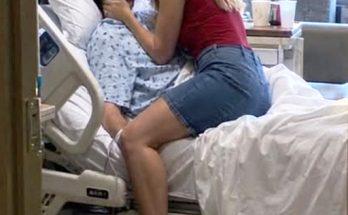
Then he got sick.
Everything happened so quickly that even now, I sometimes struggle to believe how little time we had.
One day we were discussing plans for the following year.
Six weeks later, I was standing beside his coffin.
His diagnosis had come suddenly.
There were appointments, tests, conversations with doctors, long nights, and increasingly difficult days.
We tried to remain hopeful.
Russell tried especially hard to protect me from his fear.
But there was no miracle.
Only six weeks separated the diagnosis from his funeral.
At the service, his children barely looked at me.
Marlene’s expression was hard.
Her brothers were distant.
There was a quiet hostility around them that made me feel as though they believed I had somehow taken something from their father simply by being there.
I wanted to tell them that I would have traded every dollar in Russell’s accounts for one more ordinary morning with him.
But there was no point.
They had already decided who I was.
I cried anyway.
Not because I was afraid of what would happen to the estate.
Not because I was thinking about the house.
I cried because the man I loved was gone.
The morning after the funeral, Russell’s attorney called.
He asked me to come to his office.
When I arrived, his three children were already sitting there.
Marlene wouldn’t even make eye contact with me.
I expected a will.
I expected stacks of paperwork.
Perhaps property documents, business records, or some complicated explanation of Russell’s estate.
Instead, there was only one thing sitting in the middle of the attorney’s desk.
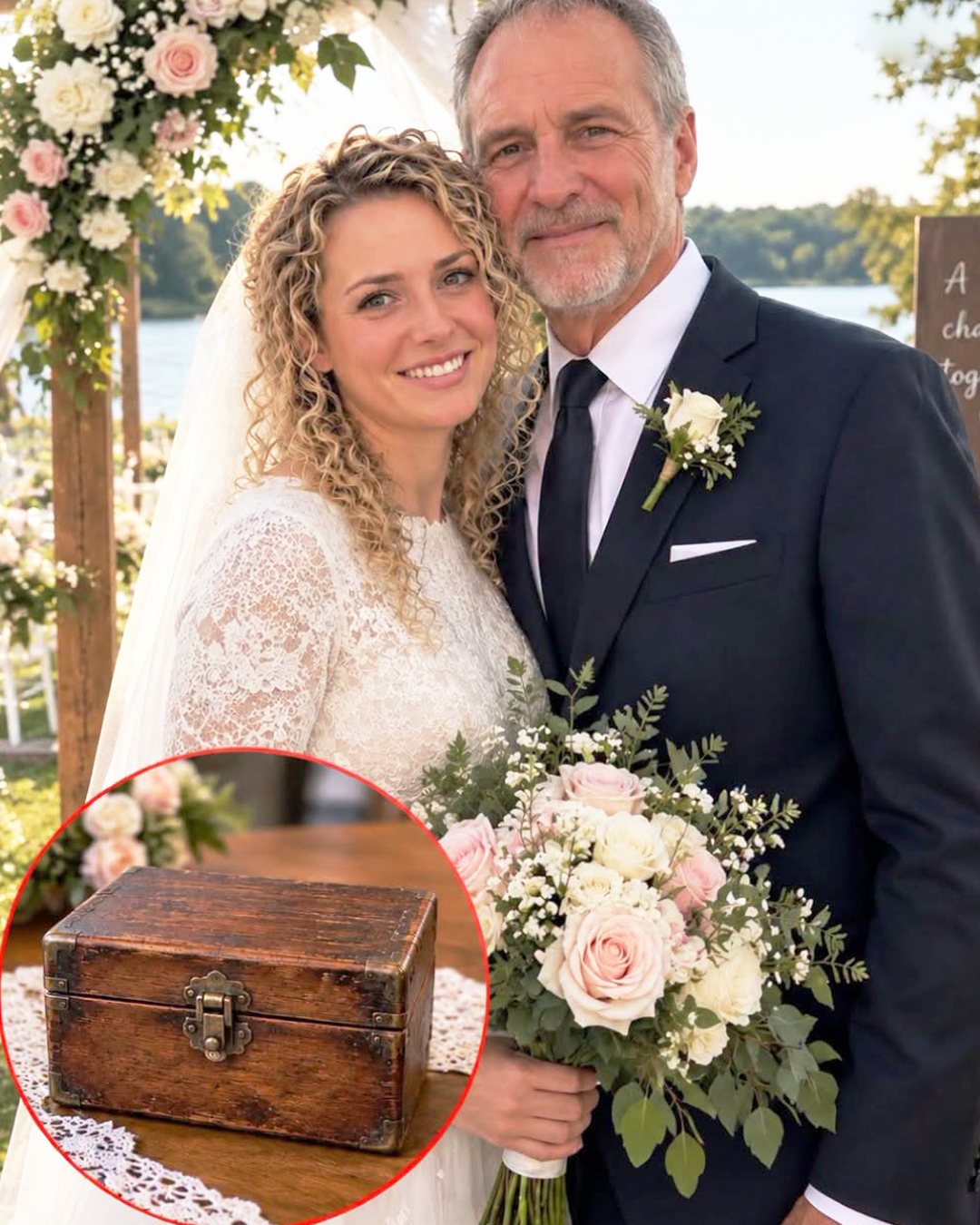
A small wooden box.
It was simple.
Dark wood.
No decoration.
No lock that I could see.
I stared at it.
The attorney looked at me.
Then he looked at Russell’s children.
“Russell left very specific instructions,” he said.
Marlene gave a quiet laugh.
It wasn’t a happy laugh.
It sounded almost as though she already knew what was coming.
The attorney reached across the desk and slowly pushed the box toward me.
Then he said the words that made the entire room go silent.
“He made sure you got exactly what you deserved.”
My hands began to shake.
I opened the box.
Inside was a photograph.
I picked it up.
It was from the charity dinner where Russell and I had first met.
I was in the background of the photograph, carrying a tray.
Russell was looking directly at me.
I hadn’t even known anyone had taken the picture.
Underneath it was a folded letter.
My name was written on the front in Russell’s handwriting.
I unfolded it.
The first few lines were enough to make my throat tighten.
Russell wrote about the night he first saw me.
He wrote that he remembered the tired expression on my face.
He remembered my shoes.
He remembered that I kept working even though my feet hurt.
But then he wrote something I wasn’t prepared for.
He had known for some time that his children believed I had married him for money.
He also knew there was a chance they would challenge whatever he left me.
That was why he had been so careful.
The attorney then opened the estate documents.
Everything had been prepared long before Russell died.
He had completed a competency evaluation before signing the final documents because he expected his children might eventually claim that he had been influenced or mentally incapable of making his own decisions.
Every clause had been carefully reviewed.
The house was mine.
His controlling interest in the company was mine.
Most of the estate was mine.
His children were not left with nothing, but their inheritance had been structured differently.
They received trust allowances designed for education, housing, and medical needs.
There were specific conditions attached to those trusts.
If they attempted to challenge the will improperly, they could put their own inheritance at risk.
Russell had thought of everything.
He had even created protections around the property so it could not simply be sold or stripped of value while my child was still a minor.
My child.
I stopped reading.
I looked at the attorney.
“What did you say?”
He didn’t answer immediately.
Instead, he looked at the letter in my hands.
Then he said, “Russell knew.”
My heart began pounding.
I looked down at the page again.
There was another part of the letter I hadn’t reached.
Before his illness became public, Russell had already realized that I was pregnant.
He had noticed the small changes before even I fully understood them.
He had quietly arranged medical care because he suspected we were expecting a child.
He hadn’t told his children.
He hadn’t told anyone.
And he had written the letter before his diagnosis became public—before anyone could claim that the pregnancy had been used to influence his decisions.
The room went completely silent.
Marlene stared at me.
Then at the attorney.
Then back at me.
“You were pregnant?”
I didn’t know how to answer.
I placed one hand against my stomach.
I hadn’t even had enough time to process it myself.
Russell had known.
And before his illness took him, he had already begun planning for the child he would never get to meet.
Marlene immediately accused me of manipulating him.
She said I must have known about the pregnancy when the estate documents were prepared.
The attorney stopped her.
The dates were clear.
The competency evaluation was documented.
The estate documents had been prepared before the diagnosis and before the pregnancy could possibly have been used as leverage.
Russell had left a paper trail because he knew exactly what his children might say after he was gone.
But what struck me most was not the money.
It wasn’t the house.
It wasn’t the company.
It wasn’t even the protections around the estate.
It was the letter.
Russell had written that he knew people would judge our marriage.
He knew they would say I had married him for his fortune.
He knew some people would never believe that love had eventually become the most important part of our relationship.
And then he wrote the words I still carry with me.
He said he didn’t want me spending the rest of my life proving why I deserved what he had chosen to leave me.
He wanted me safe.
He wanted our child safe.
He wanted me to have the freedom to build a life without constantly wondering whether one unexpected bill could destroy it.
That was what he meant when he told Marlene I would get exactly what I deserved.
He wasn’t promising me a reward.
He was promising me a future.
I left the attorney’s office that afternoon carrying the small wooden box against my chest.
I didn’t feel victorious.
I didn’t feel rich.
I felt devastated.
Russell was gone.
The man who had noticed my aching feet when almost nobody else noticed me at all was gone.
The fortune he left behind could never replace him.
Months later, I stood alone in Russell’s kitchen with one hand resting against my growing belly.
The house was quiet.
For the first time, I understood something I hadn’t understood when he made that promise.
Russell had never been talking only about money.
He had been talking about dignity.
Security.
Choice.
A future.
He wanted me to stop measuring my worth by the size of my bank account or by the opinions of people who had already decided I was guilty of loving the wrong man for the wrong reasons.
Maybe I had married Russell partly because I was afraid of being poor.
I won’t lie about that.
But I stayed because I loved him.
And by the time he was gone, the fortune everyone thought I had married for mattered far less than the person who had given it meaning.
I touched the wooden box sitting on the kitchen counter.
Inside was the photograph from that charity dinner.
The photograph of the woman Russell first noticed.
The woman who was exhausted, worried about rent, and counting every dollar.
She had no idea that the older man watching her from across the room would become her husband.
She had no idea that he would become the person who made her feel seen.
And she certainly had no idea that one day, after his funeral, his lawyer would place a small wooden box in her hands and reveal that Russell had planned for everything.
I had entered his life looking for security.
I left the attorney’s office carrying something much bigger.
A future.
And finally, I understood exactly what Russell meant.
I didn’t receive what his children thought I deserved.
I received what the man who knew me best believed I deserved.
A life without fear.
A safe future for our child.
And the dignity to know that I never had to apologize for surviving.