My father didn’t ask if I was alive—he snapped, “It’s Whitney’s night. You made your own bed, Seraphina,” before hanging up. Three hours later, at two in the morning, my hospital door opened… and the man who walked in was the one my parents had underestimated for almost ten years. PART 1: I made the call at exactly 10:47 p.m., gripping my phone with my left hand because my right arm was trapped inside a heavy cast. Every breath sent pain through my ribs, and dried blood still stained the sweatshirt the paramedics had cut off me after the crash. Somewhere down
the hall, my newborn son, Noah, was crying in the nursery because I wasn’t strong enough to hold him. “Dad,” I whispered when he answered. “Please… can you and Mom take Noah for just one night?” Music and laughter echoed behind him. I heard glasses clink and someone uncork a bottle of champagne. “What is it now, Seraphina?” he asked impatiently. “I’m at St. Anne’s Hospital. A delivery truck hit my car. My arm is broken, I needed stitches, and I can’t take care of Noah by myself tonight.” The silence that followed wasn’t worry. It was annoyance. “Tonight is Whitney’s
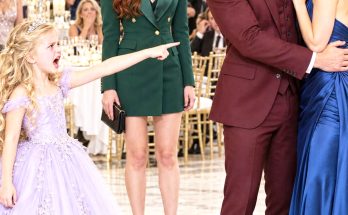
engagement dinner,” he said. “Your mother and I are hosting everyone.” Whitney had always been the favorite. When she made mistakes, she was overwhelmed. When I struggled, I was irresponsible. “Dad,” I pleaded, “I’m not asking you to cancel the party. I’m asking you to help your grandson.” “And ruin Whitney’s celebration?”
“I was in a car accident.”
“And she’s finally having the evening she deserves.”
Tears blurred my vision. “I can’t even lift my baby,” I whispered.
His voice turned colder than I’d ever heard it. “You chose to have that baby without a husband. You chose this life. You made your own bed, Seraphina. Now lie in it.”
Before I could answer, he hung up.
I stared at the dark screen until all I could see was my bruised reflection. For years I’d defended my parents, convinced myself they loved me in their own way. That night I finally accepted the truth. They weren’t unable to help. They chose not to.
A nurse named Melissa quietly adjusted my blanket before bringing Noah back into my room. She showed me how to rest one hand gently on his tiny chest without picking him up.
“You have nothing to apologize for,” she said after hearing me whisper, “I’m so sorry.”
Three long hours crawled by. The medication dulled the pain but couldn’t quiet my fear. I kept imagining dropping Noah because I only had one usable arm.
At exactly 2:03 a.m., the door slowly opened. I expected another nurse.
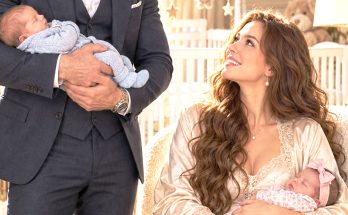
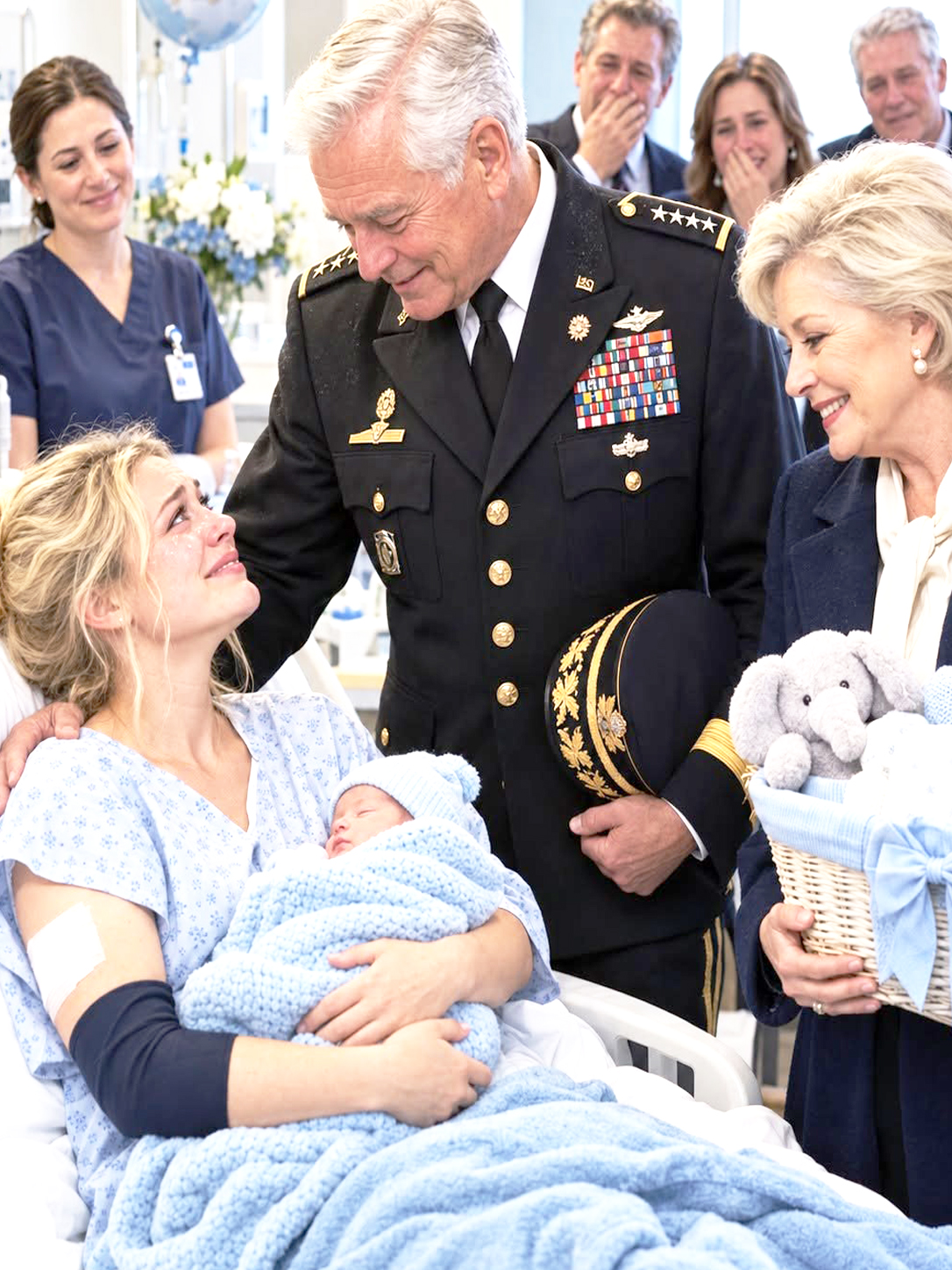
Instead, my Uncle Richard walked in wearing a rain-soaked charcoal coat over a dark suit. Behind him stood my Aunt Beatrice, cradling Noah against her shoulder while he slept peacefully beneath his blue hospital blanket.
“Uncle Richard?”
His eyes moved across my cast, the bruises on my face, and the bandage above my eyebrow. His expression didn’t show shock. It showed recognition. The calm, focused look of a man assessing damage.
“I just found out,” he said quietly.
“The charge nurse called us,” Aunt Beatrice explained. “Your emergency contact still listed Richard.”
I had forgotten that years earlier, when I moved out of my parents’ house, Uncle Richard made me promise to keep his number.
“If no one else answers,” he’d told me, “call me.”
Richard stepped closer. “Your father’s party is over.”
My stomach tightened. “What did you do?”
“I called him.”
I almost smiled despite the pain. My parents had spent years calling Richard a failure because he lived quietly outside Washington, Virginia, and rarely attended family events. They never knew he’d spent more than thirty years serving as a highly respected colonel in elite U.S. military operations, leading men and women whose lives depended on whether he answered their calls.
Richard looked me in the eyes. “I put your father on speaker,” he said. “And everyone at Whitney’s engagement dinner heard him tell his injured daughter she wasn’t worth leaving the party for.”
PART 2
For a few seconds, all I could hear was the quiet rhythm of Noah’s breathing against Aunt Beatrice’s shoulder.
My father’s words seemed to echo again inside the hospital room, but this time they sounded different. Smaller. Exposed. Not because Richard had raised his voice or made a scene, but because he had simply let the truth stand where everyone could see it.
“You put him on speaker?” I whispered.
Richard pulled a chair closer to my bed. Rainwater clung to his coat, leaving dark marks across the fabric, but he moved with the same careful calm I remembered from childhood, as if storms were ordinary things that could be crossed without complaint.
“I did,” he said. “After he told me you were exaggerating, I asked him to repeat himself.”
Aunt Beatrice’s mouth tightened, though her hands stayed gentle around Noah. “Whitney’s fiancé heard it,” she added softly. “So did his parents.”
I closed my eyes. Part of me wanted to feel satisfied. Another part, the tired and bruised part, felt nothing but shame, as if my father’s cruelty still somehow belonged to me.
“I didn’t want a scene,” I said.
Richard leaned forward, resting his elbows on his knees. “Seraphina, you didn’t create the scene. You asked for help.”
The words were simple, but something inside me loosened. Maybe because nobody in my parents’ house had ever said it that way. Need was always treated like failure. Pain was treated like drama. Asking for help meant you had mismanaged your life.
“I called them because I didn’t know what else to do,” I said, my voice shaking.
“I know.”
“I thought maybe because it was Noah…” My throat closed around his name.
Aunt Beatrice came nearer. “Honey, they should have come because it was you.”
The softness in her voice broke something I had been trying hard to hold together. Tears slipped sideways into my hairline, stinging near the stitches above my eye. I hated crying in front of people, but there was no dignity left to defend. Not that night.
Richard reached for the box of tissues beside the bed and placed it within reach of my left hand. No lectures. No disappointed sighs. No reminders of choices made years earlier. Just a tissue box, moved closer.
That kindness hurt more than my ribs.
“What happened after you called him?” I asked when I could breathe again.
Richard’s expression changed slightly. Not anger exactly, but restraint. “Your father said family obligations had to be respected.”
Despite everything, a laugh escaped me. It sounded sharp and broken. “Family obligations.”
“Yes,” Richard said. “That was his phrase.”
Aunt Beatrice shifted Noah carefully, his tiny mouth opening in a sleepy yawn. “Your mother tried to take the phone from him after she realized everyone could hear,” she said. “But by then, the room had gone quiet.”
I pictured my parents’ dining room glowing with candlelight, Whitney sitting beneath the crystal chandelier, my mother’s best silver laid out beside folded linen napkins. I imagined all those polished faces turning toward my father as his voice filled the space.
You made your own bed, Seraphina.
For years, I had feared embarrassment more than loneliness. I had learned to keep the family’s secrets smooth and presentable. If my mother forgot my birthday, I said she was busy. If my father missed my graduation lunch, I said work ran late. If Whitney borrowed money and never paid it back, I called it a misunderstanding.
That night, I had finally been too injured to cover for anyone.
“What did Whitney say?” I asked.
Aunt Beatrice looked at Richard.
He sighed. “Nothing at first.”
Of course she hadn’t. Whitney had always understood silence as a kind of protection. As long as nobody challenged the version of life that benefited her, she could pretend she wasn’t involved.
“Then?” I asked.
“Then her fiancé asked whether Noah was safe.”
That surprised me. “Daniel?”
Richard nodded. “He wanted the hospital name. Your father refused to give it.”
Aunt Beatrice’s eyes flashed. “So Richard gave it to him.”
I stared at them. “Daniel knows I’m here?”
“He does,” Richard said. “Whether he comes is his decision.”
I turned my face toward the window. Rain slid down the glass in thin silver lines. Beyond it, the city was dark except for blurred parking lot lights and the occasional flash of headlights.
I had met Daniel only three times. He was polite, quiet, and observant in a way my family mistook for dullness. Whitney had described him as steady, which from her mouth sounded almost like an insult. He came from a family with old money and careful manners, the kind my mother had spent years hoping would notice Whitney.
I wondered what he thought now.
“I don’t want him involved,” I said, though I wasn’t sure I meant it.
Richard studied me. “You don’t have to manage everyone else tonight.”
The hospital door opened before I could answer. Melissa stepped in, carrying a clipboard and wearing the same calm expression she had worn through my earlier panic.
“I’m sorry to interrupt,” she said. “I need to check your pain level and make sure little Noah is feeding soon.”
At the sound of his name, Noah stirred against Beatrice, making small searching motions with his mouth.
“I can help,” Aunt Beatrice said.
Melissa smiled. “We’ll work around your injuries. No rushing.”
That became the pattern of the next hour. Nobody expected me to be stronger than I was. Nobody stood over me asking why I had not planned better. Melissa arranged pillows until my ribs were supported, Beatrice placed Noah carefully along my uninjured side, and Richard turned his back politely toward the window while I tried to feed my son with one arm and a body that felt like it had been dropped from a height.
Noah fussed at first. I panicked immediately.
“I can’t do it,” I whispered.
“You are doing it,” Beatrice said.
“He’s crying.”
“He’s four weeks old. Crying is one of his main forms of communication.”
Melissa laughed softly. “She’s right.”
Noah’s tiny fingers opened against my hospital gown. His face wrinkled with frustration, then settled. The weight of him against me was barely more than a loaf of bread, yet it anchored me to the world.
I looked down at him and felt the fear return, deep and cold. “What happens when I go home?” I asked.
Nobody answered too quickly. I appreciated that.
Richard turned from the window. “You and Noah come home with us for a while.”
I looked up. “Uncle Richard—”
“No debate tonight.”
“I can’t just move in.”
“It’s not moving in. It’s recovering.”
“I have rent. I have Noah’s things. I have work. I have—”
“You have a broken arm, cracked ribs, stitches, and a newborn,” Beatrice said gently. “That is enough to have.”
My first instinct was to refuse. Not because I wanted to be alone, but because accepting help felt like signing a confession. My parents had trained me to believe assistance always came with a hidden invoice. Favors were stored like weapons. Shelter had strings. Money had memory.
Richard seemed to understand without me saying any of it. “No conditions,” he said. “No speeches. No keeping score.”
I swallowed. “Why?” I asked.
His face softened. “Because when you were seven years old, you used to wait on the porch with your backpack when your mother forgot pickup. You would pretend you liked watching the streetlights come on.”
I remembered that porch. I remembered the cold concrete step beneath my legs and the way I told myself Mom would be there any minute. I remembered Richard’s old truck pulling up one evening when the sky had turned purple. He had brought me hot chocolate and said, “Traffic happens.” He had never said, “They forgot you.”
“I thought you didn’t notice,” I whispered.
“I noticed everything.”
The room blurred again.
Beatrice reached over and brushed Noah’s blanket smooth. “We both did.”
Before I could speak, a knock sounded at the door. It was too hesitant to be a nurse.
Richard’s posture changed immediately. Just alert.
Melissa glanced toward the hallway, then back at me. “Are you expecting anyone else?”
“No,” I said.
The door opened a few inches. Daniel stood outside in a navy overcoat, his hair damp from the rain, one hand tucked uncertainly around a bouquet of white tulips wrapped in brown paper.
“I’m sorry,” he said. “I know it’s late. The front desk said I could come up for a few minutes.”
Richard said nothing, waiting for me.
“It’s okay,” I said.
He stepped inside slowly. His eyes went first to Noah, then to my cast, then to the dark bruising along my cheek.
“I’m so sorry, Seraphina.”
“Thank you.”
He looked at Richard. “Colonel Hayes.”
Richard gave a small nod. “Daniel.”
“You two know each other?” I asked.
“Not well,” Daniel said. “My father knows your uncle.”
Daniel placed the flowers on the windowsill. “I heard what happened. My face burned.”
“Not everyone understood what they were hearing,” Daniel said. “Your father tried to explain it afterward. He said you had a history of making emergencies out of inconveniences.”
Beatrice inhaled sharply, but Richard remained still.
“And you believed him?” I asked.
Daniel met my eyes. “No.”
“I asked Whitney why she didn’t tell me you’d had the baby,” he continued. “She said you wanted privacy.”
Daniel’s jaw worked. “Seraphina, I didn’t come here to stir up family matters. I came because what happened tonight made me realize there are things I should have asked sooner.”
He looked at me. “Such as why your parents told my family that you were living out of state.”
“I live twenty minutes from them,” I said.
“My mother asked about you last month,” he said. “Your mother told her you’d moved away and weren’t close to the family anymore.”
“They erased me,” I said.
Daniel reached into his coat pocket and removed a folded cream-colored envelope. My name was written across the front in my mother’s handwriting.
“I found this tonight,” he said. “In the drawer of the entry table. Whitney asked me to get her gloves before I left. This was underneath them.”
He held it out.
With my left hand, clumsy and shaking, I took the envelope.
Seraphina Elise Hayes.
Not my married name, because I had never married. Hayes. My mother’s maiden name.
“Why would she write Hayes?” I whispered.
Inside was a single sheet of paper and a smaller photograph. The photograph fell onto my blanket. It showed my mother much younger, holding a baby in a yellow blanket on a porch. Beside her stood Richard in uniform.
On the back, someone had written a date: Thirty-one years ago. My birth year.
The paper was a copy of a legal document: Guardianship Appointment and Family Trust Addendum.
Beneficiary: Seraphina Elise Hayes.
“When your grandparents died, they left provisions for you and Whitney,” Richard said. “Separate ones.”
“I’ve never heard about a trust.”
“They controlled it while you were a minor. After you turned twenty-five, you were supposed to be given full access to the records.”
I was twenty-nine.
Richard scanned the copy. “This copy has a notary stamp from six weeks ago.”
Daniel added, “I found it under Whitney’s gloves and a folder with wedding vendor contracts. The venue deposit was paid yesterday. It was a very large deposit.”
Suddenly, Daniel’s phone buzzed. It was Whitney. He answered on speaker.
“Daniel, where are you?” Whitney’s voice was bright and brittle. “Please tell me you didn’t actually go to the hospital.”
“I did,” Daniel said.
“Daniel, Seraphina always finds a way to make things about her.”
“She was hit by a truck,” Daniel said. “Why didn’t you tell me she had a son?”
“Because it wasn’t relevant,” Whitney snapped.
“I found the envelope,” Daniel said.
Silence. Then Whitney’s voice dropped: “Bring it back. Daniel, please. You don’t know what you’ve done.”
Richard leaned forward. “What has he done, Whitney?”
The line went dead.
Daniel turned to me. “I’m sorry for bringing this here tonight.”
“No,” I said. “I think it was already here. You just carried it into the light.”
Daniel left shortly after. Beatrice lowered Noah into the bassinet.
Richard opened the envelope again and removed the photo. “There’s something else,” he said.
Beneath the date on the back of the photo were four faded words: Tell Seraphina the truth.
Then, my phone rang. My mother’s name lit up the screen.
PART 3
My mother’s name glowed on the screen like something alive.
For years, that name had been enough to make me sit straighter, wipe my face, and prepare to explain myself. But looking at Noah, I knew I didn’t want him to inherit my fear.
“No,” I said quietly to Richard. “I’ll answer.”
I pressed accept. “Mom.”
“Seraphina,” my mother said, her voice thin. “Where is Richard?”
“He’s here.”
“That envelope belongs to me.”
“It has my name on it,” I said.
“You have no idea what you might destroy,” my mother warned.
“I’m keeping a copy. And tomorrow I’m speaking to an attorney,” I replied, before hanging up.
When I looked at Richard, he told me, “When you were born, your mother asked me to be your legal guardian if anything happened to her.”
Beatrice added, “When your mother was young, she depended on Richard more than she has ever admitted. Your father didn’t like that.”
The next morning, Richard’s attorney, Maren Cole, arrived.
“Richard filled me in on the basics, but I want to hear from you directly,” Maren said.
I told her everything. Maren examined the document and noted that the original drafting firm was Benton, Vale & Harrow.
“That firm dissolved years ago,” Maren said. “One partner was disbarred for mishandling estate funds.”
That afternoon, Daniel returned holding a glass vase with white tulips.
“I spoke with my parents,” Daniel said. “They’re postponing any wedding discussions.”
He then pulled out a small pink envelope from Whitney’s purse. Inside was a photo of Noah in his hospital bassinet—a photo I hadn’t sent her. On the back, Whitney had written: He looks like her.
When the hospital administrator, Mrs. Alvarez, checked the visitor log, she confirmed that Whitney had visited the maternity floor secretly the day after Noah was born, asking questions about the birth announcement.
Daniel revealed a crucial detail: “My family has a genetic condition—distinctive gray-green eyes. My mother’s family name is Harrow.”
Richard looked stunned. “Your grandfather was Edward Harrow? He drafted Seraphina’s grandparents’ trust.”
That evening, I was discharged into Uncle Richard’s care.
His white farmhouse was warm and welcoming. In the guest room, a handmade wooden cradle stood ready. Richard had spent eight years building it for me. On my pillow lay my old childhood blanket, made by my grandmother.
Later that night, as Noah slept, my phone buzzed with a text from an unknown number:
Ask Richard about the day your mother tried to leave. And ask why Noah looks like the baby in the yellow blanket.
I locked the phone as Richard entered with a glass of water.
“Uncle Richard,” I said slowly, “what happened the day my mother tried to leave?”
The glass in his hand went perfectly still.
FINAL PART
The glass in Uncle Richard’s hand didn’t spill, but his knuckles turned white against the crystal. Outside, the winter wind rattled the heavy wooden shutters of the farmhouse, filling the silence that stretched between us.
Aunt Beatrice appeared in the doorway, carrying a freshly warmed bottle for Noah. She took one look at Richard’s rigid posture, then at my face, and set the bottle on the nightstand without a word.
“Who sent that text, Seraphina?” Richard’s voice was barely louder than a whisper, but it carried the weight of a command.
I slid my thumb across the screen, turning the phone face-up toward him. He didn’t take the phone. He just read the message:
Ask Richard about the day your mother tried to leave. And ask why Noah looks like the baby in the yellow blanket.
Beatrice gasped softly, covering her mouth. “Richard… it’s time. Maren is already digging into the trust. She’s going to find the hospital records from thirty-one years ago anyway.”
Richard closed his eyes, taking a slow, measured breath—the habit of a man who had faced impossible crises in remote corners of the world, now trapped in his own guest room. He pulled the armchair closer to my bed and sat down heavily.
“Thirty-one years ago, your mother didn’t just give birth to you, Seraphina,” Richard began, his eyes fixed on the small moon-shaped night-light near the floor. “She ran away.”
My breath hitched in my chest, sending a sharp spark of pain through my cracked ribs. “Ran away?”
“Your father—even back then—was obsessed with status, control, and money,” Richard said. “He had lost a massive sum in bad investments right after they married. He pressured your mother endlessly to tap into her parents’ assets, but your grandparents refused. When your mother got pregnant with you, the pressure became unbearable. One night in her seventh month, she packed a single bag, drove out to this very farmhouse, and begged me to hide her.”
“She came to you?” I asked, trying to reconcile the cold, distant woman who had just hung up on me with a desperate girl running in the night.
“She stayed here for three weeks,” Beatrice said softly, taking my left hand in hers. “She was terrified of your father. She realized he didn’t love her—he loved what her family represented. During those three weeks, Richard took her to a private clinic in Richmond. Your grandparents came down, and together with their family lawyer, Edward Harrow, they drafted that trust and guardianship paper.”
“They wanted to ensure that if she left your father permanently, he couldn’t touch a single dime meant for you,” Richard continued. “And if anything happened to her, I would have absolute custody of you. Not him.”
“Then why did she go back?” I whispered. “Why did she stay with him for thirty years?”
Richard’s face hardened. “Because your father found out about the clinic. And he found out something else.”
He pulled the old photograph from his coat pocket—the picture of my young mother on the porch holding the baby wrapped in yellow, with Richard standing guard.
“Look at the baby, Seraphina,” Richard said quietly.
I picked up the photograph with my trembling left hand. In the fading light of the old print, a tiny face peeked out from the yellow knit wool. The baby had a tuft of dark hair and striking, unusual eyes—even in black and white, the iris had a distinct, pale ring.
The Harrow eyes.
My mind raced, pieces colliding in a dizzying blur. “This baby… this isn’t me.”
“No,” Richard said. “It isn’t.”
The room went dead quiet.
“Your mother was pregnant twice,” Beatrice explained, tears spilling over her eyelashes. “The first baby was born prematurely during those three weeks at the clinic. A little girl. But there were severe complications… the baby survived only four days.”
I stared at her, my heart hammering against my ribs. “A sister?”
“Your mother was shattered,” Richard said. “She was in deep grief, isolated, and mentally fragile. That was when your father showed up at the clinic. He didn’t offer comfort—he brought leverage. He had discovered that Edward Harrow had committed a major financial fraud using clinic funds. Your father threatened to ruin Harrow, ruin your grandparents, and expose the entire family to public scandal unless your mother came home and played the perfect wife.”
“And two months later,” I breathed, the horrific math finally coming together, “she gave birth to me.”
“You were born nine months after she returned,” Richard said gently. “Your father forced her to erase every record of the first baby. He forced Harrow to alter the trust addendum, blending the dates so your father could gain administrative control under the guise of ‘protecting the family secret.’ Harrow agreed to save his own skin.”
“And Whitney?” I asked, my voice cracking. “Where does Whitney fit into this?”
“Whitney wasn’t born until four years later,” Beatrice said. “By then, your mother had completely surrendered to your father’s control. To survive the guilt of abandoning her first baby’s memory and betraying Richard, she convinced herself that appearance was everything. Whitney became the child your father wanted—spoiled, compliant, and pristine. And you…”
“And I looked too much like the truth,” I whispered.
“You had your grandmother’s face,” Richard said, his voice thick with emotion. “And every time your father looked at you, he remembered that he had only won your mother through blackmail. He hated me because I knew what he was. He isolated you from me because he was afraid I’d tell you about the trust the moment you turned eighteen.”
A soft chime sounded from my phone on the nightstand.
It wasn’t a text this time. It was an email notification.
I tapped the screen. The email was from Daniel. Attached were three scanned documents from his family’s private archive, along with a short note:
Seraphina, I asked my mother about my grandfather’s disbarment tonight. She finally broke down and gave me his old personal journal entries from 30 years ago. He kept a shadow ledger of every trust he altered under duress. Your father didn’t just steal your trust money to pay for Whitney’s wedding. He’s been draining your grandparents’ estate for twenty years to cover his failed business ventures. The notarized copy Daniel found in the entry table? Whitney found it last week when she was snooping for money. She realized you were the sole legal heir to the entire Hayes family estate—including the house my parents live in. Whitney didn’t go to the hospital nursery to check on Noah out of sisterly love. She went because she was terrified Noah had the Harrow eyes. She thought Noah might be proof of another family secret that could ruin her marriage to Daniel. I’m breaking off the engagement tonight. My lawyer will contact Maren Cole in the morning with all of my grandfather’s original records. I am so sorry for what my family’s silence did to you. — Daniel
I let the phone slip onto the mattress.
The door had finally opened. The secret my parents had built their entire lives around—the secret they had traded my childhood for, the lie they used to justify treating me like an outcast—was crumbling into ash.
“They didn’t just reject me tonight because of a party,” I said, looking at the tiny bassinet where Noah slept, peaceful and untouched by their poison. “They rejected me because if I came back into their lives with a child, they were afraid the legal truth would finally catch up to them.”
“And now it has,” Richard said. He stood up, his tall frame blocking the doorway, looking every bit the commander who had spent thirty years protecting people from danger. “Maren will file for an emergency freeze on all your father’s accounts tomorrow morning. By noon, the auditors will be at their front door.”
He walked over to the bassinet, reaching down with one large, calloused finger. Baby Noah immediately wrapped his tiny hand around it, holding on with surprising strength.
“You don’t ever have to cover for them again, Seraphina,” Richard said softly, looking at me with eyes full of a lifetime of fierce, unbroken loyalty. “You have a real home now. And so does he.”
For the first time since the truck slammed into my car on that rain-slicked highway, the crushing tightness in my chest eased. The pain in my ribs was still there, the cast on my arm was still heavy, but as I looked around the warm room—at Aunt Beatrice folding a handmade quilt, at Uncle Richard standing guard by my son, and at the night-light casting a gentle glow over us—I knew the nightmare was over.
They had told me I made my own bed and had to lie in it.
They were right. But for the first time in my life, I was lying in a bed surrounded by love, truth, and a family that would never let me go.