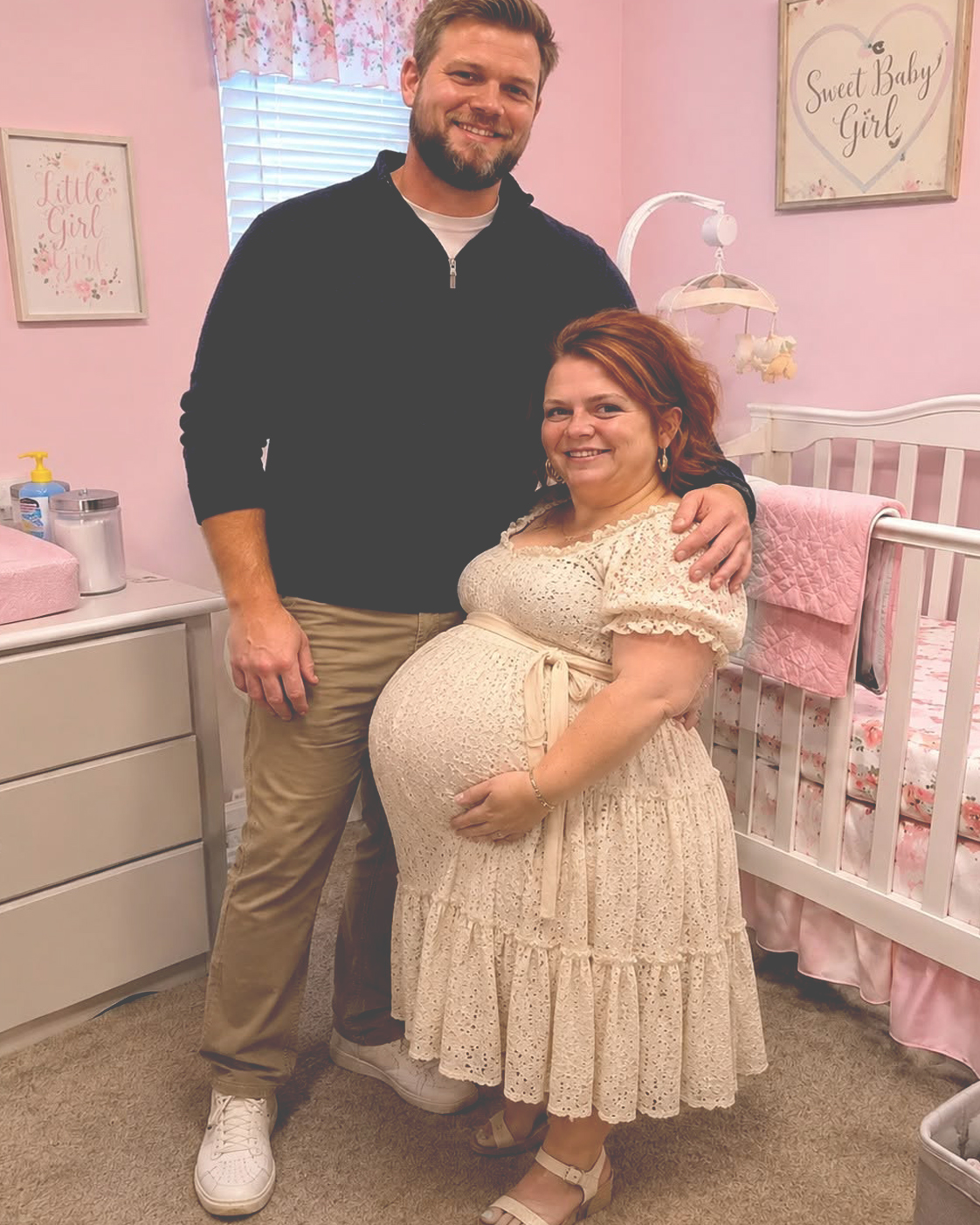
PART 1: After thirty years of being mocked for my height, I finally found true love and became pregnant in our quiet home in Madison. At seven months along, my mother in law offered me one hundred thousand dollars to leave my baby at the hospital, and I firmly refused. When she showed up right after the delivery, the nurses suddenly rushed to my newborn daughter’s bassinet in a state of alarm. What was actually happening in that hospital room? “Have you really thought through what raising a child will actually involve?” my mother in law, Margaret, asked me
while I was helping her set the table for Sunday dinner in Columbus. I was three months pregnant at the time, and I paused with a stack of ceramic plates in my hands. “What do you mean by that?” I asked, trying to keep my voice steady as I looked across the oak dining table at her. She glanced down at my slightly rounded stomach before meeting my eyes with a cold, calculating expression. “With your particular physical condition, Hannah, raising a baby is not going to be like it is for normal mothers,” she replied softly. “Brandon and I have already discussed every single
detail with our specialists at Riverview Medical Center,” I told her firmly. Margaret frowned deeply and shook her head as she folded a linen napkin beside a water glass. “Doctors do not know everything about real life, and they certainly do not live with the consequences,” she muttered under her breath. Before I could think of a proper response, Brandon walked into the dining room carrying a pitcher of iced tea. “Is everything okay in here?” Brandon asked, looking between the two of us with slight concern. Margaret immediately plastered a warm, welcoming smile onto her face and patted my arm gently. “Of course, sweetheart, I was just asking how Hannah is feeling today and making sure she is getting enough rest,” she said smoothly.
I stood there wondering why she had changed her tone so quickly the very second her son entered the room. I had no idea back then just how far she would eventually go to keep me from raising my own child.
I was born with a rare form of dwarfism, and growing up in Minneapolis was never easy for me. Standing at just three feet eight inches tall, I had spent the vast majority of my life being treated like a walking joke by strangers and peers alike.
In elementary school, the other children relentlessly teased me about my short legs and excluded me from their playground games every single afternoon.
By the time I reached high school, cruel boys in my class dared each other in the hallways to ask me to the senior prom as a sick prank. One popular football player actually walked up to my locker and invited me to be his date in front of everyone.
I spent an entire Saturday afternoon with my aunt choosing a lovely blue dress before discovering that the whole invitation was a humiliating setup. When I smiled and said yes on Monday morning, his friends burst out laughing from behind the bleachers, and I never went to prom.
Adulthood in Minneapolis was not much kinder to me, even after I finished college and built a successful career as a graphic designer. Some men rejected me the moment I stood up from a coffee shop table, while others treated my height like an amusing curiosity to brag about to their friends.
By the time I turned thirty five, I had completely stopped believing that anyone in the world could genuinely love me for who I was. Then, during a rainy autumn evening at a local bookstore, I met Brandon.
He was forty two years old, tall, handsome, and remarkably easy to talk to about everything from old movies to architecture. On our very first date at a quiet Italian bistro, he pulled out my chair without making a scene, asked thoughtful questions about my design work, and truly listened to every word I said.
He never once mentioned my height or stared at me as if I were fragile, and when he called me the very next morning, I almost could not believe my luck. Brandon and I got married two years later in a small garden ceremony surrounded by our closest friends.
He never treated my body as something embarrassing or something to hide from the public eye. Whenever rude strangers stared at us holding hands on the sidewalk, he simply squeezed my fingers tighter and smiled down at me with pure devotion.
His mother, however, was much harder for me to understand from the very beginning of our relationship. Margaret was always polite enough during family gatherings in Columbus, yet she maintained an invisible wall between us that never seemed to thaw.
At our wedding reception, she offered us a stiff congratulations near the buffet table without ever leaning down to give me a proper hug. Whenever Brandon excitedly mentioned wanting to start a family in the near future, she would abruptly change the subject to the weather or neighborhood gossip.
At first, I honestly assumed she was simply worried about the potential medical complications of a high risk pregnancy. I had plenty of serious concerns myself, because my specific form of dwarfism and my past medical history meant that carrying a baby required months of careful planning.
Brandon and I met with a team of maternal fetal specialists in Madison long before we even started trying to conceive. We discussed every possible physical risk, the weekly monitoring I would need, and the exact reasons why a scheduled surgical delivery would be the safest option for both me and the baby.
Nothing in medicine was ever guaranteed, of course, but we weighed all the facts and made an informed decision together as husband and wife. When I finally saw two pink lines on a pregnancy test at age thirty eight, I sat on the bathroom floor and cried so hard that Brandon thought something terrible had happened.
“Hannah, what has happened, are you hurt?” he called out as he rushed through the bedroom door in a panic.
I could not even speak through my happy tears, so I simply held the plastic test up for him to see. He stared at it in complete silence for several seconds before dropping to his knees beside me and starting to cry too.
From that day forward, Brandon attended every single doctor appointment he could possibly fit into his work schedule. He spent an entire weekend assembling the white wooden crib and painting the spare bedroom a soft, welcoming shade of pale yellow.
After weeks of debating our favorite family names, we finally chose the name Abigail for our little girl. My doctors at Riverview Medical Center monitored me closely every step of the way, and the pregnancy progressed much more smoothly than anyone had dared to hope.
Yet the bigger my belly grew, the more visibly uncomfortable Margaret became whenever she visited our house. When Brandon proudly showed her a printed ultrasound photograph over coffee one afternoon, she barely glanced at the paper before setting it down on the table.
“Are you two really sure that going through with this is a good idea?” she asked quietly, avoiding eye contact with me.
Brandon frowned deeply and set his coffee mug down with a sharp clink against the saucer.
“Mom, we have already been over this a dozen times, and Hannah is doing wonderfully,” he replied firmly.
“I am only trying to express my concern as a mother who wants the best for everyone,” she insisted stiffly.
“Then please ask how Hannah is feeling instead of constantly questioning whether we should have a child,” Brandon told her, and Margaret did not say another word for the rest of the afternoon.
At six months pregnant, she stopped by our house in Madison while I was organizing baby blankets and stood in the doorway staring into Abigail’s nursery.
“You have certainly bought an awful lot of expensive things for this room,” she remarked, her eyes scanning the changing table and the rocking chair.
“Babies need a lot of supplies, Margaret, and we want to be completely ready before she arrives,” I said cheerfully while folding a tiny yellow onesie.
She walked slowly into the room and ran one manicured finger along the top rail of the white crib.
“People often get far too attached to elaborate plans that do not always work out the way they expect,” she murmured softly.
I stopped folding and asked her directly what she meant by such a strange comment. She merely sighed, claimed she was just being realistic about life, and excused herself to leave a few minutes later.
When I was seven months pregnant, Margaret called me on a Tuesday morning and invited me to have lunch with her at a quiet tearoom downtown. Brandon was busy at his engineering firm all day, and she specifically asked that I come alone so the two of us could have some quality time together.
I drove to the tearoom hoping with all my heart that she finally wanted to mend our strained relationship before the baby arrived. When I arrived at our corner booth, she already had a pot of chamomile tea waiting on the table.
After several minutes of awkward small talk about the autumn weather, Margaret stood up and walked over to her leather handbag resting on the empty chair beside her. She pulled out a thick cream envelope and placed it squarely between our teacups.
“I have been thinking a great deal about your current situation, Hannah,” she began, folding her hands neatly on the edge of the table.
“My situation, what are you talking about?” I asked, staring down at the crisp envelope with a sudden knot forming in my stomach.
She reached out with two fingers and slid a handwritten bank check out from beneath the flap of the envelope. My eyes focused on the numbers written in dark blue ink, and my breath caught in my throat when I saw the amount was one hundred thousand dollars.
“What on earth is this check for?” I whispered, looking up at her face in total confusion.
Margaret kept her posture completely rigid and looked at me without blinking.
“When the baby is finally born next month, I want you to leave her at the hospital, and I will quietly arrange everything from there,” she said calmly.
I stared at her across the table, convinced for a fleeting second that I had completely misheard her words.
“Are you seriously telling me that you want me to abandon my own child?” I asked, my voice trembling with shock.
“I want you to think of it as giving this innocent baby a much better, normal life,” she replied smoothly.
“You are offering me money to give up Abigail,” I said, feeling a wave of nausea wash over me as the reality of her proposal sank in.
“I am offering you a generous chance to do what is truly best for her future,” she insisted.
“She is my daughter, Margaret, and I love her more than anything in this world,” I said, gripping the edge of the table to keep my hands from shaking.
“Giving birth to a child does not necessarily mean you are the best person equipped to raise her,” she replied coldly.
I reached forward and shoved the check back across the wooden table so hard that it knocked over my spoon.
“Take your money and get out of my life right now,” I told her, fighting back hot tears of rage.
Margaret calmly picked up the check, slipped it back inside the cream envelope, and tucked it into her purse.
“Then do not say I did not warn you when things become too difficult for you to handle,” she said quietly.
I struggled to stand up from the booth with my heavy pregnant belly, leaning on the table for support.
“Do not ever contact me again, Margaret, because you are not welcome near my family,” I said clearly.
“You are just being overly emotional right now because of the pregnancy hormones, Hannah,” she replied dismissively.
“No, I am not being emotional, I am being completely clear,” I answered before turning and walking out of the tearoom as fast as my legs could carry me.
Once I reached my car in the parking lot, I sat behind the steering wheel gripping the leather until my knuckles turned white. I had heard cruel, thoughtless remarks about my body for more than thirty years, yet nobody had ever dared to suggest that I should surrender my own child because of my height.
When Brandon came home from work that evening, I sat him down on the living room sofa and told him every single detail of what his mother had done. He looked completely stunned as the color drained from his face.
“She offered you how much money?” he asked quietly, his jaw clenching tightly.
“One hundred thousand dollars, Brandon, and she actually had the check already written out in her purse,” I said softly.
“And she told you to leave Abigail behind at the hospital after the delivery?” he repeated, his voice dropping to a low, furious growl.
I nodded silently, wiping a stray tear from my cheek as he reached immediately for his cell phone on the coffee table. I placed my hand gently over his wrist to stop him before he could dial her number.
“Please do not call her tonight while you are this angry, because we both need a clear head,” I pleaded with him.
He set the phone down, pulled me into his arms on the sofa, and kissed the top of my head.
“She is never coming anywhere near our baby, Hannah, I promise you that,” he swore quietly, and for once in our marriage, I did not try to soften his harsh words.
Brandon called Margaret the very next morning from his home office with the door closed, though I could still hear his stern voice echoing down the hallway. He told her firmly that what she had done was utterly unforgivable and that she was no longer welcome in our house or at the hospital when I gave birth.
Margaret insisted over the phone that she had only been trying to help us avoid a lifetime of struggle.
“Help whom, Mom, because you certainly were not trying to help your son or your daughter in law,” Brandon asked coldly before ending the call.
For the remaining weeks of my pregnancy, we had zero contact with her and blocked her calls whenever she tried to reach out. At thirty six weeks, I spent quiet mornings carefully folding Abigail’s tiny cotton clothes into the dresser drawers.
She shook her head slowly, wiping a tear away with the back of her hand.
“No, Hannah, you do not understand what it does to a mother’s heart to watch it happen,” she whispered brokenly.
Brandon stepped closer to the doorway, frowning deeply at his mother’s strange words.
“Mom, what on earth are you talking about right now?” he asked quietly.
Margaret looked up at her son, her lower lip trembling uncontrollably before she finally spoke in a bare whisper.
“Brandon, you were not my first child,” she confessed.
Brandon went completely still in the middle of the room, staring at her as if she had just spoken in a foreign language.
“What did you just say?” he asked, his voice barely audible.
“Three years before you were born, I gave birth to a little girl,” Margaret said softly, tears streaming freely down her face now.
She paused to catch her breath before revealing that the baby’s name had been Claire. Little Claire had been born with dwarfism, just like me.
Back in those days in Columbus, Margaret’s late husband and his wealthy, image obsessed family had reacted horribly to the diagnosis. They relentlessly convinced Margaret that Claire would suffer a miserable, lonely life and that Margaret was far too young and unprepared to raise a disabled child properly.
Terrified, isolated, and completely overwhelmed by their pressure, a young Margaret had eventually signed the paperwork to let another family adopt her baby daughter. Brandon stood frozen beside my bed, staring at his mother in absolute shock.
“You had a daughter before me?” he asked, his voice cracking with disbelief.
Margaret nodded slowly, unable to meet his gaze.
“And you never once told me that I had an older sister?” he demanded.
“I simply could not bring myself to say the words out loud,” she whispered, wiping her wet cheeks with a tissue from her pocket.
“I spent nearly forty years telling myself every single day that I had given her a much better life by letting her go,” she admitted brokenly.
I looked over at tiny Abigail sleeping soundly in her bassinet, and then I turned my gaze back toward Margaret standing in the doorway.
“Do you have any idea what happened to Claire after the adoption?” I asked gently.
Margaret shook her head sadly, her shoulders slumping forward.
“I received one brief letter from the agency six months later saying she was healthy and growing well, and after that, there was nothing at all,” she said, her voice breaking completely.
“I do not even know if my daughter is still alive today,” she sobbed quietly.
For several long moments, nobody in the room spoke a single word. Part of me felt a deep wave of sorrow for the frightened, bullied young woman Margaret had once been all those decades ago, yet another part of me still burned with righteous anger over what she had tried to do to us.
“You tried to force me to make the exact same choice that you made,” I said quietly.
Margaret looked down at the floor, avoiding my eyes once again.
“I truly thought that once the shock wore off, you would eventually understand why I did it,” she murmured.
“Understand what, Margaret?” I asked firmly.
“That loving a child does not always mean keeping them with you,” she replied softly.
I took a slow, deep breath to steady my emotions before answering her.
“Sometimes in extreme cases that might be true, yet you never once bothered to ask what I wanted, or what Abigail actually needed,” I told her clearly.
Margaret began crying harder, covering her mouth with one trembling hand.
“When I saw you pregnant this summer, all I could think about was little Claire, because everyone around me swore she would be miserable just because she was different,” she wept.
“And seeing me genuinely happy and excited to become a mother made you question everything they told you,” I said softly, suddenly seeing the entire truth laid bare before us.
She did not answer me, because she knew I was right. Margaret had spent four long decades defending her painful decision in order to survive her own guilt.
If I could raise Abigail with joy, confidence, and unconditional love despite my dwarfism, then perhaps little Claire could have been raised with that exact same love too. Facing that heartbreaking possibility was far more painful than Margaret was willing to bear, so she had desperately tried to make me repeat her past mistake to prove herself right.
Brandon looked at his mother with a mixture of grief and betrayal in his eyes.
“Did Dad know the truth about Claire?” he asked quietly.
“Of course he knew, Brandon, we were married when she was born,” Margaret replied softly.
“And neither one of you ever thought to tell me?” he asked, shaking his head in disbelief.
“Your father and I made a strict agreement never to discuss it again once the adoption was finalized,” she explained quietly.
Brandon stepped back from the doorway, looking thoroughly defeated.
“I grew up my entire life thinking I was your only child,” he said softly.
Margaret reached one trembling hand slightly across the threshold toward him.
“Brandon, please try to understand how hard things were back then,” she pleaded.
He took another deliberate step backward, putting clear distance between them.
“You should have told me the truth years ago, Mom,” he said firmly.
“I was so deeply ashamed of what I had done,” she whispered.
“I understand that you have been carrying a lot of pain for a long time, yet that gives you zero right to try to take my daughter away from her mother,” Brandon replied, his voice steady and resolute.
Margaret began sobbing loudly in the hallway as the nurse gently touched her elbow to signal that it was time to leave.
“I only wanted to protect her from getting hurt,” she cried out.
“No, Mom, you only wanted to feel certain that what happened to Claire had to happen,” Brandon corrected her gently yet firmly.
She stared at her son through her tears, completely speechless.
“Abigail is not Claire, and Hannah is certainly not you, so you do not get to decide our daughter’s future,” Brandon told her clearly.
Margaret looked past him toward my bed one last time, her eyes pleading silently.
“Can I at least look at her for just one second before I go?” she asked quietly.
I looked at Brandon, then down at my sleeping newborn, and shook my head firmly.
“Not today, Margaret,” I said calmly.
For once in her life, Margaret did not argue or make excuses, and she quietly turned around and walked down the hallway with the security officers.
The following days at home in Madison were exhausting in the sweetest possible way. I was slowly recovering from my surgery, learning how to nurse Abigail around the clock, and catching brief stretches of sleep whenever she napped.
Brandon was an incredible partner, handling every diaper change, cooking all our meals, and comforting me whenever the physical recovery felt overwhelming. Occasionally, while Abigail slept soundly in her crib, Brandon and I sat on the couch and talked quietly about Claire.
He was deeply devastated to discover that he had an older sister he had never known existed. He wanted answers about where she had ended up, though he understood realistically that tracking down a closed adoption from forty years ago might not be easy.
We agreed together that he could hire an investigator and explore that family history whenever he felt emotionally ready to handle whatever he might find. For now, however, Abigail’s arrival was not going to become another tragic chapter in Margaret’s lifelong attempt to justify her past.
Our precious daughter deserved a peaceful, joyful beginning surrounded only by people who cherished her wholeheartedly. When we finally brought Abigail home from Riverview Medical Center, Brandon carried her gently through our front door while I walked slowly beside him.
He placed her carefully into the pale yellow nursery crib we had assembled together months earlier. She opened her dark eyes, stretched her tiny arms above her head, and let out a big yawn before falling right back to sleep.
I laughed softly, leaning my head against Brandon’s shoulder as warm sunlight streamed through the nursery window. After everything we had endured to get here, that simple, ordinary moment felt truly extraordinary.
Two weeks later, a thick white envelope arrived in our mailbox with Margaret’s return address in Columbus written neatly in the corner. Inside was a long handwritten letter in which she sincerely apologized for offering the check and admitted that setting up a nursery without our knowledge had been completely wrong.
She also wrote openly about Claire, acknowledging for the very first time in her life that she honestly did not know whether giving her daughter away had been the right decision. Brandon read the letter twice at the kitchen table before sliding it across to me and asking what I thought.
“I think she is finally beginning to face the truth about what happened forty years ago,” I said thoughtfully after reading her words.
“Does that mean we should invite her over to visit Abigail soon?” Brandon asked carefully.
“Not yet, Brandon, because healing takes time and trust has to be earned back slowly,” I answered gently.
He nodded in complete agreement, squeezing my hand across the table. Margaret’s decades of hidden grief certainly deserved human compassion, yet feeling compassion did not require us to ignore the gravity of what she had tried to do.
If she ever became a grandmother in Abigail’s life, it would only be because she had truly learned to respect Brandon and me as capable, loving parents. It would never happen just because she felt lonely in Columbus, and certainly never because she had tried to use money to control our family.
One quiet evening a month later, I sat in the pale yellow rocking chair in Abigail’s nursery while Brandon prepared dinner downstairs in the kitchen. My daughter was fast asleep against my chest, her tiny hand curled gently around the collar of my sweater.
I studied her peaceful little face in the soft glow of the nightlight and thought deeply about all the lessons I wanted her to carry throughout her life. I wanted her to know beyond any doubt that she was fiercely loved, that her body belonged entirely to her, and that being born different would never make her any less deserving of dignity and respect.
For more than thirty years, cruel strangers and careless peers had tried to convince me that my height made me unworthy of a normal, loving family. I had believed their lies for far too long before I met Brandon.
Margaret had believed those exact same cruel lies about her own baby girl, and that tragic fear had shaped every single year of her adult life. I could not go back in time and change what had happened to little Claire, yet I could make sure Abigail never once questioned whether she belonged right here with us.
I leaned down softly and pressed a gentle kiss against her warm forehead.
“You never have to prove your worth to anyone in this world, sweetheart,” I whispered softly into the quiet room.
She stirred slightly in her sleep, let out a tiny sigh, and settled even closer against my chest. Margaret had offered me one hundred thousand dollars to make me walk out of that hospital without my baby.
She had genuinely believed that money could persuade me to surrender the exact life and family I had waited nearly forty years to build. Yet as I held my daughter safely in my arms, I knew with absolute certainty that there was no amount of money on earth that could ever make me walk away from her.
So here is the real question for you: if you were standing in Hannah’s shoes, would you ever allow Margaret to gradually become part of your daughter’s life after she showed genuine remorse, or would you cut ties with her permanently?