He didn’t offer me coffee this time. Instead, he pulled a spectacularly thick, cream-colored legal folder into the center of the blotting pad. “This,” he announced, tapping the heavy cardstock with his index finger, “is the unredacted, complete estate directive of Admiral Thomas Whitaker.” He flipped past the first several pages—the pages my parents had heard before celebrating their sudden windfall. “I must confess,” Callahan murmured, adjusting his silver-rimmed spectacles, “I harbored strong suspicions that this exact scenario would unfold. The Admiral explicitly instructed me to maintain radio silence for forty-eight hours after the initial reading, pending certain… environmental triggers.” “Environmental triggers,” I repeated, tasting the clinical nature of the phrase. “Meaning my parents violating the terms.” “Precisely.” He slid a densely typed page across the polished wood. At the very top, printed in bold, uncompromising typography, read: CONDITIONAL INHERITANCE CLAUSE. “Your parents were indeed granted the manor, the Tesla, and the primary liquid assets,” Callahan explained softly. “However, that transfer of wealth was entirely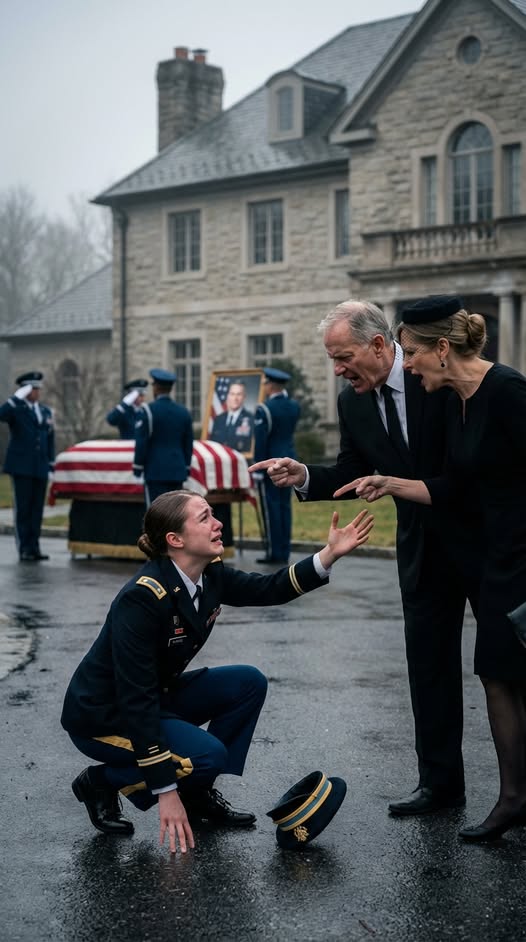
probationary. They were legally bound to uphold three non-negotiable stipulations.” I leaned forward, my eyes scanning the text. My grandfather’s sharp, authoritative signature anchored the bottom of the page. “Read the first condition,” the lawyer instructed. I cleared my throat. “The primary beneficiaries must grant Captain Amelia Whitaker permanent, unimpeded residence within the family estate for the duration of her natural life, or until she chooses to vacate of her own volition.” I blinked, the words blurring slightly. I looked up. “They evicted me in less than twelve
hours.” “Keep reading.” “Second,” I continued, my voice gaining strength. “Captain Amelia Whitaker shall maintain shared, equal authority regarding the financial management and physical preservation of the estate properties.” Not a guest. A co-commander. “And the third?” Callahan
prompted.
“The beneficiaries must allocate twenty percent of the estate’s annual liquid yield to aggressively maintain and expand the Admiral Thomas Whitaker Veterans Outreach Foundation, as outlined in Addendum B.”
I knew the foundation well. It had been Granddad’s crusade during his twilight years, a desperate fight to secure housing and psychiatric care for forgotten combat veterans. My mother had always mocked it as a “depressing money pit.”
My eyes drifted to the final paragraph, labeled ENFORCEMENT MECHANISM.
“Should the primary beneficiaries violate, subvert, or deliberately ignore any of the aforementioned conditions, their ownership of the Norfolk estate and all associated financial assets shall be instantly nullified. Full, unencumbered ownership shall immediately and irrevocably transfer to Captain Amelia Whitaker.”
The silence in the office was absolute, save for the rhythmic ticking of a brass carriage clock on the mantle. The sheer magnitude of the legal snare took my breath away. It wasn’t just a will; it was an ambush.
“Legally speaking,” Mr. Callahan said, steepling his fingers, “the absolute second your father threw your duffel bags onto the pavement and your mother changed the security protocols, they triggered the enforcement mechanism. They detonated their own inheritance.”
A cocktail of vindication, awe, and profound sorrow flooded my system. “He knew,” I whispered. “He knew exactly what they would do to me the moment he was gone.”
“He was the most astute judge of character I have ever encountered,” Callahan agreed. “He knew they would betray you. He just needed them to document it.” The lawyer opened a secondary, much thinner file. “The house is yours, Amelia. The estate is yours. The assets are yours. The paperwork was pre-filed with the county under a provisional seal, which I lifted thirty minutes before you arrived.”
Before I could fully process the gravity of my newfound empire, Callahan slid a sealed, handwritten envelope across the desk. My name was inscribed on the front in my grandfather’s immaculate block lettering.
“He requested you read this in private once the trap was sprung,” Callahan said quietly.
I broke the wax seal with a trembling thumb and unfolded the heavy parchment.
Amelia,
If you are reading this, then the anchor line has snapped, and the crew has mutinied exactly as I suspected they would. Do not let anger cloud your tactical judgment. Your parents were not born monsters, but they have allowed luxury to rot their character. This legal maneuver was not designed as an instrument of petty revenge. It was a crucible designed to show you, unequivocally, who you can trust in the trenches.
You have always possessed the strongest moral compass in our bloodline. You are the only one fit to hold the perimeter.
Stand steady.
I lowered the letter, a single, hot tear escaping my left eye and tracking down my jawline. The Admiral was gone, but his command presence remained absolute.
“Mr. Callahan,” I said, my voice hardening into steel.
“Yes, Captain?”
I carefully tucked the letter into my breast pocket. “I believe it is time we paid my parents a visit.”
Chapter 4: The Coup de Grâce
Three days later, the Virginia sky had cleared into a brilliant, piercing canopy of pale blue. I drove my modest sedan slowly down the familiar, oak-lined avenue that led to Whitaker Manor. The waterfront properties passed by in a blur of manicured perfection, their private docks reaching out into the sparkling green waters of the bay like long, wooden fingers.
In the passenger seat beside me rested a heavy, leather-bound portfolio. Inside it lay the certified, notarized, and county-stamped documents of ownership transfer. Mr. Callahan had insisted on ensuring every legal ‘i’ was dotted and ‘t’ crossed before I engaged the enemy. Justice, he had advised me, is most devastating when it arrives quietly and cloaked in undeniable paperwork.
When my tires crunched onto the expansive gravel driveway, the first anomaly I noted was the pristine, silver Tesla parked ostentatiously near the grand portico. My father had positioned it there like a shiny monument to his unearned victory. The manor itself looked glorious in the afternoon sun, completely oblivious to the impending change of command.
As I ascended the wide marble steps, I heard the unmistakable, grating sound of forced, aristocratic laughter spilling through the partially open bay windows. They were entertaining. Of course they were. My mother had never possessed the psychological stamina to delay a victory lap.
Through the sheer curtains of the formal dining room, I observed the scene. Crystal wine glasses caught the light of the immense chandelier. I recognized several affluent neighbors and one of my father’s insufferable country club associates.
I didn’t bother using the brass knocker. I simply turned the heavy knob—they hadn’t changed the perimeter locks yet, only the alarm codes—and stepped into the grand foyer.
The heavy thud of the front door closing echoed like a gunshot. The laughter in the dining room abruptly died.
My mother emerged from the dining room first, holding a flute of champagne, swathed in an expensive, pale blue designer dress. When her eyes locked onto my uniform, the blood drained from her face so rapidly I thought she might faint.
“What in God’s name are you doing trespassing here?” she hissed, her voice a venomous whisper meant to evade her guests’ ears.
I stood at parade rest. “I came home.”
Her jaw tightened. “I explicitly told you—”
“I am aware of what you told me,” I interrupted smoothly.
My father appeared behind her, his face flushing a dangerous, mottled crimson. “Amelia,” he barked, attempting to project patriarchal authority. “This is wildly inappropriate. We have company. You need to leave the premises immediately.”
“Actually,” I countered, stepping fully into the light of the hallway, “my timing is surgically precise.”
Two of the neighbors peered curiously around the doorframe. My father noticed their audience and lunged forward, grabbing my elbow. I didn’t flinch, but the look I gave him caused him to instantly release his grip.
“I am calling the police,” my mother threatened, pulling her smartphone from a clutch purse.
I calmly unzipped the leather portfolio and withdrew the thick stack of legal documents. “I wouldn’t advise involving local law enforcement in a trespassing dispute, Mother. Not when you are the ones lacking a deed.”
My father scoffed, a nervous, breathless sound. “What kind of psychotic stunt is this? We handled the will reading.”
“You handled page one,” I corrected softly.
That phrase struck him like a physical blow. His eyes darted to the papers in my hand. “What is that?”
“The deed transfer,” I said, holding it out. “Certified by the county clerk seventy-two hours ago.”
He snatched the paper from my hand, his eyes frantically scanning the dense legal jargon. His pupils dilated. “This… this is a forgery. This is impossible.”
My mother abandoned her phone and leaned over his shoulder, her manicured nails digging into his bicep. She read the words. Conditional Inheritance Clause. Enforcement Mechanism Activated. Sole Proprietorship: Amelia Whitaker.
“No,” she breathed, stepping back as if the paper had caught fire. “Callahan wouldn’t dare—”
“Mr. Callahan executed the Admiral’s direct orders,” I stated, raising my voice just enough so the paralyzed guests in the dining room could hear every syllable. “Condition one: I was to be granted permanent residence. Condition two: Shared authority. You violated both conditions the exact moment you dumped my uniform on the asphalt and mocked me.”
The silence that saturated the foyer was absolute. Even the ambient noise from the bay seemed to vanish.
My father’s hands began to tremble violently. The paper shook like a leaf in a gale. “You’re saying… you’re saying you own the estate.”
“I own the estate. I own the investment portfolios. I even own the Tesla parked in my driveway,” I confirmed, my voice devoid of malice, delivering only cold, hard facts. “You detonated your own inheritance because you couldn’t wait twenty-four hours to show me how little you cared about me.”
One of the guests in the dining room awkwardly cleared his throat, placed his crystal glass on a table, and muttered something about needing to leave. Within ninety seconds, the house had emptied of strangers, leaving only the three of us standing in the wreckage of my parents’ hubris.
My father’s shoulders collapsed. The arrogant posture he had maintained for decades dissolved, revealing a small, terrified man. “Amelia… what happens now?”
I looked at the two people who had gleefully made me a refugee three days prior. I held the power to destroy them. The words ‘Now you’re homeless’ danced on my tongue, begging to be weaponized. But my grandfather’s voice echoed in my mind. Stand steady.
“I will inform you of my decision in the morning,” I said coldly.
Leaving them shivering in the foyer, I turned and walked deliberately toward the Admiral’s private library, knowing that the final test of my character was waiting behind those heavy oak doors.
Chapter 5: The True Inheritance
The library was a sanctuary of profound stillness. The atmosphere was thick with the comforting, phantom aroma of my grandfather’s cherrywood pipe tobacco, aged leather, and the salty draft leaking through the window casings. I crossed the room and sat behind his massive mahogany desk, running my fingertips over the worn edge where he had rested his arms for half a century. A biography of Chester Nimitz lay exactly where he had left it, marking his final day of reading.
In the center of the pristine blotting pad sat a small, unadorned walnut box. It hadn’t been there previously. Resting atop the brass clasp was a second envelope, inscribed with my name.
I sank into his leather chair, my adrenaline fading, replaced by a bone-deep exhaustion. I opened the letter.
Amelia,
If you are reading this specific letter, the estate is yours, and the enemy has been routed. But the true test begins now.
Power often arrives wearing the mask of justice. It whispers in your ear that because you have been grievously wronged, you are fully entitled to inflict catastrophic wounds in return. I implore you, do not listen to that venomous voice.
You have the absolute legal right to cast your parents into the streets. But before you strike, ask yourself: What tactical maneuver leaves your own character intact? Revenge is a fleeting high; character is the only companion that stays with you in the dark. If you can administer justice without succumbing to cruelty, if you can establish ironclad boundaries without surrendering your inherent compassion, then my legacy is safe in your hands.
I lowered the parchment. The tears finally came—silent, hot, and purifying. I had wanted them to bleed. I had fantasized about watching them pack their bags in disgrace. But the Admiral was right. If I mirrored their cruelty, I was no better than the people who had abandoned me. He was still mentoring me from beyond the grave, teaching me how to win the war without losing my soul.
The next morning, the Chesapeake Bay was a sheet of blinding, pale gold under the rising sun. I stood in the massive chef’s kitchen, nursing a mug of black coffee, watching the distant silhouettes of Navy vessels gliding toward the Atlantic.
I heard the slow, defeated shuffle of footsteps behind me. My father entered the kitchen. He looked as though he had aged ten years overnight. The bombastic confidence was entirely gone; his posture was hollowed out.
“I didn’t sleep,” he confessed, leaning heavily against the granite island.
“I imagine not,” I replied evenly.
My mother hovered in the doorway, stripped of her makeup and her arrogance. She looked small, frail, and profoundly uncertain. “Amelia,” she whispered, her voice cracking. “We owe you an apology. We… we behaved monstrously.”
It wasn’t a grandiose, theatrical plea for mercy, which made it all the more pathetic—and real.
“I read Granddad’s final letter last night,” I said, setting my ceramic mug down with a soft click. “He noted that sudden wealth doesn’t change people. It merely removes their masks. You showed me exactly who you are.”
My father stared at the floor tiles. “I suppose we proved him right.”
“However,” I continued, withdrawing a fresh stack of documents from my portfolio, “a commander dictates the terms of the peace.”
They both looked up, a glimmer of desperate hope reigniting in their eyes.
“The manor and all primary assets remain solely in my name,” I stated, tapping the paperwork. “That is non-negotiable. But you will not be evicted from the property.”
My mother let out a jagged, stifled sob.
“Under strict conditions,” I amended sharply. I slid the charter for the Admiral Thomas Whitaker Veterans Outreach Foundation toward them. “Granddad left an immense endowment to build transitional housing for combat veterans. I am expanding the operational scope of the foundation immediately.”
My father blinked, confused. “Expanding how?”
“The main mansion is being entirely repurposed,” I explained. “The formal dining rooms, the parlors, the guest wings—they are being converted into a central headquarters, psychiatric counseling offices, and community spaces for the foundation. We are opening our doors to the men and women who actually understand the meaning of the word ‘service.’”
“And us?” my mother asked, her voice trembling.
“The detached guest cottage near the eastern gardens,” I said. “It has two bedrooms and a modest kitchen. You may reside there, rent-free, for the remainder of your lives. But you will contribute to the foundation’s daily operations. That is the cost of your sanctuary.”
My father stared out the window at the sprawling, manicured lawns, slowly absorbing the reality of his new existence. He wasn’t the lord of the manor; he was the groundskeeper. But he was also safe. “The Admiral would have loved this plan,” he murmured softly.
“I know,” I replied.
Six months later, Whitaker Manor was unrecognizable in the best possible way. The oppressive silence of aristocratic wealth had been replaced by the chaotic, beautiful hum of life. Vans brought retired Marines, aging sailors, and struggling veterans to the property daily. The dining room hosted group therapy and community meals.
And remarkably, my parents adapted. Stripped of their unearned status, they found a strange, quiet dignity in actual labor. My father maintained the docks and the landscaping; my mother organized the weekly pantry deliveries.
One brisk autumn afternoon, my father walked up to the back porch where I was reviewing contractor bids. He leaned against the railing, watching a Coast Guard cutter cut through the gray water.
“He was right, you know,” my father said quietly, not looking at me.
“About what?”
“Character. It’s the only currency that actually matters when the market crashes.”
I smiled, a genuine expression of peace, and looked up at the second-story window of the Admiral’s library. The true inheritance I received wasn’t real estate, or money, or a luxury vehicle. It was the profound, hard-won ability to choose exactly who I would become when the world attempted to break me.
If Amelia’s journey of resilience, grace under fire, and the true meaning of legacy resonated with you, please like and share this post if you find it interesting! Let’s honor the mentors in our lives who teach us how to stand steady when the anchor line snaps.