“You say absolutely nothing,” I instructed, dropping the phone into the kitchen junk drawer beside a roll of scotch tape and a graveyard of dead batteries. On day fourteen, at six in the morning, my phone rang. It was Richard, calling from Florence. “Joanna, what the hell is going on with Mom’s bank?” His voice was tight, bordering on panic. “I tried to call the manager. They told me my authorization has been suspended. That makes zero sense.” I leaned against the kitchen counter, watching Loretta water her winter ferns across the street. “I wouldn’t know, Dad. Have you tried calling the fraud department?” “Of course I tried!” he snapped. “They won’t tell me anything. I manage her estate, Jo. I need access. It has to be a system error.” I let the silence hang, thick and suffocating, over the transatlantic line. “Banks make mistakes,” he added, his voice pitching higher, desperate for validation. “They certainly do,” I replied flatly, and hung up. He called Hazel four times that afternoon. She let every single ring bleed into voicemail. By evening, his facade of the concerned son crumbled. A text arrived on my phone, dripping with venom. This is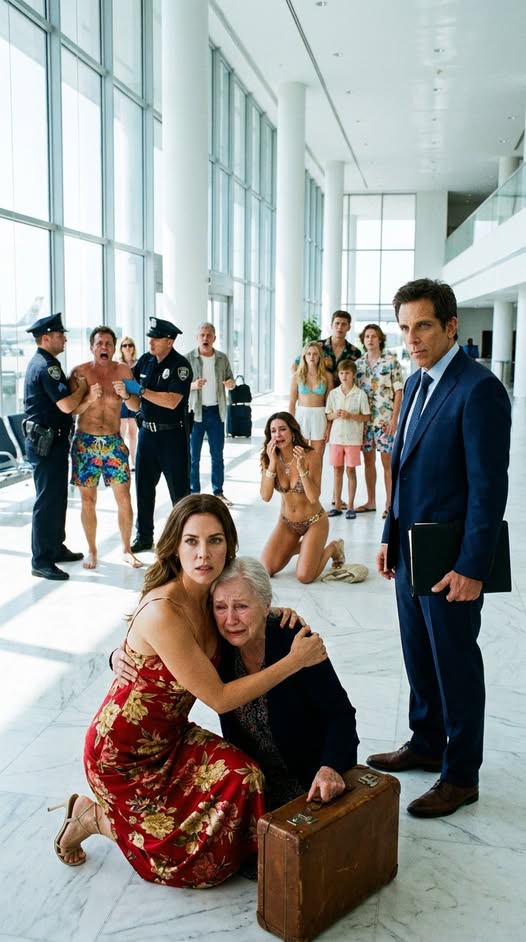
ridiculous. I am the authorized signer. I need that access restored immediately. Tell Mom to fix this. He was managing her life the way a parasite manages a host, and he was furious the host had suddenly developed an immune system. His final text of the night sealed his doom. I’m cutting the trip short. Flying home Tuesday. Have Mom’s paperwork ready. Chapter 6: The Reckoning Tuesday, Day 17. 2:00 PM. Richard’s pristine truck slammed into Hazel’s driveway. He marched up the walkway, unshaven, his expensive Italian jacket wrinkled. The European tan he had cultivated
now looked sallow, doing nothing to hide the dark, exhausted rings beneath his eyes. He hammered a fist against the door once and pushed his way inside without waiting for an invitation.
“Mom! We need to talk about the bank right now.”
I stepped out of the hallway shadows, blocking his path to the living room. “Come on in, Dad.”
He glared past me, his eyes landing on the dining room. He froze.
The Thanksgiving table had been transformed into a tribunal. It was meticulously organized: thick folders with color-coded tabs, a laptop displaying a massive Excel spreadsheet, and the bank transaction history—now a five-page document—pinned beneath a ceramic coffee mug.
“What is this?” he demanded, his voice dropping an octave. “What did you do, Joanna?”
“Sit down.”
He didn’t move. “This is none of your damn business. Her finances are my legal responsibility.”
“Grandma’s finances are Grandma’s responsibility,” I shot back. “And she is right here.”
Hazel materialized from the kitchen. She wore her Sunday church dress and her pearl earrings. She held a steaming cup of tea. She looked at Richard not with anger, but with the cold, detached observation one reserves for a stranger making a scene in public.
“Richard. Sit down,” she commanded.
It was the teacher’s voice. The voice that brokered no argument. He slowly lowered himself into a chair, his hands flat on the table, his jaw clenched tight.
“Dad,” I began, gesturing to the folders. “Grandma would like to understand the architecture of her accounts. Walk us through the withdrawals.”
He puffed his chest out, clinging to his dying authority. “I don’t have to explain my accounting to you. I have Power of Attorney.”
I let a single beat of silence pass.
“Had.”
The color drained from his face with the speed of a plunging elevator. The arrogant sneer vanished, replaced by a mask of sudden, paralyzing terror. “What do you mean, had?”
“A judge granted an emergency ex parte order,” I stated, my voice echoing in the quiet room. “Your Power of Attorney has been permanently suspended pending judicial review. You have zero legal access to this woman.”
Richard violently shoved his chair back, the wood scraping against the linoleum. “You dragged me to court behind my back?!”
I didn’t blink. “You drained over one hundred and forty thousand dollars from a seventy-four-year-old widow behind hers.”
“I was managing her portfolio!” he roared, pointing a trembling finger at me. “I moved liquid assets because the interest yields were—”
“Richard,” Hazel interrupted. She set her teacup down with a sharp clack. “I have seen the ledgers. Every single line item.”
He turned to her, his tone shifting instantly to a sickly, patronizing whine. “Mom, you don’t grasp complex finance. I was protecting you.”
“I grasp that I had two hundred and twelve thousand dollars when you took control, and I have forty-one thousand left,” Hazel replied, her voice like cracking ice.
He stared at her, his mouth opening and closing like a suffocating fish. “I… I can explain the receipts. Every transaction.”
“You can explain them to Marcus Webb,” I said.
The name hung in the air.
“Who?”
“Our attorney.”
Attorney. The word broke him. He staggered back a step. “Mom, you don’t need lawyers. For God’s sake, I’m your son!”
Hazel looked up at him, her eyes devoid of pity. “A son who forgot my plane ticket.”
The silence that followed was absolute. Richard looked at the towering stacks of evidence, the undeniable proof of his greed. He grabbed his coat from the back of the chair, turned on his heel, and bolted for the front door, slamming it hard enough to rattle the windows.
The next morning, the rest of the family returned.
At 9:00 AM, Marcus Webb’s silver Volvo pulled into the driveway. He entered the house carrying a thick leather briefcase and an aura of impending doom. He arranged the evidence binder at the head of the table.
At 9:47 AM, Richard returned, this time flanked by Diane and Brenda. They walked in expecting a family argument. They walked into an execution.
When Diane saw Marcus sitting at the head of the table, the color vanished from her neck upward. Brenda clutched her purse to her chest like a shield.
“Sit,” Marcus instructed. They obeyed mechanically.
Marcus didn’t raise his voice. He didn’t need to. He simply opened the binder and began to read the timeline of theft.
He laid out the fake medical expenses. He laid out the phantom home repairs. And then, he turned his gaze to Diane.
“In 2024, a transfer of twenty-five thousand dollars was routed to the personal checking account of Diane Mitchell, categorized by Mr. Frell as a ‘Home Renovation Loan’.” Marcus paused. “Ms. Mitchell, did you ever ask your mother if she authorized a quarter of her liquid savings to remodel your kitchen?”
Diane stared at the table, her hands trembling violently. She said nothing.
Marcus turned the page. He pulled out the forged itinerary and laid it next to the business-class receipts. “Thirty thousand dollars withdrawn for a family vacation. And yet, Mrs. Frell was handed this.” He tapped the forgery. “A fake ticket.”
Richard leaped up. “This is a private family matter! You have no right—”
“I am entering into the record,” Marcus cut over him smoothly, pulling out a highlighted sheet of paper, “an email communication between Richard Frell and Diane Mitchell. Paragraph two: ‘Don’t book Mom’s ticket… she won’t even notice the money’s gone.’“
Brenda gasped, covering her mouth with both hands. Diane squeezed her eyes shut, a tear leaking down her cheek.
Richard fell back into his chair, utterly defeated. “Mom…” he whispered, his voice cracking. “I was trying to help. The money was just sitting there… wasting away.”
Hazel finally spoke. She placed her hands flat on the table, assuming the exact posture she had held during that fateful Thanksgiving dinner.
“I saved that money for twenty-two years,” she said, her voice ringing with an undeniable, tragic power. “Every summer I didn’t take a vacation. Every Christmas I bought myself one small gift so I could put the rest away for my family.”
She leaned forward, locking eyes with the son who had robbed her. “I signed that legal paper because I believed you were a good man. Because a mother should never have to hire an investigator to audit her own child. I do not want you in a prison cell, Richard. But I want my name on my own accounts. I want my mail in my own box.”
She took a slow, deep breath. “But you need to understand something. What you did to me at that airport gate? In front of strangers? That is the exact moment you ceased to be a man I trust. ‘I forgot your ticket. Just go home.’ You didn’t forget anything. You just calculated that I wouldn’t matter enough for anyone to stay behind with me.”
She reached out and placed her hand over mine. “But someone stayed.”
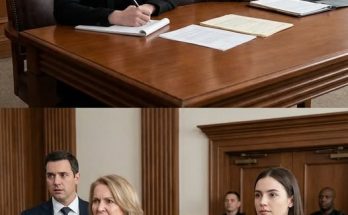
Marcus snapped the binder shut, the sound like a gavel striking wood. “The court hearing for restitution is scheduled in nine days. You will all be served by a process server this afternoon. Furthermore, Adult Protective Services has opened an active investigation into elder exploitation. I suggest you all retain independent counsel.”
Richard stood up. The European vacation was over. The facade was shattered. He looked at his mother, a hollow shell of a man. “This isn’t over, Mom.”
Hazel didn’t blink. “No, Richard. It is not. That is precisely the point.”
Chapter 7: The Lights of Paris
Two agonizing months later, a county judge brought the hammer down.
The Power of Attorney was permanently, irrevocably revoked. Richard Alan Frell was court-ordered to repay one hundred and forty thousand dollars through a brutal, structured five-year payment plan. To ensure compliance, the judge slapped a heavy lien on his personal assets. Adult Protective Services formally substantiated the allegations of elder financial exploitation, placing a permanent, damning flag on Richard’s public record.
Diane, terrified of the legal fallout, mailed a cashier’s check for twenty-five thousand dollars to Marcus Webb’s office. There was no apology note enclosed. The envelope bore a new return address in Nashville. We haven’t heard her voice since she walked out of the dining room.
Richard was forced to liquidate his beloved speedboat and a timeshare in the mountains to make his first restitution payment. He and Brenda quietly sold their home and downsized to a modest subdivision on the outskirts of the city. They do not call. I do not expect them to.
Hazel’s house looks vastly different today. The porch boasts a sturdy new railing. The gutters have been replaced. The kitchen faucet no longer weeps into a plastic bowl, and the digital thermostat sits comfortably at a warm seventy-two degrees. Her refrigerator is fully stocked—milk, fresh produce, and the expensive sharp cheddar cheese she used to insist was an unnecessary luxury.
She meets Loretta and the church ladies at the diner every Friday for a towering slice of pie. Loretta swears Hazel looks ten years younger. Hazel laughs and says she feels twenty years younger.
It turns out that harboring the weight of betrayal ages the soul, but reclaiming your truth forcefully takes those years back.
I make the forty-five-minute drive to Maryville every single Saturday. I never mind the traffic.
Earl’s duct-taped leather suitcase is currently sitting by the front door. Tucked safely inside the zippered compartment are two confirmed, fully paid, non-refundable tickets to France. October in Europe.
“I want to see the Eiffel Tower at night,” she told me yesterday, her eyes bright. “Your grandpa always said the lights make it look like it’s breathing.”
It is a Saturday afternoon. We are standing in her warm kitchen. The legendary cast-iron skillet is heating on the stove. Hazel is measuring cornmeal, leveling the cups with the flat edge of a butter knife, just as she has done for half a century.
“Your grandpa bought this pan at a flea market,” she murmurs, smiling at the heavy iron. She says it every time I visit. And every single time, I listen as if it’s a revelation.
People at the hospital often tell me I was incredibly brave for confronting my family. I always shake my head. I don’t believe staying at that airport gate was an act of bravery. Walking away would have been the easiest thing in the world. Staying behind was simply the necessary thing.
That is my story. It is a chronicle built on a torn boarding pass, a seasoned iron skillet, and a devastating silence that finally found its voice. If someone you love needs you to stay behind at the gate… stay. Because sometimes, refusing to board the plane is the only way you truly learn how to fly.