I established the Pritchard Family Residential Trust and named myself as the grantor while designating my parents as the lifetime occupants with absolute rights. The trust documents specifically prohibited any form of subletting or management transfer to any outside party without my express written consent. The anniversary dinner took place at a quiet restaurant in the city where my father wore his best charcoal blazer and my mother looked radiant in a new silk dress. Megan and Chadwick arrived late, and Chadwick immediately made a show of ordering an expensive bottle of wine that he clearly couldn’t afford. After we finished the dessert, I pushed the heavy navy envelope across the white tablecloth toward my mother’s trembling hands. “What is the meaning of this, Gavin?” she asked as she looked at the official looking documents inside. “It means that you finally have your someday,” I told them as my father leaned in to read the address on the deed. My mother began to cry while my father took off his glasses and cleaned them three times as if he were trying to wipe away the shock of the moment. “This is far too much for you to give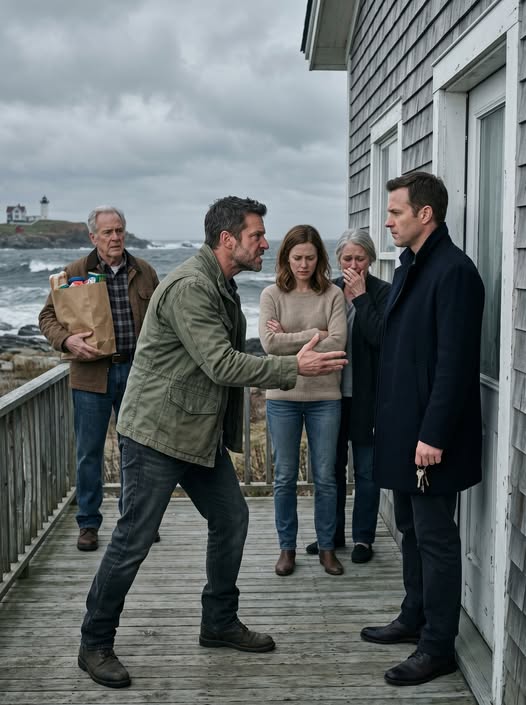
us,” he whispered while his hand rested on the paper as if it were a fragile bird. “It is a house, Dad, and it belongs to you for as long as you both are on this earth,” I replied firmly. Later that evening, Chadwick had asked about the tax implications and the maintenance costs with a hunger in his eyes that I found deeply unsettling. “Everything is handled through a separate endowment I created,” I told him, and I watched him nod as if he were already calculating how to circumvent my rules. For the first few months, the house was a source of pure joy as my parents learned the
rhythms of the tide and the names of the local birds. My father took up the hobby of watching the weather with an intensity that he used to reserve for his warehouse inventory. However, the questions from Chadwick never truly stopped and eventually began to grow more aggressive as
his own business ventures began to falter. He started suggesting that my parents were being selfish by occupying such a valuable piece of real estate during the peak summer months. Megan began to echo his sentiments by claiming that our parents were becoming too isolated and that
they needed a more managed living situation.
The actual trouble arrived when Chadwick’s latest investment firm collapsed under the weight of its own bad decisions.
I began to hear reports that he was telling people in his social circle that he was in the process of taking over a luxury coastal rental.
My mother called me three weeks before the lockout to ask if I had ever given Chadwick any authority to speak with the insurance company.
“I told him that you were the one in charge of the trust, but he said he was just trying to be a helpful son in law,” she said with a worried tone.
“Do not sign anything he gives you, Mom,” I warned her, and I could hear the exhaustion in her sigh.
The morning of the incident, my parents had gone to a local bakery to buy bread for their lunch, leaving the house unoccupied for less than an hour.
Chadwick had arrived with a locksmith and a set of forged documents that claimed he was the primary property manager for the trust.
By the time my parents returned with their groceries, their keys were useless and their belongings were already being moved into the guest rooms.
Back on the porch in the present, I reached out and took the leather portfolio from Chadwick’s hand before he could even register that I was moving.
“What do you think you are doing with my property?” he snapped as he tried to snatch the folder back.
“I am reading the evidence of your incompetence,” I replied as I flipped through the amateurish rental agreements and the unsigned management letters.
Inside the folder was a printed listing from a vacation website that featured photos of my mother’s kitchen and a description of the home as a premium getaway.
“This document is legally worthless,” I said as I held it up for my sister to see.
“It is a plan to ensure the financial stability of this family,” Chadwick argued while he tried to maintain his composure.
“You are not the family, Chadwick, you are an intruder who has just committed a very serious legal error,” I told him.
I took out my phone and dialed the number for Sandra, the lead attorney who had drafted the trust documents.
“Sandra, I need you on speaker immediately,” I said as the call connected and the wind roared around us.
“Who is the legal owner of the property in Rockport?” I asked as I held the phone toward the group.
“The home is held entirely by the Pritchard Family Residential Trust, and any interference with the occupants is a violation of state law,” she answered clearly.
Sandra went on to explain that my parents held a life estate that could not be revoked by anyone other than the grantor.
Chadwick’s face began to lose its color as he realized that his template documents from the internet were no match for actual legal structure.
Just as he was about to speak, a white SUV pulled into the driveway and a woman with a professional camera case stepped out.
“I am here for the eleven o’clock real estate shoot,” she said with a cheerful smile that died the moment she saw my mother’s face.
“There will be no shoot today because this property was listed without the owner’s consent,” I told her as I walked toward her car.
The photographer looked at Chadwick and then at the suitcases on the porch before she began to back away toward her vehicle.
“I am leaving right now and I will be reporting this to my agency,” she said as she quickly put her car in reverse.
I then called the local police and explained that my elderly parents were being unlawfully excluded from their primary residence.
When the two officers arrived, they didn’t need much explanation after seeing my mother’s teal cardigan and the suitcases on the deck.
Officer Higgins was a veteran with a no nonsense face who immediately asked Chadwick for his identification and his proof of ownership.
“This is a family matter that we are resolving internally,” Chadwick tried to say, but the officer was already looking at the trust papers Sandra had emailed to his cruiser.
“The law says you have no right to be in this house, sir,” Officer Higgins said as he stepped toward the door.
Chadwick finally handed over the keys with a trembling hand as he realized that his narrative of being a helpful manager had completely disintegrated.
Before we went inside, I asked the officers to accompany us through the house to ensure that no damage had been done to the interior.
The sight inside was even worse than the porch because Chadwick had already begun to erase my parents’ presence from the rooms.
My mother’s favorite landscape painting had been taken down and tucked behind a sofa while the pantry had been reorganized with labels for guest supplies.
On the dining table was a welcome binder for renters that included a list of local rules and a map of the beach paths.
“He turned our life into a hotel,” my mother whispered as she touched the empty space on the wall where her painting used to hang.
The officers stayed until Chadwick and Megan had packed their things and driven away in a silence that suggested their marriage was already fracturing.
My father sat at the kitchen table and held the returned keys in his palm for a long time without saying a single word.
“I am so sorry that you had to see this, Gavin,” he finally said as he looked at the ocean through the window.
“You have nothing to be sorry for, Dad, because you did nothing wrong,” I told him as I put my hand on his shoulder.
The aftermath was a long and quiet process of rebuilding the walls that had been breached by Chadwick’s greed.
Megan called me several times to complain that I had humiliated her in front of the local authorities and that I was being a tyrant.
“You let your husband put our mother on the driveway in her slippers, Megan, so do not talk to me about humiliation,” I told her before blocking her number.
Eventually, the truth about their finances came out, and it was far more dire than any of us had suspected.
They were months behind on their own mortgage and had been counting on the rental income from the beach house to save them from bankruptcy.
Instead of asking for help, they had chosen to try and steal the one thing that gave our parents peace.
Six months after the lockout, Megan finally returned to the house alone to offer a real apology that didn’t involve any excuses.
She sat on the porch with my mother and admitted that she had been blinded by her own fear and the empty promises of a man who was always chasing a shortcut.
“I was jealous of the way they looked at you, Gavin,” she admitted to me later that evening.
“You gave them a future and I felt like I was only giving them problems to solve,” she added with a hollow voice.
My parents eventually forgave her because that is what parents like mine do, but the trust was never the same.
The house is still there on the bluff, and the waves still crash against the stones with that same indifference they showed on the day of the lockout.
But now, there are cameras on the gates and a new security system that only three people in this world have the code for.
Peace is a beautiful thing, but as my father often says now, it is a thing that must be defended with a very strong lock.
THE END.