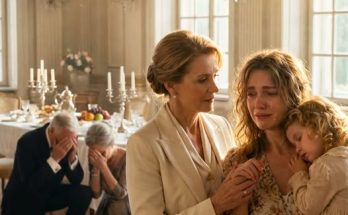
Slowly, they pushed me aside. I ate alone because she said the children felt nauseous watching me eat. She wouldn’t let me sit on the couch because it “smelled old.” She always found excuses to keep my grandchildren away from me.
One morning in the kitchen, while I was making chamomile tea, she finally said the words that broke something inside me.
“Mom… I don’t know how to say this. Your presence makes me uncomfortable. Your breathing, the way you eat, the way you walk… I can’t stand it. Old people are unpleasant.”
Something inside me shattered, but my voice remained steady.
“Sophie, is that really how you see me?”
She hesitated… then nodded.
At that moment, I realized something painful: I was no longer her mother. I had become temporary shelter. A bridge to the comfortable life she believed she would someday inherit.
She didn’t know the house was worth nearly three million dollars. She didn’t know about the investment accounts, the small vineyard property in Napa Valley, or the savings that exceeded four million.
She believed that sooner or later, everything would belong to her.
That same night, I made the bravest decision of my life.
I would sell the house.
Liquidate the investments.
Close every account.
And before she could see me as her future financial security…
I would disappear.
Taking every cent with me.
That night I didn’t sleep.
I sat at the walnut desk that had belonged to my husband and opened each drawer slowly—bank statements, property deeds, investment records. My fingers moved across the papers as if touching the years it had taken to build everything.
By sunrise, I had a plan.
Over the following weeks, I behaved exactly the same. I made breakfast, kissed my grandchildren good morning, and smiled when Sophie spoke about “the future.”
But every morning after dropping the children at school, I took a taxi.
First stop: a real estate office.
“I want to sell the house,” I said.
The agent looked surprised.
“This is a very valuable property in San Diego, Mrs. Hayes. Are you sure?”
“Completely.”
Within a month, a buyer appeared. He paid nearly the full price. I signed the documents without hesitation.
Then I liquidated investments. Closed accounts. Transferred funds. I sold the vineyard property in Napa Valley to a young couple who dreamed of starting a winery.
Each signature felt like closing a door.
Each transfer was a step toward freedom.
Meanwhile, Sophie continued making plans.
I simply nodded.
One afternoon I overheard her on a video call with Rachel again.
“I’m just waiting. I don’t think she has much time left. At her age…”
That night I didn’t cry.
That night I wrote a letter.
The day came sooner than expected.
One Thursday morning, while Sophie was taking the kids to school, the new owners arrived with a notary and a moving truck.
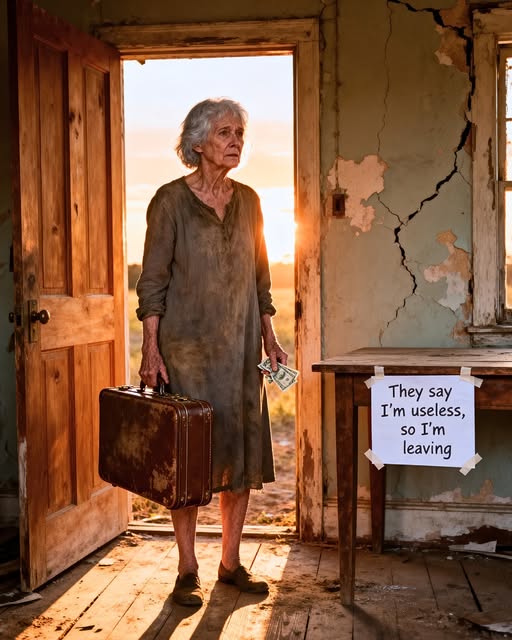
My suitcases were already packed.
When Sophie returned, she found boxes in the hallway and strangers measuring the walls.
“What’s going on?” she asked, pale.
The notary stepped forward.
“Miss, the property was sold three weeks ago. You have until tomorrow to vacate.”
Her eyes turned to me in disbelief.
“Mom… what does this mean?”
“It means the house is no longer mine.”
“You SOLD it? WITHOUT TELLING ME?”
“I didn’t need your permission, Sophie.”
Her face twisted with anger.
“But this is my house! It was supposed to be mine!”
There it was. No sadness. No hurt. Only fury over what she thought she had lost.
“No, daughter,” I replied softly. “It was never yours.”
She stepped closer, trembling.
“And the money? Where’s the money?”
I looked into her eyes—the same ones I had kissed when she was a baby.
“With me.”
Silence filled the room.
“You can’t do this to me,” she whispered.
“You called me useless. You said my presence disgusted you. You said you were waiting for me to die.”
She swallowed, but didn’t deny it.
“I gave you shelter. I gave you years of love. And all you saw was an inheritance.”
I handed her the letter.
“Tomorrow, I’m leaving the country.”
“Where?” she asked weakly.
I smiled slightly.
“To live.”
Two days later, I boarded a flight to Spain.
I rented a small apartment facing the sea in Barcelona. Every morning I walked along the beach. No one looked at me like I was a burden. No one complained that I breathed too loudly.
I opened a new bank account. Invested carefully. I also donated a large portion of my money to organizations that help abandoned elderly people.
The rest became my security.
Three months later I received the first message.
“Mom, forgive me. I didn’t know what I was doing.”
I didn’t respond.
Weeks later another message arrived.
“The kids miss you. We need help.”
This time I replied.
“You didn’t need me. You tolerated me.”
It wasn’t cruelty.
It was the truth.
A year later, sitting by the Mediterranean Sea, I realized something no one had ever taught me:
Love is not an inheritance.
Respect cannot be begged for.
And dignity has no age.
My daughter once believed I was her guaranteed future.
But at seventy, I learned I could still be my own present.
I didn’t respond to Sophie’s messages.
Until one afternoon, nearly a year later, something different arrived.
A photograph.
My grandchildren sat on a park bench holding a sign drawn with crayons.
“Grandma, we love you.”
Below it was a short message.
“Mom, I’m not writing to ask for money. I just want you to know I’m working. It’s not easy. I’ve made mistakes, but I’m learning. If you ever decide to see me… I promise I’ll listen.”
That night I walked along the beach longer than usual.
The sea was dark but peaceful.
And I realized something important: leaving wasn’t about punishing her.
It was about saving myself.
Months passed and I felt no guilt. No hatred either.
Only clarity.
The next day I visited a lawyer in Spain.
Not to reverse my decisions.
But to finish what I had started.
I wrote a new will.
Part of my estate would go to organizations supporting abandoned elderly people. Another part would go into a trust for my grandchildren, accessible only when they turned thirty—without their mother’s control.
And for Sophie…
Nothing material.
Only a sealed letter she would receive after my death.
In it I wrote:
“Daughter, I left you the greatest gift I could give: the chance to build your life without depending on my death.”
Two years later, I returned to the United States for the first time.
I didn’t go back to my old house.
We met in a quiet café.
When Sophie walked in, she looked older—not from age, but from experience.
She sat across from me silently.
“Mom…” she whispered.
There was no arrogance now.
“I’ve been working all this time,” she said. “I live in a small apartment. It’s not easy, but it’s mine. I realized too late that you weren’t an inheritance… you were my mother.”
I looked at her for a long moment.
“And you were my daughter,” I said. “Until you turned me into something you were waiting on.”
She cried.
But this time, her tears felt sincere.
I didn’t hug her immediately.
Forgiveness takes time.
“I will never be your financial safety net again,” I said calmly. “But I can be your mother again… if you learn how to be my daughter.”
She nodded.
I never moved back.
Barcelona remained my home.
But now, twice a year, visitors come.
My grandchildren run across the sand and hug me freely. Sophie helps me cook and listens to my stories.
We never speak about the money again.
Because money was never the center.
Respect was.
I didn’t leave to punish her.
I left to teach her that love isn’t inherited—it’s honored.
And when the day comes for me to leave this world, I won’t leave running away.
I’ll leave knowing I was never a burden.
I was a woman who, at seventy years old, had the courage to choose herself.
And that…
Has no price.